To enhance service speed and avoid tariff delays, we've opened a US warehouse. All US orders ship directly from our US facility.
| Cat. No. | Product Name | Field of Application | Chemical Structure |
|---|---|---|---|
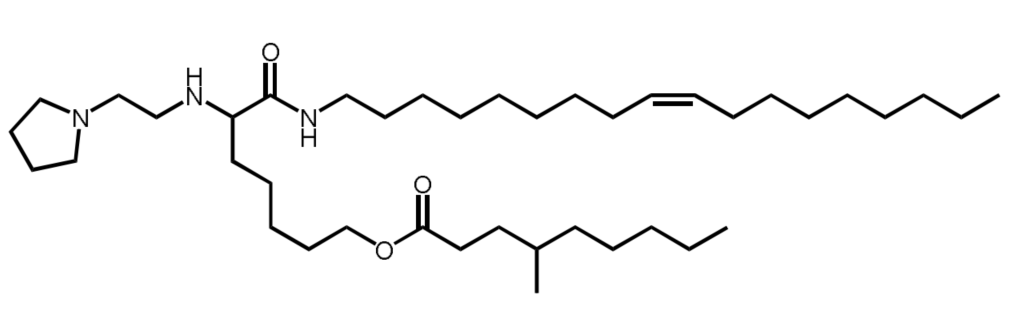
| DC60510 | Iso-A11B5C1 Featured |
Iso-A11B5C1 is an ionizable lipid. The iso-A11B5C1 LNP demonstrates a high level of muscle-specific mRNA delivery efficiency. exhibiting transfection efficiency comparable to the commercially available lipid SM-102, while considerably reducing inadvertent mRNA expression in main organs such as the liver and spleen.Additionally, study results show that intramuscular administration of mRNA formulated with iso-A11B5C1 LNP caused potent cellular immune responses, even with limited expression observed in lymph nodes.
More description
|
|
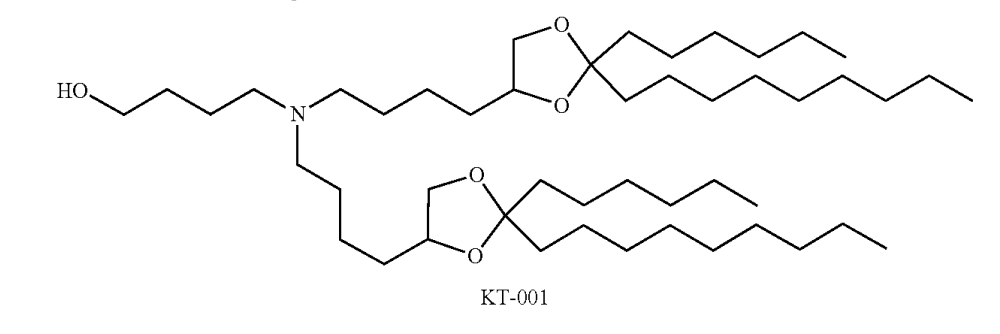
| DC67988 | KT-001 Featured |
KT-001 is a novel ionizable cationic lipid developed by Vivas, Inc., disclosed in US 2026/0007612 A1 (published Jan 8, 2026).KT-001 demonstrates exceptional skeletal muscle targeting and low liver toxicity.Unlike traditional lipids that primarily accumulate in the liver, KT-001 avoids serum ApoE binding, preventing hepatic uptake. Upon intramuscular injection, it achieves a 29-fold reduction in liver off-target expression compared to standard lipids, while maintaining robust, long-lasting protein expression at the injection site.Its optimized pKa enables precise, pH-responsive endosomal escape for high transfection efficiency. KT-001 is an ideal carrier for localized mRNA vaccines and targeted therapeutics for muscle-related disorders.
More description
|
|
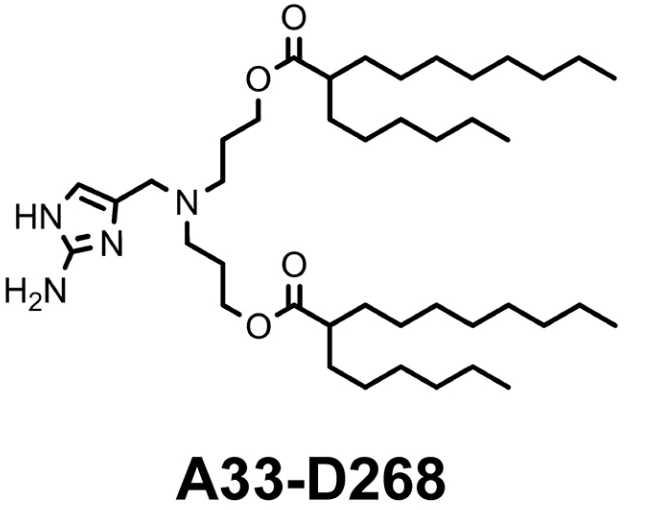
| DC60872 | Lipid A33-D268 |
A33-D268 is an ionizable lipid derived from a 2-aminoimidazole (AM) core, featuring an asymmetric hydrophobic tail structure designed to optimize mRNA interactions. Selected as the top candidate from a 21-lipid library through molecular dynamics (MD) simulations, it demonstrated superior performance: low root mean square deviation (RMSD) and the smallest radius of gyration (Rg), indicating tight mRNA compaction, alongside moderate electrostatic energy and above-average hydrogen bonding for stable encapsulation. Formulated into LNPs, it achieves efficient muscle-specific transfection post-intramuscular injection, rivaling commercial ALC-0315 LNPs. Crucially, it exhibits 29-fold lower hepatic off-target expression, attributed to its inability to leverage serum protein coronas for liver tropism.
More description
|
|
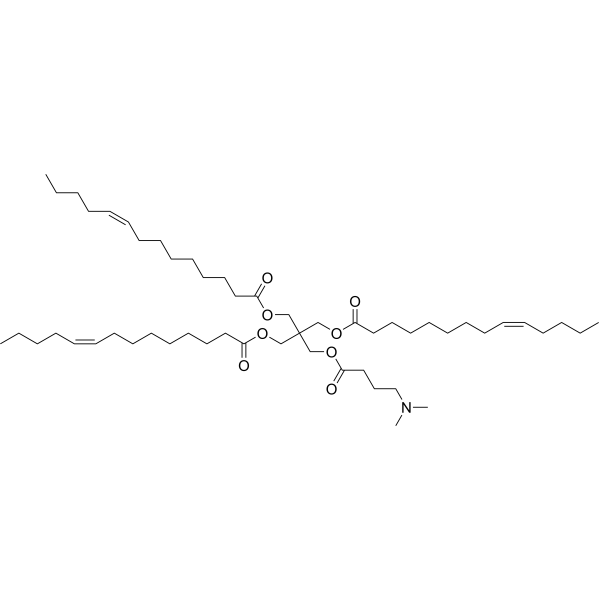
| DC60211 | TCL053 Featured |
TCL053 is an ionizable amino lipid.1 It has been used in the generation of lipid nanoparticles (LNPs) and has a pKa value of 6.8. LNPs containing TCL053 and encapsulating mRNA encoding the Cas9 nuclease, in combination with LNPs containing TCL053 and encapsulating single-guide RNA (sgRNA) targeting the Rosa26 locus, have been used to induce CRISPR-mediated gene editing in the mouse gastrocnemius muscle.TCL053 is an ionizable lipid that has received FDA approval
for preparing mRNA vaccines. It is a three-tailed ionizable lipid
to overcome the disadvantage of nonrepeatable administration of
AAV vectors. In addition, combined with limb perfusion administration,
TCL053 iLNPs could transiently deliver CRISPR-Cas9
mRNA and sgRNA to multiple muscle tissues, reducing
immunogenicity and increasing the safety of iLNPs. It is
great progress for treating Duchenne muscular dystrophy and
other diseases that require multiple doses.
More description
|
|
| DC60910 | CL15F 7-5 Featured |
CL15F 7-5 is a piperidine-based ionizable lipid from the CL15F library, characterized by a symmetrically branched tail structure with a 7-carbon main chain and a 5-carbon side chain. This moderate tail length positions it between short-tail (e.g., CL15F 6-4) and long-tail (e.g., CL15F 14-12) variants, granting it a unique balance in mRNA delivery properties. Its LNPs exhibit optimized organ selectivity, enabling significant mRNA expression in both the spleen and muscle, as demonstrated by in vivo luciferase assays following intravenous and intramuscular administration. This lipid structure facilitates a favorable DSPC surface density on LNPs, which moderates interactions with serum proteins like ApoE, thereby reducing rapid hepatic clearance and promoting extrahepatic delivery. In vaccine applications, CL15F 7-5 LNPs encapsulating SARS-CoV-2 RBD mRNA elicited robust anti-RBD IgG titers and neutralizing antibodies in mice, outperforming the clinically benchmarked SM-102 lipid. The piperidine headgroup further contributes to storage stability by minimizing the generation of aldehyde impurities that can form mRNA-lipid adducts. Consequently, CL15F 7-5 represents a versatile lipid for developing stable, spleen-targeted mRNA vaccines and therapeutics, leveraging tail-length engineering for enhanced efficacy without complex formulation changes.
More description
|

|
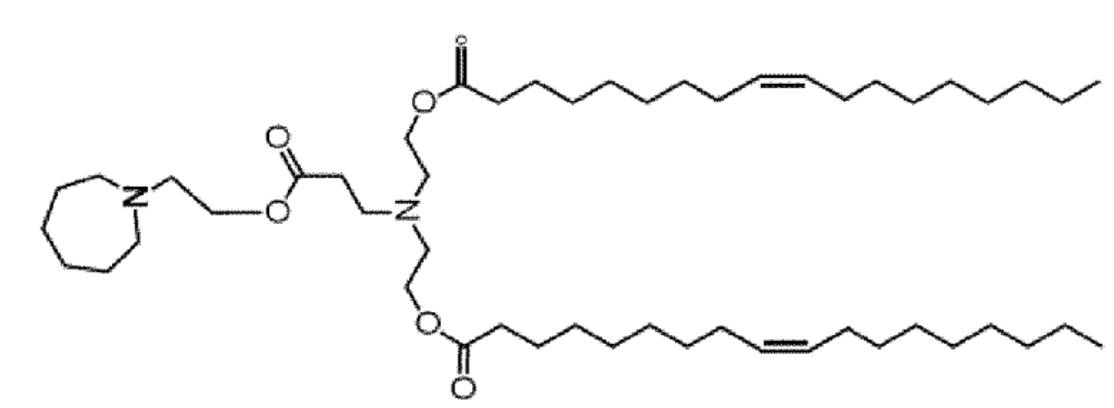
| DC68020 | Lipid OC7 Featured |
Lipid OC7, as described in the patent WO2022207938A1, is a novel ionizable lipid that serves as the core functional component of the saNppa-LNP delivery system. Its key innovation lies in its unique biodegradable structure featuring an internal ester bond. Under typical physiological conditions, this bond hydrolyzes, triggering a charge shift from a cationic form that complexes nucleic acids to a zwitterionic form that releases them. This property is central to its role in enabling long-acting self-amplifying RNA (saRNA) therapies. Specifically, OC7 facilitates immune stealth by mitigating early interferon responses, supports sustained and efficient intracellular replication of saRNA even at low doses, and enables therapeutic protein expression that persists for over 28 days from a single administration. This combination of efficient delivery, controlled release, and extended duration of action makes OC7-based LNPs a promising platform for long-term treatments, such as for myocardial infarction, as demonstrated in the referenced research.
More description
|
|
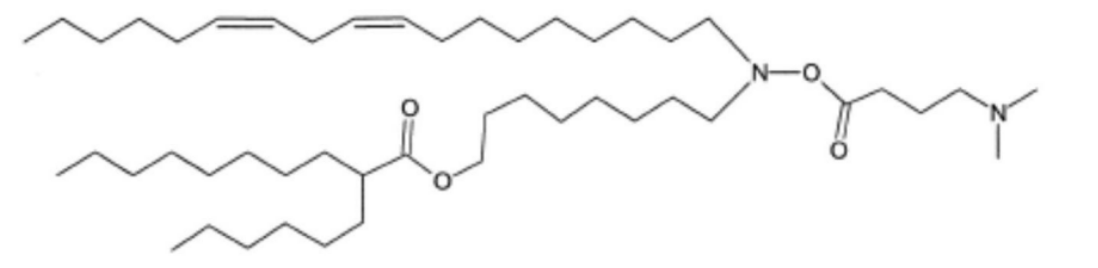
| DC67530 | HY-501 Featured |
HY-501 is a next-generation cationically ionizable lipid engineered for high-efficiency RNA delivery developed by Biontech. Formulated at 40–50 mol% in lipid nanoparticles (LNPs) alongside DSPC, cholesterol, and polysarcosine-conjugated lipid C14pSar23, HY-501 yields uniform, stable particles (80–100 nm) with >90% RNA encapsulation. It demonstrates superior in vivo performance: driving 2-fold higher protein expression than benchmark lipids (EA-405/HY-405) in muscle tissue, minimizing off-target liver accumulation, and reducing immunogenic risks (near-zero complement activation and <5% hemolysis). Preclinically, HY-501-based LNPs encoding SARS-CoV-2 spike protein elicit potent neutralizing antibodies and T-cell responses, underscoring its utility in precision vaccines. Its combination of scalable synthesis, exceptional transfection efficiency, and biosafety establishes HY-501 as a transformative vector for therapeutic RNA delivery.
More description
|
|
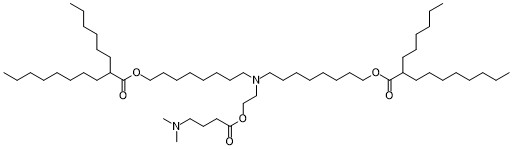
| DC82125 | lipid 14 Featured |
LIPID 14 is a novel ionizable lipid used for mRNA delivery.In 2021, Elia et al. used lipid 2 LNPs and lipid 14 LNPs to deliver mRNA encoding SARSCoV-2 human Fc-conjugated receptor binding domain (RBDhFc
mRNA). While both lipid 274 LNP RBD-hFc mRNA and
lipid 14 LNP RBD-hFc mRNA induced equal cellular and
humoral responses in mice at an mRNA dose of 5 μg, only lipid
14 LNP RBD-hFc mRNA exhibited strong immunogenicity
following intradermal administration. Both intradermal administration
and intramuscular administration of lipid 14 LNPs
could activate antigen presenting cells (APCs), thus inducing
cellular responses.
More description
|
|