To enhance service speed and avoid tariff delays, we've opened a US warehouse. All US orders ship directly from our US facility.
| Cat. No. | Product Name | Field of Application | Chemical Structure |
|---|---|---|---|
| DC10646 | VPS34 inhibitor(Compound 80) Featured |
A novel VPS34 inhibitor.
More description
|

|
| DC74260 | cyclo-CRVLIR Featured |
cyclo-CRVLIR is a cyclic peptide that binds selectively to p110α RAS binding domain (p110α-RBD) with ITC Kd of 3 uM, blocks p110α/RAS interaction in vitro and KRAS cancer cell lines.
More description
|

|
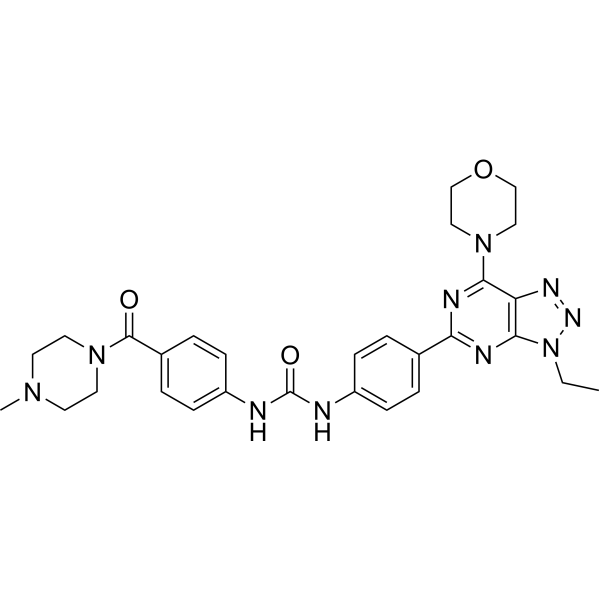
| DC7123 | PKI-402 Featured |
PKI-402 is a potent dual pan-PI3K/mTOR inhibitor targeting PI3Kα/β/γ/δ and mTOR with IC50 of 2 nM/7 nM/16 nM/14 nM and 3 nM, respectively; also potent to PI3Kα mutants E545K and H1047R.
More description
|
|
| DC81131 | NCT-10b |
NCT-10b (compound 17b) is a selective HDAC6 inhibitor.NCT-10b mediates preferential α-tubulin acetylation without major histone H4 acetylation.NCT-10b can be used for the research of multiple myeloma.
More description
|

|
| DC80995 | Mal-PEG2-azide |
Mal-PEG2-azide is a PEG ADC linker, can be used for ADC synthesis.
More description
|
|
| DC80928 | Kv7.2/Kv7.3 modulator-3 |
Kv7.2/Kv7.3 modulator-3 (example 40 peak-1) is a selective Kv7.2/Kv7.3 modulator with an EC50 of 0.099 μM.
More description
|
|
| DC80885 | JI-101 hydrochloride |
JI-101 hydrochloride is an orally active angiogenesis inhibitor and anticancer agent with 55% oral bioavailability in Sprague Dawley rats, high permeability, and no P-gp substrate activity.JI-101 hydrochloride modulates angiogenesis signaling pathways in tumor vessel beds, downregulates EphB4, targets EphB4, VEGFR-2, and PDGFR-β, and inhibits multiple stages of tumor angiogenesis.JI-101 hydrochloride exerts activity against cancer cells and xenografts, exhibits mild to moderate inhibition of CYP3A4, and shows stability in pre-clinical and human liver microsomes.JI-101 hydrochloride undergoes rapid oral absorption in Sprague Dawley rats, has extensive tissue distribution with preferred lung uptake, and is excreted via bile with mono- and di-hydroxy metabolites, with feces as the primary elimination route.JI-101 hydrochloride can be used for the research of ovarian cancer and solid tumors.
More description
|
|
| DC80714 | Glutaminase C-IN-3 |
Glutaminase C-IN-3 is a potent allosteric inhibitor of Glutaminase C (GAC) with an EC50 of 116 nM. Glutaminase C-IN-3 regulates cellular metabolites and increases reactive oxygen species (ROS) production by blocking glutamine metabolism. Glutaminase C-IN-3 exhibits strong antitumor activity in an A549 xenograft mouse model. Glutaminase C-IN-3 can be used for the research of non-small cell lung cancer (NSCLC).
More description
|
|
| DC80589 | E-6837 |
E-6837 is a selective and orally active 5-HT6 receptor ligand. E-6837 demonstrates partial agonism at a presumably silent rat 5-HT6 receptor and full agonism at a constitutively active human 5-HT6 receptor by monitoring the cAMP signaling pathway. E-6837 induces hypophagia, reduces fat mass and body weight, and improves glycemic control. E-6837 can be used for the research of obesity.
More description
|
|
| DC80582 | E2072 |
E2072 is a selective, orally active competitive inhibitor of glutamate carboxypeptidase II (GCPII) with a Ki of 10 nM. E2072 alleviates established thermal hyperalgesia in a rat model of chronic constriction injury. E2072 prevents oxaliplatin-induced reductions in nerve conduction velocity and amplitude in mice. E2072 is applicable to research related to neuropathic pain and neuropathy.
More description
|
|
| DC80543 | Dimethyl 3-hydroxyphthalate-amido-C4-N3 |
Dimethyl 3-hydroxyphthalate-amido-C4-N3 is an E3 ligase ligand-linker conjugate containing a CRBN-based ligand and linker, which can be used to synthesize PROTAC.
More description
|
|
| DC80314 | Bis-Mal-Lysine-PEG4-DBCO |
Bis-Mal-Lysine-PEG4-DBCO (CGBS-13) is a linker for AOC drugs and can be used to synthesize AOC drugs that inhibit DMPK gene expression.
More description
|
|
| DC80293 | BAY-693 |
BAY-693 is a highly potent and highly selective ERK5 inhibitor with an IC50 of 6.40 μM. BAY-693 reduces the transcriptional activity of MEF2. BAY-693 is applicable for cancer research.
More description
|
|
| DC80197 | AMYR/CTR agonist 1 |
AMYR/CTR agonist 1 (Compound 195) is a pancreatic amylin receptor and calcitonin receptor (AMYR/CTR) agonist with EC50 values for pancreatic amylin receptor and calcitonin receptor cAMP of 99.5 and 6.16 pM respectively. AMYR/CTR agonist 1 can be used in the research of diseases such as type 2 diabetes and obesity.
More description
|
|
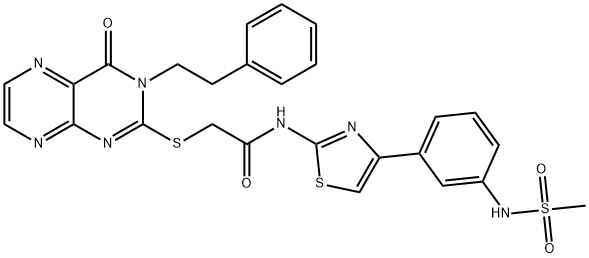
| DC74268 | PITCOIN3 Featured |
PITCOIN3 is a potent, highly selective, cell-permeable inhibitor of PI3KC2α catalytic activity with IC50 of 126 nM.
More description
|
|
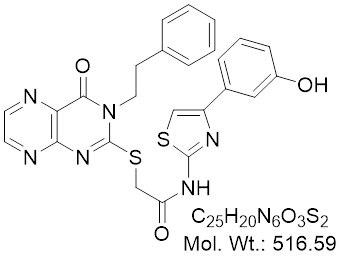
| DC74267 | PITCOIN2 Featured |
PITCOIN2 (LU-06-006) is a potent selective PI3KC2α inhibitor with IC50 of 126 nM, has selectivity against PI3KC2γ but shows micromolar activity on PI3KC2β.
More description
|
|
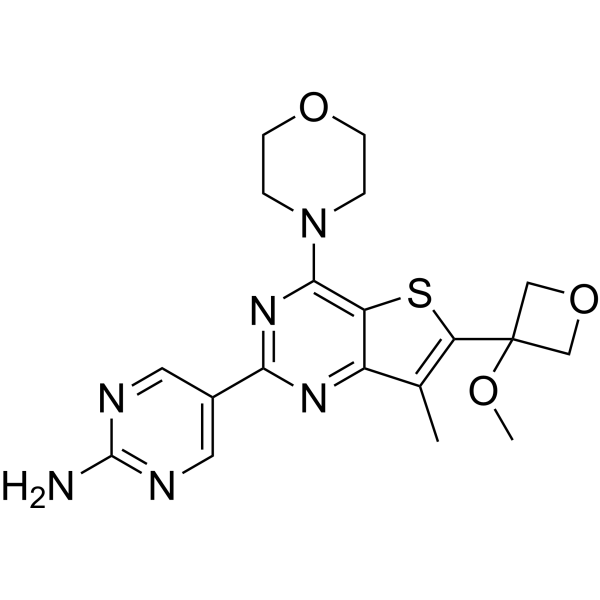
| DC8410 | GNE-317 Featured |
GNE-317 is a potent, brain-penetrant PI3K inhibitor.
More description
|
|
| DC79865 | FHND5032 |
FHND5032 is an orally active miR-124 inducer. FHND5032 significantly upregulates miR-124 expression in macrophages. FHND5032 disrupts inflammatory signaling, promotes macrophage reprogramming, and restores the epithelial barrier function by inhibiting the PIK3R2/PI3K/Akt axis. FHND5032 alleviates colitis and reduces inflammatory burden in ulcerative colitis mice. FHND5032 can be used for the study of ulcerative colitis.
More description
|
|
| DC79848 | DHW-221 |
DHW-221 is a potent orally active dual PI3K/mTOR inhibitor, exhibiting low nanomolar potency against all four Class I PI3K isoforms and mTOR (PI3Kα, IC50 = 0.50 nM; PI3Kβ, IC50 = 1.9 nM; PI3Kγ, IC50 = 1.8 nM; PI3Kδ, IC50 = 0.74 nM; mTOR, IC50 = 3.9 nM). DHW-221 exerts antitumor effects by blocking the PI3K/Akt/mTOR pathway and inducing mitochondrial apoptosis and paraptosis (via Endoplasmic Reticulum (ER) stress and MAPK signaling) and arrests cell cycle, thereby inhibiting cell migration, invasion and angiogenesis. DHW-221 inhibits tumor growth in both the A549/Taxol and the HCC827 xenograft mouse models. DHW-221 can be used for non-small cell lung cancer (NSCLC), colon and breast cancer research[1][2][3].
More description
|
|
| DC79809 | Psicose |
Psicose is a natural and low-calorie sweetener. Psicose can activate the PI3K/Akt/mTOR pathway to promote muscle synthesis. Psicose can upregulate IGF-1 and downregulate Myostatin. Psicose regulates mitochondrial function by increasing G6P activity. Psicose enhances antioxidant enzyme activity and reduces oxidative stress markers. Psicose reduces plasma triglycerides and total cholesterol. Psicose can improve muscle fiber size and reduce fibrosis. Psicose can be used for research on sarcopenia.
More description
|
|
| DC79686 | PI3Kα Ligand-1 |
PI3Kα Ligand-1 is the ligand for PI3Kα that can be used for synthesis of PROTACs, such as PI3Kα degrader-1.
More description
|
|
| DC79528 | RLX hydrochloride |
RLX (PD 139530) hydrochloride is the hydrochloride of RLX). RLX is a PI3K/Akt/FoxO3a signaling inhibitor, possessing significant therapeutic potential in experimental colon cancer. RLX can effectively modulate the tumor microenvironment, enhancing the efficacy of cancer immunotherapy. RLX demonstrates the ability to improve the retention time of therapeutic agents within the tumor microenvironment by utilizing advanced nanoparticle delivery systems. RLX can be integrated with various treatment modalities, such as chemotherapy and radiotherapy, to enhance overall tumor therapy effectiveness.
More description
|
|
| DC79111 | SJY26 |
SJY26 is a PI3K/HDAC dual-target inhibitor with IC50s of 0.59 nM (PI3Kα and PI3Kδ), 2.02 nM (PI3Kγ), 12.69 nM (PI3Kβ) and 114 nM (HDAC1). SJY26 exhibits potent broad-spectrum anti-proliferative activity, and is particularly sensitive to Jurkat and PC9R cells. SJY26 inhibited the migration of PC9R cells, arrested the cell cycle and induced cell apoptosis. SJY26 reduces AKT phosphorylation, and decreases histone H3 deacetylation (Ac-H3). SJY26 can be used for the studies of non-small cell lung cancer and leukemia.
More description
|
|
| DC78647 | X-370 |
X-370 is a PI3Kδ inhibitor (IC50 = 7 nM). X-370 inhibits the survival of leukemia cells, inducing G1 arrest and apoptosis. X-370 blocks PDK1 binding and phosphorylation of MEK1/2, eliminating Akt and Erk1/2 signaling. X-370 can be used in research on B-cell acute lymphoblastic leukemia (B-ALL).
More description
|
|
| DC78538 | DHW-208 |
PI3K-IN-4 is a potent Pan-PI3K inhibitor. PI3K-IN-4 has high activity for three PI3K isoforms with the IC50 values of picomole. PI3K-IN-4 shows superior inhibitory activity against PI3Kα (IC50 = 0.20 nM), PI3Kβ (IC50 = 2.99 nM), PI3Kδ (IC50 = 0.48 nM) and PI3Kγ (IC50 = 0.58 nM) and has no significant activity against EGFR. PI3K-IN-4 inhibits cancer cell growth though PI3K/Akt signaling pathway, leading to the inhibition of colony formation and the induction of apoptosis. PI3K-IN-4 can be used for lung, colon and breast cancer research.
More description
|
|
| DC78502 | Zandelisib hydrochloride |
Zandelisib (ME-401) hydrochloride is a selective, orally active, non-covalent inhibitor of PI3Kδ. Zandelisib hydrochloride can sustainably inhibit AKT phosphorylation and downstream signaling pathways. Zandelisib hydrochloride can be used in the study of malignancies such as relapsed/refractory B-cell lymphoma.
More description
|
|
| DC78484 | PWT-33597 |
PWT-33597 (VDC-597) is a dual inhibitor of PI3Kα and mTOR, which can effectively block the signaling downstream of PI3K and mTOR. PWT-33597 is capable of inducing tumor cell apoptosis and inhibiting tumor growth. PWT-33597 has anti-tumor activity and can be used in the research of tumors such as renal cell carcinoma.
More description
|
|
| DC78483 | PWT-33597 free base |
PWT-33597 (VDC-597) free base is a dual inhibitor of PI3Kα and mTOR, which can effectively block the signaling downstream of PI3K and mTOR. PWT-33597 free base is capable of inducing tumor cell apoptosis and inhibiting tumor growth. PWT-33597 free base has anti-tumor activity and can be used in the research of tumors such as renal cell carcinoma.
More description
|
|
| DC78014 | ML-220 |
ML-220 is a PI3K modulator that can be used for the study of neoplasms and infectious diseases.
More description
|
|
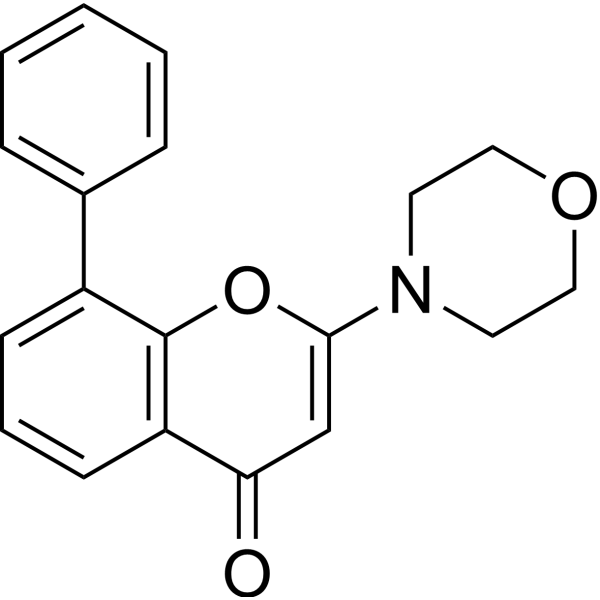
| DC1058 | LY294002 Featured |
LY294002 is a PI3K inhibitor for p110α, p110δ and p110β with IC50 of 0.5 μM, 0.57 μM and 0.97 μM, respectively.
More description
|
|