 To enhance service speed and avoid tariff delays, we've opened a US warehouse. All US orders ship directly from our US facility.
| Cat. No. | Product Name | Field of Application | Chemical Structure |
|---|---|---|---|
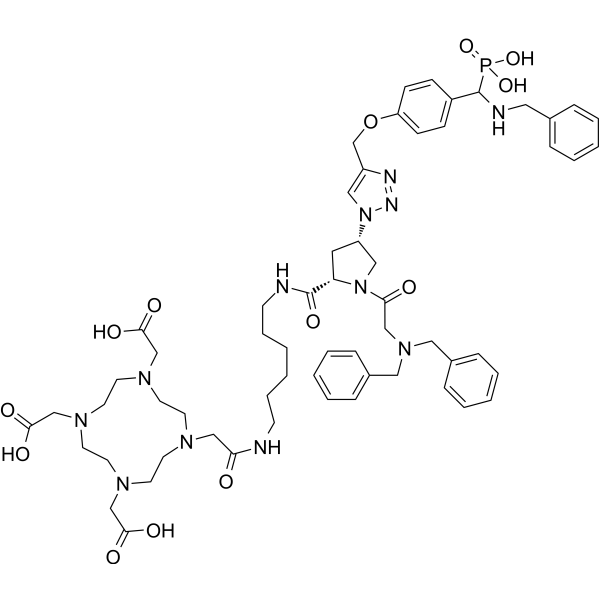
| DC79747 | OncoACP3 Featured |
OncoACP3 (Compound s43) is a high affinity ligand for prostatic acid phosphatase (ACP3). OncoACP3, radiolabelled with Lu-177, selectively accumulates in enzyme-expressing tumors and shows a potent anti-tumor activity with excellent tumor-selective payload deposition in HT1080.hACP3 and PC3.hACP3 tumor-bearing mice model. OncoACP3 can be used for prostate cancer research.
More description
|
|
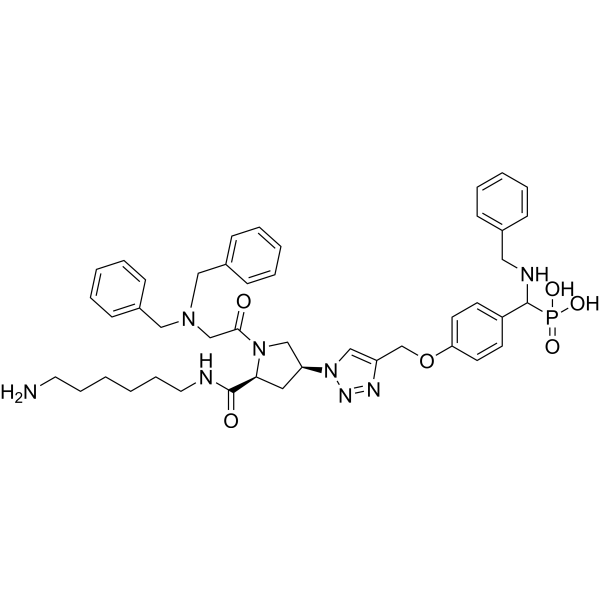
| DC79263 | ACP3 ligand 1 Featured |
ACP3 ligand 1 (compound I11a) is a ligand against Acid Phosphatase 3 (ACP3, ACPP). ACP3 ligand 1 interacts with ACP3 expressed on the surface of tumor cells for in vivo pharmaco-delivery applications.
More description
|
|
| DC72217 | HFI-419 Featured |
HFI-419 is an insulin-regulated aminopeptidase (IRAP) inhibitor. HFI-419 has inhibitory potency for IRAP with Ki value of 0.48 μM. HFI-419 can be used for the research of cognitive and memory impairments such as Alzheimer's disease, brain trauma, and stroke.
More description
|
|
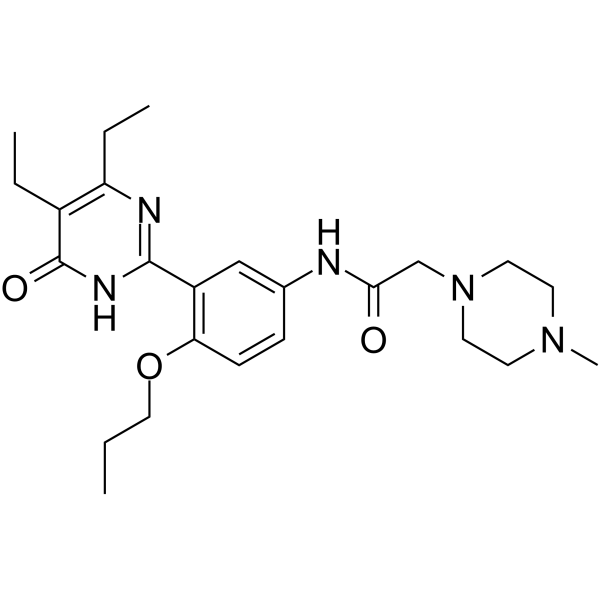
| DC73770 | TPN171 Featured |
TPN171 (TPN-171) is a highly potent, selective phosphodiesterase type 5 (PDE5) inhibitor with IC50 of 0.62 nM, 32-fold selectivity over PDE6.
More description
|
|
| DC70373 | DX314 Featured |
DX314 is a potent, specific CYP26B1 inhibitor with IC50 of 108 nM, >15-fold selectivity over CYP26A1.DX314 potentiates all-trans-RA (atRA) gene expression effects in healthy and diseased reconstructed human epidermis (RHE).DX314 potentiates the effects of atRA on the expression and localization of keratin 10 (KRT10), protects barrier function in RHE.DX314 reduces comedonal number, induces epidermal thickening, and increases comedonal profile, while having no effect on transepidermal water loss (TEWL) in treated rhino mice.
More description
|

|
| DC70372 | DX308 Featured |
DX-308 is a potent, selective dual CYP26A1/B1 inhibitor and retinoic acid metabolism blocking agent.DX308 does not interact with off‐target nuclear receptors or CYP450s, is not genotoxic, and is stable in skin, despite vigorous hepatic metabolism.Topical DX308 induces comedolysis and epidermal thickening without apparent adverse effects in vivo.DX308 shows potent modulation of retinoid‐responsive genes by DX308 in both healthy and keratinization disorder keratinocytes (KCs).DX 308 may present an improved therapeutic alternative for the treatment of keratinization disorders and other retinoid‐responsive skin ailments.
More description
|

|
| DC73744 | ADAM9i Featured |
ADAM9i is a specific small molecule inhibitor of ADAM9 protein with binding KD of 5.9 uM and enzyme IC50 of 5.2 uM, promotes the selective degradation of KRAS and sensitizes pancreatic cancers to chemotherapy.
More description
|

|
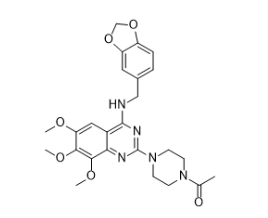
| DC73706 | ER-001135935 Featured |
ER-001135935 is a potent selective inhibitor of aldehyde dehydrogenase family 1 member A3 (ALDH1A3) with IC50 of 64 nM, Ki value of 106 nM.
More description
|
|
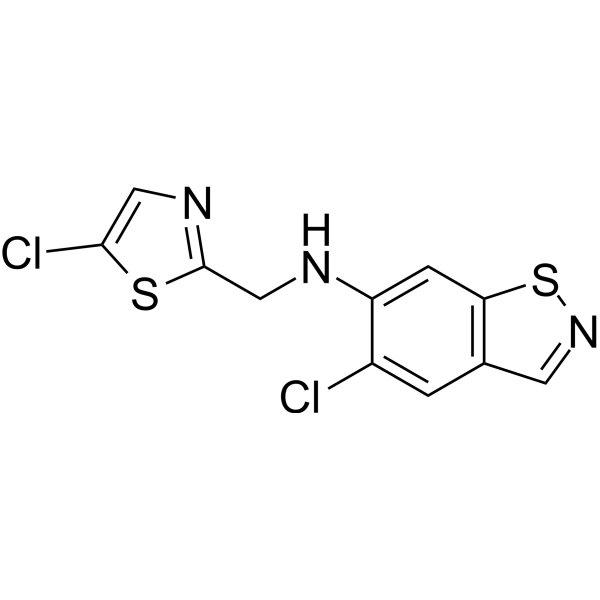
| DC81677 | TRPM5 agonist-1 Featured |
TRPM5 agonist-1 is an orally active TRPM5 agonist with a pEC50 of 8.1. TRPM5 agonist-1 shows excellent selectivity (> 100-fold) versus related cation channels (TRPM8, TRPV1, TRPV4, TRPA1, TRPM4). TRPM5 agonist-1 exhibits locally acting stimulatory effect on gastrointestinal transit in mice. TRPM5 agonist-1 can be used for research on promoting gastric motility.
More description
|
|
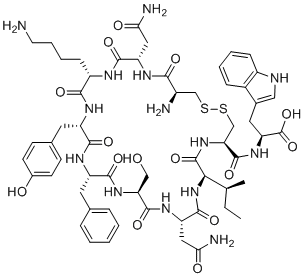
| DC73778 | WX-340 Featured |
WX-340 is a highly specific and selective, peptidic cyclic competitive inhibitor of urokinase-type plasminogen activator (uPA) with Ki of 12 and 170 nM for human and mouse uPA, respectively, inhibit 10 Units of human uPA with IC50 of 90 nM.
More description
|
|
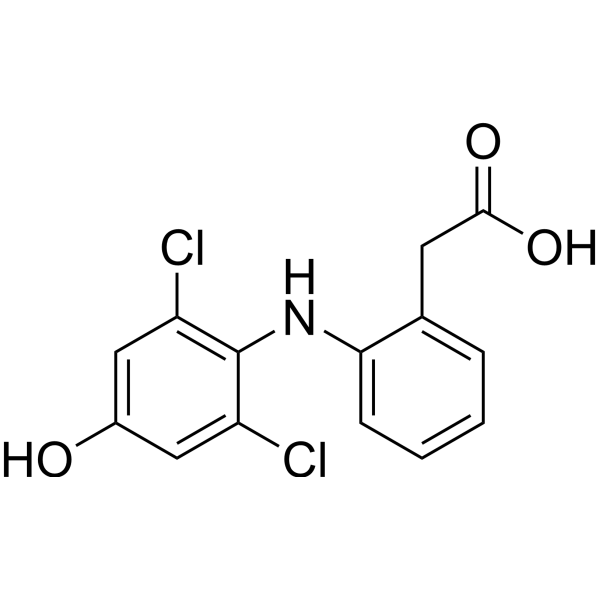
| DC41081 | 4'-Hydroxy diclofenac Featured |
4'-Hydroxy diclofenac is an orally active metabolite of Diclofenac by cytochrome P450 2C9 (CYP2C9). 4'-Hydroxy diclofenac has anti-inflammatory and analgesic properties.
More description
|
|
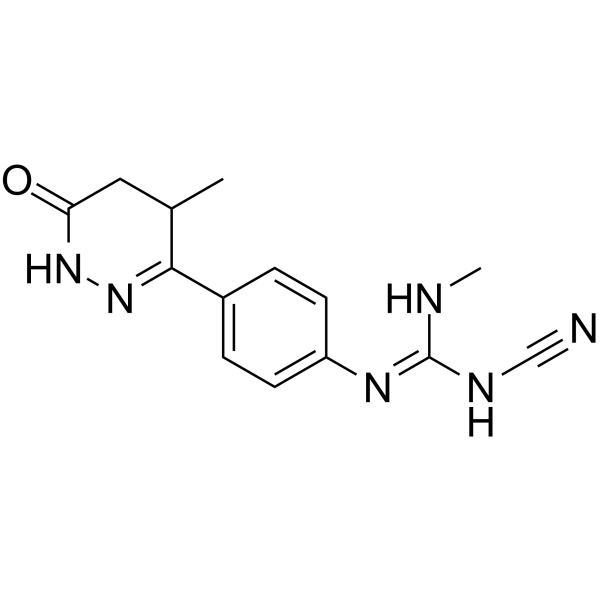
| DC29002 | Siguazodan Featured |
Siguazodan (SKF 94836) is a potent, selective and orally active phosphodiesterase III (PDE-III) inhibitor with an IC50 of 117 nM. Siguazodan increases cAMP accumulation in intact platelets with an EC50 of 18.88 μM. Siguazodan also inhibits phenylephrine-induced 5-HT release with an IC50 value of 4.2 μM.
More description
|
|
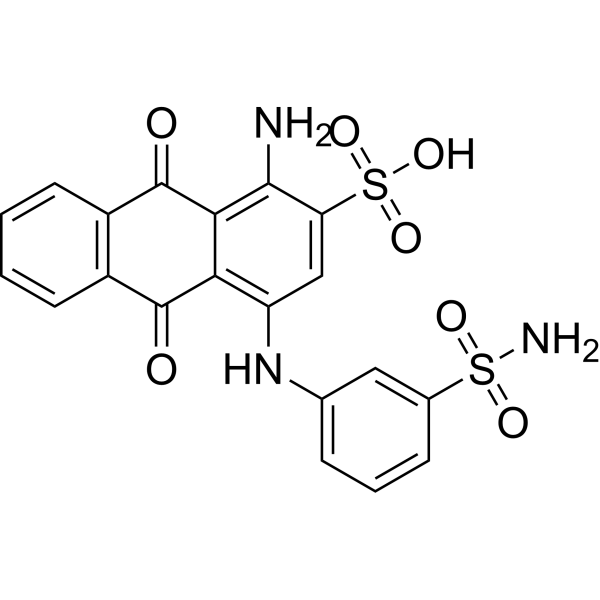
| DC12014 | NSC117079 Featured |
A selective protein phosphatase PHLPP inhibitor with IC50 of 4 uM for PP2C domain of PHLPP2.
More description
|
|
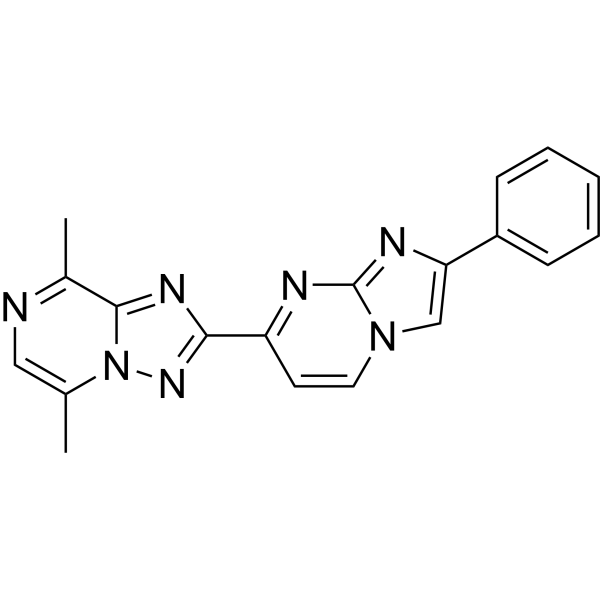
| DC70322 | CPL500036 Featured |
CPL500036 (CPL-500036) is a highly potent, selective and orally bioavailable PDE10A inhibitor with IC50 of 35 nM.CPL500036 is highly selective for PDE10A over other PDEs and common off-targets.CPL500036 effectively penetrates the brain where increases cAMP/cGMP levels and phosphorylates effector proteins like AMPA subunits.CPL500036 reduced sensorimotor deficits in 6-OHDA-lesioned rats.Acute and chronic CPL500036 did not reduce effects of L-DOPA in sensorimotor tests.Chronic CPL500036 treatment did not decrease L-DOPA-induced contralateral rotation.
More description
|
|
| DC73707 | KOTX1 Featured |
KOTX1 is a potent, selective and reversible ALDH1A3 inhibitor with IC50 of 5.14 nM by Aldefluor assay in A375 cells.
More description
|
|
| DC81818 | σ1R/H3R ligand-1 |
σ1R/H3R ligand-1 is a dual σ1R/H3R antagonist with a σ1R Ki of 8.8 nM and an H3R Ki of 31.2 nM. Through the dual action of simultaneously antagonizing σ1R and H3R, σ1R/H3R ligand-1 exhibits potent dose-dependent analgesic activity in mouse models of visceral pain and neuropathic pain. σ1R/H3R ligand-1 can be used for the research of visceral pain and neuropathic pain.
More description
|

|
| DC81817 | ΔDi6S sodium |
ΔDi6S sodium is a chondroitin that can be isolated from chondroitin-4-sulfate in whale cartilage.
More description
|
|
| DC81803 | αGlcCer |
αGlcCer is a glycosphingolipid.
More description
|
|
| DC81796 | ZX-2401 |
ZX-2401 (Compound 98a) is a 1,3,5-Triazine-based analogue of Purine. ZX-2401 has a significant antiviral activity against viruses of the Flaviviridae family, such as West Nile Virus (WNV), Hepatitis C (HCV), Yellow Fever Virus (YFV), Dengue Virus (DV), Bovine Viral Diarrhea Virus (BVDV) and Banzi Virus (BV) with EC90s of 0.6-10 μg/mL. ZX-2401 significantly reduces virus production with an EC90 of 3.3 mg/mL. ZX-2401 can be used for influenza infections research.
More description
|
|
| DC81723 | VHR-IN-3 |
VHR-IN-3 (Compound 1) is a selective vaccinia H1-related (VHR) phosphatase inhibitor with a Ki of 0.81 μM. VHR-IN-3 mimics the phosphate group through the sulfonic acid group and competitively binds to the catalytic active center of VHR. VHR-IN-3 can be used for the research of cervical cancer.
More description
|
|
| DC81699 | U 88204 |
U 88204 is a potent HIV-1 reverse transcriptase (RT) inhibitor with an IC50 of 0.25 μM. U 88204 blocks HIV-1 replication in infected cells. U 88204 can be used for the research on HIV-infection and of acquired immunodeficiency syndrome (AIDs).
More description
|
|
| DC81666 | Topoisomerase IV-IN-3 |
Topoisomerase IV-IN-3 is a Staphylococcus aureus Topoisomerase IV inhibitor, DNA gyrase inhibitor and antibacterial agent. Topoisomerase IV-IN-3 has IC50 values of 1.32 μM and 0.48 μM against topoisomerase IV, and 0.88 μM and 0.54 μM against DNA gyrase. Topoisomerase IV-IN-3 inhibits decatenation, ATPase, and supercoiling activities of its target enzymes. Topoisomerase IV-IN-3 exerts antibacterial activity against Gram-positive and Gram-negative bacterial strains. Topoisomerase IV-IN-3 exhibits low cytotoxicity toward human fibroblast cells. Topoisomerase IV-IN-3 can be used for the research of bacterial infections.
More description
|
|
| DC81649 | TLR2/9 antagonist 1 |
TLR2/9 antagonist 1 (Compound 24) is a reversible covalent TLR2 (IC₅₀ = 0.5 μM (TLR2/TLR6); IC₅₀ = 0.6 μM (TLR2/TLR1)) and TLR9 (IC₅₀ = 0.32 μM) antagonist. TLR2/9 antagonist 1 has no significant effect on other TLR subtypes. TLR2/9 antagonist 1 can be used for studying central nervous system diseases and malignant tumors caused by inflammation.
More description
|
|
| DC81610 | Tenivastatin calcium |
Tenivastatin calcium is a HMG-CoA reductase inhibitor. Tenivastatin calcium can reduce blood lipid level can be used for the research of hyperlipidemia.
More description
|
|
| DC81590 | T133 |
T133 is an orally active ATP-competitive mTOR inhibitor with an IC50 of 0.34 nM and a Ki of 0.17 nM. T133 suppresses phosphorylation of AKT, S6K1, and 4EBP1. T133 inhibits cancer cell proliferation and migration, induces apoptosis, cell cycle arrest, and autophagy. T133 exhibits dose-dependent antitumor efficacy in xenograft mouse models. T133 can be used for the research of cancer, such as gastric cancer and lung cancer.
More description
|
|
| DC81555 | SNA C(Bz) amidite |
SNA C(Bz) amidite is a phosphoramide monomer that can be used to synthesize oligonucleotides.
More description
|
|
| DC81548 | SM-122 |
SM-122 is a monovalent Smac mimetic targeting cellular inhibitor of apoptosis protein (cIAP)-1/2. SM-122 can induce cIAP-1/2 degradation and weakly induce apoptosis in tumor cells. SM-122 can be used for the research of cancer, such as breast cancer.
More description
|
|
| DC81517 | Selnoflast monopotassium |
Selnoflast (RO7486967) monopotassium, formerly somalix/RG6418/IZD334 monopotassium, is an orally active, potent, selective and reversible small molecule NLRP3 inflammasome inhibitor. Selnoflast monopotassium is a potent inhibitor of IL-1β release stimulated by NLRP3 activation in human Alzheimer's disease (AD) monocyte-derived macrophages. Selnoflast monopotassium is promising for research of AD and systemic inflammatory diseases, such as ulcerative colitis and chronic obstructive pulmonary disease.
More description
|
|
| DC81509 | SD3A |
SD3A is an antiplatelet agent. SD3A inhibits granule secretion and GP IIb/IIIa activation. SD3A inhibits mitochondrial function. SD3A has an antiaggregant effect on washed platelets stimulated with Collagen. SD3A results in reduced thrombus formation without affecting coagulation.
More description
|
|
| DC81506 | SCH 47896 |
SCH 47896 is a phenolic derivative of SCH39370, a potent specific inhibitor of metalloendopeptidase (NEP). SCH 47896 can be used for the research of cardiovascular disease, such as hypertension.
More description
|
|
