To enhance service speed and avoid tariff delays, we've opened a US warehouse. All US orders ship directly from our US facility.
| Cat. No. | Product Name | Field of Application | Chemical Structure |
|---|---|---|---|
| DC75987 | H052 Featured |
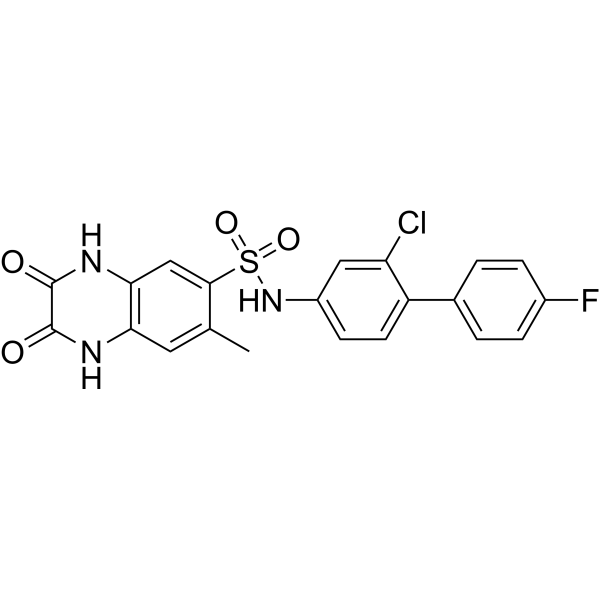
H052 is a selective Staphylococcus aureus α-hemolysin (Hla) inhibitor. H052 binds to Hla monomers, disrupts the interaction with host cell membranes to block pore formation, inhibiting calcium ion influx, cytotoxicity, and inflammatory responses. H052 exhibits potency (EC50=30 nM in U937 cells) against Hla-induced calcium influx. H052 is promising for research of lung infections caused by S. aureus.
More description
|
|
| DC80100 | 5-Diazomethane quinoxaline Featured |
5-Diazomethane quinoxaline is a novel derivatization reagent. 5-Diazomethane quinoxaline is used for the detection of phosphorylated metabolites.
More description
|
|
| DC70750 | Rv1625c agonist V-59 Featured |
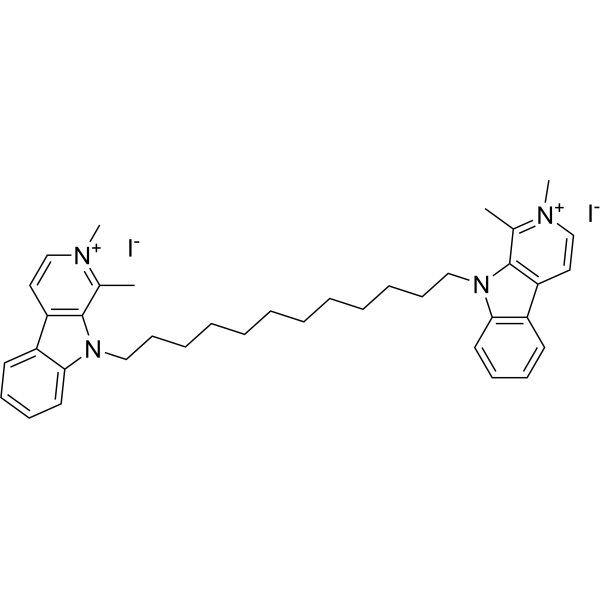
Rv1625c agonist V-59 (V-59) is a specific small molecule agonist of the Mtb adenylyl cyclase Rv1625c, inhibits Mtb growth in macrophages (EC50=0.3 uM) in an Rv1625c-dependent mechanism.V-59 inhibits Mtb growth in cholesterol media (EC50 0.70 uM), but not in media containing the two-carbon fatty acid acetate, or in standard rich growth media.V-59 stimulates Rv1625c to produce cAMP, which is necessary for V-59 to inhibit Mtb growth.Chemically activating Rv1625c via V-59 preferentially inhibits cholesterol utilization in WT Mtb, rather than equally inhibiting all lipid utilization by the bacterium.
More description
|

|
| DC28215 | A40926 Featured |
A40926, the precursor of Dalbavancin, is a second-generation glycopeptide antibiotic. A40926 inhibits gram-positive bacteria, and is very active against Neisseria gonorrhoeae.
More description
|
.gif)
|
| DC70459 | GSK3011724A Featured |
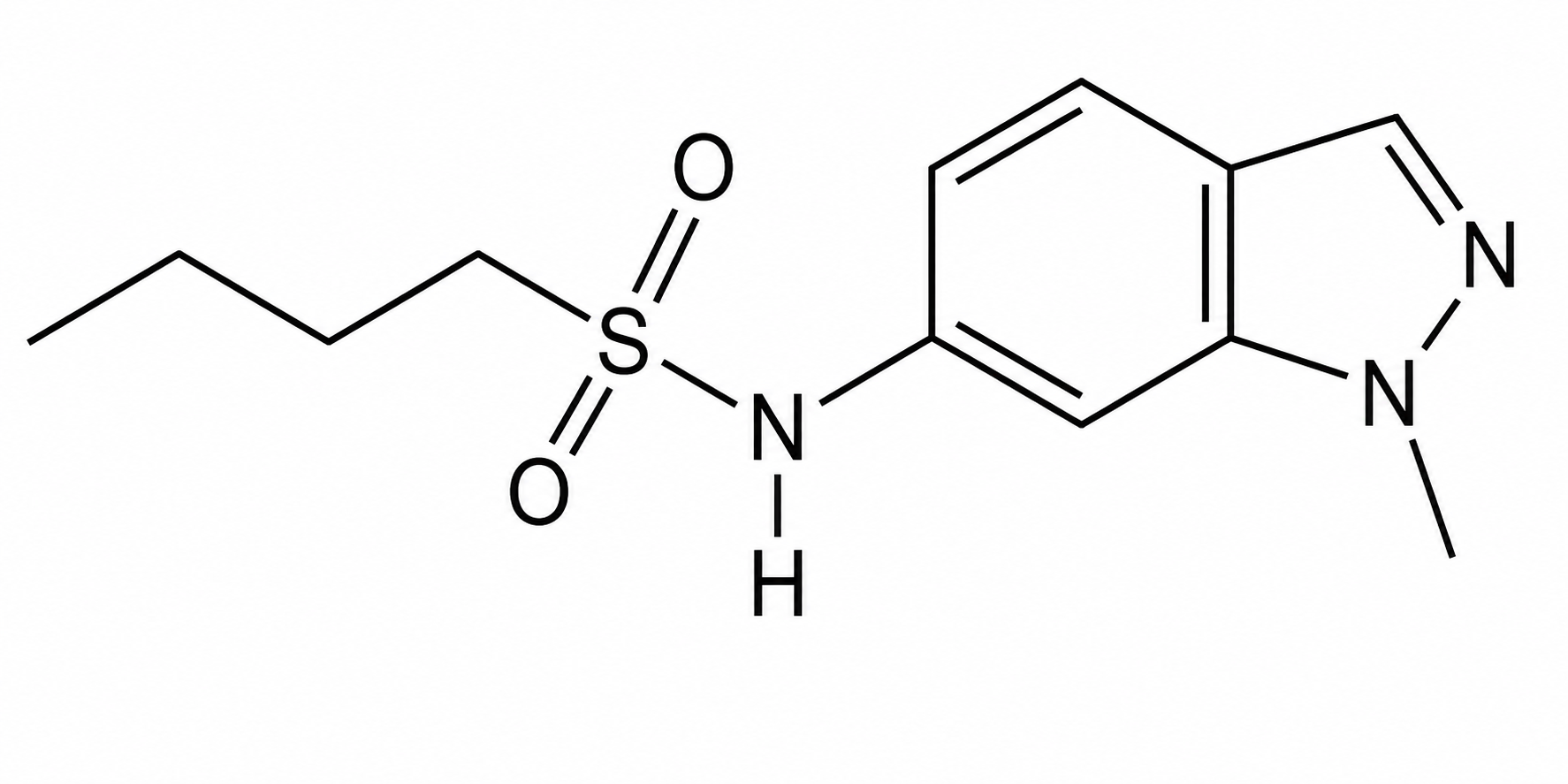
GSK 3011724A (DG-167, GSK-3011724A) is a potent, specific inhibitor of β-ketoacyl-ACP synthase (KasA, Kd=9 nM), shows anti-tubercular activity (MIC H37Rv=0.8 uM); shows much weaker apparent dissociation constant for both Pks10 and Pks (Kd=1.4 uM); inhibits mycolic acid biosynthesis and shows negligible activity against a panel of unrelated proteins and 18 Gram-positive and Gram-negative bacterial species.
More description
|
|
| DC72952 | Savirin Featured |
Savirin (S. aureus virulence inhibitor) is a small molecule that targets the agr (accessory gene regulator) quorum sensing system in Staphylococcus aureus (S. aureus). The agr system is a key regulatory pathway that controls the expression of virulence factors in S. aureus, which are critical for its pathogenicity. The system involves a two-component signal transduction pathway consisting of AgrC (a histidine kinase) and AgrA (a response regulator).
More description
|

|
| DC47736 | Targeting the bacterial sliding clamp peptide 46 Featured |
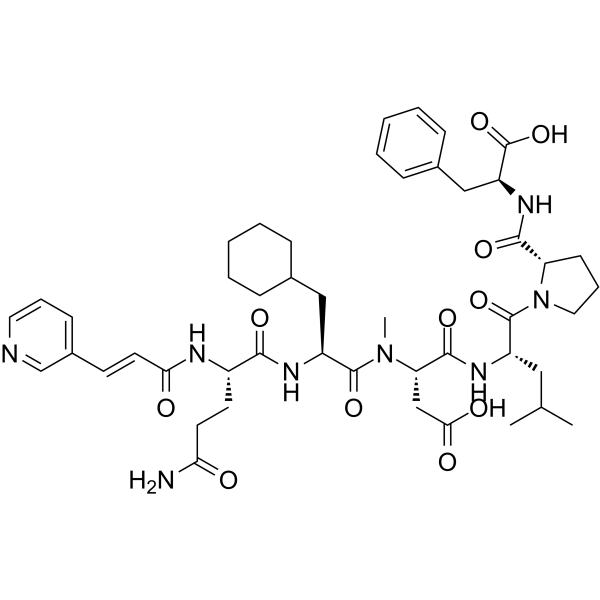
Targeting the bacterial sliding clamp peptide 46 is a short peptide targeting the bacterial sliding clamp(SC), inhibiting SC-dependent DNA synthesis.
More description
|
|
| DC42025 | Temporin L Featured |
Temporin L is a potent antimicrobial peptide and is active against Gram-negative bacteria and yeast strains. Temporin L also has antiendotoxin properties.
More description
|

|
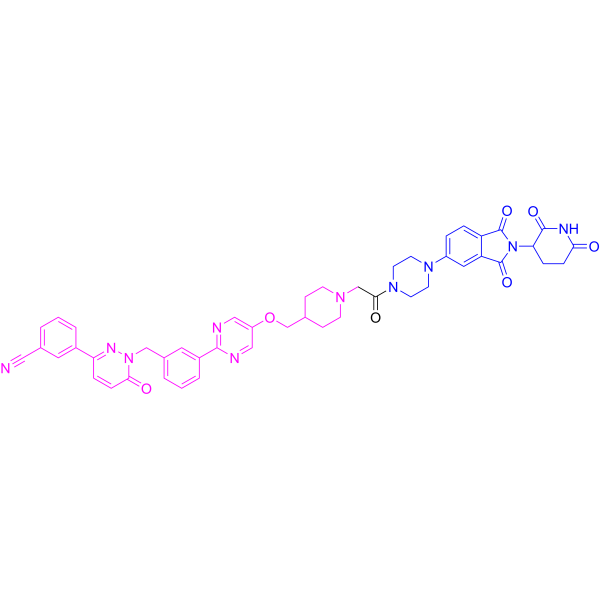
| DC81346 | PROTAC c-Met Degrader-4 Featured |
PROTAC c-Met Degrader-4 (compound D15) is a potent orally active PROTAC c-MET degrader. PROTAC c-Met Degrader-4 demonstrates excellent intracellular degradation potency with a DC50 < 0.5 nM. PROTAC c-Met Degrader-4 induces cell cycle arrest and apoptosis, inhibits cell invasion and migration, thereby suppressing cell proliferation. PROTAC c-Met Degrader-4 inhibits the growth of Hs746T xenograft tumors in nude mice. PROTAC c-Met Degrader-4 can be used for cancer research, such as non-small cell lung cancer and gastric cancer.
More description
|
|
| DC81793 | ZSTK3744 |
ZSTK3744 is an aryl hydrocarbon receptor (AhR) agonist. ZSTK3744 directly binds to AhR, upregulates the expression of AhR target genes including CYP1A1, CYP1B1 and TIPARP, and mediates cell growth inhibitory activity in triple-negative breast cancer cells. ZSTK3744 induces apoptosis in triple-negative breast cancer cells. ZSTK3744 exhibits anti-tumor activity and can be used in the research of chemoresistant triple-negative breast cancer.
More description
|

|
| DC81705 | UDP-2-alkyne-GlcNAc |
UDP-2-alkyne-GlcNAc (Compound 3) is a UDP-GlcNAc derivative. UDP-2-alkyne-GlcNAc can be used for the remodeling of cell surface glycans.
More description
|
|
| DC81648 | TLD-1433 |
TLD-1433 is the fourth-generation ruthenium (II) based photodynamic compound (PDC). TLD-1433 is activated by green light (525 ± 25 nm) and efficiently generates ROS to achieve pathogen inactivation. After photoinactivation, TLD-1433 significantly induces lipid peroxidation of the cell membrane, which can directly damage the integrity of the viral envelope. TLD-1433 has ID50 for enveloped viruses (such as H1N1 influenza virus, coronavirus OC43, HSV-1, Zika virus) is as low as nanomolar level; for non-enveloped viruses (such as adenovirus Ad5, mammalian rotavirus MRV), a concentration of micro-molar level is required for inactivation. TLD-1433 has antigen retention property and can be used for the preparation of inactivated vaccines.
More description
|
|
| DC81630 | TGF-β/Smad-IN-3 |
TGF-β/Smad-IN-3 (Compound 4w) is an effective TGF-β/Smad inhibitor. TGF-β/Smad-IN-3 exerts anti-pulmonary fibrosis activity by simultaneously inhibiting the TGF-β/Smad and MAPK signaling pathways. TGF-β/Smad-IN-3 significantly inhibits collagen deposition induced by TGF-β1, with its IC50 value being 3.21 μM. TGF-β/Smad-IN-3 has an IC₅₀ of 46.77 nM for the autocrine motility factor (ATX). TGF-β/Smad-IN-3 significantly reduces the expression levels of α-SMA, COL1A1 and FN in TGF-β1-induced CCC-HPF-1 cells, and effectively inhibited TGF-β1-induced cell migration. TGF-β/Smad-IN-3 can be used for the study of pulmonary fibrosis.
More description
|
|
| DC81613 | Terfenadine N-oxide |
Terfenadine N-oxide, an N-oxide derivative of Terfenadine, is a histamine H1 receptor antagonist (IC50 = 2.73 μM) and an hERG potassium channel inhibitor (IC50 = 0.698 μM). Terfenadine N-oxide is can be used for the research of histamine-related allergic diseases and hERG channel-associated arrhythmias.
More description
|
|
| DC81586 | SUVN-507 |
SUVN-507 is a 5-HT6 receptor antagonist. SUVN-507 can reverse cognitive impairments and enhance excitatory neural transmission while weakening inhibitory neural transmission. SUVN-507 can be used for the research of neurological disease, such as Alzheimer's disease.
More description
|
|
| DC81538 | Simeton |
Simeton is a methoxy-5-triazine herbicide used for weed control in agricultural crops including corn, wheat, maize, and barley. Simeton is a methoxy-5-triazine herbicide widely used for weed control in agricultural crops including corn, wheat, maize, and barley.
More description
|
|
| DC81471 | Ro-65-3479 |
Ro-65-3479 is a selective metabotropic glutamate receptor (mGlu2/3) antagonist. Ro-65-3479 blocks glutamate-induced signaling and modulates calcium channel activity. Ro-65-3479 is promising for research of disorders involving glutamatergic dysregulation, such as anxiety, schizophrenia, and neurodegenerative diseases.
More description
|
|
| DC81467 | RM-046 |
RM-046 is an orally active, selective ternary complex inhibitor of KRASQ61H (active form). RM-046 forms a ternary complex with cyclophilin A, binds to active KRASQ61H in a non-covalent manner, blocks effector binding via steric hindrance and inhibits downstream signal transduction. RM-046 inhibits ERK phosphorylation and cancer cell proliferation, and induces sustained RAS pathway signal inhibition, anti-tumor activity and tumor regression in preclinical xenograft models. RM-046 can be used for the research of KRASQ61H mutant cancers.
More description
|
|
| DC81418 | PXS 25 |
PXS 25 is a cation-independent mannose 6-phosphate receptor (CI-M6PR) inhibitor that inhibits CI-M6PR-mediated activation of latent TGF-β1. PXS 25 inhibits conversion of high glucose-induced latent TGF-β1 to active TGF-β1 in proximal tubule cells under normoxic conditions. PXS 25 suppresses high glucose-induced fibronectin, collagen IV production, and phosphorylated Smad 2 in proximal tubule cells under normoxic conditions. PXS 25 has antifibrotic properties in skin fibroblasts. PXS 25 can be used for the research of diabetic nephropathy.
More description
|
|
| DC81400 | PROTAC TEAD degrader-2 |
PROTAC TEAD degrader-2 (Compound 31) is an efficient TEAD1 PROTAC degrader with a DC50 of 0.6 nM. PROTAC TEAD degrader-2 inhibits the YAP/TAZ-TEAD interaction, with a IC50 of 1.8 nM. PROTAC TEAD degrader-2 exhibits significant selective inhibitory activity against YAP-dependent cancer cells and effectively suppresses the transcriptional activity mediated by YAP. PROTAC TEAD degrader-2 can be used for research on mesothelioma and glioma.
(Pink: TEAD1 ligand ; Blue: Cereblon ligand ; Black: linker ).
More description
|
|
| DC81321 | PRMT5-IN-55 |
PRMT5-IN-55 is an inhibitor of PRMT5 with a pIC50 value of 9.6 at a 10 nM enzyme.
More description
|
|
| DC81278 | Phenylalanylphenylalanylamide |
Phenylalanylphenylalanylamide (H-Phe-Phe-NH₂) is a ligand for the substance P 1–7 (SP1-7) binding site with a Ki value of 1.5 nM. Phenylalanylphenylalanylamide exerts significant anti-allodynic and anti-hyperalgesic effects in animal models of neuropathic pain following central administratio. Phenylalanylphenylalanylamide shows no distinct effect after peripheral (intraperitoneal) administration. Phenylalanylphenylalanylamide can be used for research on pain-related diseases.
More description
|
|
| DC81232 | PANK1/3 activator 1 |
PANK1/3 activator 1 (Compound 134) is a PANK1/3 activator with EC50 values of 0.011 and 0.065 μM. PANK1/3 activator 1 can be used for the research on diseases related to coenzyme A levels, such as CASTOR disease and organic acidemia.
More description
|
|
| DC81197 | Oleoylsulfamide |
Oleoylsulfamide is a cannabinoid receptor 1 inhibitor.
More description
|
|
| DC81191 | O-Carboranylphenoxyacetanilide (1,7-dicarbadodecaboran) |
O-Carboranylphenoxyacetanilide-1,7-dicarbadodecaboran(12) is a boron-containing organic compound.
More description
|
|
| DC81166 | Norfloxacin succinil |
Norfloxacin succinil is a quinolone antibacterial agent. Norfloxacin succinil can be used in the research of infectious diseases such as urinary tract infections.
More description
|
|
| DC81056 | MKI-2 |
MKI-2 is a selective MASTL inhibitor with an IC50 of 37.44 nM. MKI-2 induces mitotic catastrophe resulting from the modulation of the MASTL-PP2A axis in breast cancer cells. MKI-2 reduces phospho-ENSA, total, phospho-c-Myc levels. MKI-2 inhibts cancer cells proliferation, migration and induces DNA damage. MKI-2 inhibits germinal vesicle breakdown in mouse oocytes. MKI-2 can be used for the research of cancer, such as breast cancer.
More description
|
|
| DC81024 | Mel56 |
Mel56 is a melanogenin analogue. Mel56 can promote the melanin production in human melanoma cells. Mel56 is cytotoxic to cancer cells and induces apoptosis in melanoma cells. Mel56 can be used for the study of melanoma.
More description
|
|
| DC80990 | Lysyl-phenylalanyl-lysine |
Lysyl-phenylalanyl-lysine (Compound KFK) is a tripeptide and belongs to the peptide segments related to thrombospondin-1 (TSP-1). Lysyl-phenylalanyl-lysine can activate LAP-TGF-β1 and release active TGF-β1, thereby inhibiting abnormal expression of MMP. Lysyl-phenylalanyl-lysine can be used for research on skin aging-related diseases and poor wound healing.
More description
|
|
| DC80937 | Lanopepden camsylate |
Lanopepden camsylate (GSK1322322 camsylate) is a high-affinity bacterial peptide deformylase inhibitor. Lanopepden camsylate is applicable to research related to bacterial infections.
More description
|
|