 To enhance service speed and avoid tariff delays, we've opened a US warehouse. All US orders ship directly from our US facility.
| Cat. No. | Product Name | Field of Application | Chemical Structure |
|---|---|---|---|
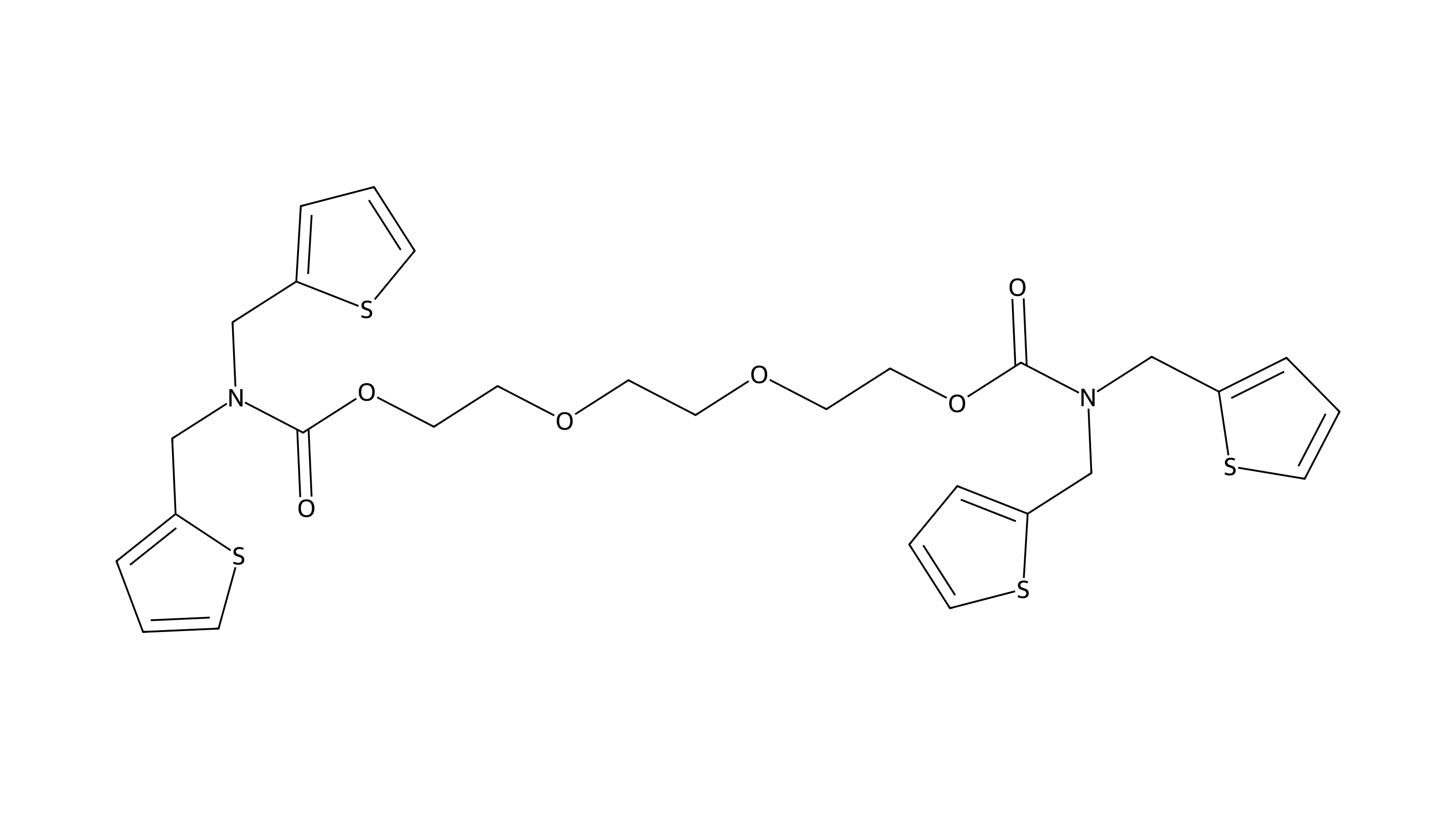
| DC73233 | Alintegimod (7HP349) Featured |
Alintegimod (7HP349) is a small molecule activator of the integrins αLβ2 (LFA-1) and α4β1 (VLA-4). 7HP349 directly activates integrin cell adhesion receptors crucial for the generation of an immune response.
More description
|
|
| DC49572 | (R)-AM-5308 Featured |
AM-5308 is a potent and selective KIF18A inhibitor with demonstrated antitumor activity in cell-based and animal models. Its ability to disrupt mitosis and induce cancer cell death makes it a promising candidate for further development as a cancer therapeutic.
More description
|

|
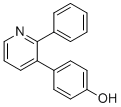
| DC73230 | SD133 Featured |
SD133 (Sd-133) is a drug-like small molecule inhibitor of adhesion molecule cadherin 11 (CDH11), binds specifically to the CDH11 binding pocket with KD of 25.2 uM in SPR assays.
More description
|
|
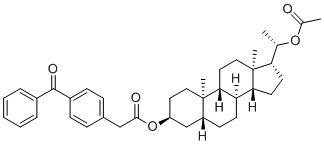
| DC70281 | C67399 Featured |
C67399 is a small molecule that blocks the integrin β1 binding site of TLN1, reduces the malignant behaviours of TNBC in vitro (MDA-MB-231 cell, IC50=2.0 uM).C67399 treatment significantly reduced the viability of BT549 cells.C67399 (2 uM) significantly reduced the expression of integrin β1, AKT, FAK, and phosphorylated FAK in MDA-MB-231 cells, while did not affect the expression of integrin β3.C67399 inhibited the binding of TLN1 to integrin β1 in MDA-MB-231 cells.C67399 (1.75 mg/kg) inhibited tumour growth and metastasis of MDA-MB-231 cells in mice, without causing obvious structural toxic changes.
More description
|
|
| DC81694 | Tubulin-IN-65 |
Tubulin-IN-65 (Compound Imp-18) is a Tubulin inhibitor. Tubulin-IN-65 exhibits tubulin-disrupting activity. Tubulin-IN-65 disrupts microtubule integrity. Tubulin-IN-65 induces Apoptosis and increases the expression of CDK1 and Cyclin B1. Tubulin-IN-65 possesses anticancer activity against breast cancer and colorectal cancer. Tubulin-IN-65 can be used in research related to triple-negative breast cancer and colorectal adenocarcinoma.
More description
|

|
| DC81507 | SCH-602539 |
SCH-602539 is a selective PAR-1 antagonist. SCH-602539 inhibits platelet aggregation in response to PAR-1-selective high-affinity thrombin receptor agonist peptide. SCH-602539 exhibits synergistic antithrombotic effects when used in combination with Cangrelor.
More description
|
|
| DC81488 | Sameridine |
Sameridine (NIH-10908 free base) is a weak partial agonist of the μ-opioid receptor. Sameridine shows local anesthetic and analgesic properties. Sameridine has minimal respiratory depression at low doses, but can suppress ventilatory response at high doses. Sameridine can be used for the study of analgesic effect.
More description
|
|
| DC81483 | S1R agonist 3 |
S1R agonist 3 is a potent and selective sigma-1 receptor (S1R) agonist with a Ki of 1.5 nM. S1R agonist 3 reduces hyperlocomotion in wfs1abKO zebrafish larvae without affecting locomotion in wildtype wfs1abWT zebrafish larvae. S1R agonist 3 reverses Aβ25-35-induced learning and memory impairments. S1R ligand 1 can be used for the research of Alzheimer’s disease.
More description
|
|
| DC81437 | Ramiprilat acyl-β-D-glucuronide |
Ramiprilat acyl-β-D-glucuronide is an acyl glucuronide metabolite of Ramiprilat. Ramiprilat acyl-β-D-glucuronide undergoes methylation on its glucuronic acid moiety during solid phase extraction with strong cation exchanger cartridges, forming a methylated derivative. Ramiprilat acyl-β-D-glucuronide undergoes in-source conversion to Ramiprilat in mass spectrometry, with conversion extent proportional to declustering potential voltage.
More description
|
|
| DC81392 | PROTAC RET Degrader 1 |
PROTAC RET Degrader 1 (Compound 20) is an orally active and blood-brain barrier-crossing RET PROTAC degrader with DC50 values for RET (WT), RET (G810S), RET (G810C), and RET (G810R) of 1.7, 3, 12, and 21 nM, respectively. PROTAC RET Degrader 1 exhibits potent anti-proliferative activity in cancer cell lines carrying oncogenic RET fusions (such as KIF5B-RET, CCDC6-RET) or mutations (such as RET (C634W)). PROTAC RET Degrader 1 shows significant anti-tumor activity in human tumor xenograft (PDX) mouse models. PROTAC RET Degrader 1 can be used for the study of RET-positive cancers Pink: RET ligand; Blue: CRBN ligand; Black: Linker).
More description
|
|
| DC81308 | PNU 101099 |
PNU 101099 is a 50S ribosomal subunit inhibitor. PNU 101099 has antibacterial activity. PNU 101099 can be used for infection research.
More description
|
|
| DC81273 | PFKFB4-IN-1 |
PFKFB4-IN-1 is a potent and selective ATP-competitive PFKFB4 inhibitor (IC50 = 4.50 μM) that reduces intracellular PFKFB4 protein levels. PFKFB4-IN-1 exhibits >12-fold selectivity over PFKFB1/4 and PFKFB3/4. PFKFB4-IN-1 inhibits cancer cell proliferation, induces apoptosis, and inhibits cell migration. PFKFB4-IN-1 inhibits tumor growth in the MDA-MB-231 xenograft mouse model. PFKFB4-IN-1 can be used for breast, lung and liver cancer research.
More description
|
|
| DC80966 | LP-371-p |
LP-371-p is a lipid that can specifically and efficiently deliver oligonucleotide compounds to the fat tissues in the body (especially fat cells). LP-371-p can be used in research on diseases related to fat, such as obesity and type 2 diabetes.
More description
|
|
| DC80964 | Losoxantrone hydrochloride |
Losoxantrone hydrochloride (CI 941 hydrochloride) is a DNA-binding agent. Losoxantrone hydrochloride has broad-spectrum antitumour activity. Losoxantrone hydrochloride induces dose-dependent leukopenia.
More description
|
|
| DC80732 | GPX4-IN-1 |
GPX4-IN-1 is a potent GPX4 inhibitor. GPX4 shows antiproliferative activity. GPX4-IN-1 has the potential for the research of cancer.
More description
|
|
| DC80690 | Gal-GIcNAc-oxazoline |
Gal-GIcNAc-oxazoline (compound 24) is an N-acetylglucosamine (GlcNAc) and azide-modified disaccharide that can be used to label antibodies. Gal-GIcNAc-oxazoline can be synthesized as an ADC via click chemistry.
More description
|
|
| DC80679 | FTC-146 precursor |
FTC-146 precursor (Compound s6) is a drug intermediate that can be used to prepare σ-1 receptor positron emission tomography tracers ([¹⁸F]FTC-146).
More description
|
|
| DC80583 | E3 Ligase Ligand-linker Conjugate 214 |
E3 Ligase Ligand-linker Conjugate 214 is an E3 ligase ligand-linker conjugate containing a Von Hippel-Lindau (VHL) ligand and a linker. E3 Ligase Ligand-linker Conjugate 214 can bind to a target protein ligand to form a PROTAC molecule, PROTAC LSD1 Degrader 1.
More description
|
|
| DC80507 | Dasatinib (GMP Like) |
Dasatinib (GMP Like) (BMS-354825 (GMP Like)) is Dasatinib produced by using GMP like guidelines. GMP Like small molecules works appropriately as an auxiliary reagent for cell therapy manufacture. Dasatinib (BMS-354825) is a highly potent, ATP competitive, orally active dual Src/Bcr-Abl inhibitor with potent antitumor activity. The Kis are 16 pM and 30 pM for Src and Bcr-Abl, respectively. Dasatinib inhibits Bcr-Abl and Src with IC50s of <1.0 nM and 0.5 nM, respectively. Dasatinib also induces apoptosis and autophagy.
More description
|
|
| DC80420 | CGS 24012 |
CGS 24012 (DPMA) is a selective adenosine A2 agonist. CGS 24012 produces significant increases in cardiac output. CGS 24012 reduces renal vascular resistance to the greatest extent and produces a concomitant significant increase in renal blood flow. CGS 24012 can be used in the research of hypertension.
More description
|
|
| DC80416 | cGAS-IN-9 |
cGAS-IN-9 is a cyclic guanosine monophosphate-adenosine monophosphate synthase (cGAS) inhibitor, with IC50 values of 27.5 nM and 5.15 μM against human and murine cGAS, respectively. cGAS-IN-9 shows weak inhibitory activity against human soluble adenylate cyclase, with an IC50 of 26.4 μM. cGAS-IN-9 inhibits dsDNA-induced expression of IFNB1 and CXCL10, as well as activation of the NF-κB pathway, in human immune cells. cGAS-IN-9 can be used in research related to cGAS-dependent inflammatory diseases.
More description
|
|
| DC80363 | C8-Glucosylceramide |
C8-Glucosylceramide is a glycosphingolipid.
More description
|
|
| DC79936 | (S,S)-SARM1-IN-9 |
(S,S)-SARM1-IN-9 (Compound MY-13A) is a stereoselective SARM1 inhibitor with covalent binding properties. (S,S)-SARM1-IN-9 covalently modifies Cys311 in the autoregulatory ARM domain of wild-type SARM1, thereby blocking NADase activity, without inhibiting the SARM1C311A or SARM1C311S mutants. (S,S)-SARM1-IN-9 blocks vacor- and vincristine-induced axon degeneration in primary rodent dorsal root ganglion neurons. (S,S)-SARM1-IN-9 can be used for research on axon degeneration-dependent neurological disorders, including chemotherapy-induced peripheral neuropathy.
More description
|
|
| DC79918 | (Rac)-UCB-J |
(Rac)-UCB-J (Compound 23) is a ligand for synaptic vesicle protein 2A (SV2A), with a pIC50 value of 8.2. (Rac)-UCB-J can be used as a PET tracer for SV2A to assist in the diagnosis of epilepsy research.
More description
|
|
| DC79910 | (R)-SM875 |
(R)-SM875 is a degrader targeting the intermediate folding form of prion protein (PrP). (R)-SM875 significantly reduces the PrP level, with an IC50 of 3 μM. (R)-SM875 can be used for the study of prion diseases.
More description
|
|
| DC79882 | (21R)-Argatroban |
(21R)-Argatroban is a diastereoisomer of Argatroban. (21R)-Argatroban is also an inhibitor of thrombin with anticoagulant activity. (21R)-Argatroban can be used for research related to anticoagulation.
More description
|
|
| DC77889 | Ecad saRNA |
Ecad saRNA is a small activating RNA (saRNA) targeting the E-cadherin genes. Ecad saRNA induce expression of the E-cadherin genes, and targets the E-cadherin promoters at ?215 relative to gene's transcription start site.
More description
|
|
| DC77852 | ALN-12115 |
ALN-12115 is a siRNA that targets kinesin spindle protein (KSP), and it is one of the siRNAs in ALN-VSP.ALN-VSP is a lipid nanoparticle formulation containing two siRNAs for KSP and VEGF with potential antitumor activity.
More description
|
|
| DC77851 | ALN-12115 sodium |
ALN-12115 sodium is a siRNA that targets kinesin spindle protein (KSP), and it is one of the siRNAs in ALN-VSP.ALN-VSP is a lipid nanoparticle formulation containing two siRNAs for KSP and VEGF with potential antitumor activity.
More description
|
|
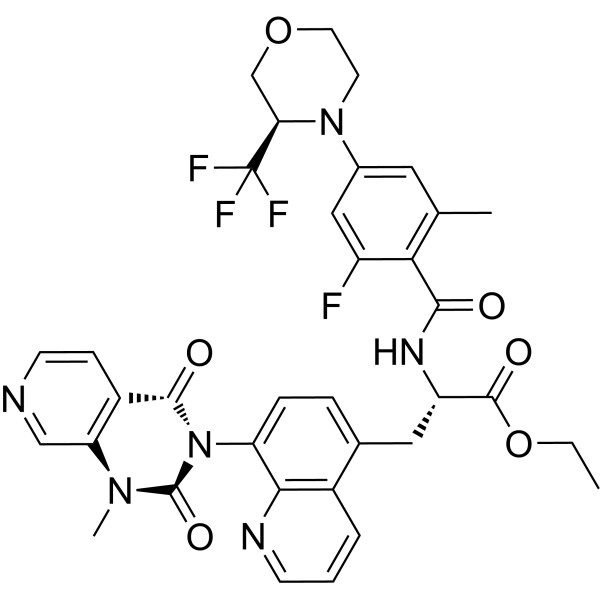
| DC78407 | Emvistegrast Featured |
Emvistegrast is a quinolone derivative. Emvistegrast is an antagonist of α4β7 integrin. Emvistegrast can be studied in research for diseases that are mediated by α4β7 integrin, such as infkammatory bowel disease.
More description
|
|
