To enhance service speed and avoid tariff delays, we've opened a US warehouse. All US orders ship directly from our US facility.
| Cat. No. | Product Name | Field of Application | Chemical Structure |
|---|---|---|---|
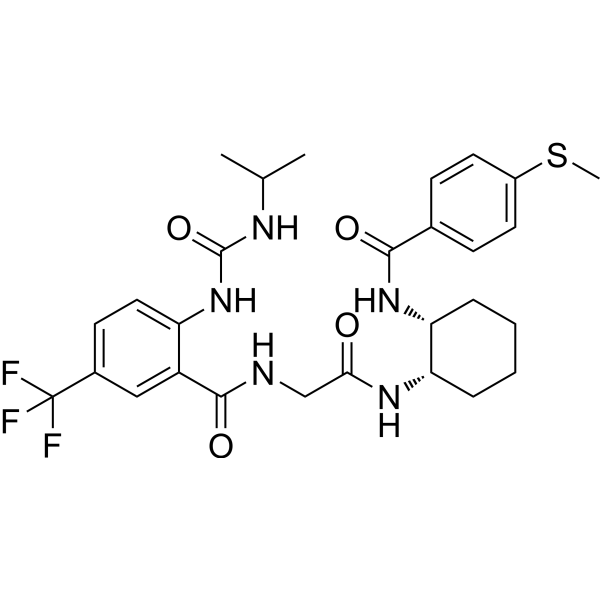
| DC11745 | BMS-22 Featured |
A potent, selective, allosteric CCR2 antagonist with binding IC50 of 5.1 nM.
More description
|
|
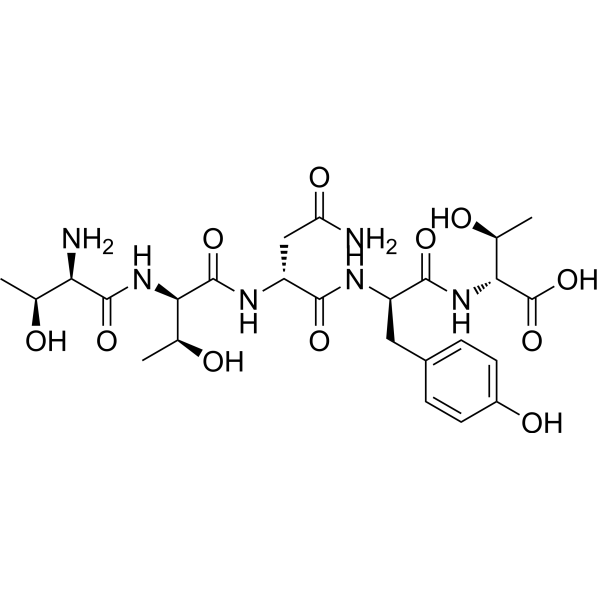
| DC73404 | RAP-103 Featured |
RAP-103 is an orally active, stabilized pentapeptide analog of DAPTA (D-ala-peptide T-amide), and multi-chemokine receptor antagonist.
More description
|
|
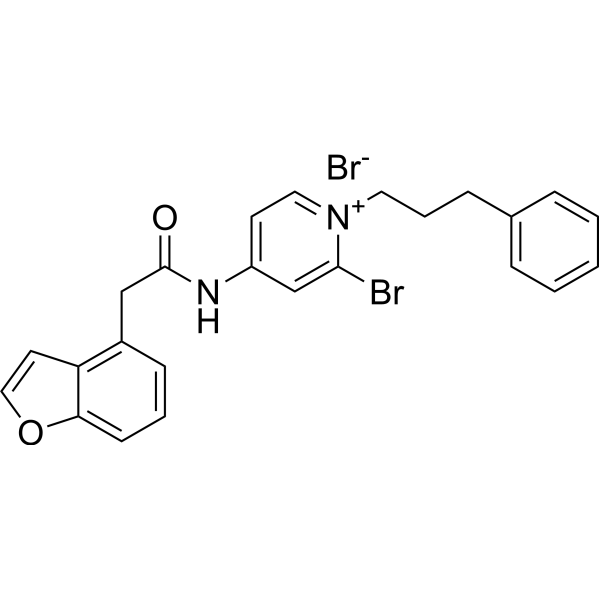
| DC78011 | CH0076989 Featured |
CH0076989 is a specific CCR3 agonist. CH0076989 activates eosinophils and transfectants expressing both wild-type CCR3 and a CCR1:CCR3 chimaeric receptor lacking the CCR3 amino-terminus. CH0076989 has a direct interaction with the transmembrane helices of CCR3, supported by the complete loss of its activity due to mutations of the residues Y41, Y113 and E287. CH0076989 can be used for the study of inflammation and allergic diseases (such as asthma).
More description
|
|
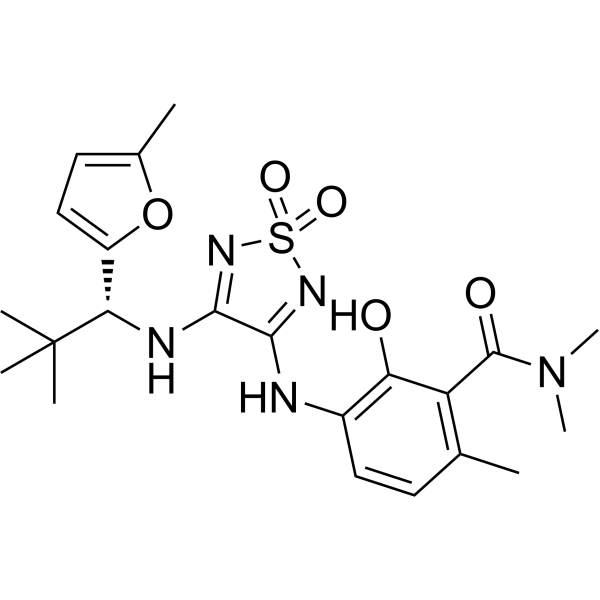
| DC70293 | CCR7 inhibitor Cmp1205 Featured |
CCR7 inhibitor Cmp1205 is an allosteric ligand and antagonist for human CC chemokine receptor 7 (CCR7) with Kd of 3 nM, suppresses arrestin binding in response to activation by CCL19 with IC50 of 7.3 uM.Cmp1205 binds to a pocket at the intracellular part of CCR7 between the ends of TM1, TM2, TM3, and TM6 and the loop between TM7 and H8.Cmp1205 allosterically inhibits binding of the native chemokine CCL19 ligand in a membrane-based competition binding experiment with IC50 of 35 nM.
More description
|
|
| DC79692 | LMD-902 |
LMD-902, a LMD-009) analog, is a CCR8 agonist with an EC50 of 15 nM. LMD-902 has a superior binging capacity depending on key residues such as PheVI:16. LMD-902 can be used for inflammation diseases like bronchial asthma and central nervous system diseases like multiple sclerosis research.
More description
|

|
| DC79348 | YJC-10592 |
YJC-10592 is an orally active CCR-2 antagonist. YJC-10592 binds to HAS. YJC-10592 can be used in the research of asthma and idiopathic dermatitis.
More description
|
|
| DC79215 | E913 |
E913 is a CCR5 antagonist that competes with the binding of antibodies to CCR5 which recognize the C-terminal half of the second extracellular loop (ECL2B) of CCR5. E913 can specifically block the binding of macrophage inflammatory protein-1alpha (MIP-1alpha) to CCR5 (IC50 = 0.002 μM) and MIP-1alpha-elicited cellular Ca2+ mobilization (IC50 = 0.02 μM). E913 inhibits the replication of laboratory and primary R5 HIV-1 strains as well as various multidrug-resistant monocyte/macrophage tropic (R5) HIV-1 (IC50 = 0.03-0.06 μM). E913 can be used for the research of infection, such as HIV-1 infection.
More description
|
|
| DC79023 | LMD-584 |
LMD-584 is an agonist of CCR8. LMD-584 is also an analog of LMD-009.
More description
|
|
| DC78754 | Dicytidine 5′-triphosphate |
Dicytidine 5′-triphosphate (Cp3C) is a cytosine-containing dinucleoside polyphosphate. Dicytidine 5′-triphosphate inhibits the intracellular accumulation of trans-resveratrol and trans-piceid. Dicytidine 5′-triphosphate induces the expression of CCR2 and upregulates the expression of PAL1 and 4CL1.
More description
|
|
| DC78710 | RAGE406R |
RAGE406R is an orally active RAGE-DIAPH1 interaction antagonist. RAGE406R can bind to ctRAGE and prevent the formation of the RAGE-DIAPH1 complex and inhibit its interaction. RAGE406R can reduce the expression of CCL2, TNF, and IL-6 in THP1 cells. RAGE406R suppresses delayed-type hypersensitivity in T2D mice. RAGE406R can be used for the study of diabetes.
More description
|
|
| DC78108 | JNJ-17166864 |
JNJ-17166864 is a highly selective CCR2 antagonist. JNJ-17166864 has low oral bioavailability. JNJ-17166864 can significantly reduce the area of alveolar bone loss in a mouse model of periodontitis induced by Porphyromonas gingivalis infection. JNJ-17166864 can be used in the research of inflammatory diseases such as allergic rhinitis and periodontitis.
More description
|
|
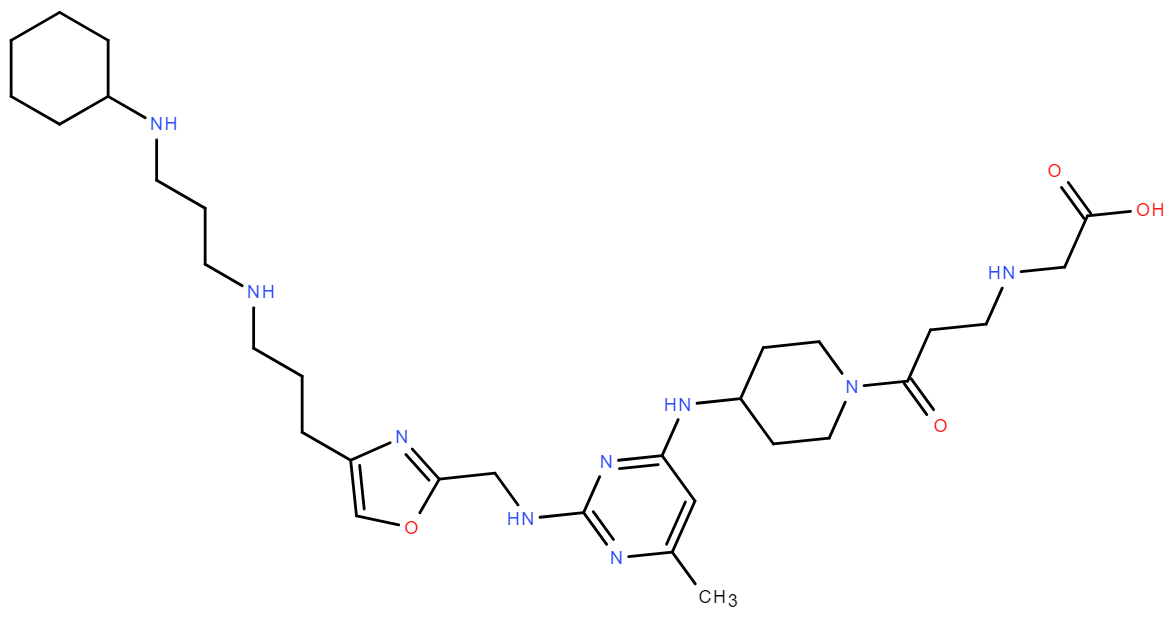
| DC73397 | BPRCX807 |
BPRCX807 (BPRCX-807) is a highly selective and potent CXCR4 antagonist with binding IC50 of 40.4 nM and EC50 of 48.1 nM for cell-mobility activity in the chemotaxis assays, inhibits CXCL12-mediated cell signaling pathway.
More description
|
|
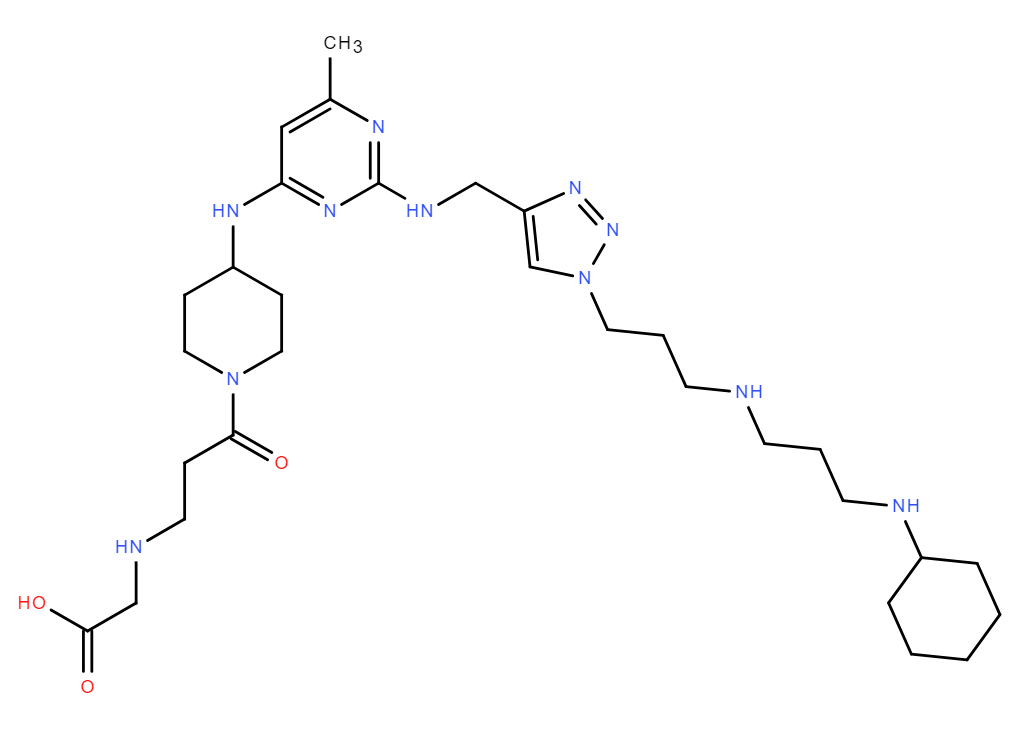
| DC73396 | BPRCX714 |
BPRCX714 (BPRCX 714) is a highly selective and potent CXCR4 antagonist with binding IC50 of 34.2 nM, effectively inhibits CXCL12-induced movement of CCRF-CEM cells with EC50 of 13.7 nM.
More description
|
|
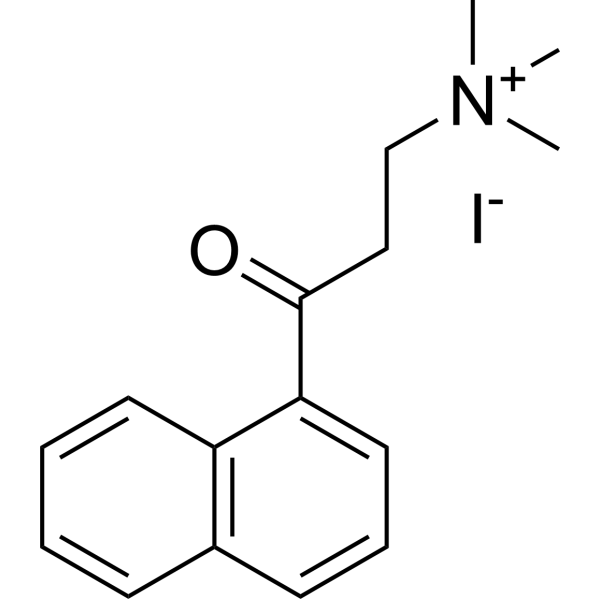
| DC73393 | alpha-NETA Featured |
alpha-NETA (α-NETA) is a small molecule antagonist of chemerin receptor chemokine-like receptor 1 (CMKLR1), inhibits chemerin-stimulated β-arrestin2 association with CMKLR1 with IC50 of 4.9 uM.
More description
|
|
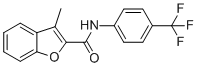
| DC72882 | MR120 Featured |
MR120 (CCR6 antagonist 1b) is a potent, selective CCR6 antagonist, disrupts the CCL20-induced chemotaxis of CCR6+CD4+ T cells.
More description
|
|
| DC9878 | ATI-2341 Featured |
ATI-2341, pepducin targeting the C-X-C chemokine receptor type 4 (CXCR4), is an allosteric agonist activating the inhibitory heterotrimeric G protein (Gi) to promote inhibition of cAMP production and induce calcium mobilization.
More description
|

|
| DC11003 | BL5923 Featured |
BL5923 (BL-5923) is a potent, highly specific, orally available inhibitor of CCR1 with IC50 of 20.4 and 22.8 nM for human and mouse CCR1, resepctively.
More description
|

|
| DC48046 | AZD-5672 Featured |
AZD-5672 is an orally active, potent, and selective CCR5 antagonist (IC50=0.32 nM). AZD-5672 shows moderate activity against the hERG ion channel (binding IC50=7.3 μM). AZD5672 is a substrate of human P-gp, and inhibits P-gp-mediated digoxin transport (IC50=32 μM). AZD-5672 can be used for the research of rheumatoid arthritis.
More description
|

|
| DC70817 | SX-682 Featured |
SX-682 (SX682) is a potent, allosteric, orally bioavailable inhibitor of CXCR1 and CXCR2.SX-682 enhances tumor infiltration, activation, and the therapeutic efficacy of adoptively transferred NK cells.SX-682 significantly inhibits trafficking of PMN-MDSCs without altering CXCR2 ligand expression.SX-682 enhances T cell-based immunotherapeutic efficacy.
More description
|

|
| DC10283 | IT1t dihydrochloride Featured |
IT1t dihydrochloride is a potent CXCR4 antagonist; inhibits CXCL12/CXCR4 interaction with an IC50 of 2.1 nM.
More description
|
|
| DC73409 | YM-344031 Featured |
YM-344031 is a potent, selective, brain-penetrable CCR3 antagonist with binding IC50 of 3.0 nM, inhibits ligand-induced Ca(2+) flux with IC50 of 5.4 nM.
More description
|

|
| DC73411 | YM-355179 |
YM-355179 is a potent selective, and orally available antagonist of CC chemokine receptor 3 (CCR3) with binding IC50 of 7.6 nM (CCL5).
More description
|
|
| DC73410 | YM-344484 |
YM-344484 (YM344484) is a potent, selective dual antagonist of chemokine CCR3 receptor and histamine H1 receptor, potently inhibits both the CCL11-induced Ca2+ influx in human CCR3-expressing cells (Kb=1.8 nM) and histamine-induced Ca2+ influx in histamin
More description
|
|
| DC73408 | VUF15485 |
VUF15485 is a small-molecule agonist of the atypical chemokine receptor ACKR3 with binding pIC50 of 8.3, and pEC50 of 7.6 in BRET-based β-arrestin2 recruitment assay.
More description
|
|
| DC73407 | UCUF-965 |
UCUF-965 (UCUF965) is a potent partial agonist and positive allosteric modulator of CXCR4 with EC50 of 0.02 uM, Emax=44% for CXCR4/CXCL12 signaling for β-arrestin-2 recruitment.
More description
|
|
| DC73406 | UCB35625 |
UCB35625 is a potent, selective inhibitor of CCR1 and CCR3, inhibits MIP-1α-induced chemotaxis in CCR1 transfectants and eotaxin-induced chemotaxis in CCR3 transfectants with IC50 of 9.57 and 93.8 nM respectively.
More description
|
|
| DC73405 | SCH-479833 |
SCH-479833 is a potent, specific and orally active CXCR1 and CXCR2 antagonist with Ki of 0.17 and 7 nM, respectively.
More description
|
|
| DC73403 | NUCC-390 dihydrochloride |
NUCC-390 dihydrochloride (NUCC390) is a small molecule agonist of CXCR4, recapitulates the activity of CXCL12α.
More description
|
|
| DC73402 | LN6023 |
LN6023 (LN-6023) a potent, selective and first-in-class inhibitor of the atypical chemokine receptor 3 (ACKR3, CXCR7) with β-arrestin EC50 of 3.5 uM.
More description
|
|
| DC73401 | Ki19003 |
Ki19003 (Ki 19003) is a potent, specific CCR3 antagonist, inhibits the CCL11-induced migration of CCR3-expressing L1.2 cells with IC50 of 20 nM.
More description
|
|