 To enhance service speed and avoid tariff delays, we've opened a US warehouse. All US orders ship directly from our US facility.
| Cat. No. | Product Name | Field of Application | Chemical Structure |
|---|---|---|---|
| DC80547 | Discodermolide Featured |
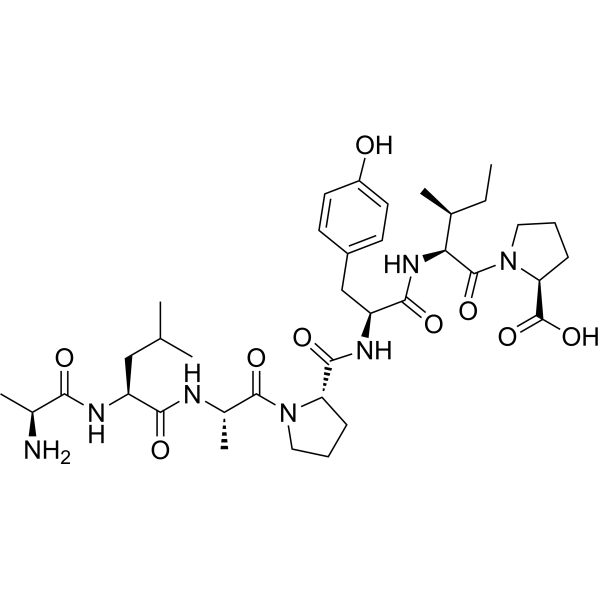
Discodermolide (NVP-XAA-296) is a potent microtubule-stabilizing agent with a Ki of 0.4 μM. Discodermolide stabilizes microtubules, induces G2 or M phase cell cycle arrest and apoptosis, leading to inhibition of cancer cell proliferation. Discodermolide competitively inhibits the binding of Paclitaxel to tubulin polymers, and inhibits the growth of Paclitaxel-resistant cells. Discodermolide can be used for breast and colon cancer research.
More description
|
|
| DC46956 | Thalidomide-5-COOH Featured |
Thalidomide-5-COOH is the Thalidomide-based cereblon ligand used in the recruitment of CRBN protein. Thalidomide-5-COOH can be connected to the ligand for protein by a linker to form PROTACs.
More description
|

|
| DC47889 | Thalidomide-5-NH2-CH2-COOH Featured |
Thalidomide-5-NH2-CH2-COOH (compound 114) is a potent and selective inhibitor of tropomyosin receptor kinase (trk). Thalidomide-5-NH2-CH2-COOH is a ligand of E3 ligase. Thalidomide-5-NH2-CH2-COOH has the potential for the treatment of one or more diseases (extracted from patent WO2021170109A1) .
More description
|

|
| DC81747 | WX-02-23 Featured |
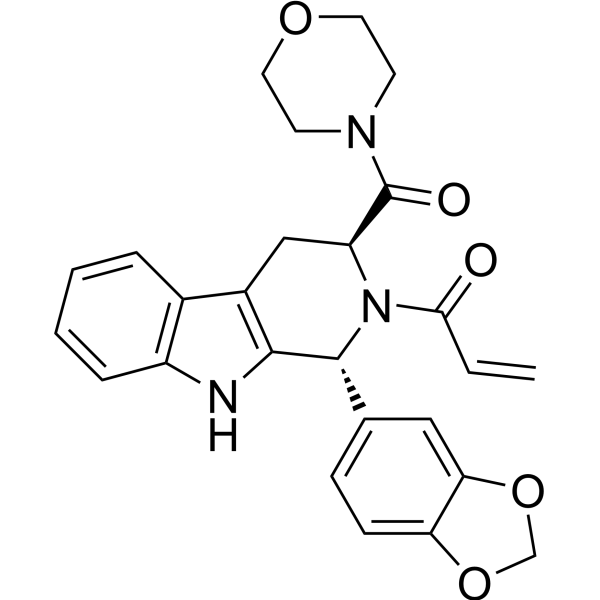
WX-02-23 is a small-molecule probe that stereoselectively and site-specifically binds to C258 of FOXA1 and C1111 of SF3B1. WX-02-23 remodels FOXA1's chromatin binding and pioneer activity in a DNA-dependent manner, disrupts spliceosome assembly, and enhances the thermal stability of SF3B1. WX-02-23 inhibits tumor cell proliferation and induces apoptosis. WX-02-23 can be used for research on cancers such as prostate cancer.
More description
|
|
| DC81798 | α,δ-NAG |
α,δ-NAG is an orally active glutaminase-resistant less-hydrolyzable L-Glutamine derivative. α,δ-NAG is a G protein-coupled receptor (GPCR) allosteric modulator. α,δ-NAG suppresses neutrophilic airway inflammation by activating the GPCR/ERK/MKP-1 pathway. α,δ-NAG can be used for the researches of inflammation and immunology, such as asthma.
More description
|

|
| DC81778 | ZAK-IN-2 |
ZAK-IN-2 (Compound 8) is a selective, covalent ZAK inhibitor with an IC50 of 11.5 nM. ZAK-IN-2 forms a covalent bond with Cys22 in the P-loop of ZAK to inhibit its kinase activity. ZAK-IN-2 inhibits the phosphorylation of the downstream target p38. ZAK-IN-2 blocks Doxorubicin-induced cleavage of Caspase 3. ZAK-IN-2 is applicable to research related to myocardial hypertrophy.
More description
|
|
| DC81764 | YCH3292 |
YCH3292, a derivative of YCH189 is a potent, selective and orally active PARP1/2 inhibitor with IC50 both <0.001 nM. YCH3292 can increase the stability of PARP-DNA complexes. YCH3292 exhibits robust antiproliferative activity. YCH3292 can induce double-strand breaks in DNA, increase the protein levels of γH2AX, P-RPA32, and P-Chk1 and induce tumor cells S or G2/M phase arrest and apoptosis. YCH3292 can inhibit tumor growth in MC38 xenograft model.
More description
|
|
| DC81743 | WRN-IN-23 |
WRN-IN-23 is a Werner Syndrome helicase enzyme (WRN) inhibitor. WRN-IN-23 inhibits the ATP-dependent helicase domain activity of WRN. WRN-IN-23 can be used for the research of cancers characterized by microsatellite instability (MSI) and/or defective DNA mismatch repair system (dMMR).
More description
|
|
| DC81741 | WMK-2 |
WMK-2 is a 1,2,4,5-tetraoxane derivative and ferroptosis inducer with broad-spectrum anticancer activity. WMK-2 generates hydroxyl radicals and lipid ROS to induce ferroptosis in cancer cells and cancer stem cells. WMK-2 can be used for the research of cancer.
More description
|
|
| DC81690 | Tubulin polymerization-IN-84 |
Tubulin polymerization-IN-84 inhibits tubulin polymerization by targeting the colchicine-binding pocket, with anIC50 = 10.9 μM. Tubulin polymerization-IN-84 shows antiproliferative activity against Jurkat, B16-F10, HCT116, and MDA-MB-231 cells (IC50 = 60 nM, 380 nM, 138 nM, and 1.054 μM). Tubulin polymerization-IN-84 induces G2/M-phase arrest and apoptosis in B16-F10 cells. Tubulin polymerization-IN-84 suppresses tumor growth in a B16-F10 melanoma model and potentiates anti-tumor immunity in combination with a PD-L1 mAb for the research of T-cell acute lymphoblastic leukemia, melanoma, colon cancer, and breast cancer.
More description
|
|
| DC81656 | TMC-169 |
TMC-169 is a potent antibiotic of the Aspochalasin group that can be isolated from Aspergillus flavipes. TMC-169 exhibits anti-tumor activity against multiple cancer cells. TMC-169 can be used for the research of cancer, such as hematologic malignancies, non-small cell lung cancer, breast cancer, and glioma.
More description
|
|
| DC81598 | Tau ligand-2 |
Tau ligand-2 is a tau aggregate ligand with a Ki value of 0.99 nM. Radiolabeled (18F) Tau ligand-2 serves as a PET tracer. Tau ligand-2 is applicable to research related to Alzheimer's disease.
More description
|
|
| DC81589 | SYK-1106 |
SYK-1106 is a potent delta-opioid receptor (DOR) agonist with an EC50 of 89 pM and a Ki of 848 pM. SYK-1106 is selective for μ and κ opioid receptors, with Ki values of 9.54 nM and 2.45 nM, respectively. SYK-1106 induces dose-dependent antidepressant-like effects. SYK-1106 can be used for the research of depression.
More description
|
|
| DC81577 | STING agonist-48 |
STING agonist-48 is a potent STING agonist that exhibits STING-dependent activity in vitro (EC50 = 4.02 μM). STING agonist-48 prefers to bind with the transmembrane domain (TMD) over the cytosolic cyclic dinucleotide (CDN) domain. STING agonist-48 shows adjuvant efficacy, enhancing IgG and Th1/Th2 cytokine responses in humanized STING mice. STING agonist-48 can be used for the study of inflammation-related diseases.
More description
|
|
| DC81575 | Stibophen |
Stibophen is a potent antiparasitic agent is effective against Litomosoides carinii, Dipetalonema witei, and Brugia pahangi. Stibophen inhibits lactate accumulation and phosphofructokinases (PFK) activity in adult filariids. Stibophen also inhibits Ascaris and Hymenolepis diminuta PFK without inhibiting mammalian liver PFK. Stibophen can be used for the research of schistosomiasis and filariid infections.
More description
|
|
| DC81556 | SNX3-IN-1 |
SNX3-IN-1 is a sorting nexin 3 (SNX3) inhibitor. SNX3-IN-1 reduces SNX3 protein expression and inhibits SNX3-mediated activation of the Wnt/β-catenin signaling pathway. SNX3-IN-1 inhibits the proliferation and migration of pulmonary fibrosis-related cells, and decreases the expression of fibrosis markers α-SMA and COL-1. SNX3-IN-1 can be used in research related to pulmonary fibrosis.
More description
|
|
| DC81545 | SLD1121 |
SLD1121 is an agonist of the Wnt/β-catenin signaling pathway that enhances Wnt signaling by targeting LRP6 (Kd: 4.52-7.49 nM). SLD1121 interacts with the intracellular domain of LRP6, stabilizes LRP6, promotes its nuclear translocation, and facilitates its binding to β-catenin, TCF4 or LEF1 in the nucleus, thereby inducing the expression of Wnt-regulated genes and stem cell-related genes. SLD1121 induces the transition of hair follicles from telogen to anagen in the mouse hair growth cycle and promotes hair growth in mice. SLD1121 is applicable to hair loss-related research.
More description
|
|
| DC81544 | SLC6A19-IN-4 |
SLC6A19-IN-4 is an allosteric-competitive and orally active B0AT1 inhibitor. SLC6A19-IN-4 inhibits both human and mouse B0AT1 with IC50 values of 513 nM and 295 nM, respectively. SLC6A19-IN-4 exhibits excellent metabolic stability. SLC6A19-IN-4 significantly increases urinary phenylalanine (Phe) excretion and reduces plasma Phe levels through dual inhibition of B0AT1 in both the intestine (reducing absorption) and kidney (promoting excretion) in vivo. SLC6A19-IN-4 can be used for phenylketonuria (PKU) and other disorders involving SLC6-family transporters research.
More description
|
|
| DC81524 | SGI-1776-VHL-02 |
SGI-1776-VHL-02 is a stereoselective PIM PROTAC degrader. SGI-1776-VHL-02 promotes the ubiquitination and degradation of PIM1, PIM2 and PIM3. SGI-1776-VHL-02 downregulates c-myc protein levels, induces Apoptosis, and reduces the colony-forming ability of prostate cancer cells. SGI-1776-VHL-02 can be used in studies related to prostate cancer.
(Pink: Pim and Autophagy and Apoptosis ligand ; Blue: Ligands for E3 Ligase and VHL ligand ; Black: linker ).
More description
|
|
| DC81522 | SET7-IN-DC21 |
SET7-IN-DC21 is a selective, potent SET7 inhibitor (IC50 = 15.93 μM; KD = 18.00 μM). SET7-IN-DC21 has good selectivity for several other epigenetic targets, such as SUV39H1, G9a, NSD1, DOT1L and MOF. SET7-IN-DC21 can be used for the researches of cancer, infection, inflammation, metabolic and cardiovascular disease, such as breast cancer.
More description
|
|
| DC81466 | RM-041 |
RM-041 is a selective, orally active KRASG13C (ON) inhibitor that forms a covalent complex with KRASG13C (ON) and Cyclophilin A. RM-041 blocks the binding of RAS effector proteins via steric hindrance, and then covalently binds to Cys-13 to form an irreversible inhibitory complex, thereby inhibiting the proliferation of KRASG13C mutant cancer cells. RM-041 induces regression of KRASG13C tumors in cellular and xenograft tumor models. RM-041 exerts a synergistic effect when combined with upstream node inhibitors (such as SHP2 inhibitors). RM-041 can be used for the research of non-small cell lung cancer.
More description
|
|
| DC81456 | RH01504 |
RH01504 is a HIF2α inhibitor with a Kd value of 5.42 nM against human HIF2α. RH01504 inhibits the growth of renal cancer cells. RH01504 can be used in research related to renal cell carcinoma.
More description
|
|
| DC81423 | QBS10072S dihydrochloride |
QBS10072S dihydrochloride is a bifunctional chemotherapeutic agent that can cross the blood-brain barrier (BBB), comprising a LAT1-targeting domain and a cytotoxic domain. QBS10072S dihydrochloride exhibits inhibitory potency against LAT1-mediated substrate uptake (IC50 = 21 μM) of approximately 50-fold higher than that against LAT2 (IC50 = 1100 μM). QBS10072S dihydrochloride enters LAT1-expressing tumor cells via LAT1-mediated active transport, induces DNA interstrand crosslinking, and causes DNA damage and cell death. QBS10072S dihydrochloride can be used for the research of glioblastoma and aggressive T-cell lymphoma.
More description
|
|
| DC81390 | PROTAC NTRK1 degrader-1 |
NTRK degrader-1 is a wild-type and mutant NTRK1 PROTAC degrader with IC50 values of 4 nM (wild-type), 2 nM (G595R), 5 nM (G667C), and <0.5 nM (F598L). NTRK degrader-1 catalyzes ubiquitination and subsequent proteasome-mediated degradation of wild-type and mutant (G595R, G667C, F598L) NTRK1.NTRK degrader-1 can be used for the research of solid tumors.
(Pink: NTRK1 Target protein ligand; Blue: Cereblon E3 ligase ligand; Black: linker).
More description
|
|
| DC81389 | PROTAC NAMPT Degrader-28 |
PROTAC NAMPT Degrader-28 is a NAMPT PROTAC degrader with DC50 values of 45 nM and 55 nM in MCF7 and 4T1cl5 cells, respectively. PROTAC NAMPT Degrader-28 retains nicotinamide phosphoribosyltransferase inhibitory activity and does not induce degradation of this enzyme. PROTAC NAMPT Degrader-28 can be used in breast cancer-related research.
(Pink: NAMPT ligand ; Blue: VHL ligand ; Black: linker ).
More description
|
|
| DC81360 | PROTAC EZH2 Degrader-26 |
PROTAC EZH2 Degrader-26 (compound 11) is an EZH2 degrader developed based on PROTAC technology. PROTAC EZH2 Degrader-26 has an IC50 of 5.80 nM against EZH2. PROTAC EZH2 Degrader-26 exhibits micromolar-level enzyme inhibitory activity against EZH1, with an EZH1 IC50 of 0.06 μM.
(Pink: Histone Methyltransferase ligand ; Blue: Cereblon ligand ; Black: ).
More description
|
|
| DC81334 | PROTAC BCR-ABL Degrader-2 |
PROTAC BCR-ABL Degrader-2 is a selective Bcr-AblT315 PROTAC degrader with a DC50 of 108.7 nM in Ba/F3 Bcr-AblT315I cells. PROTAC BCR-ABL Degrader-2 exhibits the most potent degradation efficacy with DR of 69.89% and 94.23% at 100 and 300 nM, respectively. PROTAC BCR-ABL Degrader-2 demonstrates high plasma exposure, and induces significant tumor regression and induces tumor cell apoptosis with a good safety profile in vivo. PROTAC BCR-ABL Degrader-2 can be used for chronic myeloid leukemia (CML) research.
(Pink: Bcr-Abl ligand ; Blue: Cereblon ligand ; Black: linker).
More description
|
|
| DC81333 | PROTAC BCL6/GSPT1 Degrader-1 |
PROTAC BCL6/GSPT1 Degrader-1 is a dual-target PROTAC degrader that targets BCL6 and GSPT1. PROTAC BCL6/GSPT1 Degrader-1 inhibits cell proliferation, promotes DNA damage, and induces cell cycle arrest and apoptosis in diffuse large B-cell lymphoma. PROTAC BCL6/GSPT1 Degrader-1 can be used for research on tumors such as lymphoma.
(Pink: BCL6 ligand ; Blue: Cereblon ligand ; Black: linker ).
More description
|
|
| DC81330 | PROTAC Akt3 Degrader-1 |
PROTAC Akt3 Degrader-1 is a highly efficient and selective PROTAC degrader targeting Akt3. PROTAC Akt3 Degrader-1 shows weak antiproliferative activity in 36 cell lines. PROTAC Akt3 Degrader-1 can be used for the study of Triple-negative breast cancer and melanoma.
(Pink: Akt3 ligand ; Blue: Cereblon ligand ; Black: linker).
More description
|
|
| DC81315 | PPI stabilizer-1 |
PPI stabilizer-1-1 (Compound 2) is a KRAS dimerizing agent. PPI stabilizer-1-1 dimerizes KRAS with a KD of 3.8 µM. PPI stabilizer-1-1 co-crystallizes with GCP-KRASG12D. PPI stabilizer-1 can be used for the research of kras-driven cancers.
More description
|
|
