 To enhance service speed and avoid tariff delays, we've opened a US warehouse. All US orders ship directly from our US facility.
| Cat. No. | Product Name | Field of Application | Chemical Structure |
|---|---|---|---|
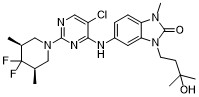
| DC28558 | BCL6-IN-3 Featured |
BCL6-IN-3 (example 20a) is a B-cell lymphoma 6 (BCL6) inhibitor with anti-tumor activity, extracted from patent WO2018215801A1. BCL6-IN-3 (example 20a) exhibits a GI50 of 70 nM in SU-DHL4 cells.
More description
|
|
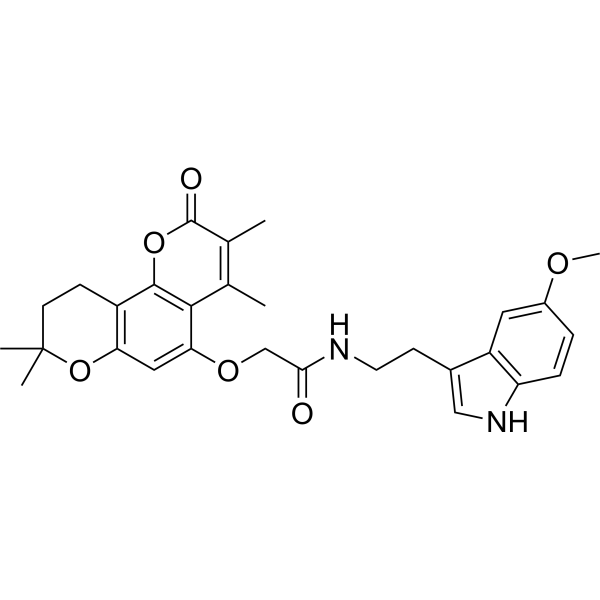
| DC70660 | NPD4928 Featured |
NPD4928 (NPD 4928) is a small molecule that enhances ferroptosis via inhibition of ferroptosis suppressor protein 1 (FSP1).NPD4928 enhanced the sensitivity of various cancer cells to GPX4 inhibitor RSL3.
More description
|
|
| DC70246 | BFL-1 inhibitor 4E14 Featured |
BFL-1 inhibitor 4E14 (4E14) is a potent, selective, covalent BFL-1 inhibitor that disrupt BH3-binding activity with IC50 of 1.3 uM, targets a unique C55 residue in the BFL-1 groove.4E14 blocks BFL-1 suppression of BAX-mediated mitochondrial apoptosis.
More description
|

|
| DC70934 | ZH97 Featured |
ZH97 is a selective and covalent small-molecule inhibitor of BFL-1 protein with binding Ki of 0.41 uM, >200-fold selectivity over MCL-1.ZH97 does not bind to BCL-xL, BCL-2, TEAD2, TEAD4, MDM2, MDMX, BRD2 BD1, BRD2 BD2, BRD3 BD1, BRD3 BD2, BCL9, PD1/PD-L1 (Ki>400 uM).ZH97 modifies BFL-1 at the C55 residue, blocks BFL-1/BID interaction in vitro.ZH97 dose-dependently increased cytoplasmic cytochrome c level in U937 cells, has cell growth inhibition with IC50 of 2.8 uM, 5.5 uM, 7.7 uM, 6.8 uM, and 3.9 uM in U937, Kasumi-1, K562, MM.1S, and MV4-11 cell lines, respectively.ZH97 inhibits BFL-1/PUMA interaction in cell lysate and is effective in cancer cells that harboring highexpression level of BFL-1.
More description
|

|
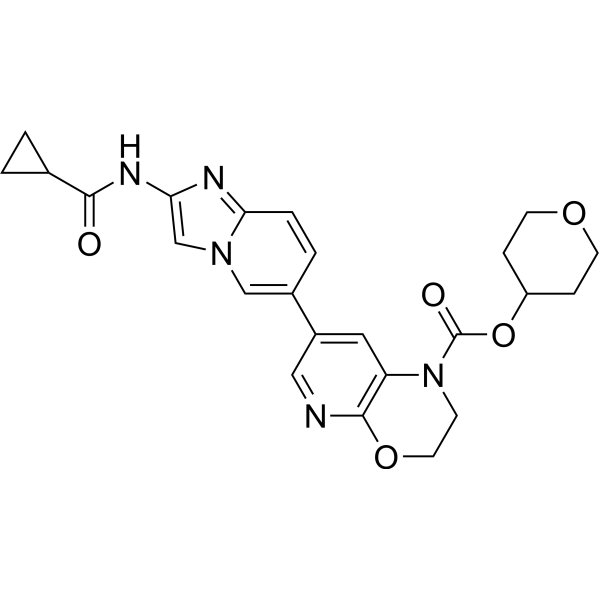
| DC73130 | AC-003 Featured |
AC-003 is a novel, orally administered small-molecule inhibitor targeting receptor-interacting protein kinase 1 (RIPK1), demonstrating therapeutic potential for the treatment of idiopathic pulmonary fibrosis (IPF).
More description
|
|
| DC81824 | GPX4-IN-5 |
GPX4-IN-5 covalently inhibits GPX4 with an IC50 of 0.12 μM. This compound induces ferroptosis and exhibits anti-tumor activity. It has potential applications in triple-negative breast cancer (TNBC) research.
More description
|

|
| DC81716 | Val-Cit-Exatecan |
Val-Cit-Exatecan is a peptide-linked anti-tumor payload that can be used for the synthesis of antibody-drug conjugates (ADC). Val-Cit-Exatecan consists of DNA TopI inhibitor Exatecan and a cathepsin-cleavable ADC linker (valine-citrulline). Val-Cit-Exatecan can be used in the research of colorectal cancer, gastric cancer, breast cancer, non-small cell lung cancer, ovarian cancer, head and neck cancer, pancreatic cancer, cervical cancer, and melanoma.
More description
|
|
| DC81713 | USP1-IN-16 |
USP1-IN-16 is a USP1 inhibitor with an USP1-UAF1 IC50 value of 0.002 μM. USP1-IN-16 can be used in the research of USP1-related malignancies.
More description
|
|
| DC81659 | TMLZ-G46 |
TMLZ-G46 is an orally active ZNF207 inhibitor with blood-brain barrier penetration ability, with a Kd value of 68 nM. TMLZ-G46 inhibits cancer cell proliferation, stemness, migration and invasion, induces G0/G1 cell cycle arrest and apoptosis, and suppresses colony formation. TMLZ-G46 can be used in glioma research.
More description
|
|
| DC81607 | Teglicar chloride |
Teglicar chloride (ST1326 chloride) is an orally active, reversible, mixed-type, selective inhibitor of hepatic carnitine palmitoyltransferase I (L-CPT I), with an IC50 of 1.1 μM against rat L-CPT I. Teglicar chloride reduces serum glucose levels. Teglicar chloride exhibits antiketotic activity in normal fasted rats. Teglicar chloride can be used in research related to type 2 diabetes and ketoacidosis.
More description
|
|
| DC81603 | TDG-IN-1 |
TDG-IN-1 is an orally active, selective small-molecule inhibitor of thymine DNA glycosylase (TDG) with a Ka of 1.46 nM. TDG-IN-1 impairs the DNA-binding ability of TDG, induces downregulated expression of DHX9, accumulation of double-stranded RNA, and activation of the RIG-I/MDA5-MAVS pathway, while acting as a tumor suppressor, innate immune activator and immunostimulant. TDG-IN-1 inhibits the growth of p53-deficient tumor cells and xenograft tumors, and exerts a synthetic lethal effect with p53. TDG-IN-1 is applicable to the research of p53-deficient cancers.
More description
|
|
| DC81513 | SDM25N |
SDM25N is a Dengue virus (DENV) inhibitor with an EC50 of 1.9 µM. SDM25N inhibits DENV in a cell type-specific manner. SDM25N restricts genomic RNA replication by targeting the viral NS4B protein. SDM25N can be used for DENV infection research.
More description
|
|
| DC81503 | SBP-1750 |
SBP-1750 is an orally active ULK inhibitor and an ATG13 degrader. SBP-1750 strongly inhibits ULK1/2 activity, with IC50 values of 8 and 50 nM, respectively. SBP-1750 induces ATG13 degradation, with an EC50 value of 114 nM. SBP-1750 can inhibit autophagy in cancer cells and induce cell death. SBP-1750 can be used in cancer research, such as for pancreatic cancer.
More description
|
|
| DC81480 | RX-RA-69 |
RX-RA-69 is an orally active platelet phosphodiesterase (PDE) inhibitor with a IC50 of 1 nM. RX-RA-69 elevates cAMP levels in platelets, exerts anti-aggregatory effects, and inhibits the formation of coronary platelet thrombi. RX-RA-69 exhibits anti-metastatic activity in a mouse Lewis lung cancer model. RX-RA-69 can be used in research related to coronary platelet thrombi and Lewis lung cancer.
More description
|
|
| DC81468 | RNA polymerase-IN-4 |
RNA polymerase-IN-4 is a RNA polymerase inhibitor with an EC50 of 22.81 nM. RNA polymerase-IN-4 exhibits potent anti-influenza virus activity (EC50 = 3.76 nM), relatively low cytotoxicity (CC50 = 29.91 μM). RNA polymerase-IN-4 can be used for the research of infection, such as influenza virus infection.
More description
|
|
| DC81395 | PROTAC SKP2 Degrader-1 |
PROTAC SKP2 Degrader-1 is a PROTAC degrader targeting SKP2, with a Kd value of 6.28 μM. PROTAC SKP2 Degrader-1 induces targeted degradation of SKP2 via the ubiquitin-proteasome system. PROTAC SKP2 Degrader-1 stabilizes the expression of SOCS1 and regulates the expression of immunoproteasomes through the JAK/STAT pathway, thereby inhibiting tumor cell proliferation. PROTAC SKP2 Degrader-1 is applicable for cancer-related research.
(Pink: COX and NF-κB ligand ; Blue: Ligands for E3 Ligase and VHL ligand ; Black: linker ).
More description
|
|
| DC81393 | PROTAC SAMHD1 Degrader-1 |
PROTAC SAMHD1 Degrader-1 is an orally active targeted SAMHD1 PROTAC degrader, with an IC50 of 6.3 μM against the dNTP hydrolase activity of SAMHD1. PROTAC SAMHD1 Degrader-1 binds to SAMHD1 inside cells and mediates its degradation, with low off-target effects. PROTAC SAMHD1 Degrader-1 inhibits the production of pro-inflammatory cytokines and interferes with the cascade amplification process of inflammatory responses. PROTAC SAMHD1 Degrader-1 delays the progression of pulmonary fibrosis and exerts protective effects on lung tissues. PROTAC SAMHD1 Degrader-1 can be used in pulmonary fibrosis-related research.
(Pink: Ligands for Target Protein for PROTAC and HIV ligand ; Blue: Ligands for E3 Ligase ligand ; Black: linker ).
More description
|
|
| DC81303 | PLAGL2-IN-1 |
PLAGL2-IN-1 is a inhibitor of pleiomorphic adenoma-like protein 2 (PLAGL2) with a Kd of 2.23 µM. PLAGL2-IN-1 suppresses PLAGL2 transcriptional activity, induces G0/G1 cell cycle arrest, and apoptosis, thereby inhibiting hepatocellular carcinoma (HCC) cell proliferation. PLAGL2-IN-1 disrupts extracellular matrix organization and suppresses the PI3K-AKT pathway by reducing AKT phosphorylation. PLAGL2-IN-1 inhibits tumor growth in an HCCLM3 xenograft mouse model. PLAGL2-IN-1 can be used for the research of HCC.
More description
|
|
| DC81253 | PD-143188 |
PD-143188 (CI 1007) is a selective agonist targeting dopamine (DA) receptors, with Ki values of 25.5 nM and 16.6 nM for human D2 and D3 receptors, respectively and lower affinity for D4.2 receptors (Ki=90.9 nM). PD-143188 inhibits DA release, synthesis and metabolism, while reducing cellular cyclic AMP levels, exerting antipsychotic activity. PD-143188 is promising for research of psychopharmacology.
More description
|
|
| DC81200 | Omigapil |
Omigapil (CGP3466B free base), an orally active GAPDH nitrosylation inhibitor, abrogates Aβ1-42-induced tau acetylation, memory impairment, and locomotor dysfunction in mice. Omigapil has the potential for the research of Alzheimer's disease. Omigapil is a apoptosis inhibitor. Omigapil can be used for the research of congenital muscular dystrophy (CMD). Omigapil is a click chemistry reagent, it contains an Alkyne group and can undergo copper-catalyzed azide-alkyne cycloaddition (CuAAc) with molecules containing Azide groups.
More description
|
|
| DC81115 | Nampt-IN-17 |
Nampt-IN-17 is an selective orally active NAMPT inhibitor with a human NAMPT IC50 of 17 nM and Ki of 25.9 nM. Nampt-IN-17 depletes intracellular NAD+ and ATP, disrupts mitochondrial membrane potential, suppresses cell proliferation, self-renewal, invasion, and migration, induces cell-cycle arrest and apoptosis. Nampt-IN-17 exhibits selective activity against NAPRT-deficient gastric cancer cells. Nampt-IN-17 can be used for the research of NAPRT-deficient gastric cancer.
More description
|
|
| DC81074 | MPO-IN-10 |
MPO-IN-10 is an orally active, selective, and irreversible inhibitor of myeloperoxidase (MPO), with an IC50 of 0.080 μM against human MPO. MPO-IN-10 exhibits higher selectivity for extracellular MPO over intracellular (neutrophil) MPO. MPO-IN-10 can be used in the study of inflammatory diseases such as vascular disorders.
More description
|
|
| DC80973 | LSD1-IN-49 hydrochloride |
LSD1-IN-49 hydrochloride (Compound (±) 1) is an irreversible LSD1/KDM1A inhibitor with an IC50 of 29 nM against hLSD1. LSD1-IN-49 hydrochloride irreversibly inhibits the enzymatic activity of LSD1 by forming an adduct with flavin adenine dinucleotide (FAD) in the binding pocket of LSD1. LSD1-IN-49 hydrochloride is applicable to research related to schizophrenia, autism spectrum disorder and Huntington's disease.
More description
|
|
| DC80809 | HKC54 |
HKC54 is a selective TRPV2 antagonist with an IC50 of 0.4 μM. HKC54 binds directly to TRPV2 and inhibits TRPV2-mediated calcium influx. HKC54 inhibits glioblastoma cell migration in vitro and breast cancer metastasis in vivo. HKC54 can be used for the research of breast cancer lung metastasis.
More description
|
|
| DC80764 | HCN2 modulator-6 |
HCN2 modulator-6 is a HCN2 ion channel inhibitor has an IC50 of 7 nM. HCN2 modulator-6 inhibits HCN2 ion channel activity. HCN2 modulator-6 can be used for the research of pain, inflammatory pain, neuropathic pain, tinnitus, central nervous system disorders, psychiatric disorders, mood disorders.
More description
|
|
| DC80740 | GRP75-IN-1 |
GRP75-IN-1 (Compound 33) is an anti-endometrial cancer (EC) agent. GRP75-IN-1 induces apoptosis in endometrial cancer cells. GRP75-IN-1 hydrochloride reduces mitochondrial Ca2+ levels by targeting GRP75 and disrupting its interaction with IP3R. GRP75-IN-1 inhibits tumor growth in human endometrial cancer xenograft animal models. GRP75-IN-1 can be used for research in endometrial cancer.
More description
|
|
| DC80727 | GPR17 agonist 1 |
GPR17 agonist 1 is a selective and potent GPR17 agonist with an EC50 of 35 pM. GPR17 agonist 1 also shows weak activation of P2Y Receptor. GPR17 agonist 1 can be used for the research of neurological disease.
More description
|
|
| DC80723 | Gosogliptin hydrochloride |
Gosogliptin hydrochloride is the hydrochloride of Gosogliptin. Gosogliptin (PF-00734200) is a potent, orally active, selective, and competitive inhibitor of DPP-IV, the enzyme mainly responsible for the degradation of the incretin peptides GLP-1 and glucose-dependent insulinotropic polypeptide. Gosogliptin demonstrates rapid and reversible inhibition of plasma DPP-4 activity. Gosogliptin stimulates insulin secretion and improves glucose tolerance.
More description
|
|
| DC80698 | GCB-27b |
GCB-27b is an immunostimulant that binds to CD1d. GCB-27b forms a stable and long-lasting complex with CD1d, which is presented to the TCR of NKT cells to drive immune responses. GCB-27b induces a Th1-skewed immune response in *Mus musculus*, resulting in high expression of IFN−γ with restricted IL-4 levels. GCB-27b is applicable to research related to lung metastasis of melanoma.
More description
|
|
| DC80598 | EGFR-IN-179 |
EGFR-IN-179 (Compound 8d) is an EGFR inhibitor (IC50: 0.068 μM for EGFR L858R/T790M/C797S; 2.56 μM for EGFR-WT-TK). EGFR-IN-179 has anticancer activity against non-small cell lung cancer.
More description
|
|
