 To enhance service speed and avoid tariff delays, we've opened a US warehouse. All US orders ship directly from our US facility.
| Cat. No. | Product Name | Field of Application | Chemical Structure |
|---|---|---|---|
| DC79780 | (S)-SCH-23390 hydrochloride Featured |
(S)-SCH-23390 (hydrochloride) is the S-enantiomer of SCH-23390. SCH-23390 is a dopamine D1-like receptor antagonist (with Ki values of 0.2 nM and 0.3 nM for the D1 and D5 receptor subtypes, respectively).
More description
|
-SCH-23390 hydrochloride.gif)
|
| DC76520 | SCH-23390 Featured |
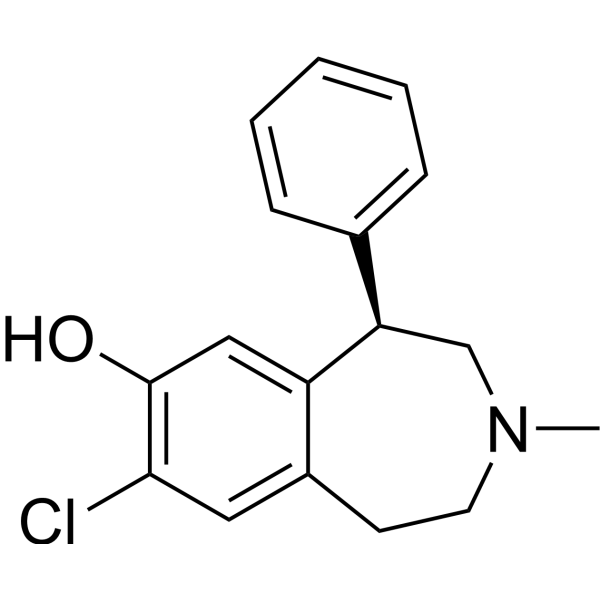
SCH-23390 is a dopamine D1-like receptor antagonist (with Ki values of 0.2 nM and 0.3 nM for the D1 and D5 receptor subtypes, respectively). SCH-23390 can shorten the latency period for cocaine-induced lever pressing behavior in rats. SCH-23390 can also eliminate generalized seizures caused by chemical convulsants, such as arecoline and strychnine, and is used in research on neurological disorders related to the dopamine system.
More description
|
|
| DC11745 | BMS-22 Featured |
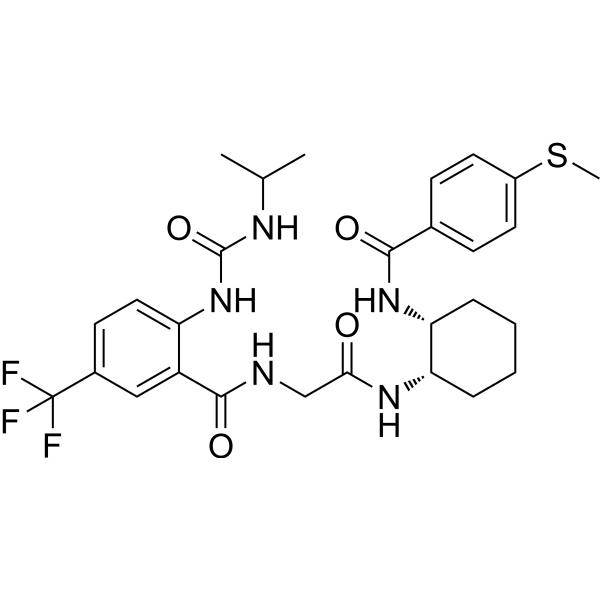
A potent, selective, allosteric CCR2 antagonist with binding IC50 of 5.1 nM.
More description
|
|
| DC12290 | Befiradol hydrochloride (F 13640 hydrochloride) |
Befiradol hydrochloride is a selective 5-HT1A receptor agonist.
More description
|

|
| DC10877 | 5,3-AB-CHMFUPPYCA Featured |
5,3-AB-CHMFUPPYCA is an analytical reference standard that is structurally classified as a synthetic cannabinoid.
More description
|

|
| DC41887 | Cortagine Featured |
Cortagine is a specific corticotropin-releasing factor receptor subtype 1 (CRF1) agonist with an IC50 of 2.6 nM for rCRF1. Cortagine is an anxiolytic and antidepressive drug in the mouse model.
More description
|

|
| DC70634 | N8279 Featured |
N8279 (NCATS-SM8864) is a selective, brain-penetrant small molecule Gαq-biased GHSR1a agonist with binding IC50 of 1.3 uM.N8279 is nearly an order of magnitude (8.9-fold) more potent than the endogenous ligand ghrelin and is a full agonist.iCa2+ EC50 of N8279 is 41-fold more potent than its GHSR1a binding IC50, suggesting possible allosteric activity, which could be competitively inhibited by GHSR1a antagonists YIL781 and JMV2959.N8279 is a weak activator of GHSR1a-mediated, βarr2-dependent cellular responses relative to ghrelin.N8279 requires receptor sites and/or conformational states driven by the GHSR1a ECD that are distinct from ghrelin.N8279 is brain-penetrant and attenuates aberrant DAergic behavior in mice.
More description
|

|
| DC11516 | Balovaptan Featured |
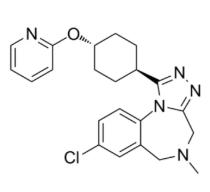
Balovaptan (RG7314, RG-7314) is a potent, selective vasopressin-1 receptor antagonist..
More description
|
|
| DC73504 | JR1-157 Featured |
JR1-157 is a potent selective sigma 2 receptor (σ2R) ligand with Ki value of 47 nM, >10-fold selectivity over σ1R.
More description
|

|
| DC73426 | F17464 Featured |
F17464 is a dopamine D3 receptor preferential antagonist exhibiting high affinity for human dopamine receptor subtype 3 (hD3) (Ki=0.17 nM) and 5-HT1a (Ki=0.16 nM) and a >50 fold lower affinity for the human dopamine receptor subtype 2 short and long form (hD2s/l) (Ki=8.9 and 12.1 nM, respectively).
F17464 is a D3 receptor antagonist, 5-HT1a receptor partial agonist.
F17464 blocks ketamine induced morphological changes, an effect D3 receptor mediated, in human dopaminergic neurons. F17464 increases dopamine release in the rat prefrontal cortex and mouse lateral forebrain-dorsal striatum and seems to reduce the effect of MK801 on % c-fos mRNA medium expressing neurons in cortical and subcortical regions.
F17464 also rescues valproate induced impairment in a rat social interaction model of autism, with dose range 0.32-2.5 mg/kg i.p. in both rats and mice
More description
|

|
| DC73375 | QAF-805 Featured |
QAF-805 (QAF805) is a potent, dual adenosine-A2B receptor and adenosine-A3 receptor antagonist with Ki of 3.4 nM (A2B).
More description
|
.gif)
|
| DC28177 | Dazoxiben hydrochloride Featured |
Dazoxiben hydrochloride is a potent and orally active thromboxane (TX) synthase inhibitor.
More description
|

|
| DC73509 | S6821 Featured |
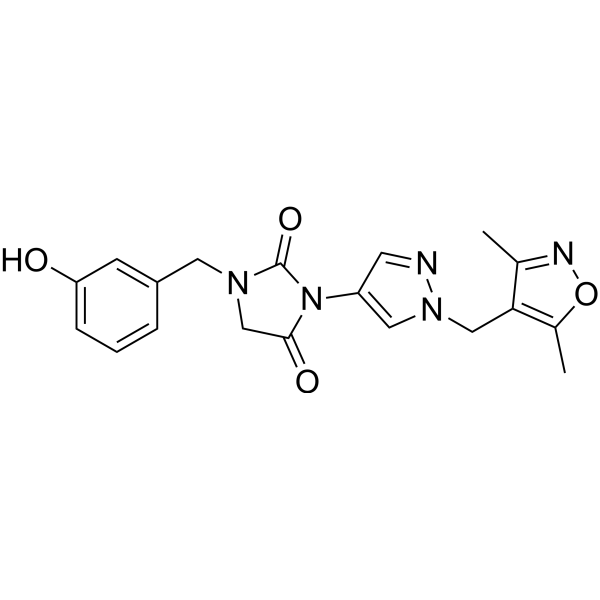
S6821 (S 6821) is a potent and selective antagonist of the bitter taste receptor TAS2R8, exhibiting an IC50 value of 21 nM.
It demonstrates high selectivity across a panel of 16 TAS2Rs, effectively reduces the bitterness of coffee, and shows an excellent safety profile.
More description
|
|
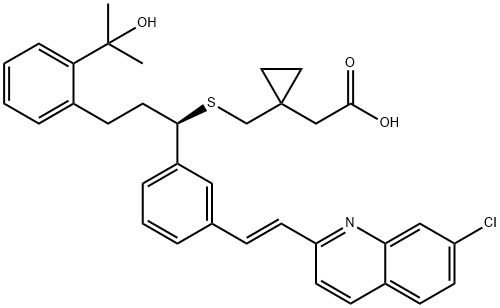
| DC40582 | Montelukast Featured |
Montelukast is a potent, selective and orally active antagonist of cysteinyl leukotriene receptor 1 (CysLT1). Montelukast can be used for the reseach of asthma and liver injury. Montelukast also has an antioxidant effect in intestinal ischemia-reperfusion injury, and could reduce cardiac damage.
More description
|
|
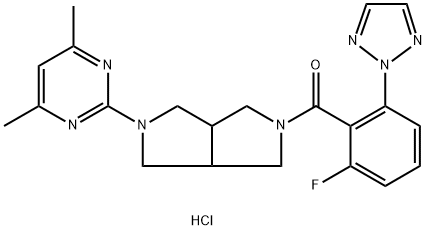
| DC28252 | Seltorexant hydrochloride Featured |
Seltorexant hydrochloride (JNJ-42847922 hydrochloride) is an orally active, high-affinity, and selective OX2R antagonist (pKi values of 8.0 and 8.1 for human and rat OX2R). Seltorexant hydrochloride crosses the blood-brain barrier and quickly occupies OX2R binding sites in the rat brain.
More description
|
|
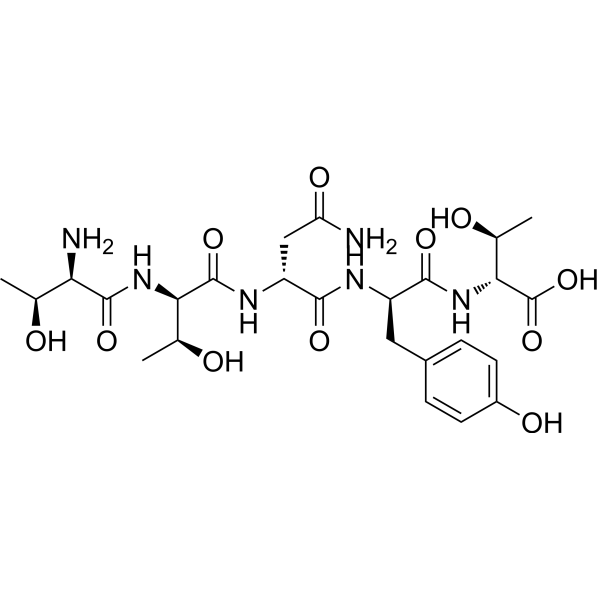
| DC73404 | RAP-103 Featured |
RAP-103 is an orally active, stabilized pentapeptide analog of DAPTA (D-ala-peptide T-amide), and multi-chemokine receptor antagonist.
More description
|
|
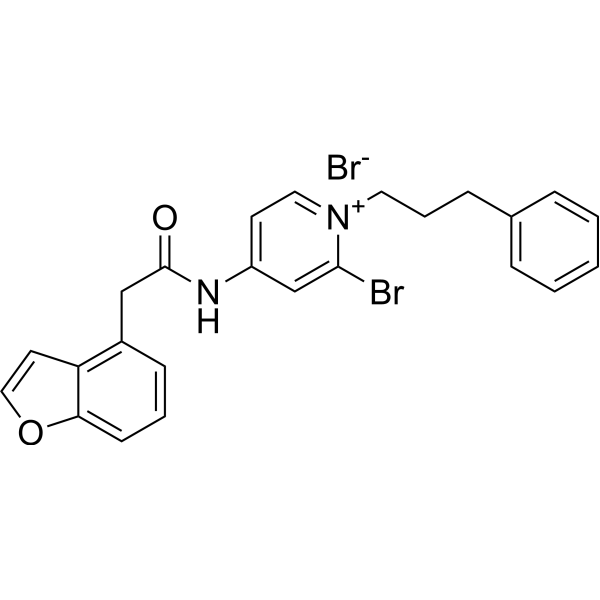
| DC78011 | CH0076989 Featured |
CH0076989 is a specific CCR3 agonist. CH0076989 activates eosinophils and transfectants expressing both wild-type CCR3 and a CCR1:CCR3 chimaeric receptor lacking the CCR3 amino-terminus. CH0076989 has a direct interaction with the transmembrane helices of CCR3, supported by the complete loss of its activity due to mutations of the residues Y41, Y113 and E287. CH0076989 can be used for the study of inflammation and allergic diseases (such as asthma).
More description
|
|
| DC5017 | Suvorexant Featured |
Suvorexant (MK-4305) is a potent, selective, and orally bioavailable antagonist of OX1R and OX2R.Suvorexant is regulated as a Schedule IV compound in the United States. This product is intended for use in analytical forensic applications. This product is for research use only, not for any other purposes.
More description
|

|
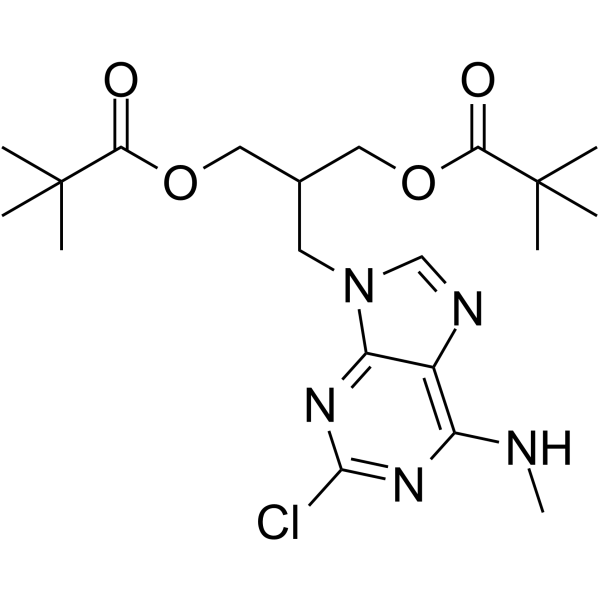
| DC49652 | MRS2395 Featured |
MRS2395, an dipivaloyl derivative, is a potent P2Y12 receptor antagonist. MRS2395 inhibits ADP-induced platelet activation with a Ki of 3.6 μM. MRS2395 inhibits cAMP induced by ADP in rat platelets in the presence of PGE1 with an IC50 of 7 µM. MRS2395 enhances platelet dense granule release in response to TRAP-6.
More description
|
|
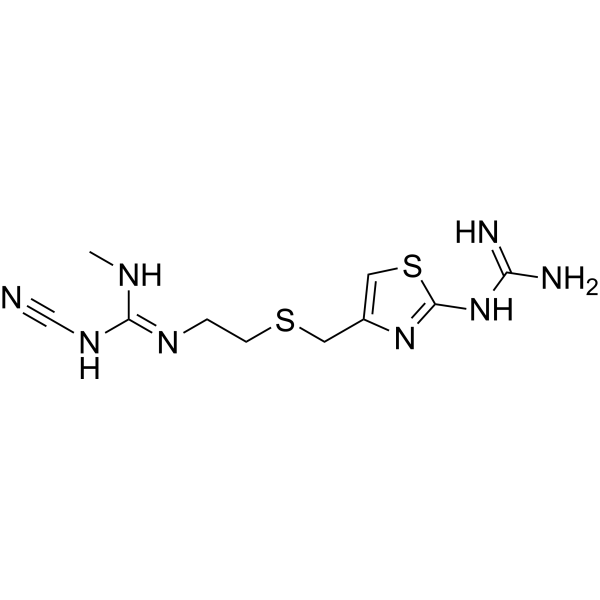
| DC28116 | Tiotidine Featured |
Tiotidine (ICI 125211) is a potent and selective antagonist of histamine H2-receptor (pA2=7.3-7.8 for guinea-pig right atrium). Tiotidine has low affinity for both the H1 and the H3 receptors.
More description
|
|
| DC70573 | LSN3172176 Featured |
LSN3172176 is a novel potent, selectiive M1 mAChR partial agonist (EC50 2.4-7.0nM, Emax 43%-73%), shows binding selectivity for M1 mAChRs (Kd=1.5 nM); LSN3172176 is a potential PET tracer for assessment of M1 mAChR target engagement in the clinic and to further elucidate the function of M1 mAChRs in health and disease.
More description
|
|
| DC49332 | (R)-(-)-α-Methylhistamine dihydrochloride Featured |
(R)-(-)-α-Methylhistamine dihydrochloride is a potent, selective and brain-penetrant agonist of H3 histamine receptor, with a Kd of 50.3 nM. (R)-(-)-α-Methylhistamine dihydrochloride can enhance memory retention, attenuates memory impairment in rats.
More description
|
-(-)-α-Methylhistamine dihydrochloride.gif)
|
| DC73469 | ML353 Featured |
ML353 (VU0478006) is a highly potent, selective, MPEP-site silent allosteric modulator of mGlu5 receptor with with sub-100 nM affinity.
More description
|

|
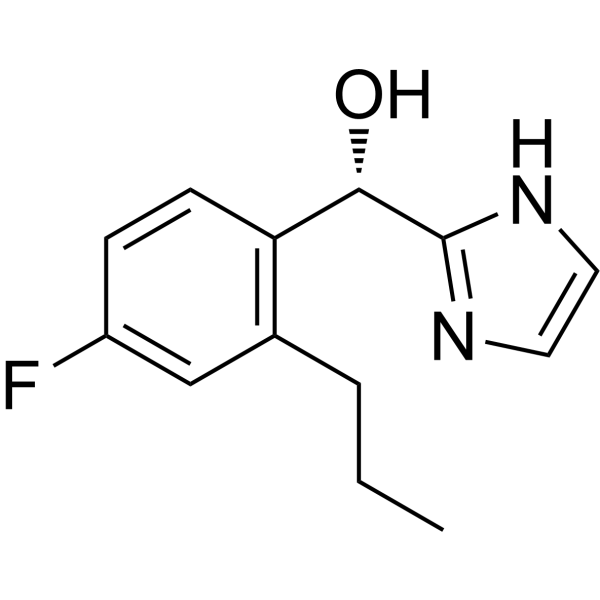
| DC11742 | AZ-8838 Featured |
AZ-8838 (AZ8838) is a potent, and selective PAR2 antagonist with Kd of 125 nM.
More description
|
|
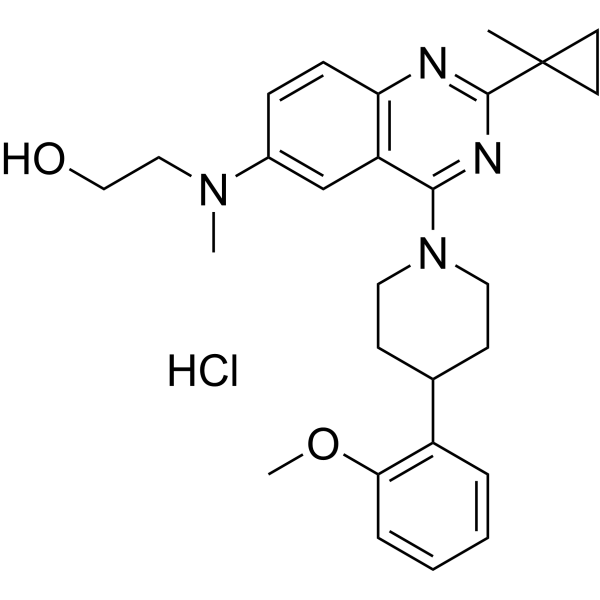
| DC76584 | SBI-810 hydrochloride Featured |
SBI-810 hydrochloride is a functionally selected β-arrestin-biased neurotensin receptor 1 (NTSR1) allosteric modulator. SBI-810 hydrochloride modulates NTSR1 G protein signaling in a G protein-specific manner in the presence of the endogenous ligand, neurotensin (NT). SBI-810 hydrochloride fully antagonizes NT-induced activation of Gq, partially antagonizes NT-induced activation of Gi1 and is permissive of NTSR1 activation of GoA and G12.
More description
|
|
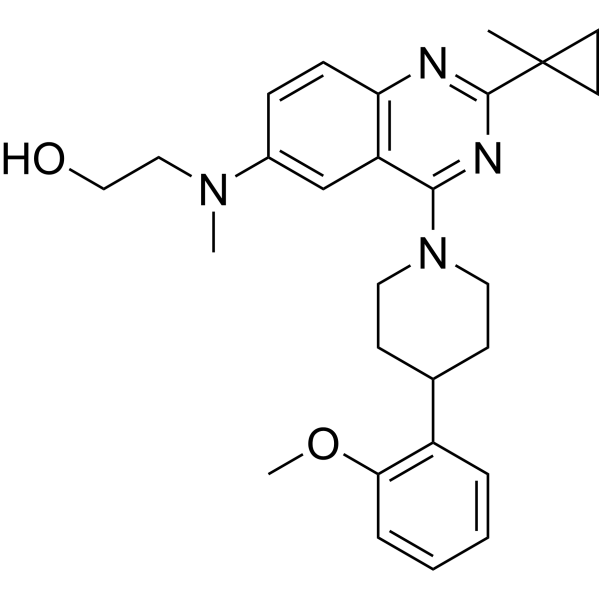
| DC76583 | SBI-810 Featured |
SBI-810 is a functionally selected β-arrestin-biased neurotensin receptor 1 (NTSR1) allosteric modulator. SBI-810 modulates NTSR1 G protein signaling in a G protein-specific manner in the presence of the endogenous ligand, neurotensin (NT). SBI-810 fully antagonizes NT-induced activation of Gq, partially antagonizes NT-induced activation of Gi1 and is permissive of NTSR1 activation of GoA and G12.
More description
|
|
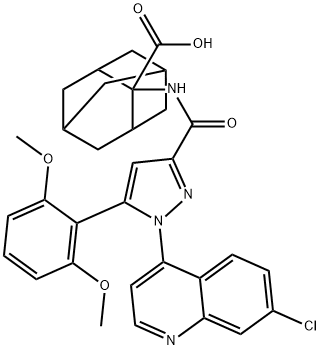
| DC4131 | SR48692 Featured |
SR 48692 is a neurotensin antagonist; selective for NTS1 over NTS2 (apparent affinity, Ke, is 36 nM for NTS1). Competitively inhibits binding of [125I]-neurotensin to HT29 and N1E115 cell membranes (IC50 values are 15.3 and 20.4 nM respectively).
More description
|
|
| DC81833 | Thiethylperazine |
Thiethylperazine is a phenothiazine derivative that acts as an oral dopamine D2-receptor and histamine H1-receptor antagonist. This compound functions as an ABCC1 activator and has been shown to decrease amyloid-β (Aβ) accumulation in mice. It exhibits anti-emetic, antipsychotic, and antimicrobial properties.
More description
|
|
| DC81828 | Opiranserin hydrochloride |
Opiranserin hydrochloride (VVZ-149 hydrochloride) is a non-opioid and non-NSAID analgesic that acts as a dual antagonist of glycine transporter type 2 (GlyT2) and serotonin receptor 2A (5HT2A), with IC50 of 0.86 μM and 1.3 μM, respectively.
More description
|
|
| DC81791 | ZPL-5212372 |
ZPL-5212372 (PF 5212372) is a cPLA2α inhibitor (IC50 = 7 nM). ZPL-5212372 inhibits the release of prostaglandin D2 (PGD2), cysteyl leukotrienes, leukotriene B4, thromboxane A2, and PGD2 from human lung cells. ZPL-5212372 inhibits delayed bronchoconstriction and airway hyperresponsiveness in a sheep allergic inflammation model. ZPL-5212372 may be used in asthma research.
More description
|
|
