To enhance service speed and avoid tariff delays, we've opened a US warehouse. All US orders ship directly from our US facility.
| Cat. No. | Product Name | Field of Application | Chemical Structure |
|---|---|---|---|
| DC79884 | (25R)-3α,7α,12α-Trihydroxy-5β-cholestan-26-oyl-CoA |
(25R)-3α,7α,12α-Trihydroxy-5β-cholestan-26-oyl-CoA is a nucleoside metabolite.
More description
|

|
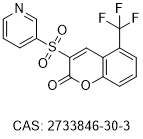
| DC11985 | PSTC Featured |
PSTC is a potent, selective Nrf2 activator with pEC50 of 7.7 (inducing of NQO1 specific enzyme activity).PSTC induces Nrf2 nuclear translocation, Nrf2-regulated gene expression, and
downstream signaling events, including induction of NAD(P)H:NQO1 enzyme activity and heme oxygenase-1 protein expression, in an Nrf2-dependent manner.PSTC does not inhibit IL-1β-induced NF-κB translocation or insulin-induced S6 phosphorylation in human cells.PSTC restores oxidant (tert-butyl hydroperoxide)
induced glutathione depletion in vitro and in vivo models of pulmonary oxidative stress.
More description
|
|
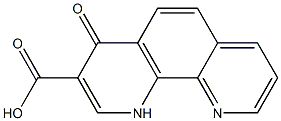
| DC73835 | FG-0041 Featured |
FG-0041 (FG0041) is a small molecule inhibitor of hypoxia-inducible factor prolyl hydroxylase (HIF-PH) with IC50 of 2 uM for collagen prolyl hydroxylase.
More description
|
|
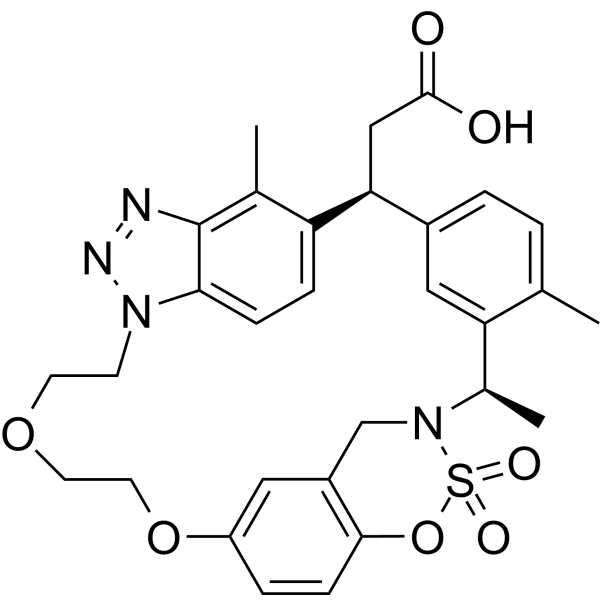
| DC73841 | S217879 Featured |
S217879 (S 217879) is a highly potent and selective NRF2 activator, binds to KEAP1 Kelch domain (SPR Kd=4.15 nM), disrupts the KEAP1-NRF2 interaction leading to robust NRF2 pathway activation.
More description
|
|
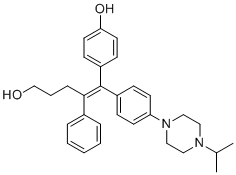
| DC70363 | DN200434 Featured |
DN200434 (DN-200434) is a highly potent (functional IC50=6 nM, binding IC50=40 nM), selective, biocompatible and orally available ERRγ inverse agonist.DN200434 binds to key ERRγ binding pocket residues through four-way interactions.DN200434 effectively upregulated iodide-handling genes and restored radioiodine avidity in ATC tumor lesions.DN200434 enhanced ATC tumor radioiodine therapy susceptibility, markedly inhibiting tumor growth.DN200434 shows higher potency than GSK5182.
More description
|
|
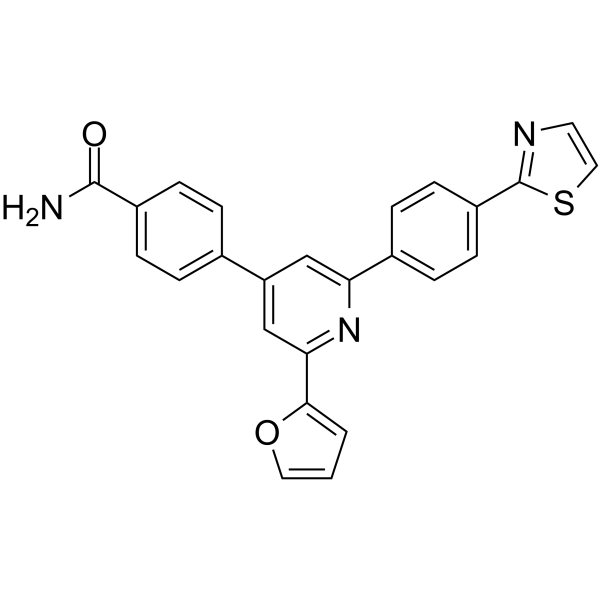
| DC45837 | MYC-IN-2 Featured |
MYC-IN-2 is a MYC protein-protein inhibitor. MYC-IN-2 can be used for the research of cancer.
More description
|
|
| DC79810 | ESP-31015 |
ESP-31015 (ETC-1001) is an orally active and non-fibrate based PPARα agonists. ESP-31015 demonstrates significant lipid-regulating effects in the obese Zucker rat model. ESP-31015 can be used in cardiovascular disease research.
More description
|
|
| DC79808 | PVTX-321 |
PVTX-321 (Compound 16a) is an orally active estrogen receptor α (ERα) degrader. PVTX-321 can potently degrade ERα (DC50=0.15 nM in MCF-7 cells) and also has inhibitory activity against mutant ERα (IC50=59 nM). PVTX-321 is promising for research of ER+/HER2- breast cancer.
More description
|
|
| DC79743 | 12-Nitrolinoleate |
12-Nitrolinoleate (12-Nitro-9-cis,12-cis-octadecadienoic acid) is an activator for peroxisome proliferator-activated receptor γ (PPARγ). 12-Nitrolinoleate is a nitrated form of linoleic acid. 12-Nitrolinoleate can be formed upon exposure to acidified nitrate and found in human red blood cells and plasma. 12-Nitrolinoleate can activate PPARγ-dependent gene expression in MCF-7 cells expressing PPARγ with an EC50 = 0.045 μM. 12-Nitrolinoleate is able to inhibit LPS-induced NF-κB transcription in RAW 264.7 cells. 12-Nitrolinoleate can inhibit IL-6, TNF-α and CCL2 induced by LPS.
More description
|
|
| DC79739 | LCI765 |
LCI765 is an orally active and selective PPARδ agonist, with an EC50 of 0.07 nM. LCI765 can be used for the research of diseases related to energy homeostasis such as metabolic syndrome.
More description
|
|
| DC79736 | SR 16234 |
SR 16234 (TAS-108) is a selective estrogen receptor modulator. SR 16234 is promising for research of pain symptoms associated with endometriosis.
More description
|
|
| DC79733 | KRP-105 |
KRP-105 is a potent, highly selective, and orally effective PPAR alpha (EC50 = 8 nM) agonist. KRP-105 can significantly reduce serum triglyceride, total cholesterol, and non high density lipoprotein cholesterol levels. KRP-105 can be used for research on metabolic diseases such as dyslipidemia.
More description
|
|
| DC79674 | CH4933468 |
CH4933468 is a thiohydantoin derivative, shows androgen receptor (AR) pure antagonist activity in vitro. CH4933468 inhibits AR-mediated transactivation and proliferation of LNCaP and LNCaP-BC2 cells. CH4933468 can be used for castration-resistant prostate cancer (CRPC) research.
More description
|
|
| DC79645 | (S)-STO021 |
(S)-STO021 is a highly selective, orally effective ERβ agonist. (S)-STO021 has a dual activity of inhibiting osteoclast activity and promoting osteoblast activity. (S)-STO021 can be used for research on osteoporosis.
More description
|
|
| DC79627 | CPD-2828 |
CPD-2828 is an orally active and selective IRE1α inhibitor with an IC50 value of 1.2 μM. CPD-2828 is promising for research of endoplasmic reticulum stress-related diseases (e.g., cancer, neurodegenerative diseases).
More description
|
|
| DC79540 | F0840-0093 |
F0840-0093 is a highly selective estrogen receptor α (ERα) degrader. F0840-0093 exhibits potent antiproliferative activity against T47D cells with an IC50 value of 4.65 μM. F0840-0093 is promising for research of estrogen receptor-positive (ER+) breast cancer.
More description
|
|
| DC79480 | (+)-Arhalofenate |
(+)-Arhalofenate ((+)-MBX 102) is the less active enantiomer of Arhalofenate. Arhalofenate is a selective partial agonist of peroxisome proliferator-activated receptor (PPAR)-γ, used for the treatment of type 2 diabetes.
More description
|
|
| DC79406 | 9-cis-UAB30 |
9-cis-UAB30 is a rexinoid agonist. 9-cis-UAB30 significantly decreases the proliferation, viability, and motility of both patient-derived xenografts (PDXs). 9-cis-UAB30 induced cell-cycle arrest as demonstrated by the significant increase in the percentage of cells in G1 and a decrease in the percentage of cells in S phase by downregulating SKP2 and/or 20S proteasome activity, which leads to increased p27kip1 protein stability. 9-cis-UAB30 downregulates the abundance of stem cell marker mRNAs (Oct4, Nanog, Sox2, nestin) and upregulates the abundance of differentiation marker mRNAs (β3-tubulin, NSE, HOXC9, GAP43). 9-cis-UAB30 has no adverse effects on the central nervous system and cardiovascular system at the tested dose. 9-cis-UAB30 can be used for the study of neuroblastoma, cutaneous T-cell lymphomas, and breast cancer.
More description
|
|
| DC79255 | NC-2100 |
NC-2100 is a PPAR activator. NC-2100 can effectively reduce the plasma glucose and triglyceride levels of obese KKAy mice. NC-2100 can induce UCP1 and UCP2 expression in mesenteric and subcutaneous WAT of mice. NC-2100 can be used in research related to type 2 diabetes.
More description
|
|
| DC79226 | MI891 |
MI891 is a highly selective PXR antagonist (IC50 = 3.76 μM, Kd = 1.7 μM) and inverse agonist (IC50 = 6.1 μM). MI891 selectively disrupts the interaction between PXR and its coactivator SRC1. MI891 effectively inhibits Rifampicin-induced PXR activation. MI891 is useful for the study of metabolic diseases and other diseases.
More description
|
|
| DC79207 | MK-8389 |
MK-8389 is an orally active LMW allosteric FSH receptor agonist. MK-8389 affects thyroid function.
More description
|
|
| DC79078 | KMS99220 |
KMS99220 is an orally active Nrf2 inhibitory protein Keap-1 activator. KMS99220 promotes Nrf2 nuclear translocation, up-regulates the gene expression of antioxidant enzymes (such as heme oxygenase-1, etc.) and proteasome subunits, alleviates oxidative stress and protein aggregation damage. KMS99220 can be used in the research of Parkinson’s disease (PD).
More description
|
|
| DC79074 | NRX-204647 |
NRX-204647 is a potent activator of retinoic acid nuclear (RARγ) with higher specificity than that to RARα and RARβ. NRX-204647 can be studied in anti-cancer research.
More description
|
|
| DC79073 | ZC9 |
ZC9 is a novel androgen receptor (AR) degrader. ZC9 directly binds to AR and inhibits Dihydrotestosterone-induced nuclear translocation of AR. ZC9 promotes AR degradation via the ubiquitin-proteasome system and suppresses AR transcriptional activity. ZC9 significantly decreases the mRNA levels of other AR downstream genes, including PSA, TMPRSS2, and PMEPA1. ZC9 promotes Apoptosis. ZC9 exhibits anticancer activity against prostate cancer.
More description
|
|
| DC78951 | (–)-JJ-450 |
(-)-JJ-450 is a non-competitive antagonist targeting the androgen receptor (AR). (-)-JJ-450 is more potent than (+)-JJ-450 in inhibiting androgen-induced AR activity, and the mechanism of AR inhibition by (+)-JJ-450 is different from that of Enzalutamide (MDV3100), which may target the ligand binding domain (LBD) of AR. (-)-JJ-450 inhibits the transcriptional activity of wild-type AR and mutant ARF876L by inhibiting AR nuclear translocation and promoting nuclear degradation of unbound AR. (-)-JJ-450 can be used in the study of castration-resistant prostate cancer (CRPC) resistant to Enzalutamide.
More description
|
|
| DC78927 | (+)-JJ-450 |
(+)-JJ-450 is a non-competitive antagonist targeting the androgen receptor (AR) that inhibits AR nuclear localization and transcriptional activity in the absence of androgen. (+)-JJ-450 is less active than (-)-JJ-450 in inhibiting prostate-specific antigen (PSA) expression in LN95 cells, possibly because (+)-JJ-450 targets the ligand binding domain (LBD) of AR. (+)-JJ-450 inhibits the transcriptional activity of AR and its splice variants (e.g., ARv7) by promoting the degradation of unliganded AR in the nucleus and reducing the binding of AR to androgen response elements (AREs). (+)-JJ-450 can be used in castration-resistant prostate cancer (CRPC) studies that are resistant to enzalutamide (MDV3100).
More description
|
|
| DC78813 | ER ligand-11 |
ER ligand-11 is the ligand for ERα and can be used for synthesis of PROTACs, such as PROTAC ERα Degrader-12.
More description
|
|
| DC78708 | WAY-255348 |
W-255348 is an effective non-steroidal progesterone receptor (PR) antagonist that acquires antagonist activity by binding to and subsequently blocking progesterone induced nuclear accumulation, phosphorylation, and PR promoter interactions. WAY-255348 can be used in the research of reproductive disorders or PR-positive breast cancer.
More description
|
|
| DC78707 | BMS-779333 |
BMS-779333 is an orally active androgen receptor (AR) antagonist. BMS-779333 is promising for research of prostate cancer and seizure.
More description
|
|
| DC78694 | MTP3 ligand-1 |
MTP3 ligand-1 is a MTP3 ligand for PROTAC MTP3 degrade-1. PROTAC MTP3 degrade-1 is a PROTAC based MYC degrader.
More description
|
|