To enhance service speed and avoid tariff delays, we've opened a US warehouse. All US orders ship directly from our US facility.
| Cat. No. | Product Name | Field of Application | Chemical Structure |
|---|---|---|---|
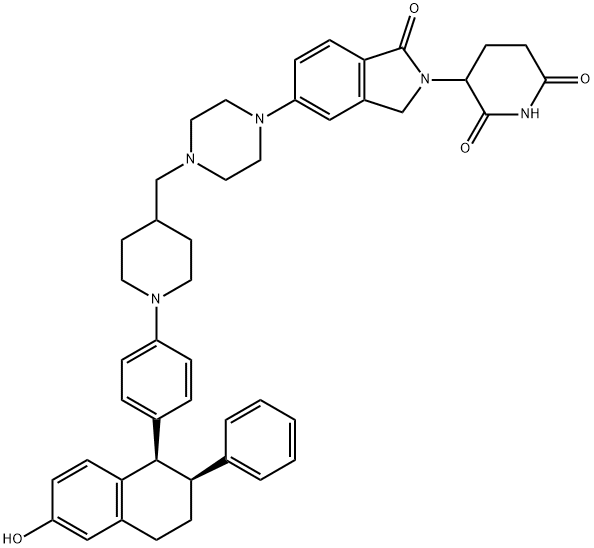
| DC71669 | ARV471 Featured |
ARV471 is an orally bioavailable estrogen receptor-targeting (ER-targeting) PROTAC for the treatment of patients with locally advanced or metastatic ER+/HER2- breast cancer.
More description
|
|
| DC74503 | KH-103 Featured |
KH103 is a highly potent, catalytically-driven glucocorticoid receptor (GR) PROTAC degrader, demonstrate excellent performance in passively preventing ligand-induced gene expression activation in the absence of partial agonistic transcriptional triggering and crosstalk inhibition. KH 103 efficiently degrades glucocorticoid receptor (GR) in vitro and in vivo. In HEK293 cells, KH-103 (1 µM) induced rapid and nearly complete GR degradation within one hour. This degradation was highly potent, with significant depletion observed at 10 nM and near-complete depletion at 100 nM. KH-103 demonstrated effective and reversible GR degradation across diverse in vitro models from multiple tissues and species.Mechanistically, KH-103 promoted GR nuclear translocation but did not activate GR-mediated gene transcription and exhibited no nonspecific transcriptional effects alone. Furthermore, KH-103 effectively blocked dexamethasone (DEX)-induced GR signaling, demonstrating greater potency than comparator inhibitors.Critically, KH-103 also effectively depleted GR protein in the mouse pituitary gland in vivo and modulated corticosterone levels, confirming pharmacological activity beyond cell-based systems.
More description
|

|
| DC28556 | XY028-133 Featured |
XY028-133 (example 14) is a PROTAC-based CDK4/6 degrader with anti-tumor activity, extracted from patent WO2018106870A1.
More description
|

|
| DC28539 | SIAIS178 Featured |
SIAIS178 is a potent and selective BCR-ABL degrader based on PROTAC technology with an IC50 of 24 nM. SIAIS178 causes effective degradation of BCR-ABL protein by recruiting Von Hippel-Lindau (VHL) E3 ubiquitin ligase. SIAIS178 has anticancer activity.
More description
|

|
| DC74495 | HDAC3 PROTAC P7 Featured |
HDAC3 PROTAC P7 is a potent and selective HDAC3-directed PROTAC with IC50 of 40 nM (HDAC3 deacetylase activity), effectively induces HDAC3 degradation with DC50 of 0.6 nM in THP-1 cells (Emax=90%).
More description
|

|
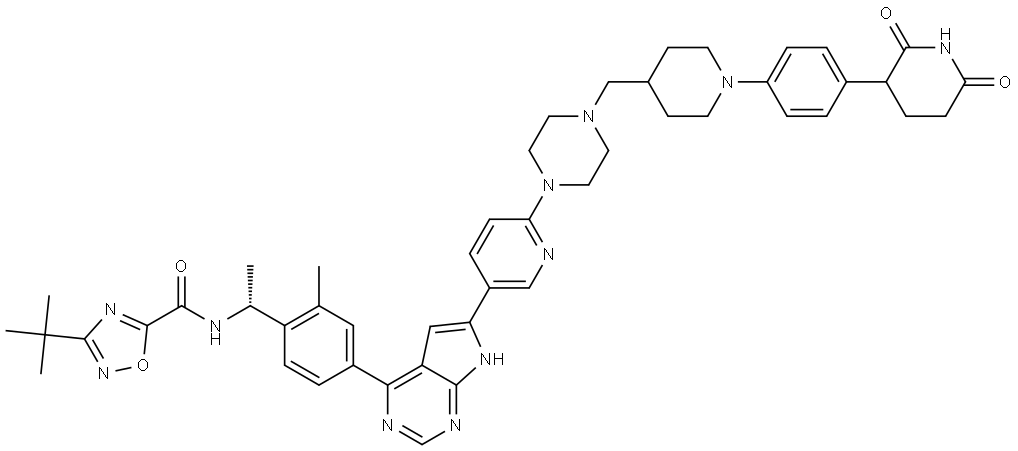
| DC60901 | PROTAC BTK Degrader-11 Featured |
PROTAC BTK Degrader-11 is a PROTAC degrader that can break down BTK, with a DC50 of 1.7 nM.
More description
|
|
| DC48434 | TD-165 Featured |
TD165(TD 165) is a PROTAC-based cereblon (CRBN) degrader that degrads Cav1.2α with the DC50 of 20.4 nM, comprising a cereblon (CRBN) ligand binding group, a linker and an von Hippel-Landau (VHL) binding group.
More description
|

|
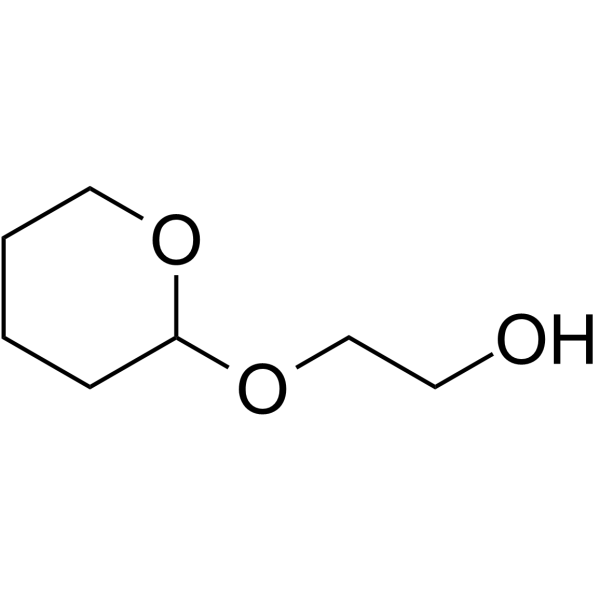
| DC44664 | THP-PEG1-alcohol Featured |
THP-PEG1-alcohol is a PEG-based PROTAC linker that can be used in the synthesis of PROTACs.
More description
|
|
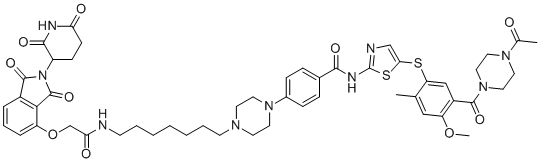
| DC74479 | Autotaxin-IN-8 Featured |
BSJ-05-037 is a potent and selective heterobifunctional degrader of ITK with DC50 of 17.6-41.8 nM in TCL lines DERL-2 and Hut78.
BSJ-05-037 induces potent degradation of ITK dependent on CRBN, neddylation, and the proteasome.
BSJ-05-037 induces GATA-3 loss and decreases chemotherapy resistance in vitro.
BSJ-05-037 disrupts TCR signaling, downregulates the Th2-associated transcription factor GATA-3, and can overcome chemotherapy resistance in TCL models in vivo.
More description
|
|
| DC72540 | MS8815 Featured |
MS8815 is a selective enhancer of zeste homolog 2 (EZH2) PROTAC degrader. MS8815 has inhibition activity for EZH2 with an IC50 value of 8.6 nM. MS8815 can be used for the research of triple-negative breast cancer (TNBC).
More description
|

|
| DC79876 | (±)-U-50488 Featured |
(±)-U-50488 ((±)-trans-(1R,2R)-U-50488) is a selective kappa opioid receptor agonist. (±)-U-50488 can improve symptoms related to status epilepticus, but has no significant effect on spontaneous seizure episodes. (±)-U-50488 can be used for research of epilepsy.
More description
|
-U-50488.gif)
|
| DC12022 | dBET6 Featured |
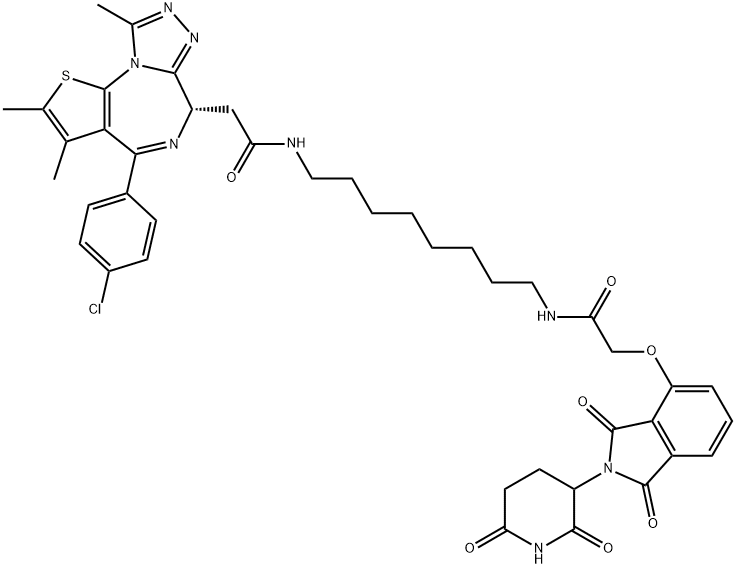
dBET6 is a highly potent, selective and cell-permeable degrader of BET with an IC50 of 14 nM, and has antitumor activity.
More description
|
|
| DC81811 | β-Catenin modulator-9 |
β-Catenin modulator-9 (Compound IIa-2075) is a β-Catenin modulator. β-Catenin modulator-9 specifically targets the activity of the stable β-catenin pool and inhibits the Wnt signaling pathway. β-Catenin modulator-9 can be used in cancer-related research.
More description
|

|
| DC81801 | α5β1 integrin-IN-1 |
α5β1 integrin-IN-1 (compound 65) is a potent and selective α5β1 integrin inhibitor with a pIC50 of 9.4. α5β1 integrin-IN-1 displays >10000-fold selectivity for α5β1 over αVβ3 (pIC50 = 5.5). α5β1 integrin-IN-1 reduces airway smooth muscle (ASM) tension through the disruption of cellular tethering. α5β1 integrin-IN-1 exhibits excellent inhalation pharmacokinetics in rodent. α5β1 integrin-IN-1 can be used for asthma research.
More description
|
|
| DC81800 | α4β7 Integrin-IN-1 |
α4β7 Integrin-IN-1 (Example 356) is a potent inhibitor of α4β7 integrin (integrin). Its ability to block the interaction between α4β7 integrin and MadCAM-1 (EC50) is 0.05 nM. α4β7 Integrin-IN-1 can be used for the study of inflammatory bowel disease.
More description
|
|
| DC81799 | α1A/1D-Adrenoceptor antagonist-1 |
α1A/1D-Adrenoceptor antagonist-1 (Compound 15) is a selective α1A/1D-adrenoceptor dual antagonist with IC50 values of 20.26 and 164.9 nM. α1A/1D-Adrenoceptor antagonist-1 shows an IC50 of 1912 nM for α1B-adrenoceptor.α1A/1D-Adrenoceptor antagonist-1 can be used for research of benign prostatic hyperplasia.
More description
|
|
| DC81790 | ZMC2 |
ZMC2 is a thiosemicarbazone-class metal ion chelator and zinc ionophore with a human mutant p53R175H binding Ka of 27.4 nM.ZMC2 binds Fe, Cu, Mn, Zn, and other transition metals.ZMC2 facilitates zinc transport across membranes.ZMC2 restores zinc binding to zinc-deficient p53 mutants, restoring wild-type structure and function, including site-specific DNA binding.ZMC2 generates reactive oxygen species (ROS).ZMC2 can be used for the research of cancer.
More description
|
|
| DC81789 | ZLY025 |
ZLY025 is a potent and orally active CCNK molecular glue degrader with an DC50 of 42.7 nM. ZLY025 exhibits broad-spectrum antiproliferative activity against various tumor cells with IC50 values ranging from 0.08 to 2.45 μM. ZLY025 can induce cells apoptosis and G1 phase arrest. ZLY025 can be used for the research of cancer, such as lung cancer.
More description
|
|
| DC81787 | ZK-Thiazolidinone |
ZK-Thiazolidinone is an ATP-competitive Polo-like kinase 1 (Plk1) inhibitor with an IC50 of 19 nM. ZK-Thiazolidinone inhibits tumor cell proliferation, induces cell cycle arrest and typical mitotic defects. ZK-Thiazolidinone impairs the recruitment of γ-tubulin and Aurora A kinase to centrosomes, resulting in failure of bipolar spindle maintenance and sister chromatid arm cohesion.\nZK-Thiazolidinone is applicable for cancer research.
More description
|
|
| DC81776 | Z226407860 |
Z226407860 is a RING-box protein 1 (RBX1) inhibitor. Z226407860 reduces house dust mite-induced airway epithelial injury and ROS accumulation by inhibiting RBX1. Z226407860 can be used for the research of asthma.
More description
|
|
| DC81762 | YAP/TAZ-TEAD-IN-3 |
YAP/TAZ-TEAD-IN-3 is a YAP/TAZ-TEAD interaction inhibitor with an IC50 of 1.8 nM. YAP/TAZ-TEAD-IN-3 can be used as a TEAD1 ligand to construct PROTACs, such as PROTAC TEAD degrader-2.
More description
|
|
| DC81761 | Y502-3888 |
Y502-3888 is a c-Myc inhibitor. Y502-3888 binds to the c-Myc G4 structure, inhibits c-Myc transcription, and downregulates c-Myc expression at both mRNA and protein levels. Y502-3888 inhibits the viability of myeloma cells and induces cell apoptosis. Y502-3888 can be used for the research of multiple myeloma.
More description
|
|
| DC81756 | XL541 |
XL541 is a potent, selective S1P1 antagonist. XL541 inhibits GDP-GTP exchange. XL541 causes frank surface hemorrhaging of tumors. XL541 collaborates with Paclitaxel to exhibit antitumor activity against breast cancer and lung cancer.
More description
|
|
| DC81734 | WB2838 |
WB2838 is a non-steroidal androgen-receptor antagonist (IC50: 0.8 μM for partially purified rat prostate cytosol receptor). WB2838 exhibits anti-cancer activity against androgen-responsive breast cancer. WB2838 also shows the inhibitory activity against the growth of the ventral prostate induced by Testosterone propionate.
More description
|
|
| DC81720 | VHL Ligand 35 |
VHL Ligand 35 (Compound 14) is a von Hippel-Lindau protein (pVHL) E3 ubiquitin ligase ligand with a Kd of 0.291 μM. VHL Ligand 35 disrupts protein-protein interaction between pVHL and hypoxia inducible factor 1α (HIF-1α).
More description
|
|
| DC81710 | UNPD139734 |
UNPD139734 is a CDK-1 inhibitor and PARP-1 inhibitor that forms stable complexes with each target protein. UNPD139734 serves as a lead compound for structural optimization to develop dual-target anticancer agents targeting CDK-1 and PARP-1.UNPD139734 can be used for the research of breast cancer.
More description
|
|
| DC81709 | UK 343664 |
UK 343664 is a potent, orally active and selective PDE5 inhibitor. UK 343664 partially reverses Thromboxane-induced pulmonary hypertension.
More description
|
|
| DC81700 | U-19052 |
U-19052 is a selective competitive peptidoleukotriene D/E receptor antagonist. U-19052 acts as a reversible antagonist that not affecting responses to non-leukotriene agonists. U-19052 does not exhibit agonist activity or induce contraction in guinea pig tracheal or ileal strips. U-19052 is a leukotriene antagonist developed by modifying leukotriene chemical structure. U-19052 can be used for the research of allergic asthma and hypersensitivity diseases.
More description
|
|
| DC81672 | trans-4-[[(1,1-Dimethylethoxy)carbonyl]amino]cyclohexaneacetic acid |
trans-4-[[(1,1-Dimethylethoxy)carbonyl]amino]cyclohexaneacetic acid is a PROTAC linker that can be used in the synthesis of PROTACs.
More description
|
|
| DC81671 | trans-2-Methoxycinnamic acid |
trans-2-Methoxycinnamic acid (Compound 6) is a trans-cinnamic acid derivative. trans-2-Methoxycinnamic acid inhibits α-glucosidase with an IC50 of 4.34 mM. trans-2-Methoxycinnamic acid can be used in the research of HIV infection and hyperglycemia.
More description
|
|