
 To enhance service speed and avoid tariff delays, we've opened a US warehouse. All US orders ship directly from our US facility.
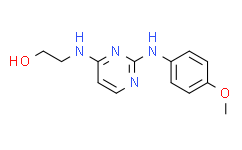



| Cas No.: | 671225-39-1 |
| Chemical Name: | CARDIOGENOL C HYDROCHLORID |
| Synonyms: | CARDIOGENOL C HYDROCHLORID;Cardiogenol C (hydrochloride);Cardiogenol C HCl;Cardiogenol C hydrochloride;4-(2-Hydroxyethylamino)-2-(4-methoxyphenylamino)-pyrimidine hydrochloride |
| SMILES: | COC1=CC=C(C=C1)NC2=NC=CC(=NCCO)N2 |
| Formula: | C13H17ClN4O2 |
| M.Wt: | 296.75300 |
| Purity: | >98% |
| Sotrage: | 2 years -20°C Powder, 2 weeks 4°C in DMSO, 6 months -80°C in DMSO |
| Description: | Cardiogenol C is a potent cell-permeable pyrimidine inducer which prompts the differentiation of ESCs into cardiomyocytes (EC50=100 nM)[1]. Cardiogenol C also acts cardiomyogenic on already lineage-committed progenitor cell types with a limited degree of plasticity. Cardiogenol C is a useful cardiomyogenic agent and can be used as a tool to improve cardiac repair by cell transplantation therapy in animal models[2]. |
| In Vitro: | Cardiogenol C (1 μM; 7 days) has a cardiomyogenic effect on P19 cells, it significantly increases atrial natriuretic factor (ANF, nppa) in P19 cells when it compares to untreated control cells[1]. Cardiogenol C (0.01-100 μM; 7 days) significantly increases ANF expression. In addition, another frequently used cardiac marker gene (NKX2-5) is also significantly increased by this small molecule in C2C12 cells[2]. Cardiogenol C (0.001-100 μM; 7 days) increases cardiac Nav1.5 sodium channel protein expression as dose-dependent manner in C2C12 cells[2]. Cardiogenol C (0.01-100 μM; 7 days) does not effect cell growth even at 10 μM. In addition, Cardiogenol C either solves in water or DMSO generates a similar effect. The highest concentration, 100 μM has significant cellular toxicity on C2C12 cells[2]. RT-PCR[2] Cell Line: C2C12 cells Concentration: 0.01 μM; 0.1 μM; 1 μM; 3 μM; 10 μM; 30 μM; 100 μM Incubation Time: 7 days Result: Increases ANF and NKX2.5 mRNA level as a dose-dependent manner. Western Blot Analysis[2] Cell Line: C2C12 cells Concentration: 0.001 μM; 0.01 μM; 0.1 μM; 1 μM; 10 μM Incubation Time: 7 days Result: Increased cardiac Nav1.5 sodium channel protein levels. Cell Proliferation Assay[2] Cell Line: C2C12 cells Concentration: 0.01 μM; 0.1 μM; 1 μM Incubation Time: 7 days Result: Did not exert toxic effects on C2C12 cells at 0.01-10 μM treatment. |
| References: | [1]. Wu X, et al. Small molecules that induce cardiomyogenesis in embryonic stem cells.J Am Chem Soc. 2004 Feb 18;126(6):1590-1. [2]. Mike AK, et al. Small molecule cardiogenol C upregulates cardiac markers and induces cardiac functional properties in lineage-committed progenitor cells. Cell Physiol Biochem. 2014;33(1):205-21. |