
 To enhance service speed and avoid tariff delays, we've opened a US warehouse. All US orders ship directly from our US facility.
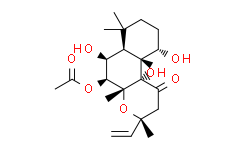



| Cas No.: | 66575-29-9 |
| Chemical Name: | Forskolin |
| Synonyms: | FORSKOLIN;BETA-ACETOXY-8,13-EPOXY-1ALPHA,6BETA,9ALPHA-TRIHYDROXY-LABD-14-EN-11-ONE;FORSKOHLIN;FORSKOLIN, COLEUS FORSKOHLII;COLEONOL;COLFORSIN;7BETA-ACETOXY-1ALPHA,6BETA,9ALPHA-TRIHYDROXY-8,13-EPOXY-LABD-14-EN-11-ONE;7BETA-ACETOXY-8,13-EPOXY-1ALPHA,6BETA,9ALPHA-TRIHYDROXY-LABD-14-EN-11-ONE;1H-Naphtho[2,1-b]pyran-1-one,5-(acetyloxy)-3-ethenyldodecahydro-6,10,10b-trihydroxy-3,4a,7,7,10a-pentamethyl-,(3R,4aR,5S,6S,6aS,10S,10aR,10bS)-;FORSKOLIN(P) PrintBack;FORSKOLIN(RG) PrintBack;Coleus Forskohlii Extract;[3H]-Forskolin;7β-Acetoxy-8,13-epoxy-1α,6β,9α-trihydroxylabd-14-en-11-one;ForsLean;HL 362;L 75-1362B;NSC 357088;NSC 375489;(3R,4aR,5S,6S,6aS,10S,10aR,10bS)-5-(Acetyloxy)-3-ethenyldodecahydro-6,10,10b-trihydroxy-3,4a,7,7,10a-pentamethyl-1H-naphtho[2,1-b]pyran-1-one;colforsina;colforsinum;colforsine;Boforsin;Colforsinum [Latin];Colforsine [French];Colforsina [Spanish];Coleonolk;Colforsin [USAN:INN];1F7A44V6OU;L |
| SMILES: | O1[C@](C([H])=C([H])[H])(C([H])([H])[H])C([H])([H])C([C@]2([C@@]1(C([H])([H])[H])[C@]([H])([C@]([H])([C@@]1([H])C(C([H])([H])[H])(C([H])([H])[H])C([H])([H])C([H])([H])[C@@]([H])([C@@]12C([H])([H])[H])O[H])O[H])OC(C([H])([H])[H])=O)O[H])=O |
| Formula: | C22H34O7 |
| M.Wt: | 410.5012 |
| Sotrage: | 2 years -20°C Powder, 2 weeks 4°C in DMSO, 6 months -80°C in DMSO |
| Description: | Forskolin is a potent adenylate cyclase activator, with IC50 and EC50 of 41 nM and 0.5 μM for type I adenylyl cyclase, respectively. |
| In Vivo: | The Forskolin (Fsk)-treated Mrp4-/- mice shows an increased number of Ki67-positive and cleaved caspase 3-positive ECs, a significant decrease in the amount of pericyte coverage, and a reduced number of empty sleeves. In pups exposed to hyperoxia (75% oxygen) from P7 to P12, the Mrp4-/- mice shows a significant increase in the unvascularized retinal area[3]. The average blood glucose in the healthy rat group is 102.12±1.94 mg/dL, 101.25±3.56 for control group and 103±2.08 in forskolin group. The data shows that glucose levels at the end of the study are lower in forskolin group, with a significant difference according to the statistical tests applied (p=0.03)[4]. |
| In Vitro: | Forskolin (Fsk) is a naturally occurring diterpene isolated from Coleus forskholii, directly activates adenylyl cyclase (AC) through its catalytic subunit to increase intracellular levels of cyclic adenosine monophosphate (cAMP)[1]. Forskolin (Fsk) affects the proliferation of the human T-cell lines such as Kit 225 and MT-2. Forskolin treatment inhibits the proliferation of both Kit 225 and MT-2 cells in a dose-dependent manner with an IC50 equal to ~5 μM Fsk. Forskolin treatment (10-100 μM) increases cAMPi levels ~5- to 20-fold above basal levels, which reache maximum levels between 50-100 μM Forskolin[2]. |