
 To enhance service speed and avoid tariff delays, we've opened a US warehouse. All US orders ship directly from our US facility.
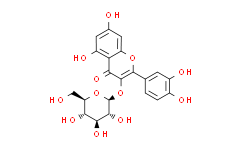



| Cas No.: | 482-35-9 |
| Chemical Name: | Isoquercetin |
| Synonyms: | 4H-1-Benzopyran-4-one,2-(3,4-dihydroxyphenyl)-3-(b-D-glucopyranosyloxy)-5,7-dihydroxy-;Quercetin 3-β-D-glucoside;3,3′,4′,5,7-Pentahydroxyflavone 3-β-glucoside, Isoquercitrin, Quercetin 3-β-D-glucoside;ISOQUERCETIN(P);ISOQUERCETIN(P) (AHP Verified)(REQUEST QUOTE) PrintBack;ISOQUERCETIN(RG);Isoquercitrin;Quercetin 3-glucoside;Quercetin 3-O-β-D Glucoside;Quercetin-3-O-glucopyranoside;2-(3,4-dihydroxyphenyl)-5,7-dihydroxy-3-[(3R,4S,5S,6R)-3,4,5-trihydroxy-6-(hydroxymethyl)oxan-2-yl]oxychromen-4-one;Isoquercetrin;NSC 115918;Q 5;Quercetin 3-D-glucoside;Quercetin 3-O-glucopyranoside;Quercetin 3-O-glucoside;Quercetin 3-O-beta-D-glucopyranoside;Quercetin 3-O-beta-D-glucoside;Quercetin 3-O-beta-D-glycoside;Quercetin 3-O-beta-glucoside;2-(3,4-Dihydroxyphenyl)-3-(beta-D-glucopyranosyloxy)-5,7-dihydroxy-4H-1-benzopyran-4-one;[ "Quercetin 3-O-glucoside", " Hirsutrin" ];Isoquercetin;Hirsutrin;3-Glucosylquercetin;Glucosyl 3-quercetin;Quercetol 3-glucoside;Quercetol 3-monoglucoside;Quercetin 3-monoglucoside;Isotrifoliin;Quercetin 3-beta-glucoside;quercetin-3-glucoside;Quercetin 3-beta-O-glucoside;quercetin-3-O-glucoside;3-beta-D-Glucosylquercetin;6HN2PC637T;CHEB |
| SMILES: | O1[C@]([H])([C@@]([H])([C@]([H])([C@@]([H])([C@@]1([H])C([H])([H])O[H])O[H])O[H])O[H])OC1C(C2=C(C([H])=C(C([H])=C2OC=1C1C([H])=C([H])C(=C(C=1[H])O[H])O[H])O[H])O[H])=O |
| Formula: | C21H20O12 |
| M.Wt: | 464.38 |
| Purity: | >98% |
| Sotrage: | 2 years -20°C Powder, 2 weeks 4°C in DMSO, 6 months -80°C in DMSO |
| Description: | Quercetin-3-glucoside is a naturally occurring polyphenol that has antioxidant, anti-proliferative, and anti-inflammatory properties.Quercetin-3-glucoside alleviates ethanol-induced hepatotoxicity, oxidative stress, and inflammatory responses via the Nrf2/ARE antioxidant signaling pathway[1].Quercetin-3-glucoside regulates the expression of nitric oxide synthase 2 (NO2) via modulating the nuclear factor-κB (NF-κB) transcription regulation system. Quercetin-3-glucoside has high bioavailability and low toxicity, is a promising candidate agent to prevent birth defects in diabetic pregnancies[2]. |
| In Vitro: | Quercetin-3-glucoside (5-20 μM; 24 hours) substantially reduces ethanol-induced cytotoxicity , protects hepatic cells against ethanol‐stimulated liver injury[1].Quercetin-3-glucoside (10 μM; pre-treat 1 hour) dramatically downregulates the levels of ethanol-induced iNOS protein expression in HepG2 cells[1]. Cell Viability Assay[1] Cell Line: HepG2 cells Concentration: 5 μM, 10 μM, 20 μM Incubation Time: 24 hours Result: Caused significantly enhanced cell viability as positive controls. Western Blot Analysis[1] Cell Line: HepG2 cells Concentration: 10 μM Incubation Time: 1 hour Result: Decreased ethanol‐ induced iNOS protein expression. |
| References: | [1]. Lee S, et al. Relative protective activities of quercetin, quercetin-3-glucoside, and rutin in alcohol-induced liver injury. J Food Biochem. 2019 Aug 5:e13002. [2]. Tan C, et al. Modulation of nuclear factor-κB signaling and reduction of neural tube defects by quercetin-3-glucoside in embryos of diabetic mice. Am J Obstet Gynecol. 2018 Aug;219(2):197.e1-197.e8. |