 To enhance service speed and avoid tariff delays, we've opened a US warehouse. All US orders ship directly from our US facility.
| Cat. No. | Product Name | Field of Application | Chemical Structure |
|---|---|---|---|
| DC79894 | (4R,5S)-Nutlin carboxylic acid-NHC2-PEG2-N3 |
(4R,5S)-Nutlin carboxylic acid-NHC2-PEG2-N3 is a synthesized E3 ligase ligand-linker conjugate that incorporates the (4R,5S)-Nutlin carboxylic acid based MDM2 ligand and a linker used in PROTAC technology. (4R,5S)-Nutlin carboxylic acid-NHC2-PEG1-N3 can be connected to the ligand for protein by a linker to form PROTAC EZH2 Degrader-30.
More description
|

|
| DC79888 | (2S,3S)-Zenidolol hydrochloride |
(2S,3S)-Zenidolol ((2S,3S)-ICI-118551) hydrochloride is a β2-adrenergic receptor (β2AR) antagonist with pKi values for β1AR and β2AR of 7.51 and 9.27 respectively. (2S,3S)-Zenidolol hydrochloride can be used in the research of heart failure, ischemic heart disease and hypertension.
More description
|
|
| DC79877 | (1R)-KRAS inhibitor-24 |
(1R)-KRAS inhibitor-24 (compound 115c) is a pyridopyrimidine KRAS inhibitor, with an IC50 of < 100 nM for KRas G12V, KRas WT and KRas G12R.
More description
|
|
| DC79874 | (+)-trans-Limonene oxide |
(+)-trans-Limonene oxide is an antimicrobial essential oil component with activity against Staphylococcus aureus. (+)-trans-Limonene oxide acts as a selective agent for drug-resistant bacterial mutants without increasing the mutation frequency of Staphylococcus aureus USA300. (+)-trans-Limonene oxide can be used in studies of Staphylococcus aureus infection.
More description
|
|
| DC77923 | ISIS 1082 |
ISIS 1082 is an antisense oligonucleotide targeted to the translation initiation codon of herpes simplex virus (HSV) type 1 and 2 virion capsid protein. It has been shown to inhibit HSV-1 replication in vitro
More description
|
|
| DC77922 | ISIS 1082 sodium |
ISIS 1082 sodium is an antisense oligonucleotide targeted to the translation initiation codon of herpes simplex virus (HSV) type 1 and 2 virion capsid protein. It has been shown to inhibit HSV-1 replication in vitro
More description
|
|
| DC77919 | 2-Chloro-2′-deoxyadenosine monophosphate |
2-Chloro-2′-deoxyadenosine monophosphate is an anticoronavirus agent. It exhibits significant inhibitory effects against wild-type novel coronavirus, novel coronavirus variants (Beta, Delta, and Omicron strains), and other coronaviruses such as human coronavirus 229E, human coronavirus OC43, human coronavirus NL63, and mouse coronavirus MHV.
More description
|
|
| DC77913 | N-Dodecanoyl-L-homoserine lactone-3-hydrazone-biotin |
N-Dodecanoyl-L-homoserine lactone-3-hydrazone-biotin (N-Dodecanoyl-L-hsl-3-hydrazone-biotin) is a biotin-tagged bacterial quorum sensing probe that links the quorum sensing signaling molecule AHL (acyl-homoserine lactone) to biotin via a hydrazone bond.
More description
|
|
| DC77908 | ALG-097558 |
ALG-097558 is an orally active 3CLpro inhibitor. ALG-097558 demonstrates pan-coronavirus activity against various SARS-CoV-2 variants as well as other human coronaviruses (HCoVs) such as SARS-CoV-1, α-HCoV 229E, and β-HCoV OC43. ALG-097558 demonstrates potent inhibition with IC50s of 2 nM (SARS-CoV-2 3CLpro) and 6 nM (229E 3CLpro). ALG-097558 demonstrates antiviral activity in the SARS-CoV-2 hamster infection model. ALG-097558 can be used for the study of viral infections[1].
More description
|
|
| DC77907 | GPI2A |
GPI2A is a 20-mer antisense oligonucleotide sequence that is complementary to a region of the HIV-1 gag gene. GPI2A shows a significant inhibitory effect on p55 and its cleavage product p39/41.
More description
|
|
| DC77906 | GPI2A sodium |
GPI2A sodium is a 20-mer antisense oligonucleotide sequence that is complementary to a region of the HIV-1 gag gene. GPI2A shows a significant inhibitory effect on p55 and its cleavage product p39/41.
More description
|
|
| DC77884 | Daplusiran |
Daplusiran is a siRNA in JNJ-3989 (JNJ-73763989). JNJ-3989 is comprised of 2 siRNAs (Daplusiran and Tomligisiran), that target hepatitis B virus (HBV) mRNAs for degradation, thereby inhibiting HBV replication.
More description
|
|
| DC77883 | Daplusiran sodium |
Daplusiran sodium is a siRNA in JNJ-3989 (JNJ-73763989). JNJ-3989 is comprised of 2 siRNAs (Daplusiran and Tomligisiran), that target hepatitis B virus (HBV) mRNAs for degradation, thereby inhibiting HBV replication.
More description
|
|
| DC77867 | RLA-3107 |
RLA-3107 is an artemisinin regioisomer that blocks ion channels, thereby preventing cations from entering the host cytoplasm. RLA-3107 is also a viroporin inhibitor.
More description
|
|
| DC77846 | Afovirsen |
Afovirsen is a 20-mer phosphorothioate oligonucleotide. It is complementary to the mRNA sequence for the translation initiation codon of the E2 protein vital to replication of HPV types 6 and 11.
More description
|
|
| DC77845 | Afovirsen sodium |
Afovirsen sodium is a 20-mer phosphorothioate oligonucleotide. It is complementary to the mRNA sequence for the translation initiation codon of the E2 protein vital to replication of HPV types 6 and 11.
More description
|
|
| DC77843 | 148.1-38m sodium |
148.1-38m sodium, an RNA aptamer, inhibits HIV-1 reverse transcriptase (RT) and interfere with viral replication.
More description
|
|
| DC77841 | Cephalexin hydrochloride |
Cephalexin (hydrochloride, Cefalexin hydrochloride) is a potent, orally active cephalosporin antibiotic with broad-spectrum activity. It acts by binding to penicillin-binding proteins (PBPs), thereby disrupting bacterial cell wall synthesis. Cephalexin hydrochloride demonstrates antibacterial activity against a wide variety of gram-positive and gram-negative bacteria.
More description
|
|
| DC41966 | CSP1 Featured |
CSP1 is a potent and selective ComD1 receptor agonist, with an IC50 of 10.3 nM. CSP1 is a major variants of competence-stimulating peptide (CSP), and it can regulate genetic transformation of S. pneumonia by modulating quorum sensing (QS). CSP1 can act as an antibacterial agent.
More description
|

|
| DC70522 | JMN3-003 Featured |
JMN3-003 is a host-directed inhibitor with potent antiviral activity against a panel of myxovirus family members with EC50 of 10-70 nM.JMN3-003 shows activity against MeV at 170 (viral CPE-reduction assay) and 30 nM (virus yield reduction assay) and does not display any detectable acute cytotoxicity.JMN3-003 also shows superb antiviral activity against a selection of clinical-relevant paramyxovirus (RSV, MuV, and HPIV3) and orthomyxovirus (influenza) family members.
More description
|

|
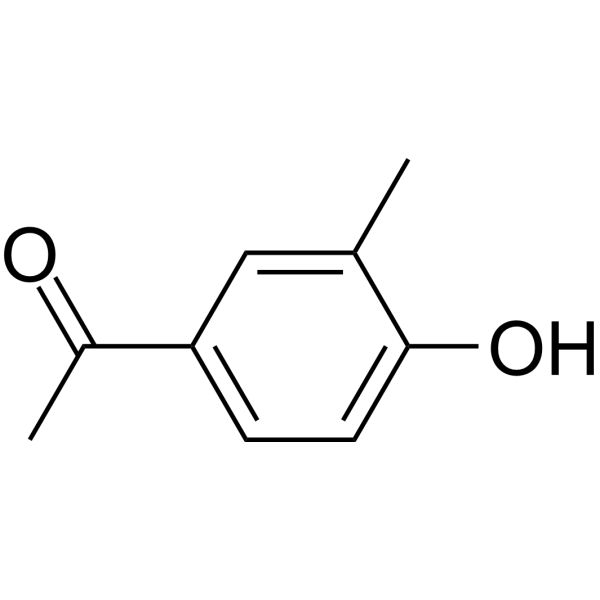
| DC44819 | 4'-Hydroxy-3'-methylacetophenone Featured |
4'-Hydroxy-3'-methylacetophenone, a phenolic volatile compound, is isolated from Hawaiian green coffee beans (Coffea Arabica L.). 4'-Hydroxy-3'-methylacetophenone has potent antioxidant activities. 4'-Hydroxy-3'-methylacetophenone also can be used to synthesize heterocyclic compounds which have antimycobacterial activity.
More description
|
|
| DC72928 | GSK147 Featured |
GSK147 (GSK-147) is an antimalarial compound that targets blood-stage activity of the Plasmodium falciparum and Plasmodium vivax parasites (Pf IC50=40 nM).
More description
|

|
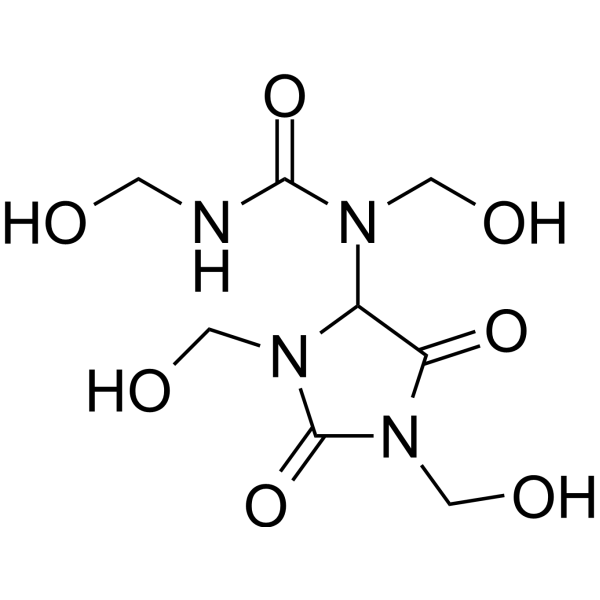
| DC42104 | Diazolidinyl urea Featured |
Diazolidinyl urea, a broad spectrum preservative, is a formaldehyde-releasing compound that releases formaldehyde through its decomposition. Diazolidinyl urea is effective against most contaminating microorganisms, especially Pseudomonas.
More description
|
|
| DC45477 | (1R)-α-Pinene Featured |
(1R)-α-Pinene is a volatile monoterpene with antimicrobial activities. (1R)-α-Pinene reduces Bacillus cereus population growth, and exhibits repellent effects.
More description
|
-α-Pinene.gif)
|
| DC72931 | HSGN-189 Featured |
HSGN-189 is a potent lipoteichoic acid (LTA) biosynthesis inhibitor, exhibits potent antibacterial activity against both MRSA and VRE strains with MICs of 1 ug/mL.
More description
|

|
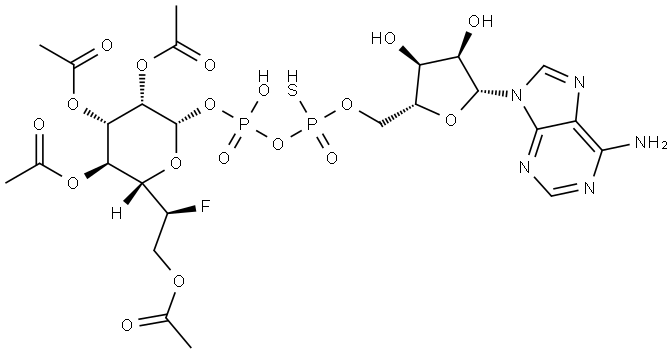
| DC72979 | DF-006 |
DF-006 is a small molecule, orally active Alpha-kinase 1 (ALPK1) agonist, activates ALPK1 and stimulates host innate immunity locally in liver, DF-006 enacts potent anti-HBV responses in mouse models of HBV and in primary human hepatocytes.
More description
|
|
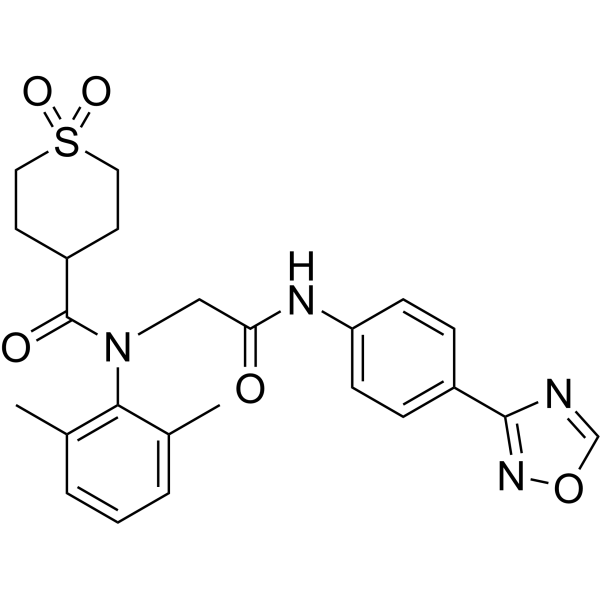
| DC10621 | Amenamevir Featured |
Amenamevir, also known as ASP2151, is a herpes virus helicase-primase inhibitor.
More description
|
|
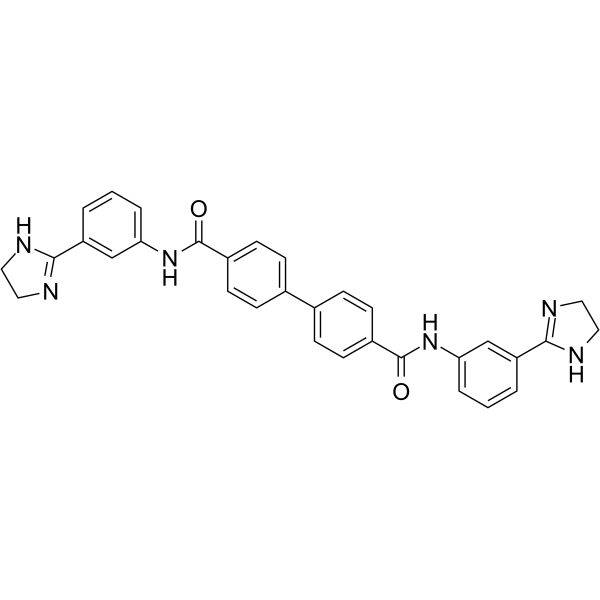
| DC44821 | BPH-1358 free base Featured |
BPH-1358 free base (NSC50460 free base) is a potent human farnesyl diphosphate synthase (FPPS) and undecaprenyl diphosphate synthase (UPPS) inhibitor with IC50s of 1.8 μM and 110 nM, respectively, and is active against S. aureus in vitro (MIC ~250 ng/mL).
More description
|
|
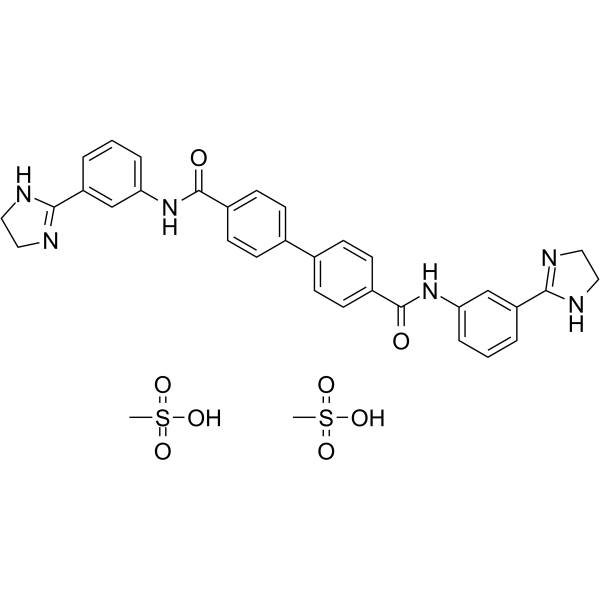
| DC46363 | BPH-1358 mesylate Featured |
BPH-1358 mesylate (NSC50460 mesylate) is a potent human farnesyl diphosphate synthase (FPPS) and undecaprenyl diphosphate synthase (UPPS) inhibitor with IC50s of 1.8 μM and 110 nM, respectively. BPH-1358 mesylate is active against S. aureus in vitro (MIC ~250 ng/mL).
More description
|
|
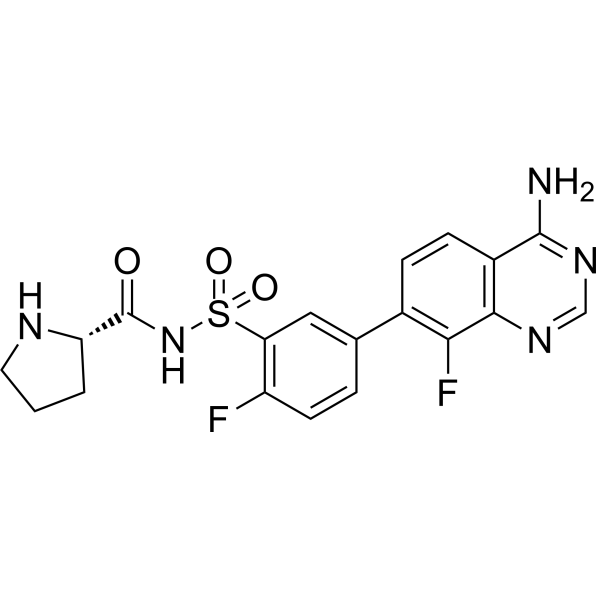
| DC76017 | PAA-38 Featured |
PAA-38 is a highly potent selective inhibitor targeting bacterial prolyl-tRNA synthetase (ProRS). PAA-38 againsts Pseudomonas aeruginosa ProRS (PaProRS) with a Kd value of 0.399 nM and an IC50 value of 4.97 nM. PAA-38 againsts human cytoplasmic ProRSs (HsProRS) with an IC50 value of 35.5 nM. PAA-38 demonstrates an in vitro antibacterial activity of minimum inhibitory concentration (MIC) = 4-8 μg/mL.
More description
|
|
