To enhance service speed and avoid tariff delays, we've opened a US warehouse. All US orders ship directly from our US facility.
| Cat. No. | Product Name | Field of Application | Chemical Structure |
|---|---|---|---|
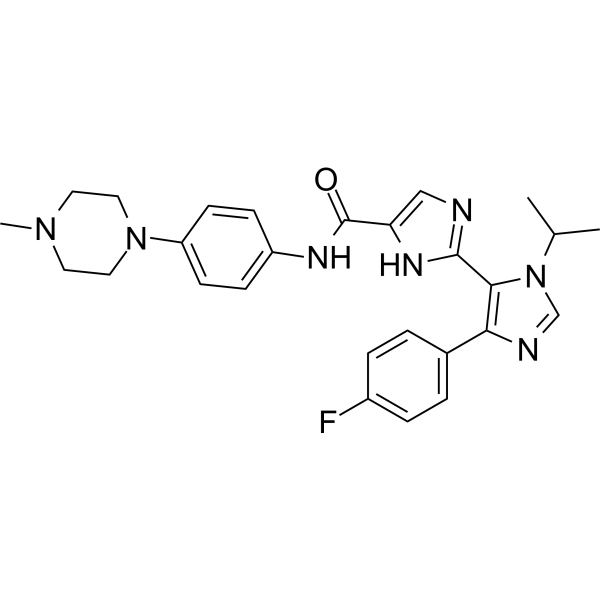
| DC74461 | Rentosertib Featured |
INS018_055 (INS018-055) a selective small-molecule TRAF2- and NCK-interacting kinase (TNIK) inhibitor with Kd value of 4.32 nM and IC50 of 31 nM, inhibits TGF-β-induced α-SMA protein expression in MRC-5 cells with IC50 of 27.14 nM.
More description
|
|
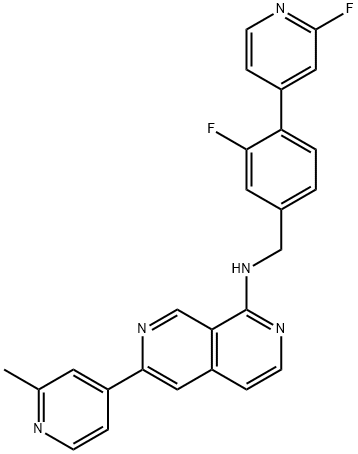
| DC74459 | Z271-0326 Featured |
Z271-0326 is a first-in-class, potent and specifc inhibitor of NACK (Notch activation complex kinase) with SPR KD value of 0.89 uM, directly blocks NACK recruitment to the Notch ternary complex (NTC).
More description
|

|
| DC74445 | FL-1607 Featured |
FL-1607, a novel Fam20C inhibitor, has shown remarkable anti-proliferative effects in triple-negative breast cancer (TNBC) cells. This compound induces apoptosis and significantly reduces the migration ability of MDA-MB-468 cells, underscoring its potential as a promising therapeutic agent for TNBC treatment.
More description
|

|
| DC81781 | ZD-2767P |
ZD-2767P (Compound 1) is a reversible and competitive inhibitor of IDH1, with its IC50 value being 410 nM.
More description
|

|
| DC81718 | VEGFR-2/c-Met/EGFR-IN-1 |
VEGFR-2/c-Met/EGFR-IN-1 is a VEGFR-2/c-Met/EGFR inhibitor with IC50 values of 0.014 μM, 0.072 μM, and 0.94 μM, respectively. c-Met-IN-27 inhibits neovascularization in the chick chorioallantoic membrane (CAM) assay and exhibits in vivo anti-angiogenic activity. c-Met-IN-27 can be used in angiogenesis-related research.
More description
|
|
| DC81704 | UCM-A86 |
UCM-A86 is a selective positive allosteric modulator of GluN1/GluN3 NMDA receptors with EC50 values of 21 µM and 19 µM at GluN1/GluN3A and GluN1/GluN3B receptors, respectively. UCM-A86 selectively potentiates responses from GluN1/GluN3A/B over GluN1/GluN2A-D receptors. UCM-A86 can be used in the research of central nervous system diseases.
More description
|
|
| DC81557 | Sodium bromide |
Sodium bromide (NSC 77384; Sanibrom 40) is a GABA-ergic system modulator that crosses the blood-brain barrier, and it effectively reduces and blocks epileptiform discharges. Sodium bromide exerts significant anticonvulsant effects by enhancing GABA-ergic inhibitory functions, such as increasing the amplitude of inhibitory postsynaptic currents and paired-pulse inhibition. Sodium bromide specifically enhances stimulation-induced extracellular alkalosis without affecting baseline pH or subsequent acidosis processes. Sodium bromide exhibits species-specific pharmacokinetic characteristics, competes with chloride ions for renal tubular reabsorption sites, and serves as a marker for extracellular fluid volume. Sodium bromide can be used in the research of epilepsy and related neurological diseases.
More description
|
|
| DC81440 | RB-105 |
RB-105 is an inhibitor of angiotensin-converting enzyme (ACE) (Ki = 4.2 nM) and neutral endopeptidase (NEP) (Ki = 1.7 nM). RB-105 after inhibiting ACE reduces the production of Ang II and increase the level of bradykinin. RB-105 after inhibiting NEP increases the level of natriuretic peptide and further increases the level of bradykinin, thereby generating a powerful synergistic effect. RB-105 has significant antihypertensive and natriuretic effects in both spontaneously hypertensive rats and normal blood pressure rats. RB-105 can be used for research on hypertension.
More description
|
|
| DC81381 | PROTAC IKKβ/NR4A1 degrader-1 |
PROTAC IKKβ/NR4A1 degrader-1 is a highly efficient and effective dual-PROTAC degrader targeting IKKβ and NR4A1. PROTAC IKKβ/NR4A1 degrader-1 can increase the levels of caspase 3 and cleaved caspase 3 proteins, while the necroptosis marker RIP kinase remained unchanged, indicating that it can induce apoptosis. PROTAC IKKβ/NR4A1 degrader-1 can be used for the study of Acute myeloid leukemia (AML). Red: IKKβ/NR4A1 ligand; Blue: E3 ligase CRBN ligand; Black: Linker.
(Pink: Nur77/NR4A1 ligand ; Blue: Cereblon ligand ; Black: linker).
More description
|
|
| DC81136 | N-Desmethylsertraline-13C6 |
N-Desmethylsertraline-13C6 (Sertraline impurity 30-13C6) is the 13C-labeled N-Desmethylsertraline.
More description
|
|
| DC80910 | KRAS G12C-IN-75 |
KRAS G12C-IN-75 is an orally active, blood-brain barrier penetrant KRASG12C inhibitor with an IC50 of 0.53 nM. KRAS G12C-IN-75 attenuates active transport mediated by P-glycoprotein (P-gp) and breast cancer resistance protein (BCRP). KRAS G12C-IN-75 inhibits tumor growth, regulates the expression of downstream MAPK target genes DUSP6 and SPRY4, and exhibits dose-dependent KRASG12C alkylation in KRASG12C-positive xenograft models. KRAS G12C-IN-75 can be used for research related to non-small cell lung cancer.
More description
|
|
| DC80697 | GATT-44 |
GATT-44 is a blood-brain barrier-permeable, selective GABA transporter 1 (GAT-1) ligand with an IC50 of 126 nM. GATT-44 shows selectivity for GAT-2, GAT-3 and BGT-1 subtypes, and undergoes copper-mediated 18F-radiofluorination. The radiolabeled GATT-44 ([18F]GATT-44) exhibits brain uptake, metabolic stability and high GAT-1 binding specificity in non-human primates. GATT-44 is applicable for research on neurodegenerative and neuropsychiatric diseases.
More description
|
|
| DC80688 | G9a-IN-4 |
G9a-IN-4 is a G9a inhibitor with high selectivity (IC50 = 32 nM). G9a-IN-4 shows high selectivity against the other tested lysine/arginine methyltransferases. G9a-IN-4 exhibits high enzymatic activity against G9a and more potent antiproliferative effects against all tested cancer cells. G9a-IN-4 significantly suppresses the H3K9me2 level. G9a-IN-4 triggers autophagy by inducing the production of ROS, thus leading to cell apoptosis and cell cycle arrest at G0/G1 in CT26 colon cells. G9a-IN-4 can be used for the study of colon cancer.
More description
|
|
| DC80450 | CK1-IN-5 |
CK1-IN-5 (compound B-AZ) is an inhibitor of CK1. CK1-IN-5 lengthened the circadian period by inhibits AtCKL3/AtCKL4 activity.
More description
|
|
| DC80263 | Asocainol hydrochloride |
Asocainol hydrochloride (Goe 4704 hydrochloride) is an antiarrhythmic agent. Asocainol hydrochloride reduces the maximum rate of action potential rise and action potential amplitude. Asocainol hydrochloride is applicable for the research of arrhythmias.
More description
|
|
| DC80215 | Antifungal agent 143 |
Antifungal agent 143 is potent antifungal agent which also exihibits antibacterial activity. Antifungal agent 143 inhibits growth of Candida albicans and Aspergillus niger, Escherichia coli, Pseudomonas aeruginosa, Staphylococcus aureus, and Streptococcus pyogenes. Antifungal agent 143 can be used for antimicrobial research.
More description
|
|
| DC70306 | CGX1321 Featured |
CGX1321 (CGX-1321) is a nove potent and specific inhibitor of porcupine (PORCN) that inhibits Wnt pathway, block secretion of WNT proteins with IC50 of 1 nM;
CGX1321 displayed >500 times selective for Porcupine over the most related target enzyme, hedgehog acyltransferase.
CGX1321 increased Ki67+ and phosphohistone H3 (PH3+) cardiomyocytes in culture, up-regulated cell cycle regulating genes such as Ccnb1 and Ccne1, did not alter YAP protein phosphorylation and nuclear translocation in cardiomyocytes.
CGX1321 administration blocked the secretion of Wnt proteins, and inhibited both canonical and non-canonical Wnt signaling pathways in MI injury mice.
CGX1321 improved cardiac function, reduced myocardial infarct size, and fibrosis of post-MI hearts.
CGX1321 significantly increased newly formed cardiomyocytes in infarct border zone of post-MI hearts, evidenced by the increased EdU+ cardiomyocytes.
More description
|
|
| DC74440 | CW85319 Featured |
CW85319 is a small-molecule compound that enhances Axin2's interaction with GSK3β, shows a high-affinity binding with Axin2 with Kd of 5.8 uM.
More description
|

|
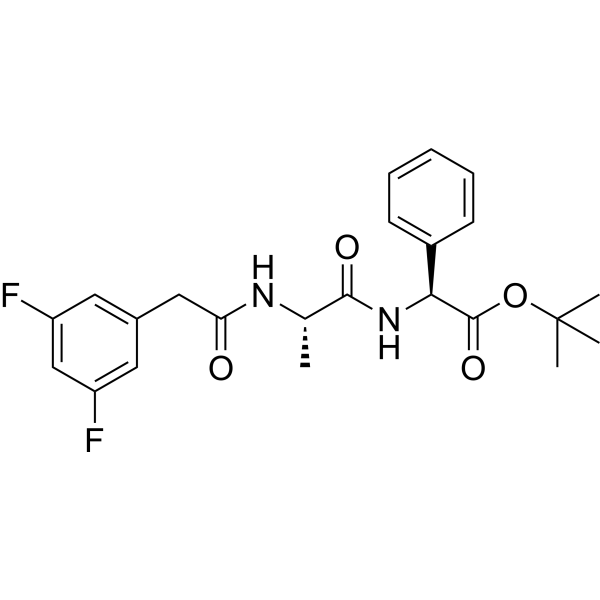
| DC7396 | DAPT Featured |
DAPT(GSI-IX) is an inhibitor of γ-secretase; DAPT causes a reduction in Aβ40 and Aβ42 levels in human primary neuronal cultures (IC50 values are 115 and 200 nM for total Aβ and Aβ42 respectively) and in brain extract, cerebrospinal fluid and plasma.
More description
|
|
| DC11791 | SSTC3 Featured |
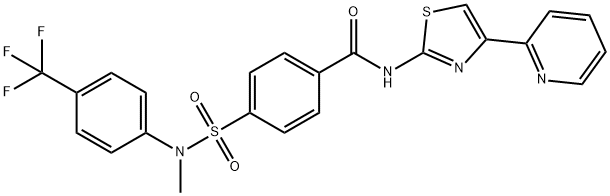
SSTC3 is a novel small-molecule CK1α activator with EC50 of 30 nM (WNT-driven reporter gene assay), Kd of 32 nM.
More description
|
|
| DC79853 | IOR-160 |
IOR-160 is a dual inhibitor of casein kinase 2 (CK2) and HDACs. IOR-160 exhibits high selectivity for CK2 (IC50 = 1.7 nM) and broad inhibitory activity against HDAC (HDAC 1, 2, 3, and 6 with IC50s of 3.3 nM, 24.0 nM, 3.9 nM, and 13.0 nM, respectively, with low activity for HDAC8). IOR-160 modulates key cellular signaling pathways by inhibiting AKT phosphorylation and increasing acetylated α-tubulin. IOR-160 inhibits tumor growth and reduces tumor burden through dual CK2/HDAC inhibition. IOR-160 is indicated for use in triple-negative breast cancer research.
More description
|
|
| DC79742 | MU1742-amide-C6-acid |
MU1742-amide-C6-acid is a CK1δ/ε inhibitor. MU1742-amide-C6-acid can be used for synthesis of PROTAC AH081.
More description
|
|
| DC79711 | BIIB042 |
BIIB042 is a potent, orally active, brain-penetrant, and selective γ-secretase modulator (GSM). BIIB042 reduces Aβ42 and increases Aβ38 levels in cells. BIIB042 significantly reduces brain Aβ42 levels in CF-1 mice and Fischer rats, as well as plasma Aβ42 levels in cynomolgus monkeys. BIIB042 reduces Aβ42 levels and Aβ plaque burden in Tg2576 mice. BIIB042 can be used for alzheimer's disease (AD) research[1][2].
More description
|
|
| DC79670 | GSI-136 |
GSI-136 is an inhibitor of γ-secretase with an IC50 of 3 nM. GSI-136 can be studied in medicinal and agricultural chemistry research.
More description
|
|
| DC79617 | JGK-263 |
JGK-263 is an orally active Glycogen synthase kinase-3β (GSK-3β) inhibitor. JGK-263 exhibits neuroprotective effect and can improve motor function. JGK-263 can be used for the research of neurological disease, such as amyotrophic lateral sclerosis (ALS).
More description
|
|
| DC79505 | GSM III |
GSM III is a γ-Secretase complexe (GSEC) modulator. GSM III significantly regulates amyloid-β (Aβ) length at the extracellular interface between the protease (NCT, PSEN) and the substrate APPC99. GSM III can be used for Alzheimer's disease (AD) research.
More description
|
|
| DC79429 | APL-5125 |
APL-5125 (Compound 61f) is a potent, selective and orally active ATP-competitive CK2α inhibitor with an IC50 of 0.348 nM and a Ki of 0.095 nM. APL-5125 binds to CK2α in a bivalent manner, simultaneously interacting with the ATP-binding site and the αD pocket. APL-5125 exhibits antitumor activity and can be used for the research of cancer, such as colon cancer.
More description
|
|
| DC79365 | Y-99 |
Y-99 is a PORCN inhibitor with an IC50 of 155.4 nM against the Wnt/β-catenin signaling pathway. Y-99 inhibits the expression of p-LRP6, β-catenin, and c-Myc.
More description
|
|
| DC79358 | AH081 |
AH081 (Compound 38) is a CK1δ/ε PROTAC degrader. AH081 is the negative control compound of AH078. AH081 has inhibitory but no degradation activity for CK1δ/ε by using an inactive stereoisomer of the VHL ligand.
More description
|
|
| DC79220 | GSK-3β inhibitor 27 |
GSK-3β inhibitor 27 (Compound 1c) is a reversible and competitive GSK-3β inhibitor with an IC50 value of 2.2 μM. GSK-3β inhibitor 27 inhibits tau hyperphosphorylation, reduces Aβ protein aggregation and possesses metal chelation and neuroprotective potential. GSK-3β inhibitor 27 is promising for research of neurodegenerative diseases (such as Alzheimer’s disease).
More description
|
|