
Alternate TextTo enhance service speed and avoid tariff delays, we've opened a US warehouse. All US orders ship directly from our US facility.

BIP-20

  Cat. No.:  DC68021   Featured
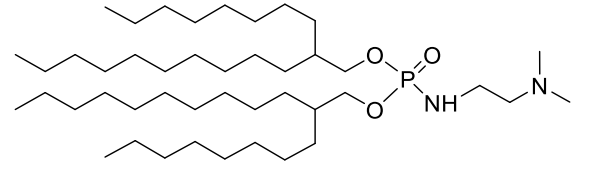
Chemical Structure
For research use only. We do not sell to patients.
We match the best price and quality on market.
Email:order@dcchemicals.com  sales@dcchemicals.com
Tel:+86 21 58447131
We are official vendor of:
  • 20
  • 19
  • 18
  • 17
  • 16
  • 15
  • 14
  • 12
  • 11
  • 10
  • 9
  • 8
  • 13
  • 6
  • 5
  • 4
  • 3
  • 2
  • 1
More than 5000 active chemicals with high quality for research!
Field of application
BiP-20 is a branched ionizable phospholipid identified as a lead compound for efficient hepatic mRNA delivery.BiP-20 is a novel, efficient, and safe liver-targeted LNP delivery vehicle. With an ideal pKa of 6.56, it achieves highly efficient liver targeting and endosomal escape primarily through the ApoE/LDL-R pathway. It demonstrates exceptional performance in gene editing at very low doses: for CRISPR-Cas9-mediated editing of TTR, a 10 μg dose achieved ~64% efficiency, which is 8-fold higher than the clinical benchmark lipid LP-01. In Prime Editing targeting the PCSK9 gene, its efficiency (4.30%) also significantly surpassed that of MC3, SM102, and LPO1. Furthermore, it mediates a 5.9-fold increase in hepatic protein expression compared to MC3. Safety assessments indicate it does not induce liver function abnormalities, showing strong therapeutic potential.
Cas No.:
Chemical Name: BIP-20
Synonyms: BIP20;BIP 20
Formula: C44H93N2O3P
M.Wt: 729.2128
Purity: ELSD-HPLC>95%
Sotrage: 1 year -20°C
Publication: Jozić A, Le Roux C, Kim J, et al. In vivo endosomal escape assay identifies mechanisms for efficient hepatic LNP delivery. Nat Biotechnol. Published online March 11, 2026. doi:10.1038/s41587-026-03022-6
Cat. No. Product name Field of application
DC68139 Lipid M10 M10 is a piperazine-derived bis-tertiary amine ionizable lipid. With an optimal pKa of 6.56, it enables efficient liver-targeted CRISPR/Cas9 delivery, achieving durable PCSK9 silencing and LDL-C reduction after a single dose, alongside a favorable safety profile.
DC68138 Lipid M3 Lipid M3 is a novel ionizable lipid. Lipid M3's primary role is to enable the efficient co-encapsulation and delivery of CRISPR/Cas9 components—Cas9 mRNA and sgRNA targeting the VEGFA gene—into human retinal endothelial cells. M3 facilitates critical steps for successful gene editing, including stabilizing the nucleic acid cargo, promoting cellular uptake, and enabling effective endosomal escape to release the payload into the cytoplasm. This results in high gene-editing efficiency (indel frequency ~28.7%). A single intravitreal injection of the M3-F4 LNP carrying this CRISPR system demonstrated potent therapeutic effects in mouse models of diabetic retinopathy by significantly inhibiting pathological neovascularization and vascular leakage, while maintaining excellent biocompatibility.
DC68021 BIP-20 BiP-20 is a branched ionizable phospholipid identified as a lead compound for efficient hepatic mRNA delivery.BiP-20 is a novel, efficient, and safe liver-targeted LNP delivery vehicle. With an ideal pKa of 6.56, it achieves highly efficient liver targeting and endosomal escape primarily through the ApoE/LDL-R pathway. It demonstrates exceptional performance in gene editing at very low doses: for CRISPR-Cas9-mediated editing of TTR, a 10 μg dose achieved ~64% efficiency, which is 8-fold higher than the clinical benchmark lipid LP-01. In Prime Editing targeting the PCSK9 gene, its efficiency (4.30%) also significantly surpassed that of MC3, SM102, and LPO1. Furthermore, it mediates a 5.9-fold increase in hepatic protein expression compared to MC3. Safety assessments indicate it does not induce liver function abnormalities, showing strong therapeutic potential.
DC65850 VL422 VL422 is a novel ionizable cationic lipid, as a high-performance "molecular engine" for next-generation Lipid Nanoparticles (LNPs), specifically engineered for the precise delivery of CRISPR base editors and mRNA. Its sophisticated chemical architecture is designed to remain neutral in systemic circulation for enhanced safety, while rapidly protonating within the acidic cellular environment to trigger efficient endosomal escape and cargo release. Validated by groundbreaking research in liver-targeted gene silencing, VL422 has become a critical benchmark molecule for developing permanent, transformative therapies for cardiovascular and metabolic diseases.
X