To enhance service speed and avoid tariff delays, we've opened a US warehouse. All US orders ship directly from our US facility.
| Cat. No. | Product Name | Field of Application | Chemical Structure |
|---|---|---|---|
| DC66279 | DSPE-PEG-PEI Featured |
Polyethyleneimine (PEI), also known as polyethyleneimine, is a water-soluble polymer. Colorless or yellowish viscous liquid, hygroscopic, soluble in water, ethanol, insoluble in benzene.
PEG-PEI, a copolymer of cationic poly (ethylene imide) (PEI) and polyethylene glycol (PEG), is a well-studied compound that significantly improves the delivery of oligonucleotides and nucleic acids (DNA, siRNA) in vitro and in vivo. By varying the MW of PEI and PEG, PEG-PEI drug conjugates, polymers, or nanoparticles with dynamic range of size, surface charge, and stability can be prepared, all of which are important for transfection efficiency.
PEI-PEG-DSPE, polyethylenimine-PEGyl-phospholipid is an AB block copolymer with phospholipids at the end of PEG that can be used in drug delivery systems. DSPE, 1, 2-distearoyl-SN-glycerol-3-phosphate ethanolamine is a synthetic phospholipid that can be used as a membrane material with solubility and is suitable for the development of liposomes and phospholipid complexes.
More description
|

|
| DC66115 | DSPE-PEG-OH Featured |
DSPE-PEG-OH, MW 2000 is a PEG-based PROTAC linker that can be used in the synthesis of PROTACs. Additionally, DSPE-PEG-OH, MW 2000 can also be used for drug delivery.
More description
|

|
| DC66113 | DSPE-PEG-FA Featured |
Phospholipid polyethylene glycol folate (dspe-peg-fa), carboxyl group and amino group form amide bond. This reaction makes folate ligand attach to protein, antibody, peptide or particle surface. Pegylated folate has good water solubility and bioactivity. Folate functionalized substrates have been used for targeted drug delivery, imaging and bioassay. DSPE (1,2-distearyl-sn-glycerin-3-phosphate ethanolamine) is a saturated 18 carbon phospholipid, which is commonly used in the synthesis of liposomes. Polyethylene glycol (PEG) - coupled DSPE is hydrophilic and can be used for drug delivery, gene transfection and biomolecular modification.
More description
|

|
| DC66100 | DSPE-Biotin Featured |
DSPE-Biotin is a lipid. DSPE-Biotin can be used for the research of various biochemical.
More description
|

|
| DC66094 | DSPE-CY5.5 Featured |
Phospholipids DSPE belong to the lipid family of biopolymers. Phospholipids consist of two fatty acids, a glycerol unit, a phosphate group, and a polar molecule. The phosphate groups and polar head regions of the molecule are hydrophilic (attracted to water), while the fatty acid tail is hydrophobic (repelled by water). When placed in water, the phospholipids Orient themselves into a double layer, where the non-polar tail region faces the inner region of the double layer. The polar head region faces outward and interacts with the water. Applications in drug release, nanotechnology and new materials research, cell culture. As well as ligand research, peptide synthesis support, grafted polymer compounds, new materials and pegylated modified functional coatings and other active compounds.
More description
|
|
| DC72426 | DSPE-SPDP Featured |
DSPE-SPDP is a phospholipid molecule. DSPE-SPDP can orient itself to form lipid bilayer in water. DSPE-SPDP can be used for the research of various biochemical.
More description
|

|
| DC66096 | DSPE-CY3 Featured |
Phospholipids DSPE belong to the lipid family of biopolymers. Phospholipids consist of two fatty acids, a glycerol unit, a phosphate group, and a polar molecule. The phosphate groups and polar head regions of the molecule are hydrophilic (attracted to water), while the fatty acid tail is hydrophobic (repelled by water). When placed in water, the phospholipids Orient themselves into a double layer, where the non-polar tail region faces the inner region of the double layer. The polar head region faces outward and interacts with the water. Applications in drug release, nanotechnology and new materials research, cell culture. As well as ligand research, peptide synthesis support, grafted polymer compounds, new materials and pegylated modified functional coatings and other active compounds.
More description
|
|
| DC65618 | DSPE-NHS Featured |
DSPE-NHS is a bioconjugation phospholipid molecule with two hydrophobic lipid tails. DSPE-NHS is a self-assembling reagent which forms lipid bilayer in aqueous solution. DSPE-NHS can be used to prepare liposomes as drug nanocarrier.
More description
|

|
| DC72430 | DSPE-Mal Featured |
DSPE-MAL is a thiol reactive a phospholipid compound. DSPE-MAL has two saturated fatty acids and can self-assemble in water to form lipid bilayer. DSPE-MAL can be used to prepare liposomes as drug nanocarrier.
More description
|

|
| DC66104 | DSPE-ICG Featured |
ICG indocyanine green is a three carbon cyanine dye with good water solubility and a molecular weight of 775. Indocyanine green can almost completely bind to plasma proteins in plasma and whole blood, ensuring that it remains almost completely in Xueguan and is not easily diffused outward. Indocyanine green (ICG) is a near-infrared imaging reagent currently approved by the US Food and Drug Administration (FDA) for clinical use. ICG is a three carbon cyanine dye with near-infrared characteristic absorption peaks, emission wavelengths between 795 and 845nm, and has amphiphilic structures that are both hydrophilic and lipophilic. Near infrared light has a greater penetration depth in tissues and is less affected by biological tissue background, Due to its near-infrared absorption and emission fluorescence characteristics, ICG can be used as an excellent tissue penetrating agent in vivo.
More description
|
|
| DC66099 | DSPE-FA Featured |
|
|
| DC72432 | DSPE-N3 Featured |
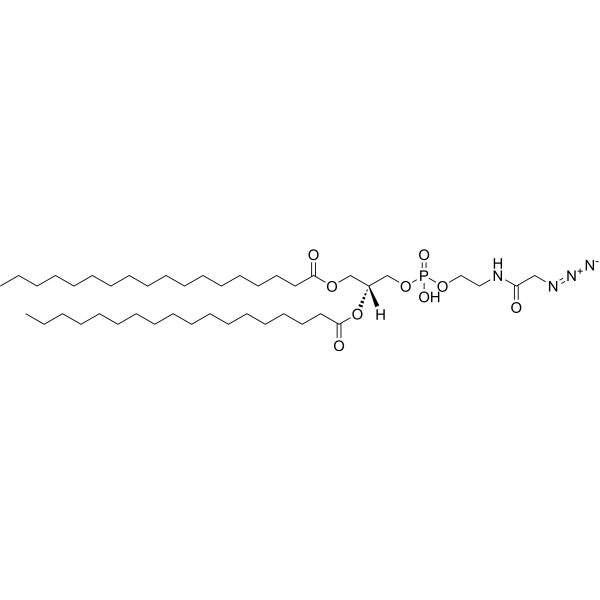
DSPE-N3 is a lipid. DSPE-N3 can be used for the research of various biochemical.
More description
|
|
| A230 | Brodalumab Biosimilar(Anti-IL-17Ra / CD217 Reference Antibody) Featured |
Brodalumab (AMG 827) is a human anti-interleukin-17-receptor IgG2 monoclonal antibody that can be used for the research of moderate-to-severe plaque psoriasis and rheumatoid arthritis.
More description
|

|
| A229 | DISC0280 Biosimilar(Anti-IL-15 Reference Antibody) Featured |
|
|
| A228 | Ordesekimab Biosimilar(Anti-IL-15 Reference Antibody) Featured |
Ordesekimab (AMG 714; PRV-015) is a fully human IgG1κ anti-IL-15 (Interleukin Related) monoclonal antibody. The binding of Ordesekimab to IL-15 inhibits the interaction of IL-15 with the IL-2Rβ and common γ chain of the IL-15 receptor complex, but not with the IL-15Rα chain. Ordesekimab has the potential for study of nonresponsive celiac disease (NRCD).
More description
|
.png)
|
| A227 | Wake Forest U. patent anti-IL-13RA2 Biosimilar(Anti-IL-13Ra2 / CD213a2 Reference Antibody) Featured |
|
|
| A225 | M1295 Biosimilar(Anti-IL-13 Reference Antibody) Featured |
|
|
| DC73377 | AS408 Featured |
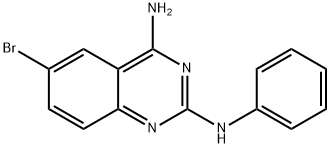
AS408 is a negative allosteric modulator of the β2-adrenergic receptor (β2AR) for both G-protein activation and arrestin recruitment (pKB=6.8, [35S]GTPγS binding assays), binds to a pocket formed by the membrane-facing surface of TM3 and TM5.
More description
|
|
| A224 | H2L6 Biosimilar(Anti-IL-13 Reference Antibody) Featured |
|
|
| A223 | Tralokinumab Biosimilar(Anti-IL-13 Reference Antibody) Featured |
Tralokinumab, a fully human IgG4 monoclonal antibody, specifically binds with high affinity to IL-13 alone, preventing its interaction with the receptor and subsequent downstream signalling. Tralokinumab can be used for the research of the atopic dermatitis (AD).
More description
|
.png)
|
| A222 | CNTO 607 Biosimilar(Anti-IL-13 Reference Antibody) Featured |
|
|
| A221 | Dectrekumab Biosimilar(Anti-IL-13 Reference Antibody) Featured |
Dectrekumab (QAX576) is a human monoclonal antibody that targets IL-13. Dectrekumab significantly improves intraepithelial esophageal eosinophil counts and dysregulated esophageal disease-related transcripts with Eosinophilic esophagitis (EoE) in a sustained manner and can be used for inflammation and immunology related research.
More description
|
.png)
|
| A220 | Cendakimab Biosimilar(Anti-IL-13 Reference Antibody) Featured |
Cendakimab (RPC4046; ABT 308; CC-93538) is a selective, humanized, recombinant monoclonal antibody against the IL-13 molecule. Cendakimab has a high affinity and potency for both human wild-type and variant IL-13 and blocks binding of IL-13 to both IL-13Rα1 and IL-13Rα2 with IC50s of 352 pM and 631 pM by ELISA, respectively. Cendakimab recognizes both wild-type human IL-13 and the common polymorphic variant R110Q, with binding affinities of 52 and 50 pM, respectively. Cendakimab has the potential for IL-13-related allergic/inflammatory diseases (e.g., asthma and eosinophilic esophagitis).
More description
|
.png)
|
| A219 | Abrezekimab Biosimilar(Anti-IL-13 Reference Antibody) Featured |
Abrezekimab (VR 942) contains CDP7766, a humanized, high-affinity, neutralizing, anti-human-IL-13 antibody fragment that binds to IL-13. Abrezekimab prevents binding to the IL-13Rα1 subunit. Abrezekimab can be used in research of asthma.
More description
|
.png)
|
| A218 | GSK 679586 Biosimilar(Anti-IL-13 Reference Antibody) Featured |
|
|
| A217 | IMA-026 Biosimilar(Anti-IL-13 Reference Antibody) Featured |
|
|
| A216 | Anrukinzumab Biosimilar(Anti-IL-13 Reference Antibody) Featured |
Anrukinzumab (IMA-638) is a humanized anti-IL-13 monoclonal antibody. Anrukinzumab effectively reduces lung inflammation in a cynomolgus monkey model. Anrukinzumab can be used in studies of ulcerative colitis (UC) as well as asthma.
More description
|
.png)
|
| A215 | Lebrikizumab Biosimilar(Anti-IL-13 Reference Antibody) Featured |
Lebrikizumab is an IgG4 humanized monoclonal antibody that specifically binds to interleukin-13 (IL-13) and inhibits its function. Lebrikizumab can be used for the research of asthma.
More description
|
.png)
|
| A214 | Ebdarokimab Biosimilar(Anti-IL-12b Reference Antibody) Featured |
Ebdarokimab (AK101) is a humanized IgG1-κ antibody, usually expressed in CHO (Chinese Hamster Ovary) cells.
More description
|
.png)
|
| A213 | BT-063 Biosimilar(Anti-IL-10 Reference Antibody) Featured |
|