To enhance service speed and avoid tariff delays, we've opened a US warehouse. All US orders ship directly from our US facility.
| Cat. No. | Product Name | Field of Application | Chemical Structure |
|---|---|---|---|
| DC79864 | 7,4'-Dimethoxy-3-hydroxyflavone |
7,4'-Dimethoxy-3-hydroxyflavone is an orally active PAR4 antagonist. 7,4'-Dimethoxy-3-hydroxyflavone inhibits PAR4-mediated human platelet aggregation with an IC50 of 1.4 μM. 7,4'-Dimethoxy-3-hydroxyflavone inhibits PAR4-mediated human platelet aggregation and PAR4 signaling pathways, including NF-κB, Ca2+/protein kinase C, Akt, ERK and p38. 7,4'-Dimethoxy-3-hydroxyflavone prevents vascular PAR4 expression, endothelial dysfunction and ameliorates oxidative stress in Streptozotocin (STZ)-induced diabetic mice. 7,4'-Dimethoxy-3-hydroxyflavone prevents thrombosis in mice without affecting bleeding time[1][2].
More description
|
|
| DC79858 | Tecarfarin |
Tecarfarin (ATI-5923) is an orally active and non-competitive vitamin K epoxide reductase (VKOR) antagonist, and impairs the activation of the vitamin K-dependent clotting factors II, VII, IX and X. Tecarfarin has the antithrombotic activity .
More description
|
|
| DC79856 | EVT0185 |
EVT0185 is an orally active ATP citrate lyase (ACLY) inhibitor. EVT0185 is converted to a CoA thioester in the liver by SLC27A2 and interacts with the CoA-binding site of ACLY. EVT0185-CoA inhibits ACLY activity with an IC50 of 2.5 μM. EVT0185 can phenocopy the immune and antitumour effects of genetic ACLY deletion. EVT0185 can increase tumour-infiltrating B cells and chemokine CXCL13 levels. EVT0185 can be used for the research of cancer, such as hepatocellular carcinoma (HCC).
More description
|
|
| DC79849 | JMC14 |
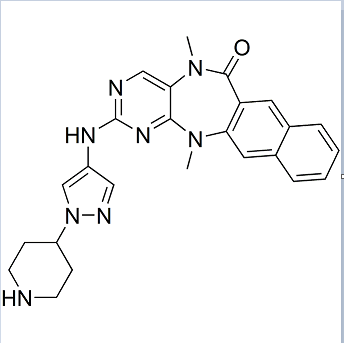
JMC14 is a selective and orally active PI3Kδ and CSF1R inhibitor with IC50 values of 12 nM and 143 nM, respectively. JMC14 preferentially inhibits PI3Kδ-mediated signaling at the cellular level. JMC14 demonstrates potent antitumor activity against B-cell lymphomas and triple-negative breast cancer (TNBC) in both in vitro and vivo studies. JMC14 can be used for the study of antitumor immunity.
More description
|
|
| DC79844 | Conophyllidine |
Conophyllidine, a bisindole alkaloid, is a selective M2 polarization inhibitor. Conophyllidine inhibits histone acetylation by targeting the histone acetyltransferase domain of the P300/CBP proteins. Conophyllidine inhibits IL-4-induced arginase with an IC50 of 0.31 μM. Conophyllidine effectively induces a phenotypic switch in tumor-associated macrophages (TAMs) from an anti-inflammatory to an inflammatory type, thereby enhancing cytotoxic CD8+ T cell recruitment and functionality within the tumor microenvironment. Conophyllidine can be used for the study of TAMs.
More description
|
|
| DC79842 | Allotrap 07 |
Allotrap 07 is a synthetic peptide composed of residues 75-84 of HLA-B7, a class I MHC molecule. Allotrap 07 combined with Cyclosporin A induces donor-specific tolerance in rat cardiac allografts, significantly prolonging graft survival.
More description
|
|
| DC79839 | FAP6-19 |
FAP6-19 is a fibroblast activation protein (FAP) targeting radioligand with a Kd of 18.2 nM. FAP6-19 selectively delivers therapeutic radioactive nuclides (such as 177Lu) to the tumor site by targeting the overexpressed FAP protein in the tumor microenvironment, achieving precise killing of cancer cells while minimizing radiation damage to healthy tissues. FAP6-19 exhibits extremely high total cellular uptake and good intracellular retention ability in HT1080 cells. After being labeled with 111In, FAP6-19 produced extremely high tumor/kidney and tumor/liver dose ratios in the mouse model with 4T1 tumors. FAP6-19 can be used in the research of solid tumors expressing FAP.
More description
|
|
| DC79831 | Hydroxylamine |
Hydroxylamine is a selective Monoamine oxidase (MAO) inhibitor used for inhibiting of platelet aggregation. Hydroxylamine is a intermediate of nitrogen cycle in aerobic ammonium oxidizers microorganisms, such as ammonium oxidizing bacteria (AOB), ammonium oxidizing archaea (AOA) and complete ammonium oxidizing bacteria (comammox). Hydroxylamine impacts NO and N2O emissions by aerobic ammonium oxidizers microorganisms and inhibits nitrite oxidizing bacteria (NOB) activity.
More description
|
|
| DC79827 | YTK-1305 |
YTK-1305 is a p62 ligand compound that promotes cellular autophagy.
More description
|
|
| DC79826 | DBM-819 |
DBM-819 is a reversible inhibitor of H⁺/K⁺-ATPase (H+/K+-ATPase), with an IC50 value of 5 μM. DBM-819 can reversibly block gastric acid secretion by inhibiting the proton pump in the gastric mucosa. It shows significant protective effects against duodenal ulcers induced by Cysteamine, gastric ulcers induced by Indomethacin, and gastric ulcers induced by Aspirin, with EC50 values of 6, 3.1, and 4 mg/kg respectively. DBM-819 can be used in ulcer prevention research.
More description
|
|
| DC79821 | KI-TOX-A3 |
KI-TOX-A3 is a selective protein-protein interaction (PPI) inhibitor targeting TOX protein (with an IC50 value of 0.51 μM for TOX-KAT7 interaction). KI-TOX-A3 induces proteasomal degradation of TOX, restores KAT7-mediated H3K14 acetylation, reversing CD8+ T cell exhaustion and inhibiting T-cell acute lymphoblastic leukemia (T-ALL) cell proliferation. KI-TOX-A3 is promising for research of hematological tumors (e.g., T-ALL).
More description
|
|
| DC79820 | PAB-(PEG4-Me)-Cit-Val-PEG2-amide-C2-MC |
PAB-(PEG4-Me)-Cit-Val-PEG2-amide-C2-MC is an ADC linker that can be combined with the TLR7/8 agonist for the synthesis of a linker-payload conjugate.
More description
|
|
| DC79815 | (R)-thioxo-Dxd |
(R)-thioxo-Dxd is a Camptothecin derivative. (R)-thioxo-Dxd can be connected to monoclonal antibodies via linkers to form antibody-drug conjugate (ADC) molecules. (R)-thioxo-Dxd can be used for research on tumors with high HER2 or TROP2 expression.
More description
|
|
| DC79814 | thioxo-Dxd |
thioxo-Dxd is a Camptothecin derivative. thioxo-Dxd can be connected to monoclonal antibodies via linkers to form antibody-drug conjugate (ADC) molecules. thioxo-Dxd can be used for research on tumors with high HER2 or TROP2 expression.
More description
|
|
| DC79804 | 2-Fluorodeoxyarbutin |
2-Fluorodeoxyarbutin, a derivative of Deoxyarbutin, is a tyrosine hydroxylase and dopa oxidase inhibitor. 2-Fluorodeoxyarbutin inhibits melanin synthesis in intact melanocytes. 2-Fluorodeoxyarbutin can be used for the strudy of skin lightening or for ameliorating hyperpigmented lesions.
More description
|
|
| DC79799 | SB-583355 |
SB-583355 (Compound 56) is a potent G2A antagonist. SB-583355 can be prepared by a Suzuki reaction between 4-methoxyphenyl boronic acid and 3-bromo-4-hydroxybenzoic acid following the conditions followed by an amide coupling reaction. SB-583355 blocks the activation of G2A mediated either by 9-HOPE or T-10148 in human G2A expressing CHO-K1 cells. SB-583355 can be studied in research for inflammation, myeloid leukemia, and neuropathic pain.
More description
|
|
| DC79793 | HEAL-116 |
HEAL-116 is a potent, specific and orally active 3β-hydroxysteroid dehydrogenase type 1 (3βHSD1) inhibitor with an IC50 of 1.18 μM and a KD of 1.32 μM. HEAL-116 inhibits DHEA metabolism and DHEA-induced target gene expression and cell proliferation. HEAL-116 can be used for cancer research, such as prostate cancer.
More description
|
|
| DC79782 | SMARCA2 Ligand-Linker Conjugate-4 |
SMARCA2 Ligand-Linker Conjugate-4 is a Target Protein Ligand-Linker Conjugate that incorporates a ligand for SMARCA2 and a PROTAC linker, which recruits E3 ligases. SMARCA2 Ligand-Linker Conjugate-4 can be used for synthesis of PROTAC SMARCA2 degrader-35.
More description
|
|
| DC79779 | Votoplam hydrochloride |
Votoplam (PTC518) hydrochloride is an HTT gene regulator with an IC50 ≤ 0.1 μM. Votoplam hydrochloride can be used in the research of Huntington's disease.
More description
|
|
| DC79772 | Faridoxorubicin |
Faridoxorubicin (AVA-6000) is a prodrug targeting fibroblast activation protein α (FAPα). Faridoxorubicin releases active doxorubicin through FAPα-mediated cleavage, enhancing intratumoral drug exposure and reducing cardiac toxicity. Faridoxorubicin is promising for research of solid tumors (e.g., colorectal cancer liver metastasis).
More description
|
|
| DC79771 | Copper ionophore I |
Copper ionophore I is an efficient copper ion carrier. Copper ionophore I can regulate various intracellular copper levels to induce cuproptosis, such as 4T1 (IC50 = 0.45 μM) and MDA-MB-231(IC50 = 1.21 μM) cells. Copper ionophore I can induce an increase in ROS and cause mitochondrial dysfunction. Copper ionophore I can reduce the expression of FDX1, DLAT, and LIAS proteins. Copper ionophore I can activate immune related pathways and promote T cell infiltration. Copper ionophore I can be used for cancer research.
More description
|
|
| DC79770 | RPR107393 |
RPR107393 is an orally active potent selective squalene synthase (SQS) inhibitor. RPR107393 inhibits rat liver microsomal squalene synthase with an IC50 value of 0.8 nM. RPR107393 reduces triglyceride biosynthesis by suppressing fatty acid biosynthesis via an increase in intracellular farnesol and its derivatives. RPR107393 reduces plasma cholesterol in rats and marmosets. RPR107393 can be used for metabolic disease research, such as hypercholesterolemia, hypertriglyceridemia and atherosclerosis[1][2].
More description
|
|
| DC79769 | D4-Ribavirin |
D4-Ribavirin (Compound 4) is a deoxygenated ribavirin analogue. D4-Ribavirin has antiviral property in vitro against the RNA-containing bunyaviruses–Rift Valley Fever () with an IC50 of 61 μg/mL.
More description
|
|
| DC79765 | C2 Adamantanyl globotriaosylceramide (d18:1/2:0) |
C2 Adamantanyl globotriaosylceramide (d18:1/2:0) (AdaGb3), a water-soluble globotriaosylceramide analog, is a bioactive sphingolipid. C2 Adamantanyl globotriaosylceramide (d18:1/2:0) reverses MDR1-MDCK cell drug resistance. C2 Adamantanyl globotriaosylceramide (d18:1/2:0) has high affinity for verotoxin (VT).
More description
|
|
| DC79764 | MDL-25637 |
MDL-25637 is an α-glucosidase inhibitor. MDL-25637 can inhibit the activity of sucrose enzyme, maltase, isomaltase, glucose amylase, and trehalose in the intestinal tract of rats. MDL-25637 can be used in the research of diabetes.
More description
|
|
| DC79763 | C2 Adamantanyl galactosylceramide (d18:1/2:0) |
C2 Adamantanyl galactosylceramide (AdaGalCer) (d18:1/2:0) is a bioactive sphingolipid. C2 Adamantanyl galactosylceramide (d18:1/2:0) stimulates glucocerebrosidase activity in vitro. C2 Adamantanyl galactosylceramide (d18:1/2:0) inhibits microsomal LacCer and Gb3 synthase, and inhibits cell sulfatide synthesis. C2 Adamantanyl galactosylceramide (d18:1/2:0) reduces glucosylceramide (GlcCer) levels in normal and lysosomal storage disease (LSD) cells. C2 Adamantanyl galactosylceramide (d18:1/2:0) acts as a substrate for A4GALT and is able to lower Gb3 levels with an IC50 concentration of 40 μM in fabry disease cells.
More description
|
|
| DC79762 | CKD-711 |
CKD-711 is an orally active aminooligosaccharide α-glucosidase inhibitor with an IC50 of 78 μg/mL. CKD-711 also inhibits porcine intestinal maltase and sucrose with IC50 values of 2.5 and 0.5 μg/mL. CKD-711 shows selective antibacterial activity against Comamonas terrigena. CKD-711 can be used for the researches of infection and metabolic disease, such as diabetes.
More description
|
|
| DC79759 | ZN148 |
ZN148 is a zinc-chelating synthetic metallo-β-lactamase (MBL) inhibitor which attenuates MBL-mediated carbapenem resistance. ZN148 can restore the in vitro clinical susceptibility to carbapenems in >98% of a large international collection of MBL-producing clinical Enterobacterales strains. ZN148 can be utilized in research on anti MBL-producing bacteria.
More description
|
|
| DC79758 | 3-Deoxy-3-fluoro-D-fructose |
3-Deoxy-3-fluoro-D-fructose (Compound 12) is a derivative of 2,5-Anhydro-D-mannitol. 3-Deoxy-3-fluoro-D-fructose is a selective probe of Hexose transporter 5 (GLUT5). 3-Deoxy-3-fluoro-D-fructose inhibits the transport of D-fructose labeled with 14C by GLUT5 with IC50s of 1.16 and 2.37 µM in EMT-6 and MCF-7 cells. 3-Deoxy-3-fluoro-D-fructose can be used for positron emission tomography (PET) imaging of cancers.
More description
|
|
| DC79755 | C16 Ceramide (d18:1(14Z)/16:0) |
C16 Ceramide (Cer) (d18:1(14Z)/16:0) is a sphingosine ceramide composed of long-chain sphingosine (d18:1) and palmitic acid (C16:0). It is one of the key lipid signaling molecules involved in apoptosis signaling. C16 ceramides are particularly involved in cell cycle arrest, cell death, and insulin signaling inhibition.
More description
|
|