To enhance service speed and avoid tariff delays, we've opened a US warehouse. All US orders ship directly from our US facility.
| Cat. No. | Product Name | Field of Application | Chemical Structure |
|---|---|---|---|
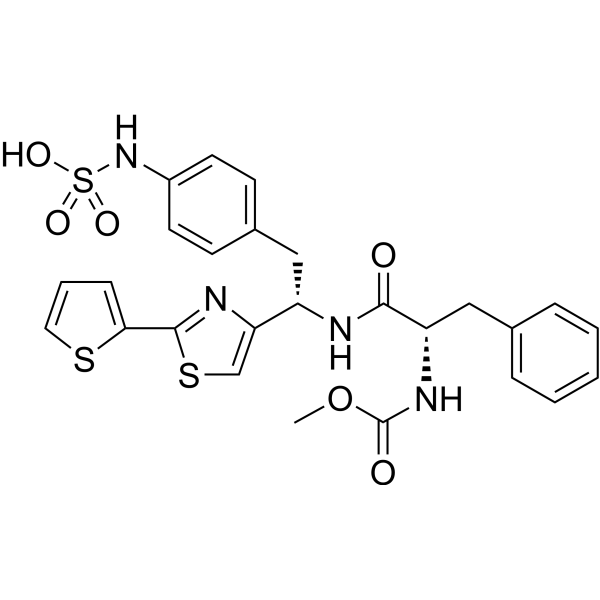
| DC20649 | AKB-9778 Featured |
AKB-9778 is a potent, selective inhibitor of vascular endothelial protein tyrosine phosphatase (VE-PTP) with IC50 of 17 pM.
More description
|
|
| DC20257 | KMN-159 Featured |
KMN-159 is a potent prostaglandin E2 type 4 (EP4) receptor agonist with Ki of 0.38 nM and shows five fold increase in potency versus KMN-80.
More description
|

|
| DC26194 | VU6003586 Featured |
VU6003586 is a novel allosteric modulators of mGlu5 with EC50 of 174 nM.
More description
|

|
| DC26190 | DS54360155 Featured |
DS54360155 is an orally potent analgesic without μ-opioid receptor agonist activity.
More description
|

|
| DC12314 | SLLK, Control Peptide for TSP1 Inhibitor(TFA) Featured |
SLLK, Control Peptide for TSP1 Inhibitor (TFA) is a control peptide for LSKL, which is a Thrombospondin (TSP-1) inhibitor.
More description
|

|
| DC20288 | (-)-CXL017 Featured |
(-)-CXL017 is a small molecule that has selective cytotoxicity toward MDR cancer cell lines in vitro, through inhibition of the sarco/endoplasmic reticulum Ca(2+)-ATPase (SERCA) with IC50 of 13.5 uM.
More description
|

|
| DC9739 | ReACp53(TFA salt) Featured |
ReACp53 is a cell-penetrating peptide,designed to inhibit p53 amyloid formation.
More description
|

|
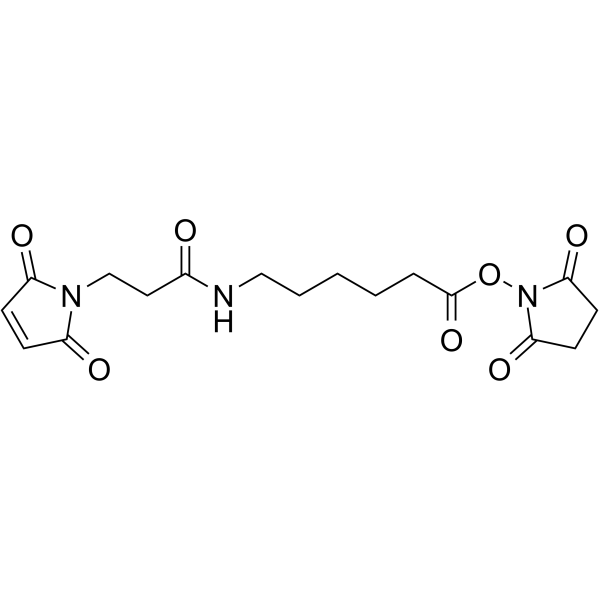
| DC34739 | SMPH Crosslinker Featured |
SMPH Crosslinker is an alkyl/ether-based PROTAC linker that can be used in the synthesis of PROTACs.
More description
|
|
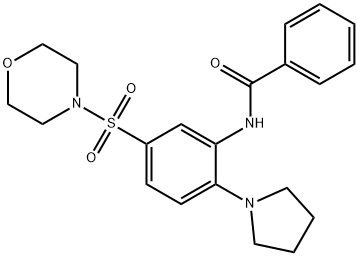
| DC11200 | NGI-1 derivative C-19 Featured |
NGI-1 derivative C-19 is a specific, small-molecule inhibitor of oligosaccharyltransferase (OST) catalytic subunit STT3B, without effect on STT3A.
More description
|
|
| DC12215 | 7-Dehydro Cholesterol Featured |
7-Dehydrocholesterol is biosynthetic precursor of cholesterol and vitamin D3.
More description
|

|
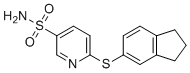
| DC22958 | RU-GIRK-1 Featured |
A potent GIRK2 inhibitor that inhibits GIRK2-mediated flux with an IC50 of 0.35 uM.
More description
|
|
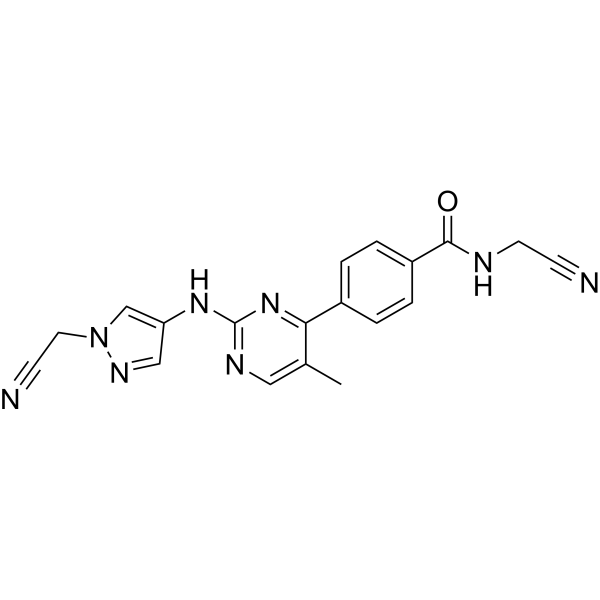
| DC74631 | LNK01003 Featured |
LNK01003(Example 4) is a selective and potent JAK inhibitor.
More description
|
|
| DC74205 | Tryptolinamide Featured |
Tryptolinamide (TLAM) is a small-molecule compound that activates mitochondrial respiration in cybrids generated from patient-derived mitochondria and fibroblasts from patient-derived iPSCs, inhibits phosphofructokinase-1 (PFK1) with an ATP-uncompetitive
More description
|

|
| DC73980 | DS55980254 Featured |
DS55980254 (DS 55980254) is potent, selective and orally active PTDSS1 (phosphatidylserine synthetase 1) inhibitor, suppresses phosphatidylserine (PS) production activity of PTDSS1 (IC50=100 nM) in cell-free assays, but not that of PTDSS2.
More description
|

|
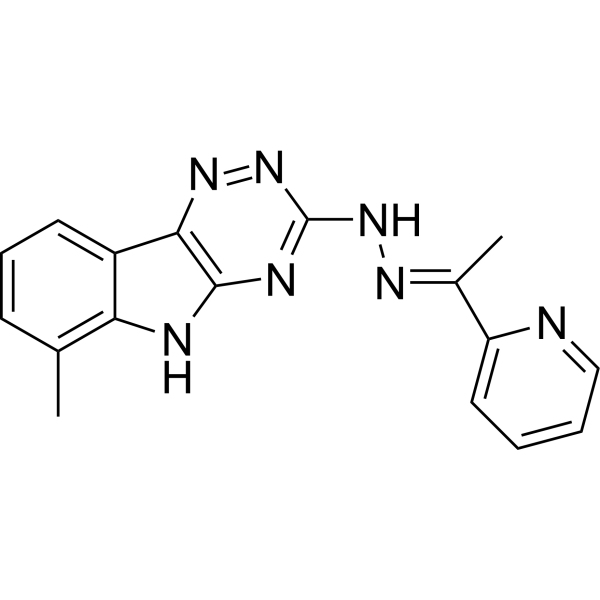
| DC34262 | VLX600 Featured |
VLX600 is a cell-permeable anticancer agent. It acts by reducing mitochondrial oxidative phosphorylation in tumor cells.
More description
|
|
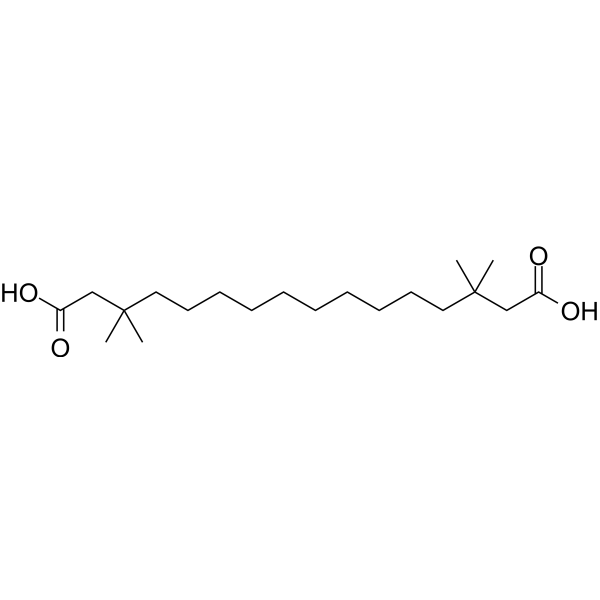
| DC34019 | MEDICA 16 Featured |
MEDICA16 is a GPR40 agonist. MEDICA 16 is a β,β'-dimethyl hexadecanedioic acid which exhibits hypolipidemic and antidiabetogenic effects in the rat.
More description
|
|
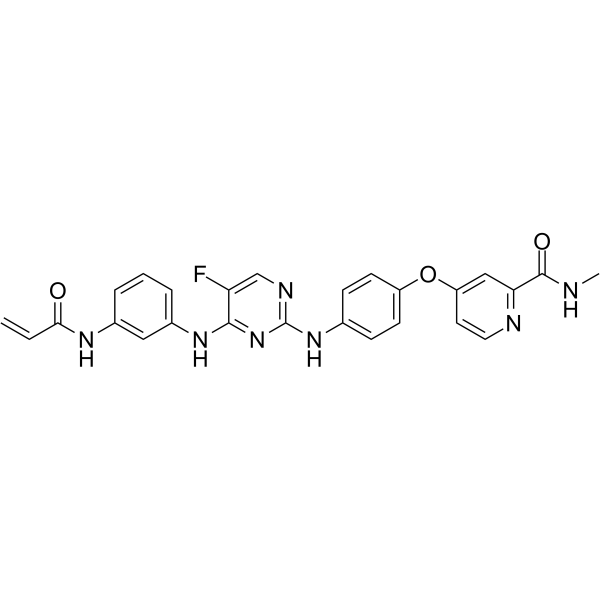
| DC7161 | CNX-774 Featured |
CNX-774 is a potent, selective, and orally available small molecule inhibitor of Btk (IC50< 1 nM) that forms a ligand-directed covalent bond with Cys-481, a non-conserved amino acid within the active site of the enzyme.
More description
|
|
| DC74133 | PSB-CB-27 Featured |
PSB-CB-27 is a potent, selective antagonist of GPR18 with IC50 of 650 nM, shows no inhibition on GPR55 and low affinity for CB1/CB2 receptors.
More description
|

|
| DC74198 | TMX-4102 Featured |
TMX-4102 (TMX4102) is a highly potent, selective PIP4K2C binder with KD of 0.45 nM, shows no affinity for PIP4K2B and PIP4K2A (KD>10 uM).
More description
|

|
| DC74539 | L557-0155 Featured |
L557-0155 is a small molecule inhibitor of VSIG-8, prevents VSIG-8 binding to VISTA, promotes cytokine production and cell proliferation in PBMCs and suppresses melanoma growth.
More description
|

|
| DC73953 | CPAG-1 Featured |
CPAG-1 (PGRMC2 activator CPAG-1) is a small-molecule activator of PGRMC2.
CPAG-1 treatment had no effect on weight or food intake but treated mice had reduced fasting glycemia and insulin levels.
CPAG-1 decreased Rev-Erbα protein in BAT of CPAG-1-treated mice.
CPAG-1 also significantly increased labile heme in the nucleus of brown adipocytes from CPAG-1-treated mice within 4 days of treatment.
More description
|

|
| DC20765 | BDT001 Featured |
BDT001 is a first-in-class, non-competitive FLT3 negative allosteric modulator, effectively prevents extracellular cytokine FL binding to FLT3 with IC50 of 11 uM.
More description
|

|
| DC12095 | GRGDSP TFA |
GRGDSP (TFA) is an integrin inhibitor.
More description
|

|
| DC10405 | SPACE peptide |
SPACE peptide is a skin penetrating peptide which facilitates the delivery of molecules through the skin.
More description
|

|
| DC12301 | Pepstatin Ammonium (Pepstatin A Ammonium) |
Pepstatin Ammonium is a specific aspartic protease inhibitor produced by actinomycetes, with IC50s of 4.5 nM, 6.2 nM, 150 nM, 290 nM, 520 nM and 260 nM for hemoglobin-pepsin, hemoglobin-proctase, casein-pepsin, casein-proctase, casein-acid protease and he
More description
|

|
| DC37947 | Chloroquine Featured |
Chloroquine is a medication used to prevent and to treat malaria in areas where malaria is known to be sensitive to its effects. Certain types of malaria, resistant strains, and complicated cases typically require different or additional medication. It is also occasionally used for amebiasis that is occurring outside the intestines, rheumatoid arthritis, and lupus erythematosus. Chloroquine enters the red blood cell, inhibiting the parasite cell and digestive vacuole by simple diffusion. Chloroquine then becomes protonated (to CQ2+), as the digestive vacuole is known to be acidic (pH 4.7); chloroquine then cannot leave by diffusion. Chloroquine caps hemozoin molecules to prevent further biocrystallization of heme, thus leading to heme buildup.
More description
|

|
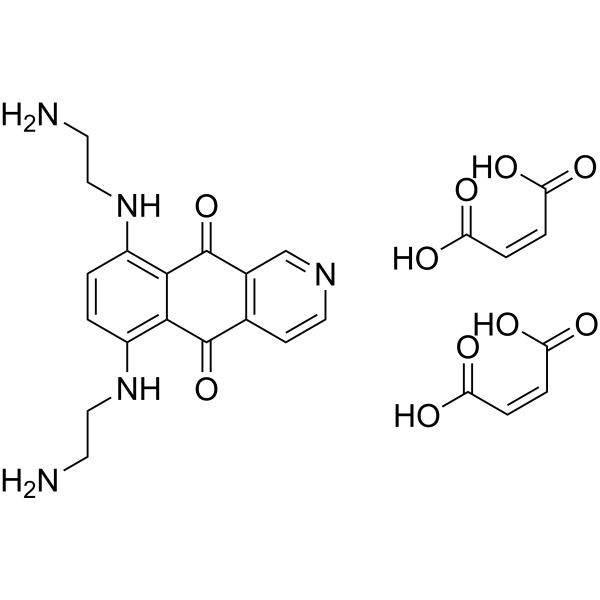
| DC31273 | Pixantrone Maleate Featured |
Pixantrone is a synthetic, noncardiotoxic aza-anthracenedione analogue with potential antineoplastic activity. Pixantrone intercalates into DNA and induces topoisomerase II-mediated DNA strand crosslinks, resulting in inhibition of DNA replication and tumor cell cytotoxicity. Pixantrone is a potentially more effective, less cardiotoxic alternative to doxorubicin for patients with aggressive non-Hodgkin lymphoma (aNHL).
More description
|
|
| DC72871 | FHP01 Featured |
FHP01 (BA103) is a potent, small molecule inhibitor of DDX3X helicase activity with IC50 of 0.3 uM in in vitro enzyme assays, exhibits very effective antiproliferative and killing activity against different breast cancer cell types (IC50=3.058 and 3.21 μM in MDA MB 468 and MDA MB 231, respectively).
FHP01 does not inhibit the ATPase activity of DDX3X and the helicase activity of DDX1 (IC50>100 uM).
FHP01 also inhibited WNT signaling, a key tumorigenic pathway already correlated to DDX3X functions in breast cancer model cell lines.
FHP01 inhibits ER+/PR+ (IC50 = 12.43 and 10.62 μM in MCF7 and T47D cells, respectively) and HER2+ (IC50 = 13.46 μM in SKBR3) cells, but lower in control MCF10A cells (IC50 = 28.71 μM).
FHP01 (45 mg/kg, i.p. injection) suppresses rowth of MDA MB 231 tumor xenografts in nude mice.
More description
|

|
| DC73988 | EP055 Featured |
EP055 (EP-055) is a small molecule that targets EPPIN on the surface of sperm and inhibits motility (IC50=199.5 uM, CASA assay using human sperm), binds to the C-terminal domain of EPPIN.
More description
|

|
| DC74218 | UT-59 Featured |
UT-59 is a specific inhibitor that targets the cholesterol-sensing membrane protein Scap (SREBP cleavage-activating protein). It functions by binding to Scap's cholesterol-binding site, which prevents Scap from interacting with SREBPs (sterol regulatory element-binding proteins). This inhibition blocks the activation of SREBPs, which are key transcription factors involved in lipid and cholesterol biosynthesis. As a result, UT-59 effectively suppresses lipid synthesis, making it a potential therapeutic candidate for conditions associated with dysregulated lipid metabolism, such as hyperlipidemia, atherosclerosis, or metabolic disorders.
More description
|

|