 To enhance service speed and avoid tariff delays, we've opened a US warehouse. All US orders ship directly from our US facility.
| Cat. No. | Product Name | Field of Application | Chemical Structure |
|---|---|---|---|
| DC80011 | Aminopurvalanol A Featured |
Aminopurvalanol A is a potent, selective, and cell permeable inhibitor of Cyclins/Cdk complexes.
More description
|

|
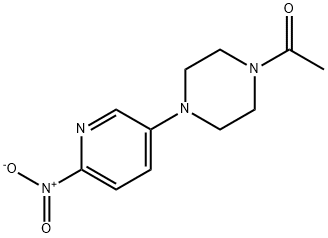
| DC80035 | WAY-647802 Featured |
WAY-647802 is a CDK inhibitor.
More description
|
|
| DC80018 | Mindeudesivir(VV116) Featured |
VV116 is an oral drug candidate of nucleoside analog against SARS-CoV-2.
More description
|
.gif)
|
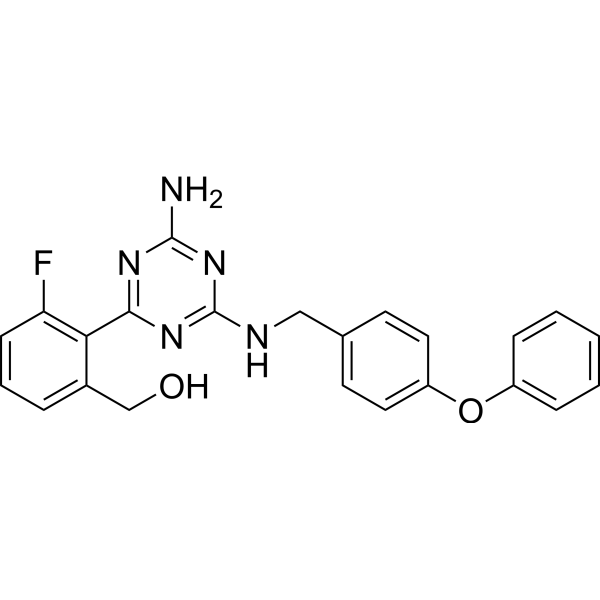
| DC80088 | MS48107 Featured |
MS48107 is a potent and selective positive allosteric modulator of G protein-coupled receptor 68 (GPR68).
More description
|
|
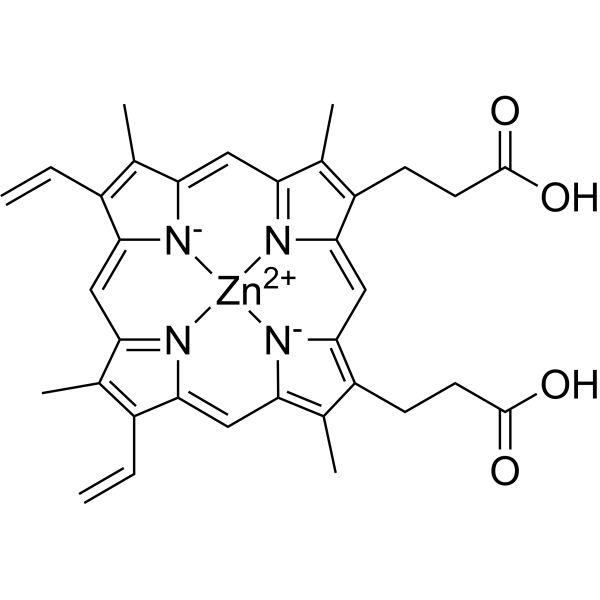
| DC80075 | Zinc protoporphyrin Featured |
Zinc Protoporphyrin (Zn(II)-protoporphyrin IX) is an orally active and competitive heme oxygenase-1 (HO-1) inhibitor and markedly attenuates the protective effects of Phloroglucinol (PG) against H2O2.
More description
|
|
| DC80099 | PF-06685249 Featured |
PF-249 is a potent, selective AMPK β1-containing complexes activator; increases the phosphorylation of the AMPK substrate ACC at S79 with EC50 of 296 nM, potently inhibits de novo lipogenesis (IC50=15 nM) in primary rat hepatocytes.
More description
|

|
| DC80106 | BRD4/CK2-IN-1 Featured |
BRD4/CK2-IN-1 is the first highly effective and oral active dual-target inhibitor of BRD4/CK2 (bromodomain-containing protein 4/casein kinase 2), with IC50s of 180 nM and 230 nM for BRD4 and CK2, respectively.
More description
|

|
| DC80040 | MS8511 Featured |
MS8511 is a highly potent, selective, and cell-active covalent inhibitor of G9a (Kd=44 nM) and GLP (Kd=46 nM). MS8511 could be a useful chemical tool for investigating the physiological and pathophysiological functions of G9a and GLP.
More description
|

|
| DC80036 | ZINC36395841(compound 25) Featured |
ZINC36395841 is a small-molecule binder of the m6A-reader
domain of YTHDC1.
More description
|
.GIF)
|
| DC80020 | TH10785 Featured |
TH10785 is a small-molecule activator that binds to the active site of 8-oxo guanine DNA glycosylase 1 (OGG1) and enables the protein to completely cleave the damaged DNA strand, which results in an overall increased repair of oxidative DNA damage.
More description
|

|
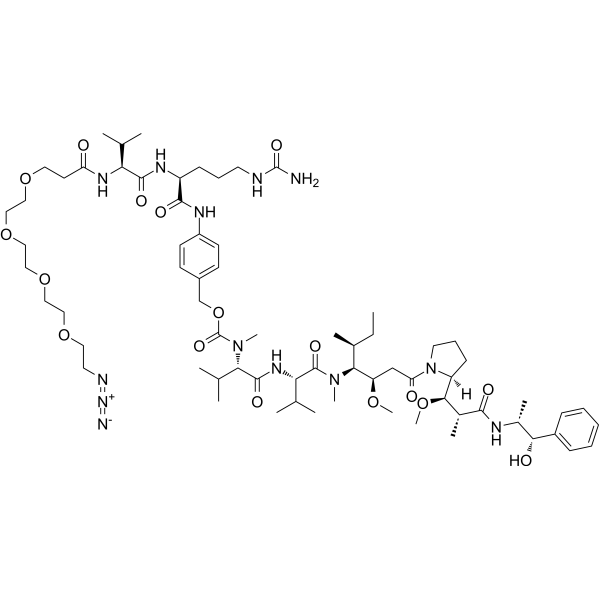
| DC80073 | Azido-PEG4-EV-Cit-PAB-MMAE Featured |
Azido-PEG4-EV-Cit-PAB-MMAE is a precursor of antibody drug conjugate.
More description
|
|
| DC80003 | 490BP-C14 Featured |
490BP-C14 is a bisphosphonate lipid-like material for mRNA delivery. 490BP-C14 LPNs could enhance mRNA expression and localization in the bone microenvironment, which overcomes biological barriers to deliver mRNA therapeutics.
More description
|

|
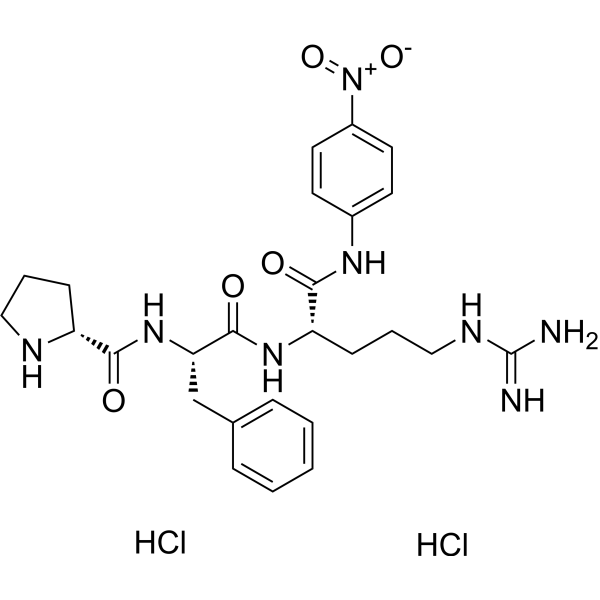
| DC80052 | H-D-Pro-Phe-Arg-pNA·2 HCl(S-2302,Chromogenic substrate) Featured |
S-2302 is a Chromogenic substrate for plasma kallikrein, factor XIa and factor XIIa.
More description
|
|
| DC80080 | OF-C4-Deg-Lin Featured |
OF-C4-Deg-Lin is a novel ionizable lipid for RNA delivery.
More description
|

|
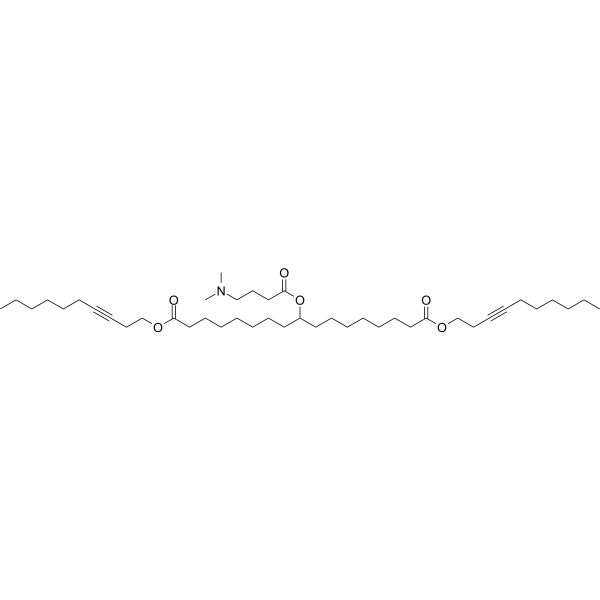
| DC80050 | LIPID A6 Featured |
Lipid A6 is an ionizable cationic and biodegradable alkyne lipid (pKa = 6.65).It has been used with other lipids in the formation of lipid nanoparticles (LNPs) for the delivery of mRNA. LNPs containing lipid A6 and encapsulating mRNA encoding human erythropoietin (EPO) increase and then maintain homeostatic levels of hemoglobin in the blood in an adenine-induced mouse model of renal anemia.
More description
|
|
| DC81110 | TS-202 Featured |
TS-202 is a novel ionizable lipid for RNA delivery.
More description
|

|
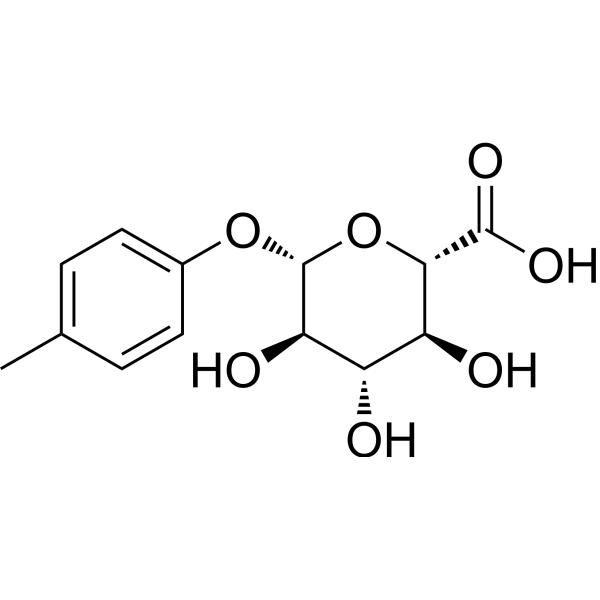
| DC80060 | p-Tolyl-β-D-glucuronide Featured |
p-Tolyl-β-D-glucuronide is a chromogenic substrate for β-glucuronidase (GUS) gene detection.
More description
|
|
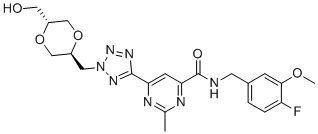
| DC21494 | PF-152 Featured |
PF-152 is a potent, highly selective and orally bioavailable MMP13 inhibitor with Ki of 1.5 nM, with no activity against MMP3 (Ki>10 uM).
More description
|
|
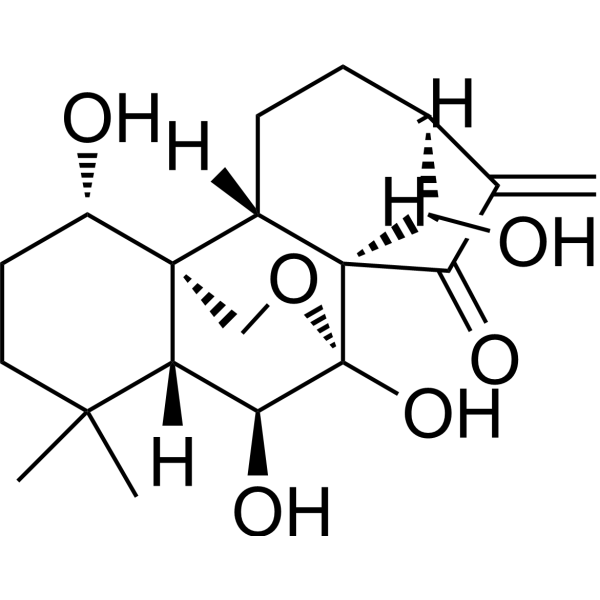
| DCD-031 | Oridonin Featured |
Oridonin (Cmpd-5, NSC 250682) is a natural ent-kaurane diterpenoid from Rabdosia rubescens identified as a first-in-class small-molecule inhibitor that directly binds β-arrestin1 and β-arrestin2 with high nanomolar to low micromolar affinity. Oridonin broadly suppresses β-arrestin recruitment, receptor desensitization, internalization, and downstream ERK signaling across multiple GPCR families, and abrogates T-cell chemotaxis.
More description
|
|
| DC65764 | DMPE-PEG2000 ammonium Featured |
14:0 PEG2000 PE (DMPE-PEG2000) is a PEG-phospholipid conjugate to prepare nanostructured lipid carrier.
More description
|

|
| DC60339 | Cephalofurimazine (CFz) Featured |
Cephalofurimazine (CFz) is a NanoLuc substrate optimized for enhanced brain performance. When paired with Antares luciferase, it generates over 20 times more signal from the brain compared to the traditional combination of D-luciferin and firefly luciferase.
More description
|
.gif)
|
| DC67347 | DMG-PEG 1000 (14:1) Featured |
A methoxy-terminated PEG1000 functionalized with 1,2-dimyristoleoyl-sn-glycerol via an ether linkage. This compound may be used in the formulation of lipid nanoparticles (LNP's) for delivery applications. Reagent grade, for research purpose. Please contact us for GMP-grade inquiries.
More description
|

|
| DC74638 | GLPG3667 Featured |
GLPG3667 is an oral, reversible, and selective tyrosine kinase 2 (TYK2) inhibitor. It is being developed to treat inflammatory and auto-immune diseases. Biochemical assays showed that GLPG3667 displayed nanomolar potency on TYK2 with a selectivity over other JAK kinases >3-fold. In human PBMC, GLPG3667 showed comparable potency on the IFNα and IL-23 pathways (around 50 nM). Selectivity for TYK2 on the IFNα pathway was >14-fold and >19-fold toward the IL-2 and GM-CSF pathways in human PBMC and whole blood, respectively. Dermal ear inflammation in a mouse model of psoriasis driven by IL-23 was prevented by GLPG3667 with a minimal effective dose of 3 mg/kg given orally once daily. This effect was associated with a decrease in neutrophil infiltration and STAT3 phosphorylation at sites of inflammation. In healthy HV, GLPG3667 completely inhibited IFNα-induced STAT1 and STAT3 phosphorylation but did not impact IL-2- and GM-CSF-induced STAT5 phosphorylation.
More description
|

|
| DC60818 | mono-Boc-Br MK-6240 Precursor Featured |
mono-Boc-Br MK-6240 Precursor is the precusor of MK-6240.. (18)F]-MK-6240 is a tau positron emission tomography (PET) tracer for neurofibrillary tangles (NFTs), exhibiting high specificity and selectivity for binding to NFTs .
More description
|

|
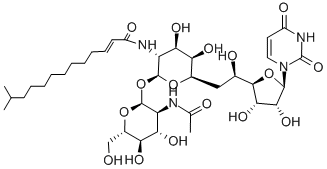
| DCC5270 | Tunicamycin Featured |
Antibiotic, inhibiting the first step in the N-linked glycosylation in eukaryotes and inducing ER stress to activate the unfolded protein response (UPR)
More description
|
|
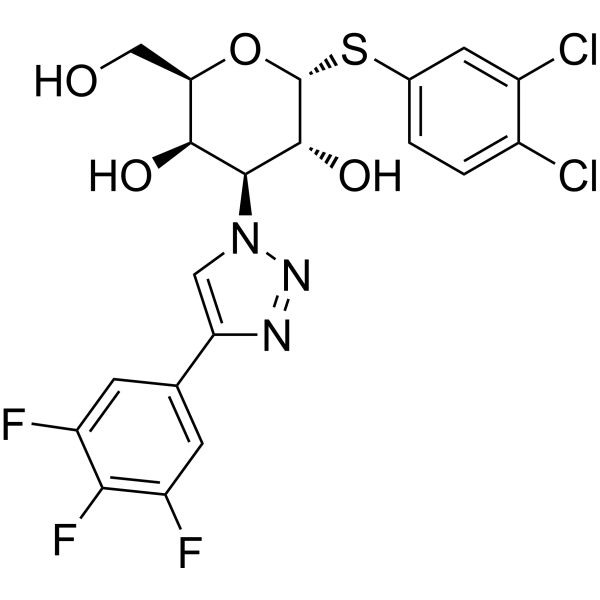
| DC22098 | GB1107 Featured |
GB1107 is a novel small-molecule inhibitor specifically designed to target galectin-3 (Gal-3), demonstrating high binding affinity and oral bioavailability.
More description
|
|
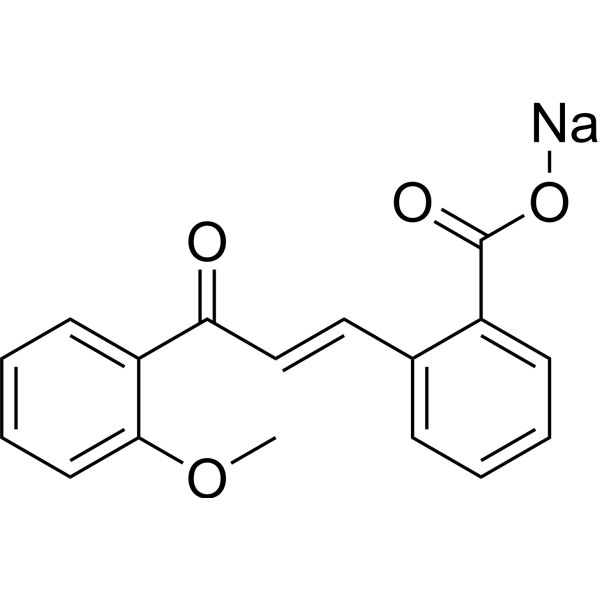
| DC22129 | HOIPIN-1(JTP-0819958;HOIP inhibitor-1) Featured |
HOIPIN-1 (JTP-0819958, HOIP inhibitor-1) is a chemical inhibitor of linear ubiquitin chain assembly complex (LUBAC, IC50=2.8 uM), specifically generates Met1-linked linear ubiquitin chains through the ubiquitin ligase activity in HOIP, and activates the N
More description
|
|
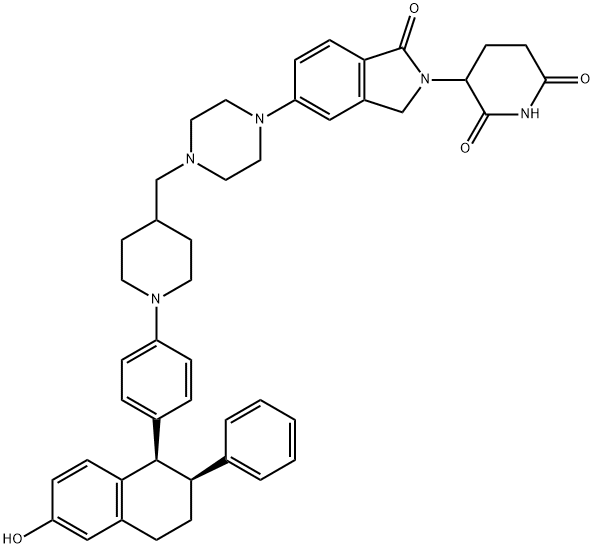
| DC71669 | ARV471 Featured |
ARV471 is an orally bioavailable estrogen receptor-targeting (ER-targeting) PROTAC for the treatment of patients with locally advanced or metastatic ER+/HER2- breast cancer.
More description
|
|
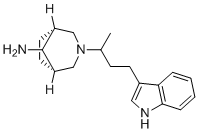
| DC70864 | UHMCP1 Featured |
UHMCP1 is a small molecule that prevents the SF3b155/U2AF65 interaction, binds to the hydrophobic pocket of the U2AF65 UHM domain (Kd=1-20 uM), impacts splicing and cell viability.
More description
|
|
| DC60823 | Ac-ATAD-AFC(Caspase-12 Substrate) Featured |
Ac-ATAD-AFC(Caspase-12 Substrate) is a fluorogenic substrate for caspase-12.
More description
|
.jpg)
|
