To enhance service speed and avoid tariff delays, we've opened a US warehouse. All US orders ship directly from our US facility.
| Cat. No. | Product Name | Field of Application | Chemical Structure |
|---|---|---|---|
| DCC3052 | Ldn-0130436 Featured |
LDN-0130436 is a novel TDP-43::GFP aggregation inhibitor.
More description
|
|
| DC74021 | IBS007125 Featured |
IBS007125 is a small molecule inhibitor of c-Maf, inhibits multiple myeloma proliferation by targeting cMaf transcriptional activity.
More description
|
|
| DC70537 | KDOBA67 Featured |
KDOBA67 is a novel cell-permeable inhibitor of H3K27 lysine demethylase KDM6A/B, inhibits TBXT expression chordoma cell lines.KDOBA67 displayed in vitro inhibitory activity in the low micromolar range with IC50 values of 2 to 5 uM in various chordoma cell lines, leading to induction of apoptosis.H3K27 demethylase inhibition via KDOBA67 alters chromatin state at TBXT and inhibits its expression.TBXT was a KDM6A/B target gene, and chromatin changes at TBXT following KDOBA67 treatment were associated with a reduction in TBXT protein levels.KDOBA67 treatment downregulated expression of a network of transcription factors critical for chordoma survival and upregulated pathways dominated by ATF4-driven stress and proapoptotic responses.
More description
|
|
| DC68022 | Lipid A1F5C5 Featured |
A1F5C5 is a core fluorinated ionizable lipid that forms the basis of the F5-LNP platform. Its key biological functions are multifaceted. Primarily, it enables efficient, targeted mRNA delivery in vivo. Following intravenous administration, F5-LNPs exhibit a strong tropism for the spleen and tumor sites, successfully transfecting over 70% of splenic macrophages and more than 20% of tumor-infiltrating macrophages. This allows for in situ cell engineering. Beyond delivery, A1F5C5 possesses intrinsic immunostimulatory activity. It promotes the maturation and activation of antigen-presenting cells (e.g., upregulating CD80/86 on dendritic cells) and enriches immune-related pathways like "cytokine-cytokine receptor interaction." Mechanistically, its unique 5-fluorine (F5) configuration confers superior membrane fusion capability, which is critical for efficient endosomal escape and cytosolic mRNA release. Therapeutically, when loaded with CAR mRNA, it serves as a platform for in vivo generation of CAR-macrophages (CAR-M). These CAR-M cells phagocytose tumors, reprogram the tumor microenvironment by shifting macrophages to an M1 phenotype, and activate CD8+ T cells. Notably, this approach synergizes powerfully with anti-PD-L1 therapy, achieving complete tumor regression in preclinical models.
More description
|
|
| DCAPI1374 | Cyclovirobuxin D(Bebuxine) Featured |
Cyclovirobuxine D (CVB-D) is the main active component of the traditional Chinese medicine Buxus microphylla. Cyclovirobuxine D induces autophagy and attenuates the phosphorylation of Akt and mTOR. Cyclovirobuxine D inhibits cell proliferation of gastric cancer cells through suppression of cell cycle progression and inducement of mitochondria-mediated apoptosis. Cyclovirobuxine D is beneficial for heart failure induced by myocardial infarction.
More description
|
|
| DC60934 | Lipid P3B Featured |
P3B is a biodegradable ionizable lipid engineered to function as a highly efficient delivery vehicle for genome-editing machinery (e.g., CRISPR-Cas9 and adenine base editors) specifically to the central nervous system (CNS). Its primary function is to encapsulate and transport large mRNA payloads across the brain-CSF interface following intrathecal administration, enabling robust and widespread gene editing in neurons and astrocytes across multiple brain regions, including the hippocampus, cortex, and thalamus. Notably, it facilitates precise single-nucleotide correction via base editing. Its targeting is intrinsically achieved by the intrathecal injection route, which localizes the nanoparticles within the cerebrospinal fluid, coupled with an optimized formulation that promotes efficient uptake and activity within CNS parenchyma while minimizing off-target exposure in peripheral organs.
More description
|
|
| DC74079 | MN132.0262 Featured |
MN132.0262 is a small molecule, dual inhibitor of A3G (APOBEC3G, IC50=20 uM).
More description
|
|
| DC74080 | MN256.0102 Featured |
MN256.0102 is a small-molecule APOBEC3G DNA cytosine deaminase inhibitor with IC50 of 3.9 uM.
More description
|
|
| DC67571 | DMG-PEG-Mannose Featured |
DMG-PEG-Mannose is a specialized functionalized lipid used primarily for the targeted delivery of lipid nanoparticles (LNPs) and liposomes to cells expressing mannose receptors, such as macrophages and dendritic cells. It combines a 1,2-dimyristoyl-sn-glycerol (DMG) lipid anchor with a polyethylene glycol (PEG) spacer and a terminal mannose sugar moiety.
More description
|
|
| DC77784 | UNC10013 Featured |
UNC10013 is a SETDB1 allosteric modulator that forms a covalent bond with Cys385 in the 3TD domain, exhibiting negative allosteric regulatory activity. It has a kinact/KI value of 1.0 × 10⁶ M-1*s-1. UNC10013 effectively disrupts SETDB1-mediated Akt methylation and holds potential value for research in cancer and neurodegenerative diseases.
More description
|
|
| DC41586 | AF12198 Featured |
AF12198 is a potent, selective and specific peptide antagonist for human type I interleukin-1 receptor (IL1-R1) (IC50=8 nM) but not the human type II receptor (IC50=6.7 μM) or the murine type I receptor (IC50>200 μM). AF12198 inhibits IL-1-induced IL-8 production (IC50=25 nM) and IL-1-induced intercellular adhesion molecule-1 (ICAM-1) expression (IC50=9 nM) in vitro. AF12198 has anti-inflammatory activities and?blocks responses to IL-1 in vivo.
More description
|
|
| DC9296 | A-1331852 Featured |
A-1331852 is a high affinity BH3 mimetic Ligand of BCL protein BCL-XL.
More description
|
|
| DC67657 | Lipid TS41 Featured |
TS41 is a trisulfide-derived ionizable lipid engineered for lipid nanoparticles (LNPs) to deliver mRNA therapeutics against multidrug-resistant bacterial pneumonia. Its optimized formulation, TS41S LNP, combines TS41 with helper lipids (e.g., DOPE, cholesterol) at a precise ratio, achieving a hydrodynamic diameter of ~105 nm, low polydispersity, and high mRNA encapsulation efficiency (~84%). This design enables efficient pulmonary delivery via intratracheal administration, with luminescence signals in lungs 4.8-fold higher than clinical benchmarks like SM-102 LNPs, ensuring targeted expression in epithelial cells, macrophages, and neutrophils. Crucially, TS41 LNPs exhibit potent anti-inflammatory properties by scavenging reactive oxygen species (ROS), reducing neutrophil infiltration and proinflammatory cytokines (e.g., IL-6, TNF-α) in infected lungs. In preclinical models, TS41S LNP encoding PB9 peptibody mRNA eradicated pathogens like Staphylococcus aureus and Pseudomonas aeruginosa, improved survival rates to 80%, and minimized tissue damage without systemic toxicity. Its ROS-scavenging capability synergizes with antibacterial effects, offering a promising, translatable platform for combating resistant infections while controlling inflammation. Future enhancements, such as codon optimization or inhalation delivery, could further broaden its therapeutic potential.
More description
|
|
| DC67658 | Lipid 4A2-B8-PH Featured |
4A2-B8-PH is an optimally designed thioketal-incorporated biodegradable ionizable lipid (TBIL) for mRNA delivery to pancreatic ductal epithelial cells. It features a 4A2 headgroup with three tertiary amines, a biodegradable thioketal-based B8 linker, and a branched PH tail. The thioketal linker enables ROS-responsive degradation in the tumor microenvironment, enhancing endosomal escape and mRNA release. In vivo, 4A2-B8-PH LNPs achieve 98.3% pancreas-specific targeting after intraperitoneal administration, with a 218-fold improvement in delivery efficiency compared to previous benchmarks. It successfully transfects 30.5% of pancreatic ductal epithelial cells and induces complete tumor regression in orthotopic PDAC models via IL-12 mRNA therapy, demonstrating high efficacy and safety.
More description
|
|
| DC67663 | Lipid 6F Featured |
6F Lipid is a Fluorinated Ionizable Lipid breakthrough in mitochondria-targeted gene delivery
More description
|
|
| DC67721 | Macrocyclic Lipid 5 Featured |
Lipid 5 is an ionizable lipid based on a macrocyclic cyclam headgroup. Its structure incorporates a benzylmethyl carbonate (BMC) linker, which contains an aromatic benzene ring, and a saturated C18 hydrophobic tail. Lipid 5 was mixed with helper lipids at a fixed molar ratio and formulated into mRNA-loaded lipid nanoparticles (LNPs) using microfluidic technology. Characterization data show that these LNPs have a hydrodynamic diameter of approximately 50-80 nanometers and a polydispersity index (PDI) below 0.2, indicating a small particle size with a uniform distribution. Their zeta potential at physiological pH is near neutral (ranging from -3 to +3 mV). The mRNA encapsulation efficiency, as determined by the Ribogreen assay, exceeds 95%. Cryo-transmission electron microscopy images reveal that the LNPs exhibit a typical spherical bilayer structure. In in vitro experiments, Lipid 5 LNPs mediated a higher level of luciferase protein expression in HEK293FT cells compared to the benchmark lipid DLin-MC3-DMA. In Balb/c mice, intravenous injection of LNPs encapsulating luciferase mRNA resulted in in vivo imaging signals predominantly concentrated in the lungs. Quantitative analysis indicated that the signal intensity in the lungs was over 100 times greater than that in the liver, with more than 95% of the total signal distributed in the lungs. In Ai9 reporter gene mice, two intravenous injections of Lipid 5 LNPs encapsulating Cre mRNA led to quantitative analysis of lung tissue sections showing that approximately 30% of lung cells were positive for tdTomato signal.
More description
|
|
| DC67570 | Generation Lipid 87 Featured |
Lipid-87 is an ionizable lipid developed by Generation Bio, characterized by its tertiary amine group for pH-dependent protonation and dual C16/C17 aliphatic chains that enhance hydrophobic stability.As the core component (47.5–57.5 mol%) of stealth lipid nanoparticles (LNPs), Lipid87 enables extended blood circulation (>24-hour half-life vs. 30 min for conventional LNPs) by synergizing with steric-stabilizing polymers (e.g., DSG-PEG₂₀₀₀-OMe), achieves >95% encapsulation efficiency for mRNA/ceDNA with low cytotoxicity (IC₅₀ >100 μM), and drives liver-specific targeting (>80% hepatocyte transfection at 0.5 mpk), effectively restoring 40% FIX activity in hemophilia B models for over 7 days.
More description
|
|
| DC67617 | iChol15-C4A2 |
iChol15-C4A2 is a groundbreaking ionizable cholesteryl lipid, expertly designed to overcome the primary challenge of liver-centric accumulation in mRNA therapeutics. Its innovative "two-in-one" structure seamlessly integrates cholesterol with an ionizable headgroup, enabling the formation of stable, three-component Lipid Nanoparticles (Tc-LNPs).The key advantage of Tc-LNPs formulated with iChol15-CA2 is their significantly reduced adsorption of Apolipoprotein E (ApoE).This unique property directly attenuates ApoE/LDLR-mediated uptake by liver cells, dramatically shifting biodistribution toward extrahepatic tissues. Peer-validated research demonstrates a remarkable 20-50 fold increase in the spleen-to-liver mRNA expression ratio compared to standard LNPs like ALC-0315, unlocking unparalleled potential for targeting the immune system.
Beyond its superior targeting capability, iChol15-C4A2 ensures high mRNA encapsulation efficiency, excellent colloidal stability, and proven biocompatibility. It offers a powerful, off-the-shelf solution to advance next-generation mRNA applications, from innovative vaccines and cancer immunotherapies to treatments for splenic disorders. Discover how iChol15-C4A2 can transform your delivery platform.
More description
|
|
| DC60880 | 2Ac3-C18 Featured |
2Ac3-C18 is a unique ionizable lipid with a distinct degradable core structure:featuring 2 acrylate units and 3 amine groups—linked to a C18 alkyl chain. Its LNPs (formulated with DOPE/cholesterol/DMG-PEG2000) exhibit spleen-specific mRNA delivery in vivo.
More description
|
|
| DC67785 | KC3-OA Featured |
KC3-OA, chemically known as 3-((S)-2,2-di((Z)-octadec-9-en-1-yl)-1,3-dioxolan-4-yl)-N,N-dimethylpropan-1-amine, is an ionizable cationic lipid (ICL) optimized for lipid nanoparticle (LNP) formulations in nucleic acid delivery, particularly for mRNA vaccines. It features a unique structure with mono-unsaturated alkyl chains (C18:1), which enhances oxidative stability compared to polyunsaturated analogs like KC3, while maintaining efficient membrane fusion and endosomal escape capabilities. In LNP compositions, KC3-OA is typically incorporated at 46–54 mol% of total lipids, with an N/P ratio of 4–6 relative to mRNA, ensuring high encapsulation efficiency and transfection potency.
Experimental data demonstrate that KC3-OA-based LNPs achieve superior mRNA expression in human dendritic cells, outperforming alternatives like KC3-PA or KC3-01 in both in vitro and in vivo models. For instance, in FIG. 2, KC3-OA LNPs showed ~2-fold higher mCherry expression at low mRNA doses (0.1 μg/mL) due to improved cellular uptake and reduced degradation. Its synergy with anionic phospholipids like DPPS (5 mol%) further enhances dendritic cell targeting via receptor-mediated internalization, leading to robust CD4+ and CD8+ T-cell responses against Mycobacterium tuberculosis antigens. This balance of stability, efficiency, and immunogenicity makes KC3-OA a leading candidate for next-generation vaccines.
More description
|
|
| DC67984 | L31(Lipid 31) Featured |
L31 is identified as a novel, proprietary ionizable cationic lipid that serves as the critical functional component within lipid nanoparticles (LNPs) engineered for CRISPR/Cas9 genome editing in head and neck squamous cell carcinoma (HNSCC). It was selected from a screened library of lipids for its superior performance. LNPs formulated with L31 exhibited excellent physicochemical properties, including a uniform size of 80-100 nm, low polydispersity, and high encapsulation efficiency (>85%) for both Cas9 mRNA and sgRNA. In vitro, L31-based LNPs demonstrated outstanding therapeutic efficacy, achieving approximately 68% gene editing of the oncogene SOX2 and an 88% reduction in cancer cell viability.For in vivo applications, L31-LNPs were further functionalized with anti-EGFR antibodies using the ASSET linker strategy to create targeted nanoparticles (tLNPs). This modification enhanced specific uptake by tumor cells. In a xenograft mouse model, intratumoral injection of these targeted L31-cLNPs co-encapsulating Cas9 mRNA and sgSOX2 led to potent tumor growth inhibition (90%) and a significant increase in survival, with tumor disappearance observed in half of the treated mice. In conclusion, L31 is a highly efficient ionizable lipid that forms the foundation of a potent targeted LNP platform for precise CRISPR-based cancer therapy against solid tumors.
More description
|
|
| DC67981 | Diamino lipid DAL4 Featured |
Diamino lipid DAL4 is diamino lipid for the preparation of lipid nanoparticles (LNPs) encapsulated with mRNAs encoding cytokines including IL-12, IL-27 and GM-CSF. Diamino lipid DAL4 delivers mRNA to tumor cells to exert anti-tumor activity.
More description
|
|
| DC67988 | KT-001 Featured |
KT-001 is a novel ionizable cationic lipid disclosed in patent US 2026/0007612 A1
More description
|
|
| DC67983 | XH-07 Featured |
XH-07 is an innovative ionizable cationic lipid that forms the backbone of the JCXH-211 lipid nanoparticle (LNP) delivery system. This complex is engineered to encapsulate and deliver self-replicating RNA (srRNA) encoding interleukin-12 (IL-12), a potent immunostimulatory cytokine. The LNP formulation featuring XH-07 exhibits optimal physicochemical properties, such as a mean particle size of approximately 82.12 nm with low polydispersity, and a near-neutral zeta potential around -3.181 mV, which facilitates stable circulation and efficient cellular uptake upon intravenous administration. Upon delivery, the srRNA leverages the host cell's machinery to produce sustained levels of IL-12p70, as demonstrated in B16F10 tumor-bearing mice, where a single dose led to peak cytokine production in sera and tumors. This induced IL-12 expression activates T cells and NK cells, generating a robust antitumor response. In murine models of melanoma and breast cancer, JCXH-211 monotherapy resulted in significant tumor regression and complete responses in some subjects, and it synergized with anti-PD-1 therapy to enhance efficacy. Importantly, the safety profile was acceptable, with transient liver enzyme elevations in mice that normalized quickly, and no significant adverse events in cynomolgus monkeys after repeated dosing, as evidenced by stable clinical observations and pathology tests. Thus, XH-07 is pivotal for enabling the safe and effective delivery of IL-12 encoding RNA, positioning JCXH-211 as a promising cancer immunotherapy.
More description
|
|
| DC67662 | Lipid 48 Featured |
Lipid 48 is a leading ionizable lipid designed for therapeutic nucleic acid delivery. Its key function is to form the core of lipid nanoparticles (LNPs) that efficiently encapsulate and deliver cargoes like mRNA and CRISPR guide RNAs into cells. Its optimized structure allows it to remain neutral in the bloodstream for low toxicity but become positively charged in acidic cellular compartments (endosomes), where it disrupts the membrane to release the therapeutic payload. Data from the patent demonstrates its superior profile: it achieves high gene editing efficiency (e.g., ~80% indel rates in vitro and 16.2% in vivo in mouse liver) while maintaining low cytotoxicity (cell viability >80% at effective doses), establishing it as an ideal candidate for gene therapy applications due to its exceptional balance of potency and safety.
More description
|
|
| DC67994 | 244-9-cis Featured |
244-9-cis is a novel ionizable lipid disclosed in United States Patent US 2026/0014075 A1, specifically engineered for advanced lipid nanoparticle (LNP) delivery systems. Its distinctive molecular architecture features biodegradable ester bonds, which contribute to excellent physicochemical properties such as a near-neutral surface charge (approximately -3 mV) for improved biocompatibility, an optimal pKa of about 6.2 to facilitate endosomal escape, and consistently high nucleic acid encapsulation efficiency exceeding 90%. In vivo studies confirm significantly enhanced delivery to hepatocytes and markedly higher therapeutic protein expression compared to control formulations, positioning 244-9-cis as a promising candidate for next-generation genetic medicines.
More description
|
|
| DC60922 | Lipid AP60 Featured |
AP60 is a novel, biomimetic ionizable lipid, identified as the lead compound from a library of 67 aminophosphonate-derived lipids. Inspired by the structure of natural phospholipids, it forms the core component of lipid nanoparticles within the CROSS delivery platform. AP60-based LNPs demonstrate superior efficiency in delivering mRNA and circular RNA to neuronal cells and astrocytes compared to the clinically used MC3 LNP. In a mouse model of spinal cord injury, AP60 LNPs achieved significantly higher protein expression at the lesion site (13.7-fold locally, 4.6-fold intravenously) while concurrently reducing off-target accumulation in the liver by nearly 5-fold. This indicates improved targeting to the central nervous system injury site and a potentially better safety profile. Its cellular uptake is primarily mediated by clathrin-mediated endocytosis and macropinocytosis, followed by efficient endosomal escape. By encapsulating therapeutic circular RNAs encoding Sox2, Ascl1, and GDNF, AP60 LNPs enable effective in vivo reprogramming and neuroprotection, leading to significant functional recovery of bladder and locomotor functions after spinal cord injury.
More description
|
|
| DC68020 | Lipid OC7 Featured |
Lipid OC7, as described in the patent WO2022207938A1, is a novel ionizable lipid that serves as the core functional component of the saNppa-LNP delivery system. Its key innovation lies in its unique biodegradable structure featuring an internal ester bond. Under typical physiological conditions, this bond hydrolyzes, triggering a charge shift from a cationic form that complexes nucleic acids to a zwitterionic form that releases them. This property is central to its role in enabling long-acting self-amplifying RNA (saRNA) therapies. Specifically, OC7 facilitates immune stealth by mitigating early interferon responses, supports sustained and efficient intracellular replication of saRNA even at low doses, and enables therapeutic protein expression that persists for over 28 days from a single administration. This combination of efficient delivery, controlled release, and extended duration of action makes OC7-based LNPs a promising platform for long-term treatments, such as for myocardial infarction, as demonstrated in the referenced research.
More description
|
|
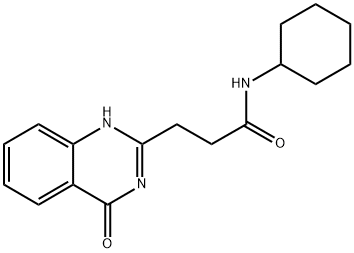
| DCC4079 | Pex14-pex5 Inhibitor-5 Featured |
First Inhibitor of PEX14-PEX5 Protein-Protein Interaction (PPI) with Trypanocidal Activity
More description
|
|
| DC44897 | Lysophosphatidylcholine 18:2 Featured |
Lysophosphatidylcholine 18:2 (1-Linoleoyl-2-Hydroxy-sn-glycero-3-PC), a lysophospholipid, is a potential biomarker identified from insulin resistance (IR) polycystic ovary syndrome (PCOS). Low plasma Lysophosphatidylcholine 18:2 also has been shown to predict impaired glucose tolerance, insulin resistance, type 2 diabetes, coronary artery disease, and memory impairment.
More description
|
|