 To enhance service speed and avoid tariff delays, we've opened a US warehouse. All US orders ship directly from our US facility.
| Cat. No. | Product Name | Field of Application | Chemical Structure |
|---|---|---|---|
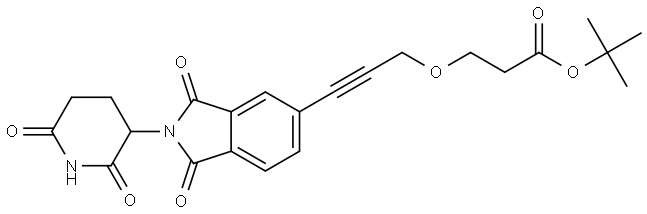
| DC67751 | tert-butyl 3-({3-[2-(2,6-dioxopiperidin-3-yl)-1,3-dioxoisoindol-5-yl]prop-2-yn-1-yl}oxy)propanoate Featured |
|
|
| DCC4750 | Sjf-1521 Featured |
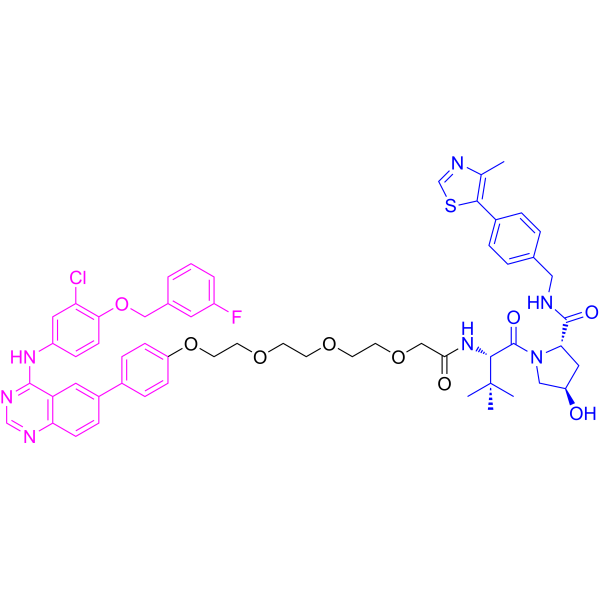
SJF-1521 is a selective EGFR PROTAC degrader. SJF-1521 is capable of inducing EGFR degradation in OVCAR8 cells. SJF-1521 can be used for tumor research.
More description
|
|
| DC67762 | CRBN ligand-204 Featured |
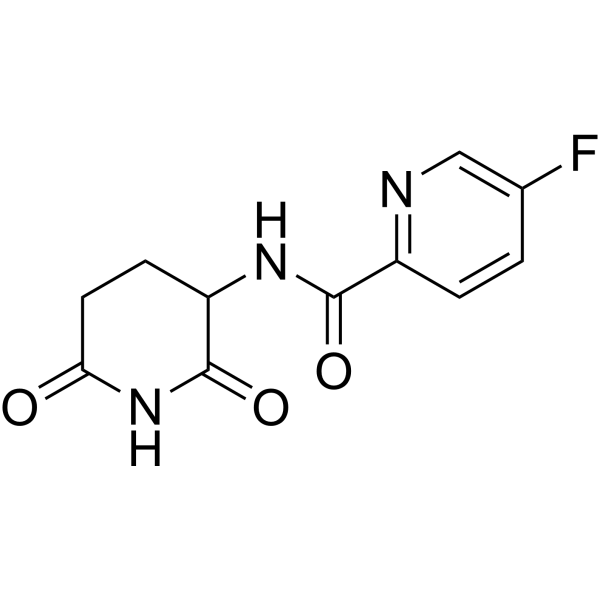
CRBN ligand-204 is an E3 ubiquitin ligase cereblon (CRBN) ligand used to recruit the cereblon protein. CRBN ligand-204 can be linked to a target protein ligand via a linker to form a PROTAC.
More description
|
|
| DC67768 | tert-Butyl (14-((2-(2,6-dioxopiperidin-3-yl)-1-oxoisoindolin-4-yl)amino)-14-oxo-3,6,9,12-tetraoxatetradecyl)carbamate Featured |

|
|
| DC67770 | (S,R,S)-AHPC-C5-COOH Featured |
(S,R,S)-AHPC-C5-COOH (VH032-C5-COOH) is a synthesized E3 ligase ligand-linker conjugate, contains the VH032 VHL-based ligand and a linker to form PROTACs. VH-032 is a selective and potent inhibitor of VHL/HIF-1α interaction with a Kd of 185 nM, has the potential for the study of anemia and ischemic diseases.
More description
|
-AHPC-C5-COOH.gif)
|
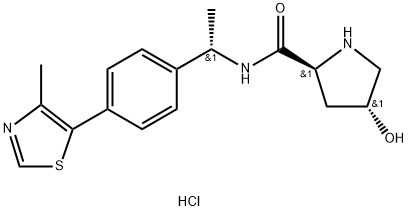
| DC67771 | (2S,4R)-4-hydroxy-N-((S)-1-(4-(4-methylthiazol-5-yl)phenyl)ethyl)pyrrolidine-2-carboxamide hydrochloride Featured |
|
|
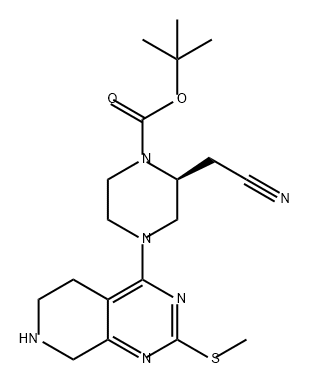
| DC67772 | tert-butyl (2S)-2-(cyanomethyl)-4-(2-methylsulfanyl-5,6,7,8-tetrahydropyrido[3,4-d]pyrimidin-4-yl)piperazine-1-carboxylate Featured |
|
|
| DC67774 | 2-(4-Chloro-phenylamino)-thiazole-4-carboxylic acid Featured |
-thiazole-4-carboxylic acid.gif)
|
|
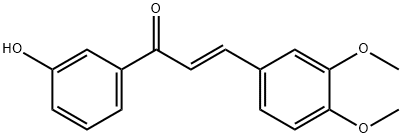
| DC67779 | (E)-3-(3,4-DIMETHOXYPHENYL)-1-(3-HYDROXYPHENYL)-1-PROPENONE Featured |
|
|
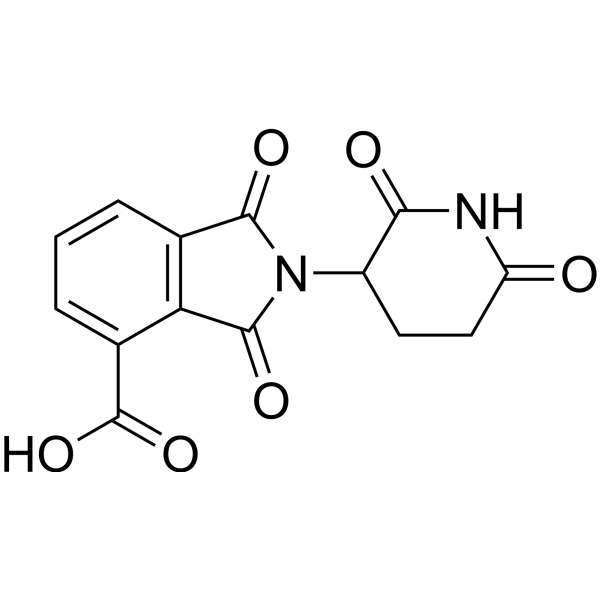
| DC67780 | Thalidomide acid Featured |
Thalidomide acid is a Thalidomide analog that can be useful in PROTAC research.
More description
|
|
| DC67790 | Benzoic acid, 4-chloro-3-(tetrahydro-2,4-dioxo-1(2H)-pyrimidinyl)- Featured |
-pyrimidinyl)-.gif)
|
|
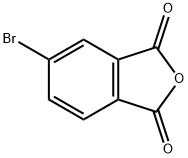
| DC67787 | 4-BROMO PHTHALIC ANHYDRUS Featured |
|
|
| DC67792 | Benzonitrile, 4-(4-methyl-5-thiazolyl)-2-(phenylmethoxy)- Featured |
-2-(phenylmethoxy)-.gif)
|
|
| DC67797 | 5-((14-amino-3,6,9,12-tetraoxatetradecyl)amino)-2-(2,6-dioxopiperidin-3-yl)isoindoline-1,3-dione Featured |
amino)-2-(2,6-dioxopiperidin-3-yl)isoindoline-1,3-dione.gif)
|
|
| DC67801 | 6-amino-N-(2-(2,6-dioxopiperidin-3-yl)-1-oxoisoindolin-4-yl)hexanamide Featured |
-1-oxoisoindolin-4-yl)hexanamide.gif)
|
|
| DC67800 | 5-[(4-aminobutyl)amino]-2-(2,6-dioxo-3-piperidinyl)-1H-Isoindole-1,3(2H)-dione, Featured |
amino]-2-(2,6-dioxo-3-piperidinyl)-1H-Isoindole-1,3(2H)-dione,.gif)
|
|
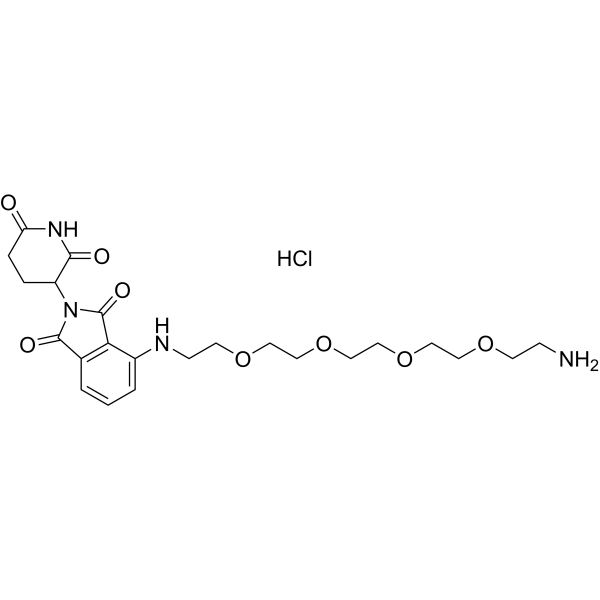
| DC67802 | Pomalidomide-PEG4-C2-NH2 hydrochloride Featured |
Pomalidomide-PEG4-C2-NH2 hydrochloride is a synthesized E3 ligase ligand-linker conjugate that incorporates the Pomalidomide based cereblon ligand and 4-unit PEG linker used in the synthesis of PROTACs.
More description
|
|
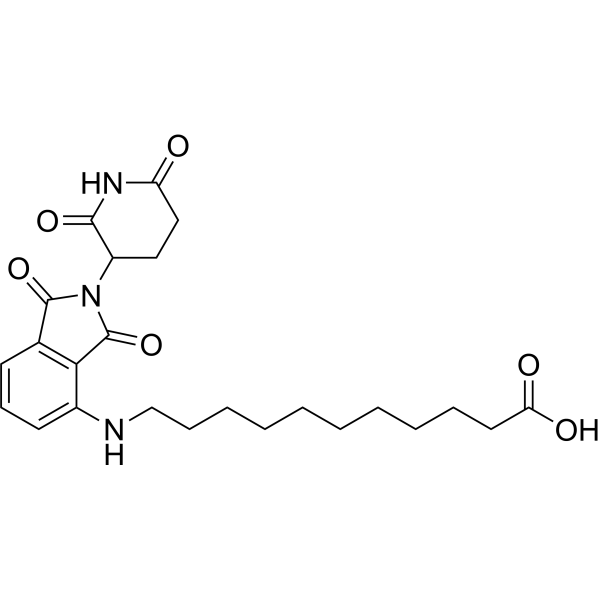
| DC67803 | Thalidomide-NH-C10-COOH Featured |
Thalidomide-NH-C10-COOH (compound 6b) is a synthesized E3 ligase ligand-linker conjugate that incorporates the Thalidomide based CRBN ligand and a linker used in PROTAC technology.
More description
|
|
| DC67806 | Thalidomide-5-NH-PEG2-C2-COO(t-Bu) Featured |
.gif)
|
|
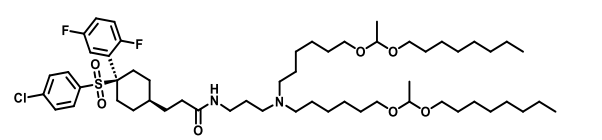
| DC68216 | Lipid CA2d Featured |
CA2d is an ionizable lipid developed for systemic mRNA delivery to the central nervous system. Its architecture combines an MK-0752-derived CNS-accessing moiety, a short three-carbon diamine spacer, a tertiary ionizable amine, and two acetal-containing hydrophobic tails. When formulated with DOPE, cholesterol and DMG-PEG2000, CA2d LNPs crossed the blood-brain barrier through caveolae- and γ-secretase-associated transcytosis and delivered mRNA to neurons, astrocytes, microglia and brain endothelial cells. Following intravenous administration of FLuc mRNA at 0.5 mg/kg in mice, CA2d produced 16.6-fold higher brain expression than MC3 and 8.6-fold higher expression than SM-102 at 6 hours. CA2d was further evaluated in repeated brain-cell transfection studies, a pilot rhesus macaque experiment and a tPA-modified TGF-β1 mRNA formulation for ischemic stroke. These results support CA2d as a promising preclinical research lipid for investigating non-viral CNS mRNA delivery; it has not been clinically validated.
More description
|
|
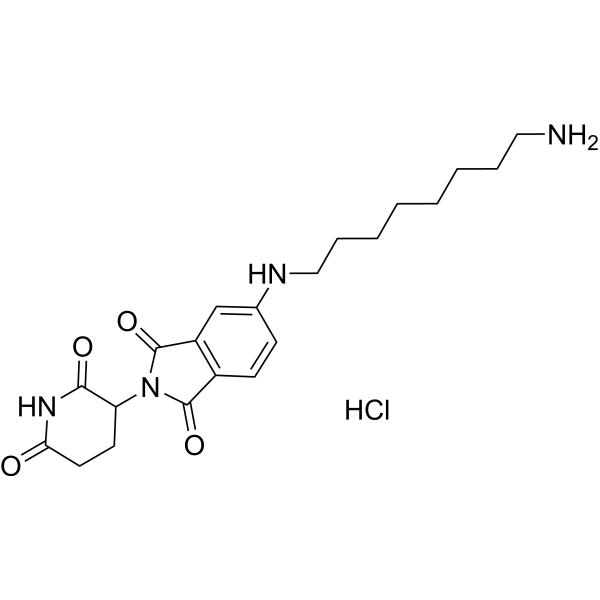
| DC67809 | Pomalidomide-5-C8-NH2 hydrochloride Featured |
Pomalidomide-5-C8-NH2 hydrochloride is the Pomalidomide (HY-10984)-based cereblon (CRBN) ligand used in the recruitment of CRBN protein.
More description
|
|
| DC67811 | Pomalidomide-5-C6-NH2 hydrochloride Featured |
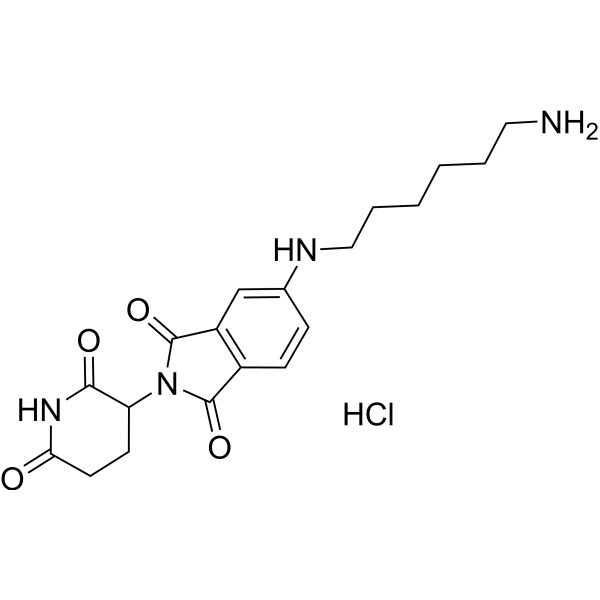
Pomalidomide-5-C6-NH2 hydrochloride is the Pomalidomide (HY-10984)-based cereblon (CRBN) ligand used in the recruitment of CRBN protein.
More description
|
|
| DC48434 | TD-165 Featured |
TD165(TD 165) is a PROTAC-based cereblon (CRBN) degrader that degrads Cav1.2α with the DC50 of 20.4 nM, comprising a cereblon (CRBN) ligand binding group, a linker and an von Hippel-Landau (VHL) binding group.
More description
|

|
| DC42025 | Temporin L Featured |
Temporin L is a potent antimicrobial peptide and is active against Gram-negative bacteria and yeast strains. Temporin L also has antiendotoxin properties.
More description
|

|
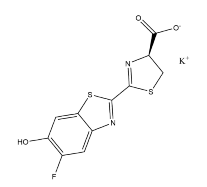
| DC67815 | 5-fluoro-D-Luciferin potassium salt Featured |
5-fluoro-D-Luciferin potassium salt is a derivative of D-Luciferin potassium salt. Its biological activity and main applications are similar to those of D-Luciferin potassium salt.
More description
|
|
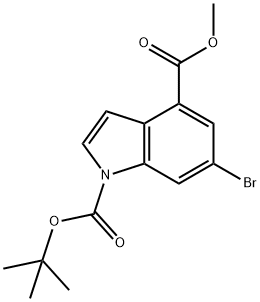
| DC67820 | 6-Bromo-indole-1,4-dicarboxylic acid 1-tert-butyl ester 4-methyl ester Featured |
|
|
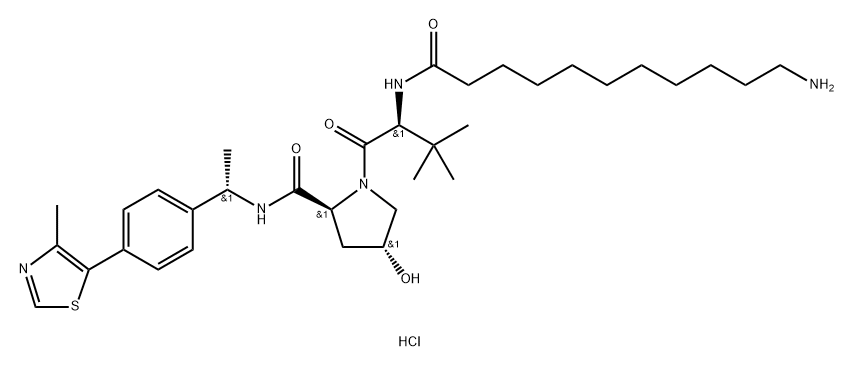
| DC67824 | (S,R,S)-AHPC-Me-C-10-NH2 hydrochloride,(S,R,S) AHPC Me C10 NH2 hydrochloride,(S,R,S)AHPCMeC10NH2 hydrochloride Featured |
|
|
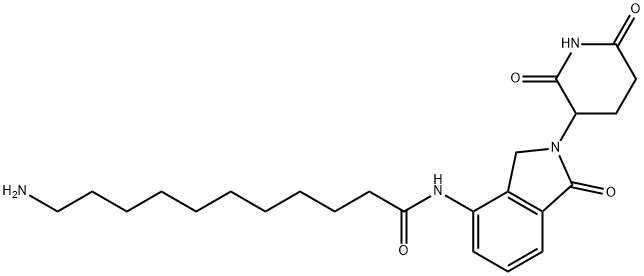
| DC67825 | Undecanamide, 11-amino-N-[2-(2,6-dioxo-3-piperidinyl)-2,3-dihydro-1-oxo-1H-isoindol-4-yl]- Featured |
|
|
| DC67829 | 1-(Boc-L-tert-leucinyl)-(4S)-4-hydroxy-D-proline Featured |
-(4S)-4-hydroxy-D-proline.gif)
|
|
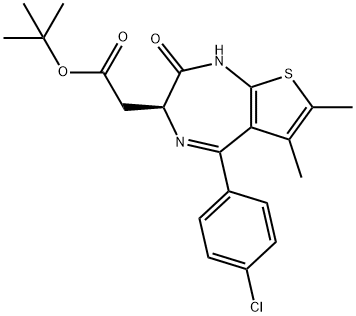
| DC67834 | 1H-Thieno[2,3-e]-1,4-diazepine-3-acetic acid, 5-(4-chlorophenyl)-2,3-dihydro-6,7-diMethyl-2-oxo-, 1,1-diMethylethyl ester, (3S)- Featured |
|
