To enhance service speed and avoid tariff delays, we've opened a US warehouse. All US orders ship directly from our US facility.
| Cat. No. | Product Name | Field of Application | Chemical Structure |
|---|---|---|---|
| DC60957 | PF-07905428 Featured |
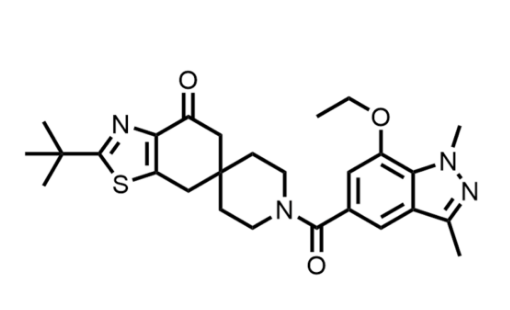
|
|
| DC60956 | iptocigistat(VENT-03) Featured |
.png)
|
|
| DC60955 | GFH647 Featured |
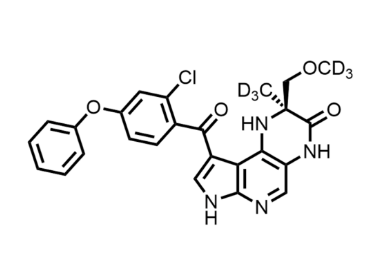
|
|
| DC60954 | surbinsertib (SGR-3515) Featured |
.png)
|
|
| DC60953 | NVP-KFA115 Featured |
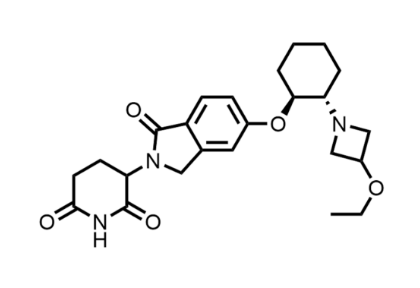
|
|
| DC60952 | AZD3632 Featured |
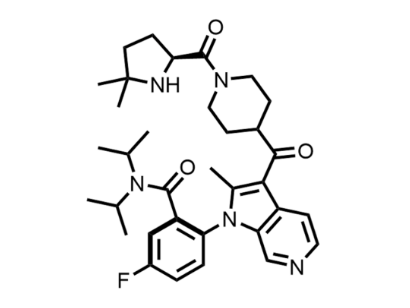
|
|
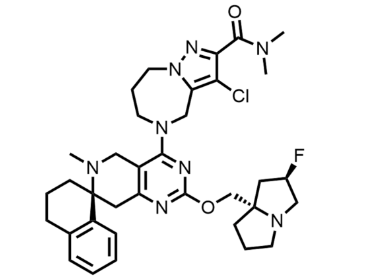
| DC60951 | QTX3034 Featured |
|
|
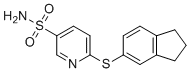
| DC22958 | RU-GIRK-1 Featured |
A potent GIRK2 inhibitor that inhibits GIRK2-mediated flux with an IC50 of 0.35 uM.
More description
|
|
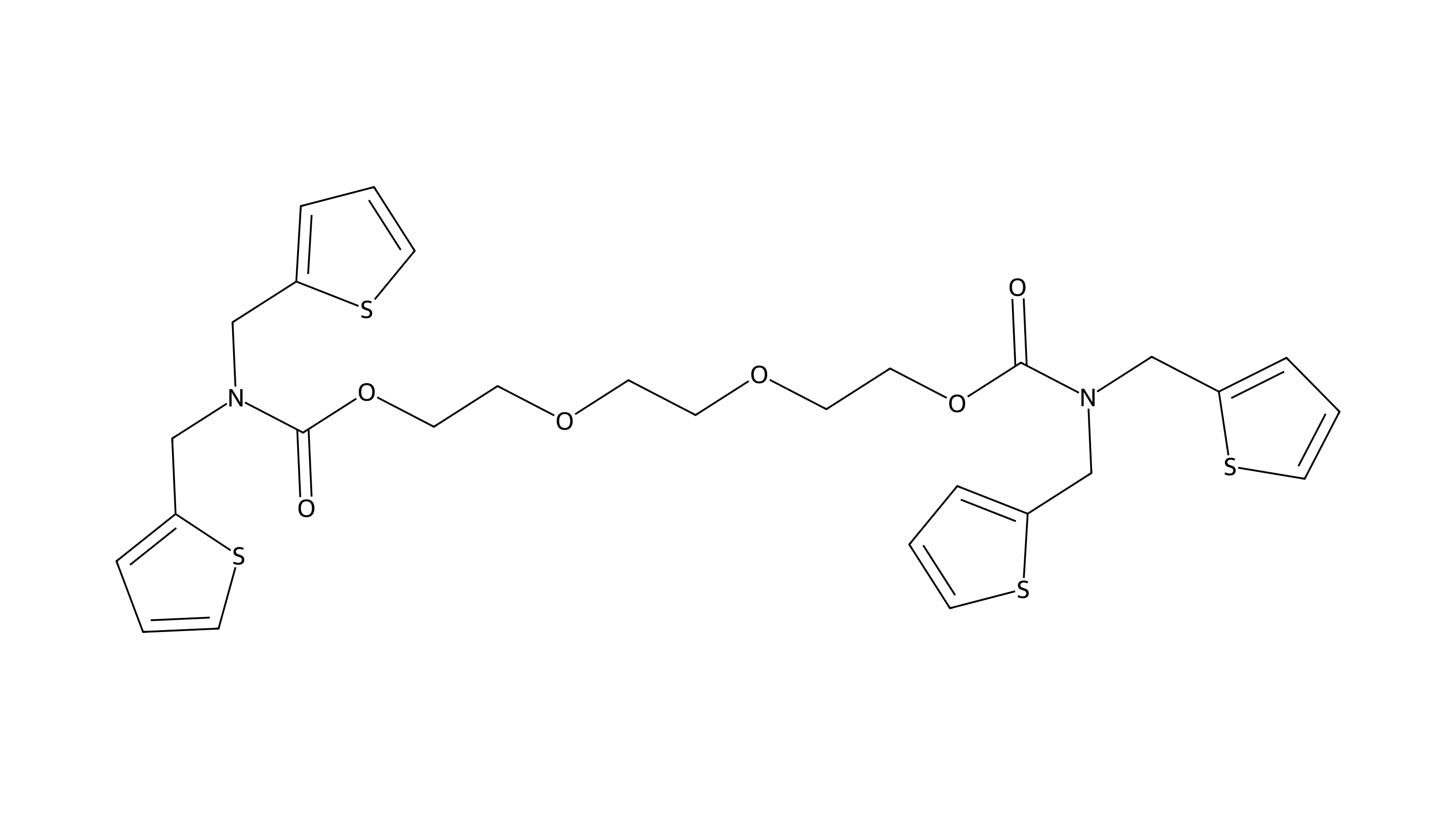
| DC73233 | Alintegimod (7HP349) Featured |
Alintegimod (7HP349) is a small molecule activator of the integrins αLβ2 (LFA-1) and α4β1 (VLA-4). 7HP349 directly activates integrin cell adhesion receptors crucial for the generation of an immune response.
More description
|
|
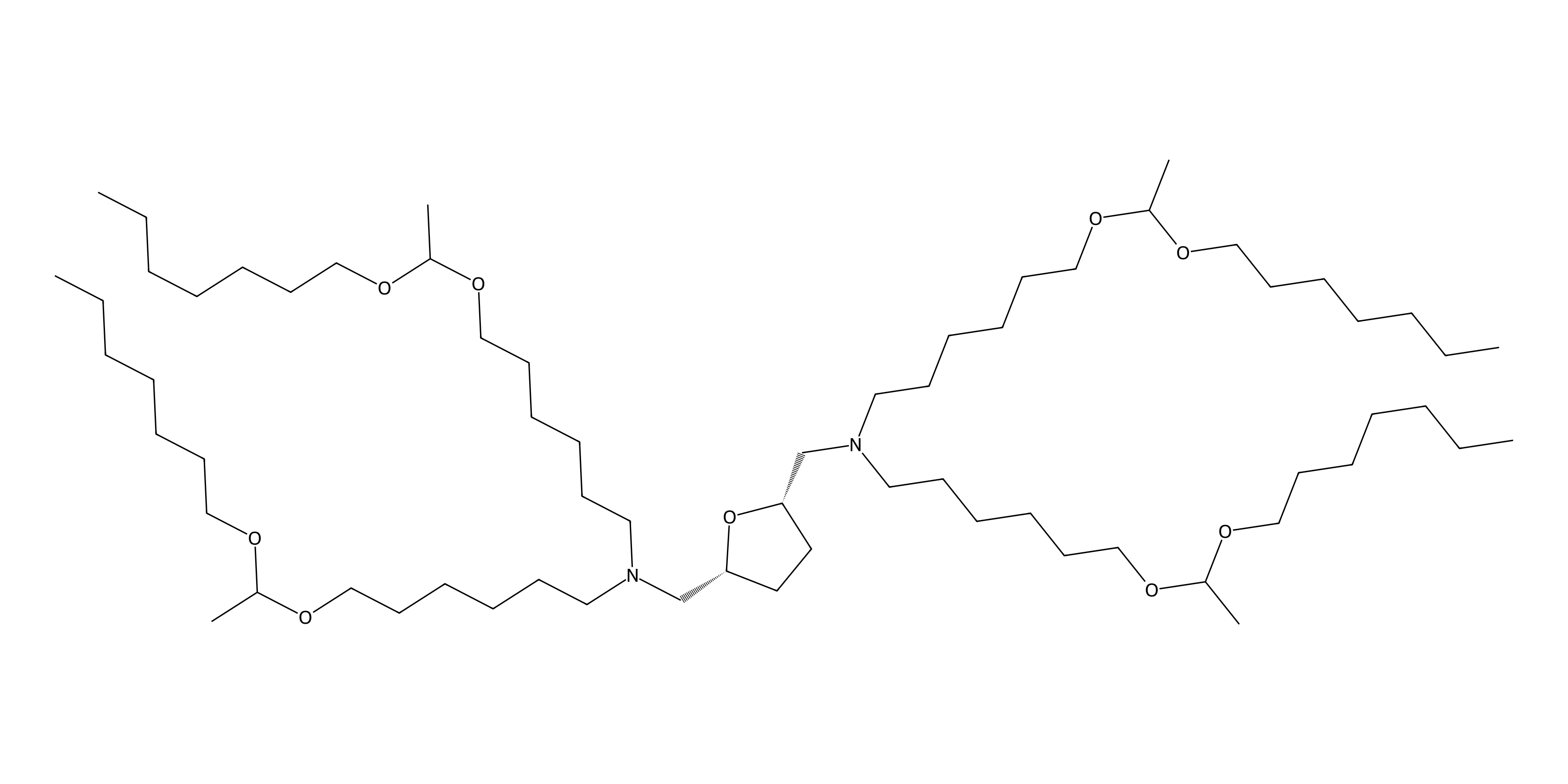
| DC60840 | Lipid F10T5 Featured |
F10T5 is a furan-derived ionizable lipid developed for mRNA delivery to the central nervous system through the meningeal lymphatic pathway. Its architecture incorporates an ionizable polyamine region and four hydrophobic tails containing acid-sensitive acetal linkages. Following subcutaneous administration near the deep cervical lymph nodes, F10T5 LNPs enabled functional mRNA expression in neurons, microglia, and astrocytes while producing relatively low signals in peripheral organs. Cre mRNA delivery resulted in tdTomato expression in approximately 8.93% of neurons, 7.0% of microglia, and 9.9% of astrocytes in mice. Compared with the co-lead lipid F11T6, F10T5 showed comparable total brain luciferase expression, stronger astrocyte transfection, and lower peripheral-organ distribution. Its activity was associated primarily with improved endosomal escape rather than increased cellular uptake. F10T5 remains a preclinical research lipid, and its repeat-dose safety, pharmacokinetics, and performance in larger animals require further evaluation.
More description
|
|
| DC70346 | DC-TEAD3in03 Featured |
DC-TEAD3in03 is a potent, selective, covalent TEAD3 inhibitor with IC50 of 0.16 uM, 100-fold selectivity over other TEAD isoforms (IC50>20 uM) in ABPP assays.DC-TEAD3in03 could significantly improve the thermal stability of TEAD3 protein, while it had minimal effect on widetype TEAD1, TEAD1 C359S and TEAD3 C371A mutants, demonstrated selective cellular engagement with Cys371 of TEAD3.DC-TEAD3in03 showed selective inhibitory effect on TEAD3 in GAL4-TEAD (1–4) reporter assays with IC50 of 1.15 uM in cellular assays.DC-TEAD3in03 reduced the growth rate of zebrafish caudal fins when administered to zebrafish juveniles.In the Hippo signaling pathway, the transcription factor TEA domains (TEADs) family proteins (TEAD1‒4) are the most important terminal regulators, which play an important role in development, cell proliferation, cell differentiation, tissue homeostasis, and regeneration.
More description
|

|
| DC60548 | IBG1 Featured |
IBG1 is a PROTAC-like degrader, which comprises JQ1 tethered to E7820. IBG1 selectively degraded BRD2 and BRD4 but not BRD3. IBG1 results in potent BRD4 degradation with DC50 of 0.15 nM and pronounces growth inhibition in various cancer cell lines.
More description
|

|
| DC60550 | IBG4 Featured |
IBG4 is a PROTAC-like degrader. IBG4 shows high specificity for BRD4 and does not efficiently degrade BRD2.
More description
|

|
| DC65831 | LNK01001 Featured |
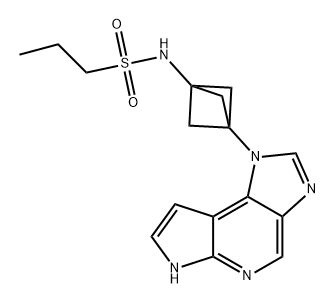
|
|
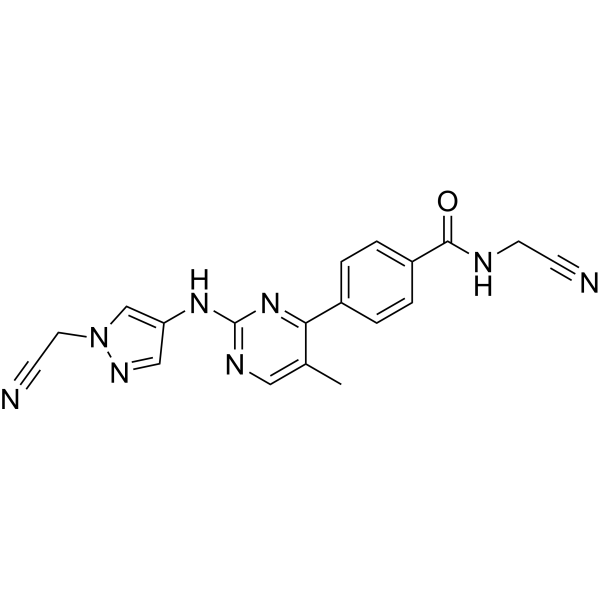
| DC74631 | LNK01003 Featured |
LNK01003(Example 4) is a selective and potent JAK inhibitor.
More description
|
|
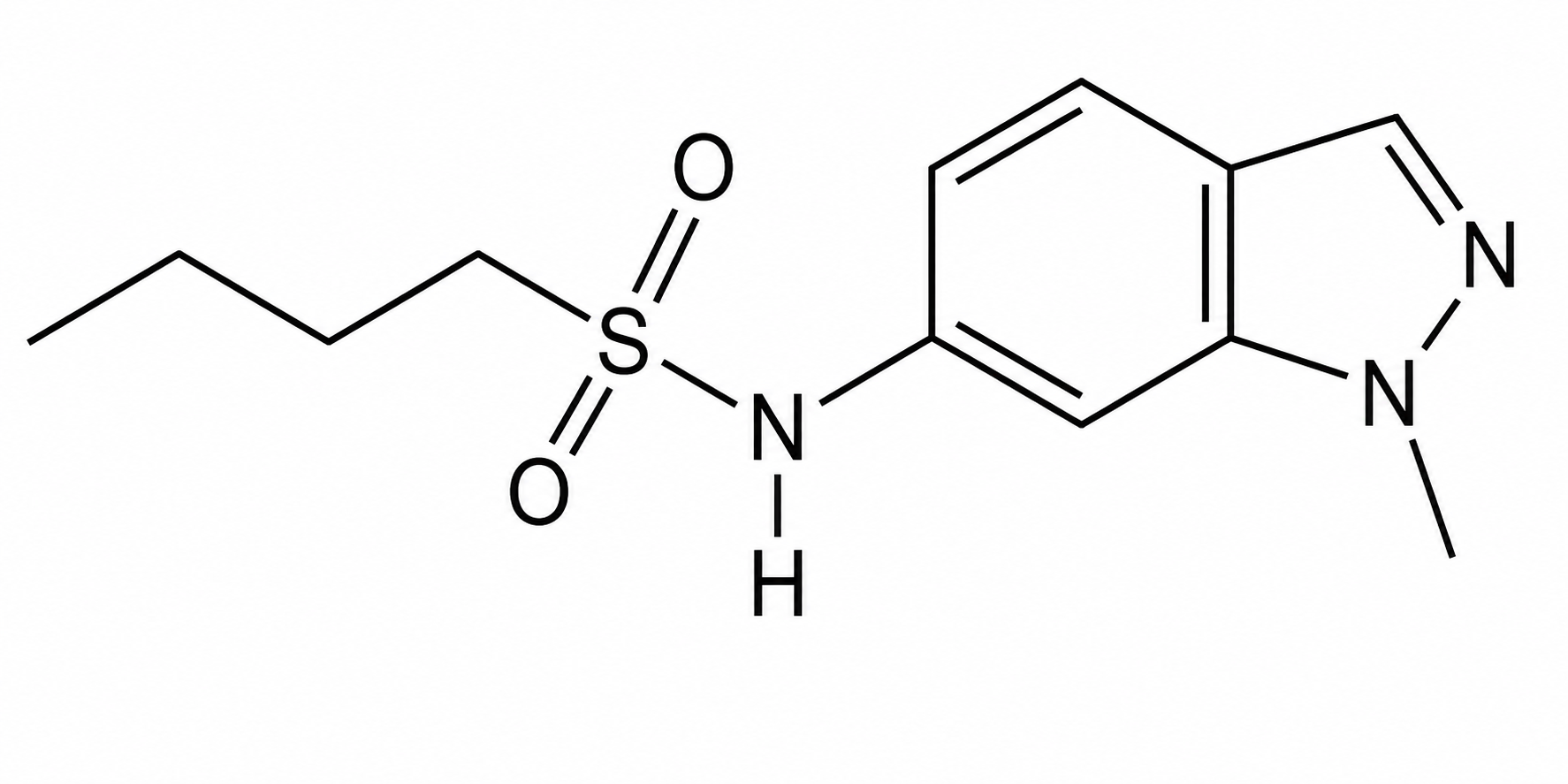
| DC70459 | GSK3011724A Featured |
GSK 3011724A (DG-167, GSK-3011724A) is a potent, specific inhibitor of β-ketoacyl-ACP synthase (KasA, Kd=9 nM), shows anti-tubercular activity (MIC H37Rv=0.8 uM); shows much weaker apparent dissociation constant for both Pks10 and Pks (Kd=1.4 uM); inhibits mycolic acid biosynthesis and shows negligible activity against a panel of unrelated proteins and 18 Gram-positive and Gram-negative bacterial species.
More description
|
|
| DC65840 | KYM-001 Featured |

|
|
| DC65899 | Des-iPr-TAS-116 Featured |
|
|
| DC60551 | Compound 181 Featured |
Compound 181 is a selective and highly potent stabilizer of the 14-3-3σ/ERα complex. Compound 181 shows potency comparable to the natural product Fusicoccin-A.
More description
|

|
| DC65961 | 10-methy1-6-one Featured |

|
|
| DC65962 | 10-B-D-glucopyranosyloxycanthin-6-one Featured |

|
|
| DC65960 | canthin-6-one-9-O-β-D-glucopyranoside Featured |

|
|
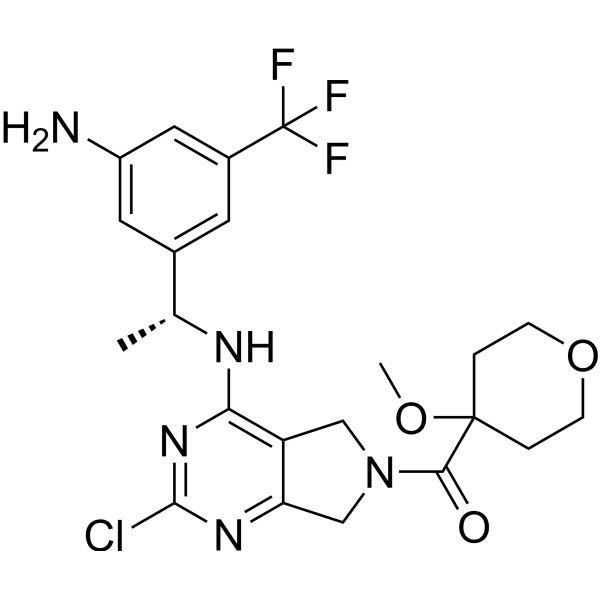
| DC60278 | RMC-0331 Featured |
RMC-0331 (RM-023) is a potent, selective and orally bioavailable SOS1 inhibitor. RMC-0331 is an in vivo tool compound that blocks RAS activation via disruption of the RAS-SOS1 interaction.
More description
|
|
| DC90056 | PLX-5622 HCl form (water solubility form) Featured |
PLX5622 is the HCl salt form of PLX-5622, which has better water solubility.PLX-5622 is a highly selective brain-penetrant CSF1R inhibitor (IC50=0.016 µM; Ki=5.9 nM) allowing for extended and specific microglial elimination, preceding and during pathology development.
More description
|

|
| DCC1108 | Bpn-14136 Featured |
Novel RBP4 antagonist with good in vitro potency and selectivity and optimal rodent pharmacokinetic (PK) and pharmacodynamic (PD) characteristics
More description
|

|
| DC74260 | cyclo-CRVLIR Featured |
cyclo-CRVLIR is a cyclic peptide that binds selectively to p110α RAS binding domain (p110α-RBD) with ITC Kd of 3 uM, blocks p110α/RAS interaction in vitro and KRAS cancer cell lines.
More description
|

|
| DC74205 | Tryptolinamide Featured |
Tryptolinamide (TLAM) is a small-molecule compound that activates mitochondrial respiration in cybrids generated from patient-derived mitochondria and fibroblasts from patient-derived iPSCs, inhibits phosphofructokinase-1 (PFK1) with an ATP-uncompetitive
More description
|

|
| DC73683 | LTGO-33 Featured |
LTGO-33 is a potent, selective inhibitor of voltage-gated sodium channel NaV1.8 with IC50 of 44 nM (hNaV1.8), 600-fold selectivity against NaV1.1-NaV1.7 and NaV1.9.
More description
|

|
| DC73980 | DS55980254 Featured |
DS55980254 (DS 55980254) is potent, selective and orally active PTDSS1 (phosphatidylserine synthetase 1) inhibitor, suppresses phosphatidylserine (PS) production activity of PTDSS1 (IC50=100 nM) in cell-free assays, but not that of PTDSS2.
More description
|

|
| DC73617 | NV-6297 Featured |
NV-6297 (NV6297) is a potent, selective mTORC1 pathway signaling inhibitor without inhibition on mTORC2, inhibits S6K1 phosphorylation (pS6K1 T389) in MCF7 cells with IC50 of 120 nM, directly and selectively targets GLUT-1.
More description
|

|