 To enhance service speed and avoid tariff delays, we've opened a US warehouse. All US orders ship directly from our US facility.
| Cat. No. | Product Name | Field of Application | Chemical Structure |
|---|---|---|---|
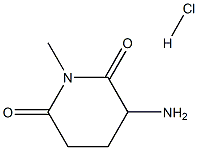
| DC67838 | 3-amino-1-methylpiperidine-2,6-dione hydrochloride Featured |
|
|
| DC67836 | (R)-3-Aminopyrrolidine-2,5-dione Featured |
(R)-3-Aminopyrrolidine-2,5-dione is a potential anticonvulsant agent and its derivatives have comparable in vivo efficacy.
More description
|
-3-Aminopyrrolidine-2,5-dione.gif)
|
| DC67835 | (S)-3-Aminopyrrolidine-2,5-dione Featured |
(S)-3-Aminopyrrolidine-2,5-dione is a potential anticonvulsant agent and its derivatives have comparable in vivo potency.
More description
|
-3-Aminopyrrolidine-2,5-dione.gif)
|
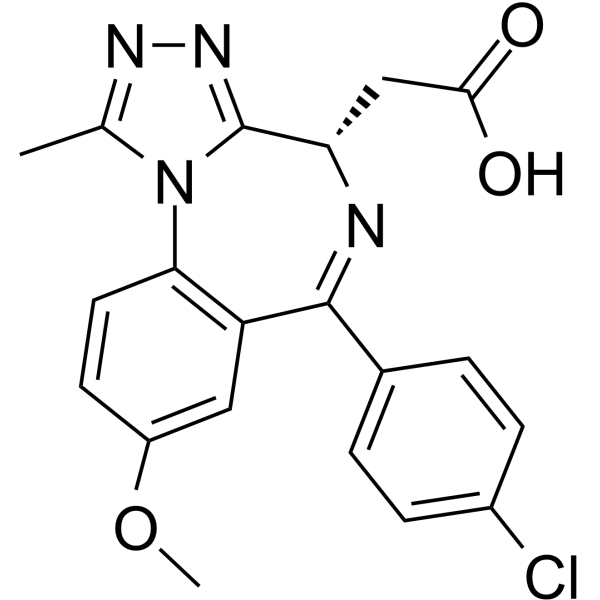
| DC67833 | I-BET762 carboxylic acid Featured |
I-BET762 carboxylic acid (Molibresib carboxylic acid) is an I-BET762-based warhead ligand for conjugation reactions of PROTAC targeting on BET. I-BET762 carboxylic acid (Molibresib carboxylic acid) is a BRD4 inhibitor with a pIC50 of 5.1.
More description
|
|
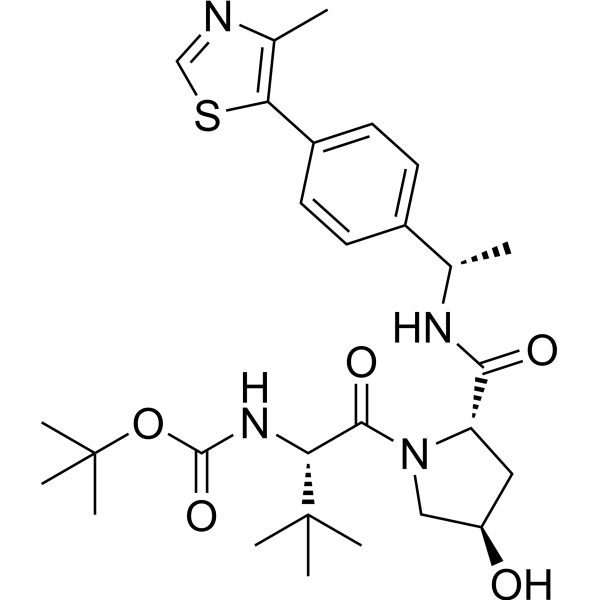
| DC67832 | (S,S,S)-AHPC-Boc Featured |
(S,S,S)-AHPC-Boc is the isomer of (S,R,S)-AHPC-Boc (HY-123109), and can be used as an experimental control. (S,R,S)-AHPC-Boc (VH032-Boc) is a ligand used in the recruitment of the von Hippel-Lindau (VHL) protein.
More description
|
-AHPC-Boc.gif)
|
| DC10656 | (+)-JQ1 carboxylic acid Featured |
(+)-JQ1 carboxylic acid is the carboxylic acid form of (+)-JQ1 for derivative synthesis.
More description
|

|
| DC67830 | CRBN ligand-798 Featured |
CRBN ligand-798 is an E3 ubiquitin ligase cereblon (CRBN) ligand used to recruit the cereblon protein. CRBN ligand-798 can be linked to a target protein ligand via a linker to form a PROTAC.
More description
|
|
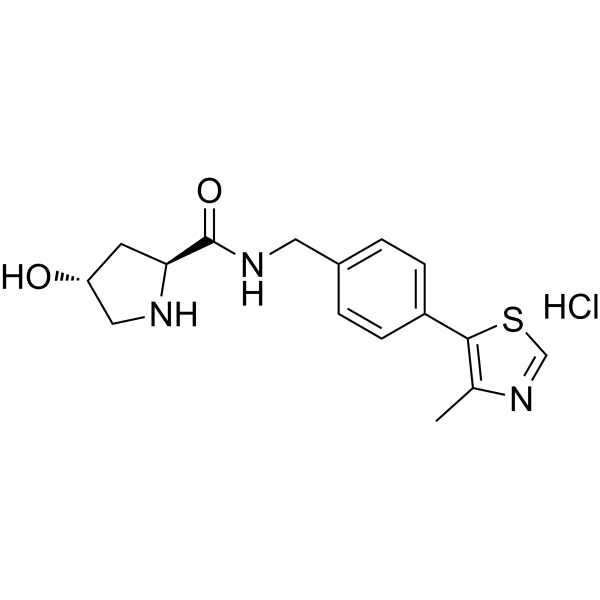
| DC65111 | CPD101077-B HCl Featured |

|
|
| DC65174 | CPD1584-B3 HCl Featured |

|
|
| DC67828 | CRBN ligand-878 Featured |
CRBN ligand-878 is an E3 ubiquitin ligase cereblon (CRBN) ligand used to recruit the cereblon protein. CRBN ligand-878 can be linked to a target protein ligand via a linker to form a PROTAC.
More description
|
|
| DC22335 | E3 ligase Ligand 1A Featured |
E3 ligase Ligand 1A is a ligand of E3 ligase, used in PROTAC technology; E3 ligase Ligand 1A can be used in the research of cancer.
(S,R,S)-AHPC-Me (VHL ligand 2) is the (S,R,S)-AHPC-based VHL ligand used in the recruitment of the von Hippel-Lindau (VHL)
More description
|

|
| DC11578 | VHL Ligand 3 Featured |
A VHL ligand for PROTAC..
More description
|

|
| DC26127 | VHL ligand 1 (TFA) Featured |
VHL ligand 1 TFA is the VH032-based VHL ligand used in the recruitment of the von Hippel-Lindau (VHL) protein.
More description
|

|
| DC11579 | VH032 Featured |
VH-032 (VHL ligand 1) is a VHL ligand for PROTAC and potent, small molecule inhibitor of the VHL/HIF-1α interaction with Kd of 185 nM..
More description
|

|
| DC12028 | MDK7526(Protein degrader 1) Featured |
MDK7526, also known as VHL Ligand 1; Protein degrader 1, is a potent and selective protein degrader.
More description
|
-AHPC monohydrochloride.gif)
|
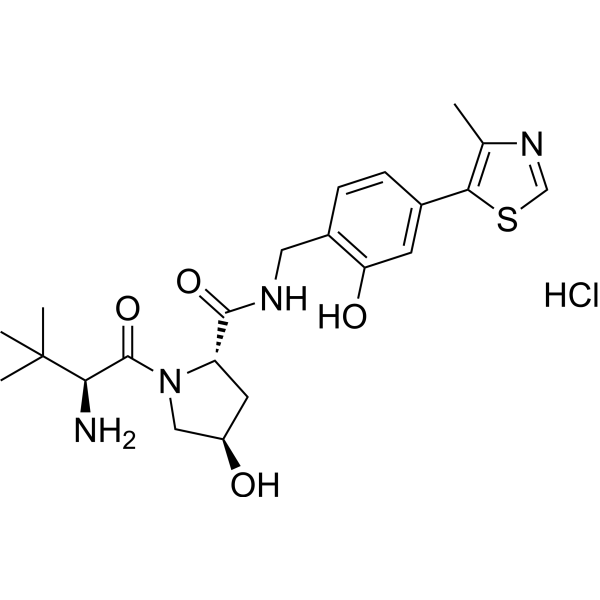
| DC67827 | CRBN ligand-877 Featured |
CRBN ligand-877 is an E3 ubiquitin ligase cereblon (CRBN) ligand used to recruit the cereblon protein.
More description
|
|
| DC67826 | (S,S,S)-AHPC hydrochloride Featured |
(S,S,S)-AHPC hydrochloride is a von Hippel-Lindau (VHL) amino building block. (S,S,S)-AHPC (Compound 27) is a ligand used as a negative control for (S,R,S)-AHPC. (S,R,S)-AHPC is the VH032-based VHL ligand used in the recruitment of the VHL protein.
More description
|
-AHPC hydrochloride.gif)
|
| DC26119 | VHL ligand 2 hydrochloride Featured |
VHL ligand 2 hydrochloride) is the (S,R,S)-AHPC-based VHL ligand used in the recruitment of the von Hippel-Lindau (VHL) protein. (S,R,S)-AHPC-Me hydrochloride can be used to synthesize ARV-771, a von Hippel-Landau (VHL) E3 ligase-based BET PROTAC degrader.
More description
|

|
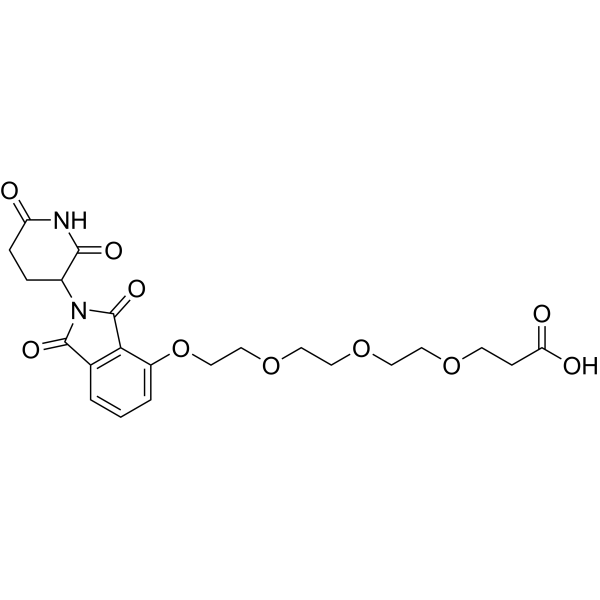
| DC79178 | Thalidomide-O-PEG3-COOH Featured |
Thalidomide-O-PEG3-COOH is a synthesized E3 ligase ligand-linker conjugate that incorporates the Thalidomide based cereblon ligand and a linker used in PROTAC technology.
More description
|
|
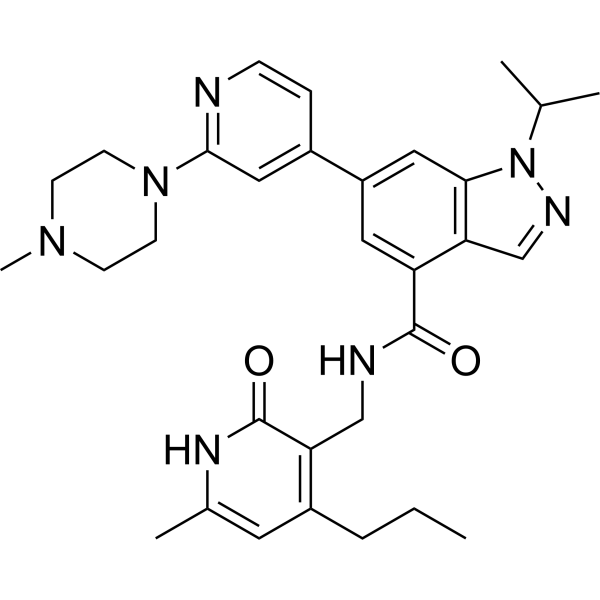
| DC7143 | GSK-343 Featured |
GSK343 is a potent and selective EZH2 inhibitor with IC50 of 4 nM, showing 60 fold selectivity against EZH1, and >1000 fold selectivity against other histone methyltransferases.
More description
|
|
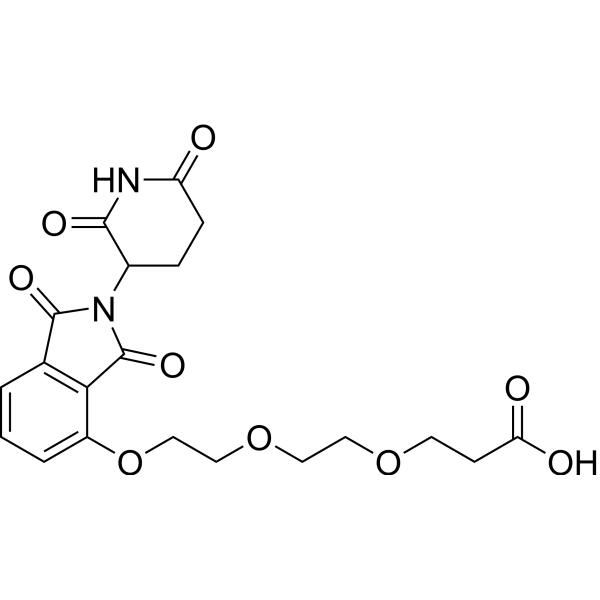
| DC67823 | Thalidomide-o-PEG2-acid Featured |
Thalidomide-o-PEG2-acid, is synthesized compound that incorporatess the Thalidomide based cereblon ligand and the PEG linker used in PROTAC technology.
More description
|
|
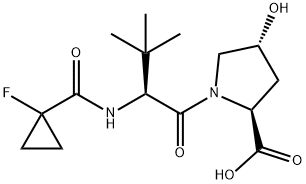
| DC67822 | L-Proline, N-[(1-fluorocyclopropyl)carbonyl]-3-methyl-L-valyl-4-hydroxy-, (4R)- Featured |
|
|
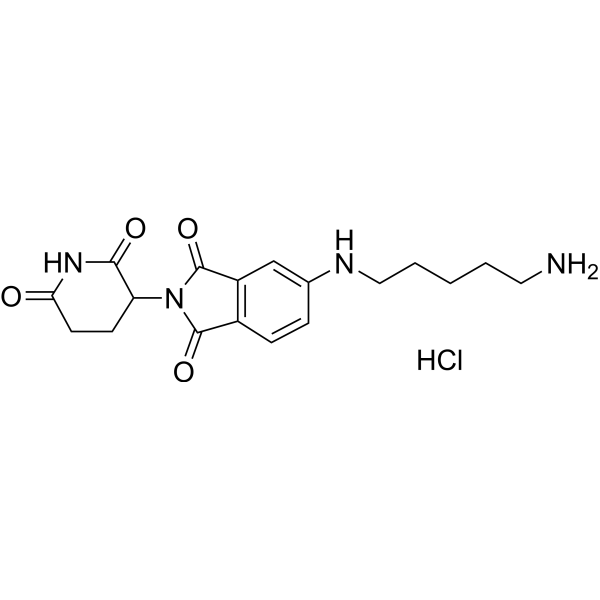
| DC67821 | Pomalidomide-5-C5-NH2 hydrochloride Featured |
Pomalidomide-5-C5-NH2 hydrochloride is the Pomalidomide (HY-10984)-based cereblon (CRBN) ligand used in the recruitment of CRBN protein.
More description
|
|
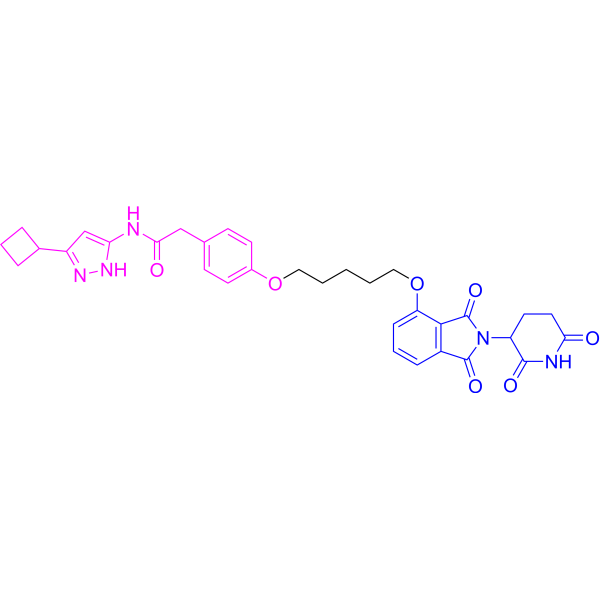
| DC11564 | PROTAC CDK9 Degrader-1 Featured |
A heterobifunctional small molecule PROTAC capable of cereblon mediated proteasomal degradation of CDK9.
More description
|
|
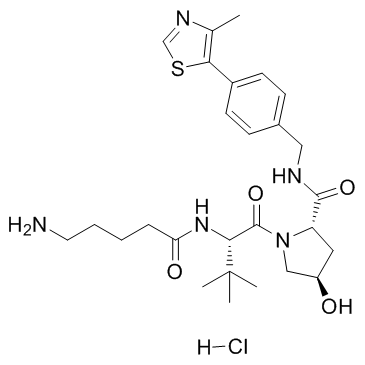
| DC12264 | Protac linker 5 Featured |
Protac Linker 5 is a PROTAC linker utilized to connect the respective tyrosine kinase inhibitor (TKI) to the E3 recruiting ligand.
More description
|
|
| DC32732 | VH 032-linker 6 Featured |
VH 032 Linker 6 is a derivative of the proteolysis-targeting chimera technology (PROTAC) for PROTAC research and development; by incorporating an E3 ligase ligand and a PEG2 linker with terminal alkyne, it is ready for conjugation to a target protein ligand
More description
|

|
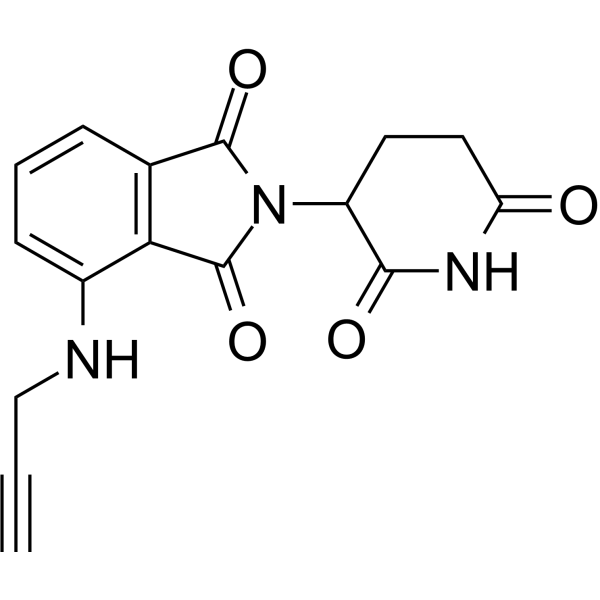
| DC67819 | Pomalidomide-propargyl Featured |
Pomalidomide-propargyl contains an E3 ligand and a terminal alkyl group ready for click conjugation. Pomalidomide-propargyl is ready for conjugation to target proteins for PROTAC.
More description
|
|
| DC67818 | 1H-Isoindole-1,3(2H)-dione, 5-[(2-aminoethyl)amino]-2-(2,6-dioxo-3-piperidinyl)- Featured |
-dione, 5-[(2-aminoethyl)amino]-2-(2,6-dioxo-3-piperidinyl)-.gif)
|
|
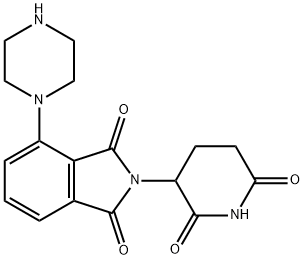
| DC65204 | Pomalidomide-piperazine Featured |
Pomalidomide-piperazine is an active compound that can be used to synthesis the E3 ligand for PROTAC.
More description
|
|
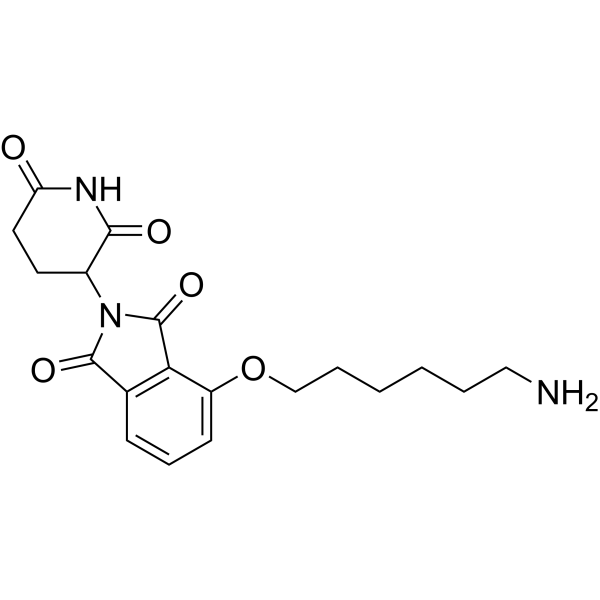
| DC45311 | Thalidomide-O-C6-NH2 Featured |
Thalidomide-O-C6-NH2 is a synthesized E3 ligase ligand-linker conjugate that incorporates the Thalidomide based cereblon ligand and a linker used in PROTAC technology.
More description
|
|
