 To enhance service speed and avoid tariff delays, we've opened a US warehouse. All US orders ship directly from our US facility.
| Cat. No. | Product Name | Field of Application | Chemical Structure |
|---|---|---|---|
| DC80547 | Discodermolide Featured |
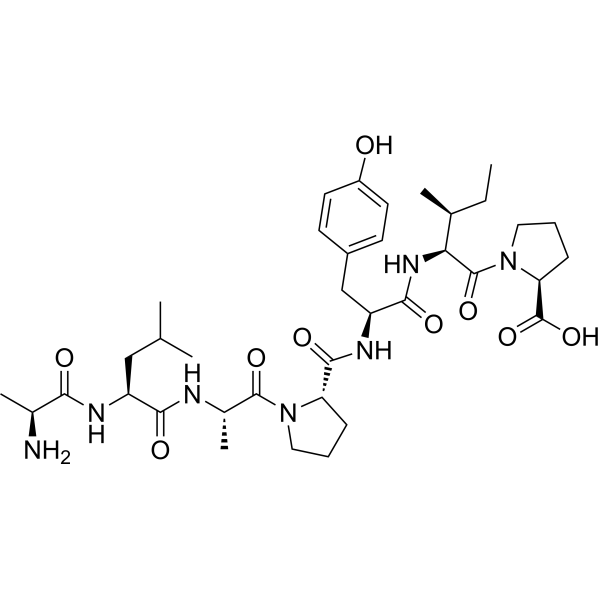
Discodermolide (NVP-XAA-296) is a potent microtubule-stabilizing agent with a Ki of 0.4 μM. Discodermolide stabilizes microtubules, induces G2 or M phase cell cycle arrest and apoptosis, leading to inhibition of cancer cell proliferation. Discodermolide competitively inhibits the binding of Paclitaxel to tubulin polymers, and inhibits the growth of Paclitaxel-resistant cells. Discodermolide can be used for breast and colon cancer research.
More description
|
|
| DC12092 | E3 Ligase Ligand-Linker Conjugates 23 TFA |
E3 Ligase Ligand-Linker Conjugates 23 (TFA) is a synthesized compound that incorporates an E3 ligase ligand and a linker used in PROTAC technology.
More description
|

|
| DC50078 | (S,R,S)-AHPC-Me-C8-NH2 Featured |
(S,R,S)-AHPC-Me-C8-NH2 is a novel PROTAC building block.
More description
|
.png)
|
| DC50076 | (S,R,S)-AHPC-Me-C3-NH2 Featured |
(S,R,S)-AHPC-Me-C3-NH2 is a novel PROTAC building block.
More description
|
.png)
|
| DC50075 | (S,R,S)-AHPC-Me-C2-NH2 Featured |
(S,R,S)-AHPC-Me-C2-NH2 is a novel PROTAC building block.
More description
|
.png)
|
| DC50074 | (S,R,S)-AHPC-Me-C1-NH2 Featured |
(S,R,S)-AHPC-Me-C1-NH2 is a novel PROTAC Building block.
More description
|
.png)
|
| DC34739 | SMPH Crosslinker Featured |
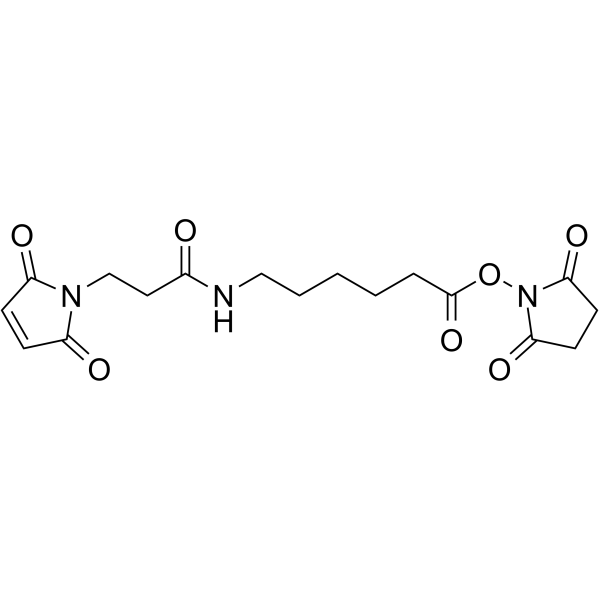
SMPH Crosslinker is an alkyl/ether-based PROTAC linker that can be used in the synthesis of PROTACs.
More description
|
|
| DC71669 | ARV471 Featured |
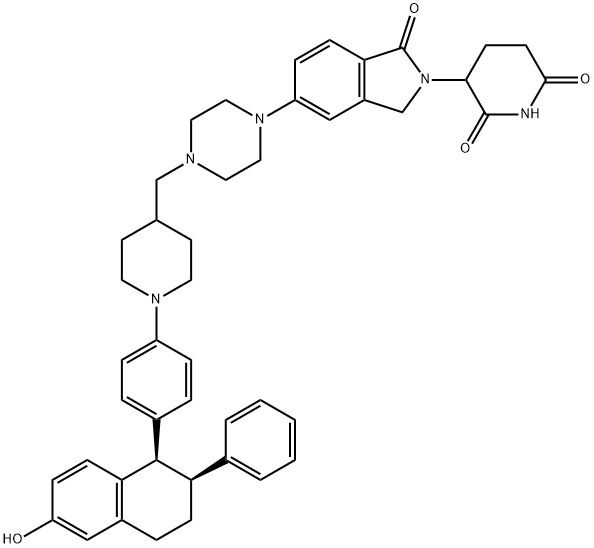
ARV471 is an orally bioavailable estrogen receptor-targeting (ER-targeting) PROTAC for the treatment of patients with locally advanced or metastatic ER+/HER2- breast cancer.
More description
|
|
| DC74503 | KH-103 Featured |
KH103 is a highly potent, catalytically-driven glucocorticoid receptor (GR) PROTAC degrader, demonstrate excellent performance in passively preventing ligand-induced gene expression activation in the absence of partial agonistic transcriptional triggering and crosstalk inhibition. KH 103 efficiently degrades glucocorticoid receptor (GR) in vitro and in vivo. In HEK293 cells, KH-103 (1 µM) induced rapid and nearly complete GR degradation within one hour. This degradation was highly potent, with significant depletion observed at 10 nM and near-complete depletion at 100 nM. KH-103 demonstrated effective and reversible GR degradation across diverse in vitro models from multiple tissues and species.Mechanistically, KH-103 promoted GR nuclear translocation but did not activate GR-mediated gene transcription and exhibited no nonspecific transcriptional effects alone. Furthermore, KH-103 effectively blocked dexamethasone (DEX)-induced GR signaling, demonstrating greater potency than comparator inhibitors.Critically, KH-103 also effectively depleted GR protein in the mouse pituitary gland in vivo and modulated corticosterone levels, confirming pharmacological activity beyond cell-based systems.
More description
|

|
| DC49083 | PROTAC-O4I2 Featured |
PROTAC-O4I2 is a PROTAC targets splicing factor 3B1 (SF3B1). PROTAC-O4I2 induces FLAG-SF3B1 degradation with an IC50 value of 0.244 μM in K562 cells. PROTAC-O4I2 also induces cellular apoptosis in K562 WT cells.
More description
|

|
| DC67667 | POMALIDOMIDE-C3-I Featured |
|
|
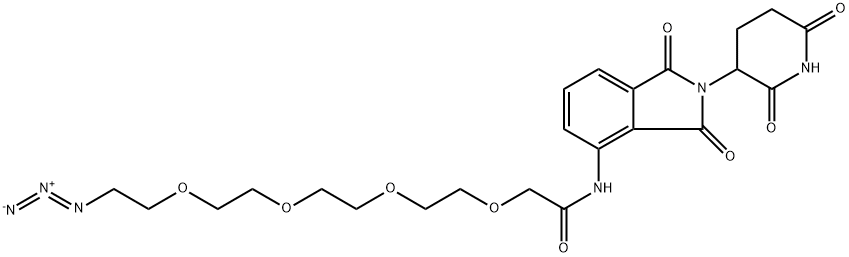
| DC67670 | Pomalidomide-PEG4-N3 Featured |
|
|
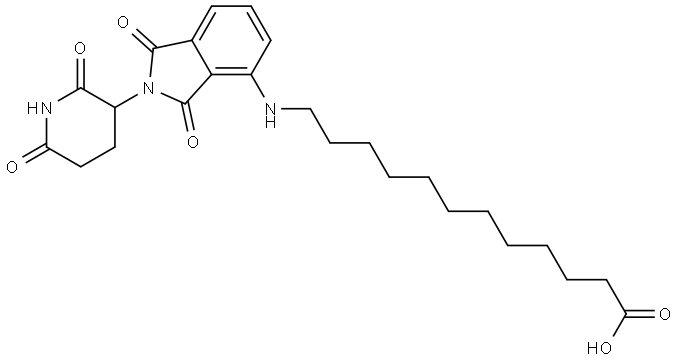
| DC67668 | Thalidomide-4-NH-C11-COOH Featured |
|
|
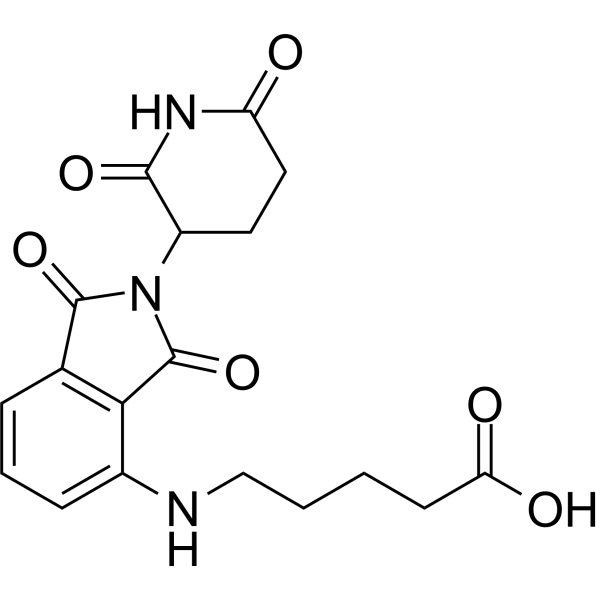
| DC67671 | Pomalidomide 4'-alkylC4-acid Featured |
Pomalidomide 4'-alkylC4-acid (linker 16) is a E3 ligase ligand-linker conjugate. Pomalidomide 4'-alkylC4-acid contains a cereblon ligand, an alkylC4 chain, and a terminal acid. Pomalidomide 4'-alkylC4-acid can be used to couple with target protein ligands to synthesize PROTAC.
More description
|
|
| DC67672 | 5-amino-N-(2,6-dioxopiperidin-3-yl)picolinamide Featured |
picolinamide.gif)
|
|
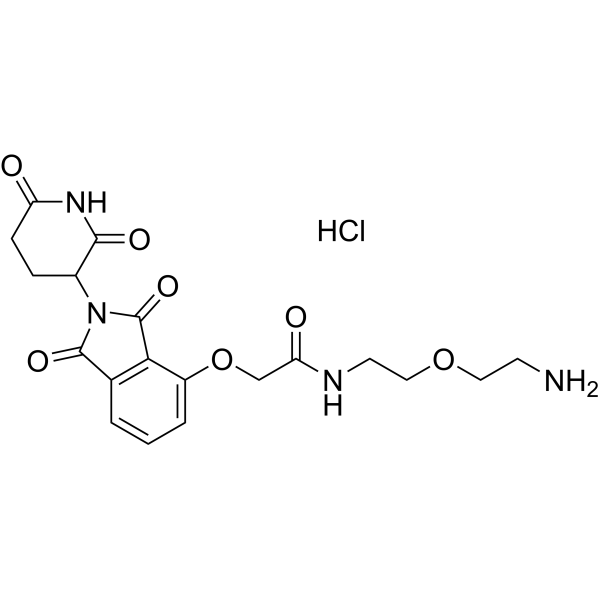
| DC67674 | Thalidomide-O-amido-PEG-C2-NH2 hydrochloride Featured |
Thalidomide-O-amido-PEG-C2-NH2 hydrochloride, a synthesized E3 ligase ligand-linker conjugate that incorporates the Thalidomide based cereblon ligand and a linker, can be used in the synthesis of PROTACs.
More description
|
|
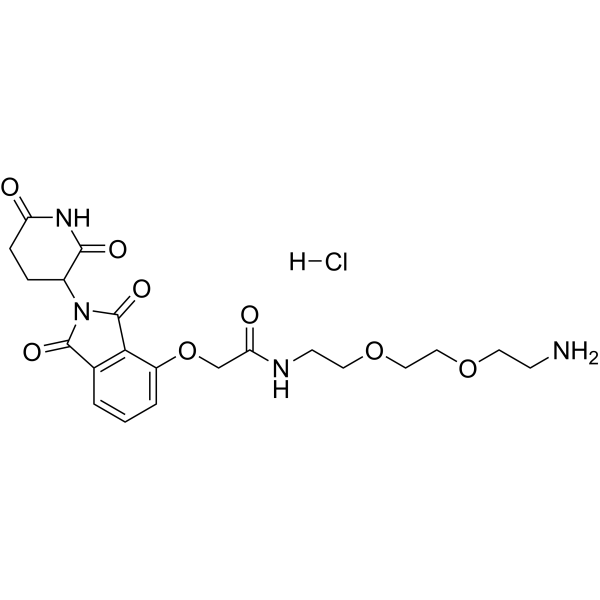
| DC67679 | Thalidomide-linker 14 Featured |
Thalidomide-O-amido-PEG2-C2-NH2 hydrochloride incorporates an E3 ligase ligand and a linker, can be an immunomodulater for the treatment of cancer.
More description
|
|
| DC28556 | XY028-133 Featured |
XY028-133 (example 14) is a PROTAC-based CDK4/6 degrader with anti-tumor activity, extracted from patent WO2018106870A1.
More description
|

|
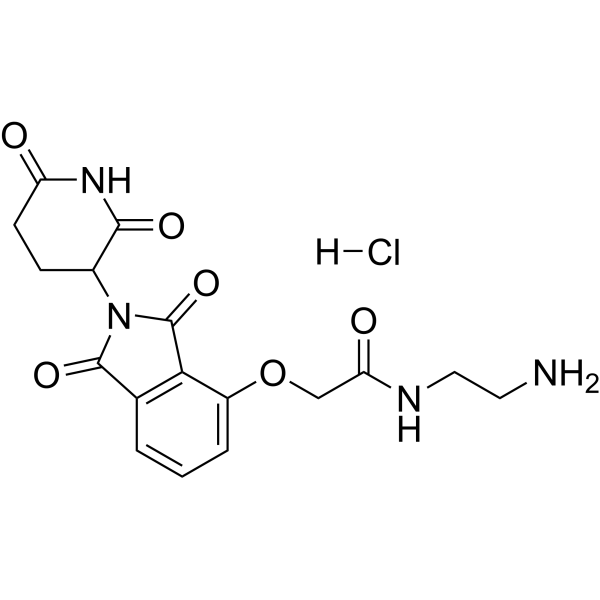
| DC67680 | Thalidomide-linker 10 Featured |
Thalidomide 4'-oxyacetamide-alkyl-C2-amine hydrochloride incorporates a cereblon (CRBN) ligand for the E3 ubiquitin ligase, and a linker. Thalidomide 4'-oxyacetamide-alkyl-C2-amine hydrochloride can be used to design the PROTACs.
More description
|
|
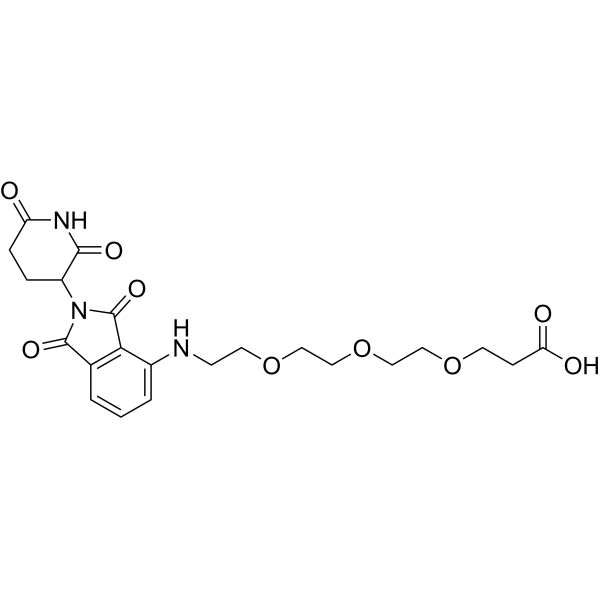
| DC67684 | Thalidomide-NH-PEG3-propionic acid Featured |
Thalidomide-NH-PEG3-propionic acid is a synthesized E3 ligase ligand-linker conjugate that incorporates the Thalidomide based cereblon ligand and 3-unit PEG linker used in PROTAC technology.
More description
|
|
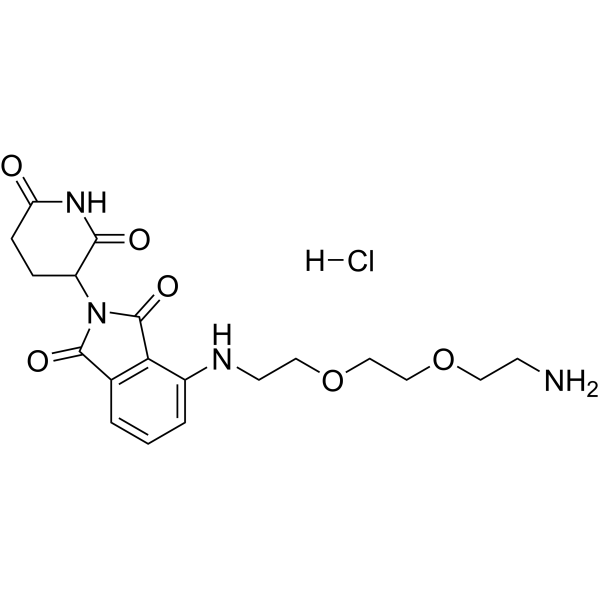
| DC67686 | Thalidomide-PEG2-C2-NH2 hydrochloride Featured |
Thalidomide-PEG2-C2-NH2 hydrochloride is a synthesized E3 ligase ligand-linker conjugate that incorporates the Thalidomide based cereblon ligand and 2-unit PEG linker used in PROTAC technology.
More description
|
|
| DC67685 | 1H-Indazole-4-carboxamide, N-[(1,2-dihydro-4,6-dimethyl-2-oxo-3-pyridinyl)methyl]-3-methyl-1-(1-methylethyl)-6-[6-(1-piperazinyl)-3-pyridinyl]-, hydrochloride (1:1) Featured |

|
|
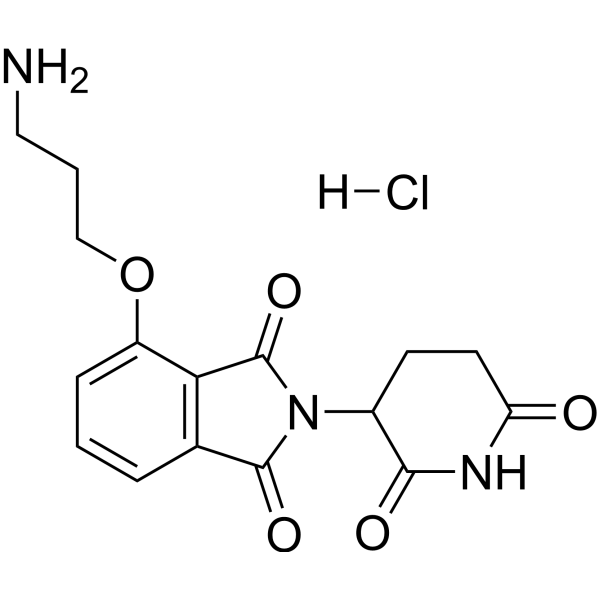
| DC67692 | Thalidomide-4-O-C3-NH2 hydrochloride Featured |
Thalidomide-4-O-C3-NH2 hydrochloride is a synthesized E3 ligase ligand-linker conjugate that incorporates the Thalidomide based cereblon ligand and a linker used in PROTAC technology.
More description
|
|
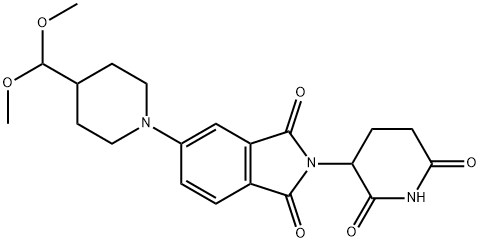
| DC67690 | 5-(4-(Dimethoxymethyl)piperidin-1-yl)-2-(2,6-dioxopiperidin-3-yl)isoindoline-1,3-dione Featured |
|
|
| DC67696 | 3-Bromo-N-(2-(2,6-dioxopiperidin-3-yl)-1,3-dioxoisoindolin-4-yl)propanamide Featured |
-1,3-dioxoisoindolin-4-yl)propanamide.GIF)
|
|
| DC67693 | (S,R,S)-AHPC-C8-NH2 dihydrochloride Featured |
(S,R,S)-AHPC-C8-NH2 dihydrochloride (VH032-C8-NH2 dihydrochloride) is a synthesized E3 ligase ligand-linker conjugate that incorporates the VH032 based VHL ligand and a linker used for AKT PROTAC degrader. (S,R,S)-AHPC-C8-NH2 is XF038-164A, example 8, extracted from patent WO2019173516A1.
More description
|
-AHPC-C8-NH2 dihydrochloride.gif)
|
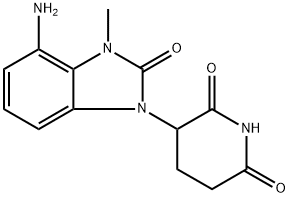
| DC67697 | 3-(4-Amino-3-methyl-2-oxo-2,3-dihydro-1H-benzo[d]imidazol-1-yl)piperidine-2,6-dione Featured |
|
|
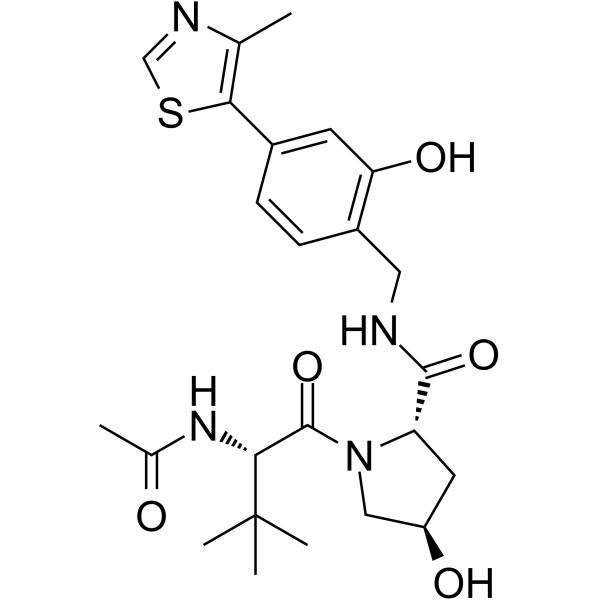
| DC67698 | VH032-OH Featured |
VH032-OH is the VH032-based VHL ligand. VH032-OH can be connected to the ligand for protein by a linker to form PROTACs.
More description
|
|
| DC67701 | 3-(1-oxo-5-(prop-2-yn-1-yloxy)isoindolin-2-yl)piperidine-2,6-dione Featured |
isoindolin-2-yl)piperidine-2,6-dione.GIF)
|
|
| DC28539 | SIAIS178 Featured |
SIAIS178 is a potent and selective BCR-ABL degrader based on PROTAC technology with an IC50 of 24 nM. SIAIS178 causes effective degradation of BCR-ABL protein by recruiting Von Hippel-Lindau (VHL) E3 ubiquitin ligase. SIAIS178 has anticancer activity.
More description
|

|
