To enhance service speed and avoid tariff delays, we've opened a US warehouse. All US orders ship directly from our US facility.
| Cat. No. | Product Name | Field of Application | Chemical Structure |
|---|---|---|---|
| DC28693 | CC-90009 Featured |
CC-90009 is a cereblon modulator that selectively binds to CRBN, influencing the activity of the ubiquitin E3 ligase complex. This interaction triggers the ubiquitination and subsequent proteasome-mediated degradation of specific transcription factors, such as Ikaros (IKZF1) and Aiolos (IKZF3), which act as transcriptional repressors in T-cells. By reducing the levels of these factors, CC-90009 modulates immune system activity, potentially leading to the activation of T-lymphocytes.
More description
|
|
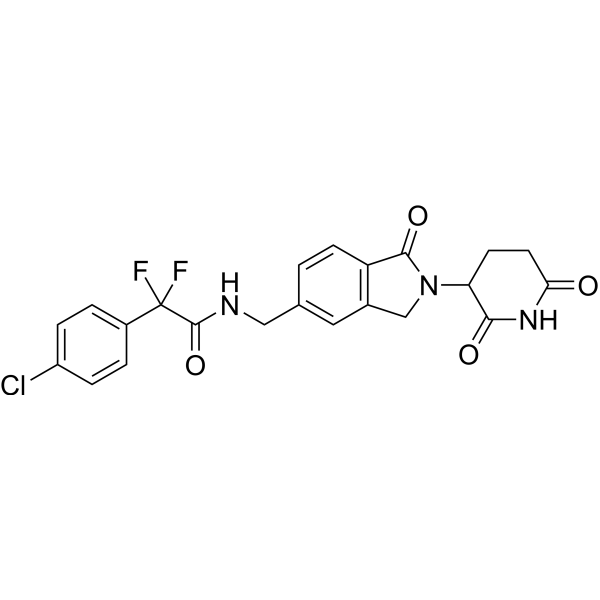
| DC11590 | Homo-PROTAC pVHL30 degrader 1 Featured |
CM-11 is a homo-PROTAC, bivalent small-molecule dimerizer of the VHL E3 ubiquitin ligase to induce self-degradation.
More description
|
|
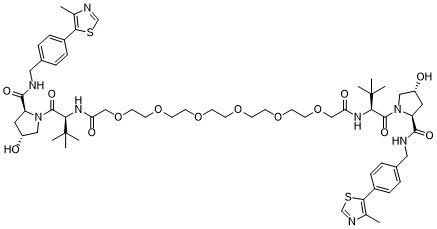
| DC50061 | Pomalidomide-C2-NH2(E3 ligase Ligand 17) Featured |
E3 ligase Ligand 17 is a ligand for E3 ubiquitin ligase. E3 ligase Ligand 17 can be connected to the ligand for protein by a linker to form PROTACs or SNIPERs. PROTACs are inducers of ubiquitination-mediated degradation of cancer-promoting proteins[1].
More description
|
|
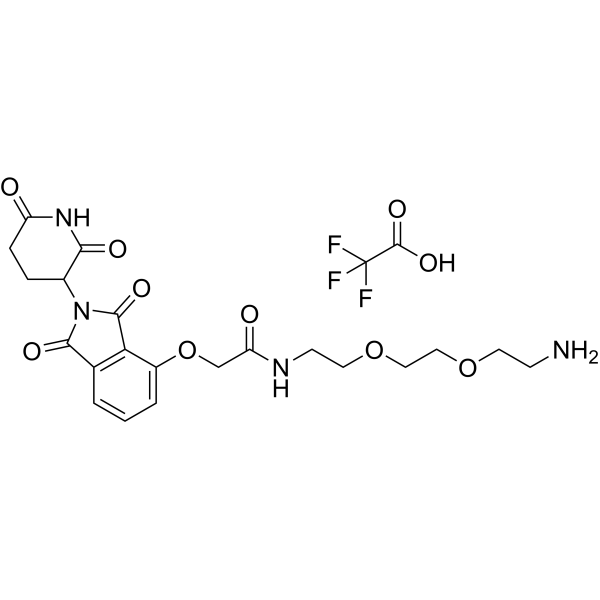
| DC67817 | Thalidomide-O-amido-PEG2-C2-NH2 TFA Featured |
Thalidomide-O-amido-PEG2-C2-NH2 TFA is a synthesized E3 ligase ligand-linker conjugate that incorporates the Thalidomide based cereblon ligand and 2-unit PEG linker used in PROTAC technology.
More description
|
|
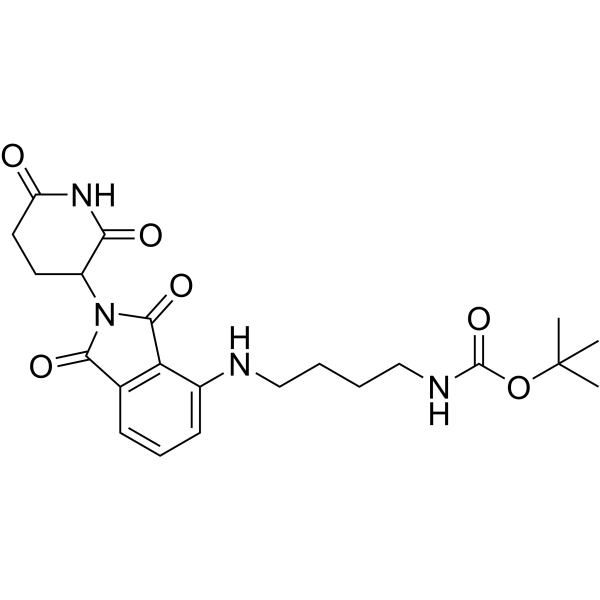
| DC71504 | Thalidomide-NH-C4-NH-Boc Featured |
Thalidomide-NH-C4-NH-Boc is a novel, potent, and selective class of Bromodomain-containing protein 4 (BRD4) and Bromodomain-containing protein 2 (BRD2) degrader for the development of therapeutics to treat cancers.
More description
|
|
| DC67816 | (S,R,S)-AHPC-O-Ph-PEG1-NH2 Featured |
(S,R,S)-AHPC-O-Ph-PEG1-NH2 (VH032-O-Ph-PEG1-NH2) is E3 ligase ligand-linker conjugate and incorporates a VHL ligand for the E3 ubiquitin ligase, and a PROTAC linker. (S,R,S)-AHPC-O-Ph-PEG1-NH2 is used in PROTAC EED degrader-1 (HY-130614). PROTAC EED degrader-1 is a PROTAC targeting EED with a pKD of 9.02.
More description
|
-AHPC-O-Ph-PEG1-NH2.gif)
|
| DC21961 | TL13-112 Featured |
TL13-112 is a novel Anaplastic Lymphoma Kinase (ALK)-PROTAC developed through conjugation of LDK378 and the cereblon ligand pomalidomide.
More description
|

|
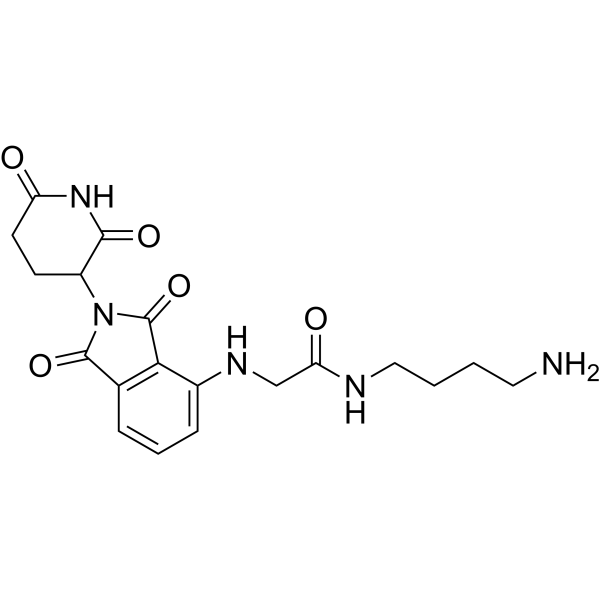
| DC45715 | Thalidomide-NH-amido-C4-NH2 Featured |
Thalidomide-NH-amido-C4-NH2 is a synthesized E3 ligase ligand-linker conjugate that incorporates the Thalidomide based cereblon ligand and a linker used in PROTAC technology.
More description
|
|
| DC26183 | BAY-1797 Featured |
BAY-1797 is a potent and selective P2X4 antagonist.
More description
|

|
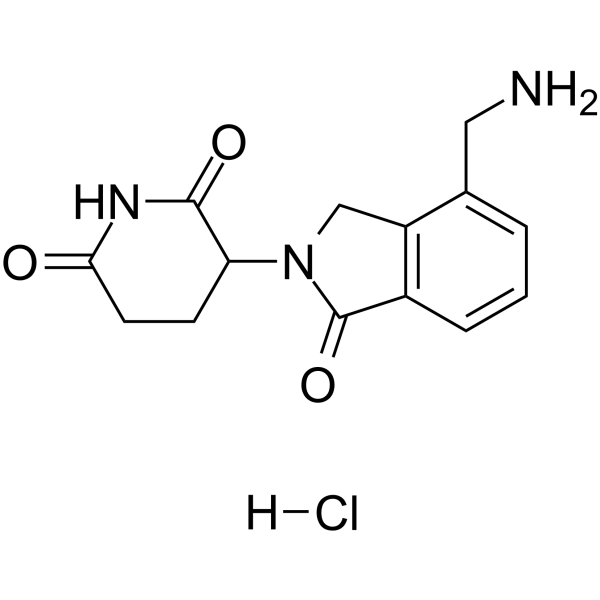
| DC45698 | Lenalidomide-4-aminomethyl hydrochloride Featured |
Lenalidomide-4-aminomethyl hydrochloride is the Lenalidomide-based cereblon (CRBN) ligand used in the recruitment of CRBN protein. Lenalidomide-4-aminomethyl hydrochloride can be connected to the ligand for protein by a linker to form PROTAC
More description
|
|
| DCC3537 | MZP-54 Featured |
Novel potent and selective PROTAC degrader of BRD3/4
More description
|

|
| DC67814 | (4R,5S)-Nutlin carboxylic acid Featured |
(4R,5S)-Nutlin carboxylic acid is the Nutlin 3-based MDM2 ligand. (4R,5S)-Nutlin carboxylic acid can be connected to the ligand for protein by a linker to form PROTACs.
More description
|
-Nutlin carboxylic acid.gif)
|
| DC65210 | CFT1946 Featured |
CFT1946 is an orally active and selective target ligand for BRAF kinase.
More description
|

|
| DC67810 | WAY-381628 Featured |
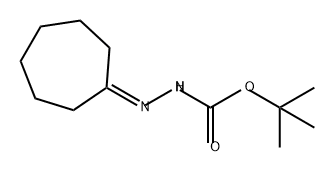
|
|
| DC47171 | ARD-2585 Featured |
ARD-2585 is an exceptionally potent and orally active PROTAC degrader of androgen receptor.
More description
|

|
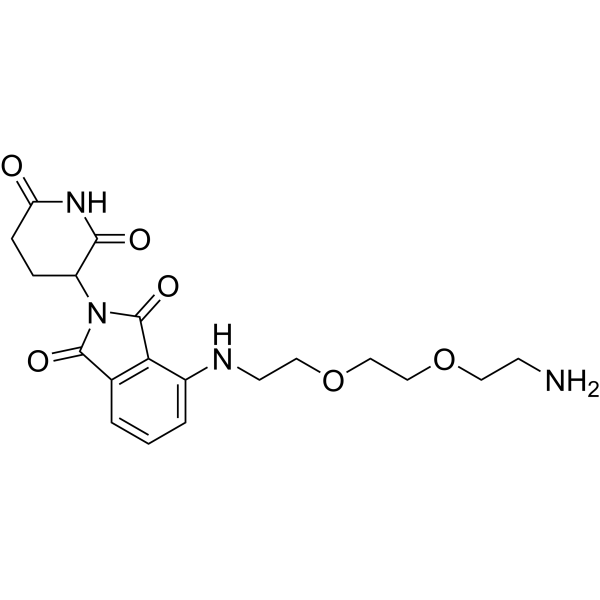
| DC50056 | Thalidomide-PEG2-C2-NH2 Featured |
Thalidomide-PEG2-C2-NH2 is a synthesized E3 ligase ligand-linker conjugate that incorporates the Thalidomide based cereblon ligand and 2-unit PEG linker used in PROTAC technology.
More description
|
|
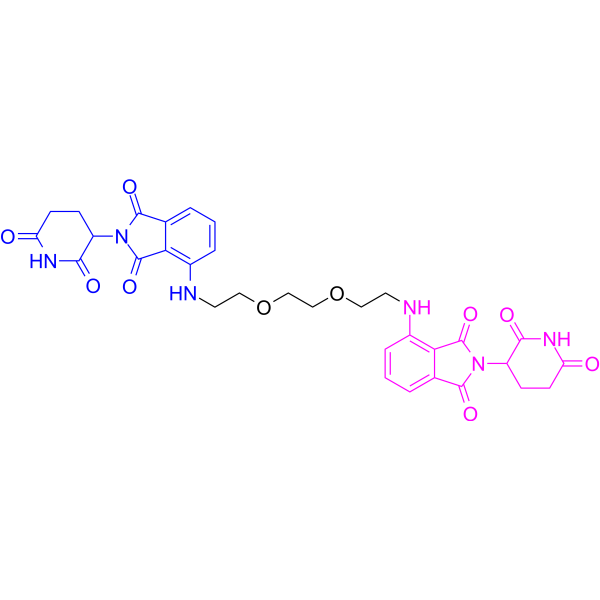
| DC39826 | Homo-PROTAC cereblon degrader 1 Featured |
Homo-PROTAC cereblon degrader 1, is a cereblon degrader.
More description
|
|
| DC67808 | N-(5-Aminopentyl)-2-((2-(2,6-dioxopiperidin-3-yl)-1,3-dioxoisoindolin-4-yl)oxy)acetamide trihydrochloride Featured |
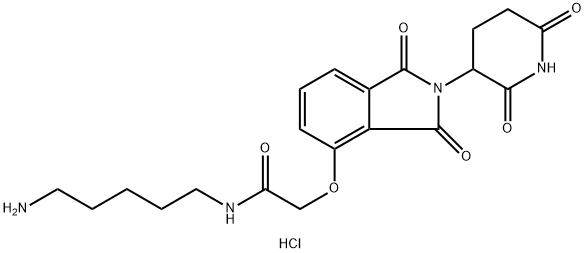
|
|
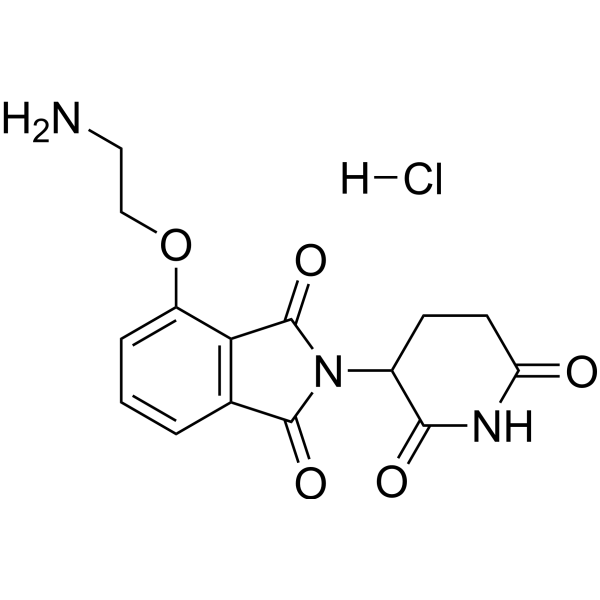
| DC67807 | Thalidomide-4-O-C2-NH2 hydrochloride Featured |
Thalidomide-4-O-C2-NH2 hydrochloride is a synthesized E3 ligase ligand-linker conjugate that incorporates the Thalidomide based cereblon ligand and a linker used in PROTAC technology.
More description
|
|
| DC26123 | Thalidomide-O-amido-C3-NH2 Featured |
Thalidomide-O-amido-C3-NH2 TFA is a synthesized E3 ligase ligand-linker conjugate that incorporates the Thalidomide based cereblon ligand and a linker used in PROTAC technology.
More description
|

|
| DC86101 | VH032-cyclopropane-F Featured |
E3 ligase Ligand 19 is a ligand for E3 ubiquitin ligase. E3 ligase Ligand 19 can be connected to the ligand for protein (e.g., SMARCA BD ligand) by a linker to form PROTACs (e.g., PROTAC 1). PROTAC 1 is a partial degrader of SMARCA2 and SMARCA4[1]
More description
|

|
| DC67805 | 4-(1-hydroxy-1-methyl-ethyl)furan-2-sulfonamide Featured |
-2-furansulfonamide.gif)
|
|
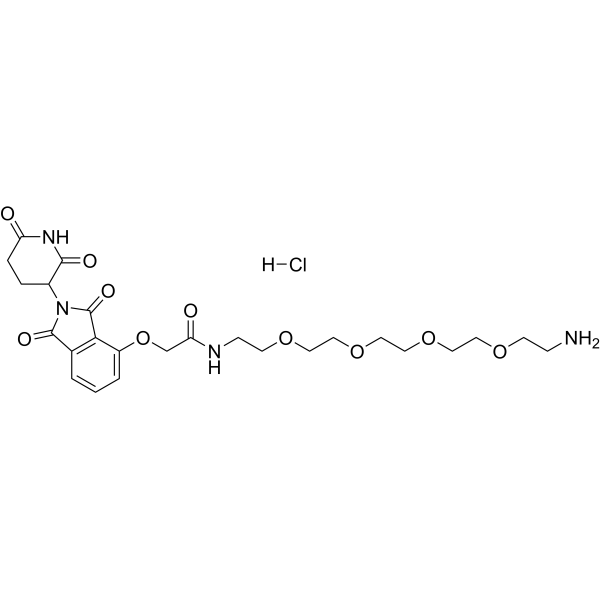
| DC67804 | Thalidomide-O-amido-PEG4-C2-NH2 hydrochloride Featured |
Thalidomide-O-amido-PEG4-C2-NH2 hydrochloride, a synthesized E3 ligase ligand-linker conjugate that incorporates the Thalidomide based cereblon ligand and a linker, can be used in the synthesis of PROTACs.
More description
|
|
| DC70923 | YX-2-107 Featured |
YX-2-107 is a CRBN-recruiting and specific CDK6-degrading PROTAC with IC50 of 0.69 and 4.4 nM for CDK4 and CDK6 in vitro, selectively degardes CDK6 in Ph+ BV173 ALL cells with a degradation constant of 4 nM.YX-2-107 does not affect expression of IKZF1 and IKZF3, and does not degarde CDK4 protein.YX-2-107 inhibits S-phase entry, cell proliferation, RB phosphorylation, and FOXM1 expression and induces the selective degradation of CDK6 in Ph+ BV173 and SUP-B15 cells.|PROTAC YX-2-107 is bioavailable in mice and pharmacologically active in suppressing Ph+ ALL proliferation in a mouse xenograft of Ph+ ALL, comparable or superior to that of the CDK4/6 enzymatic inhibitor palbociclib.
More description
|

|
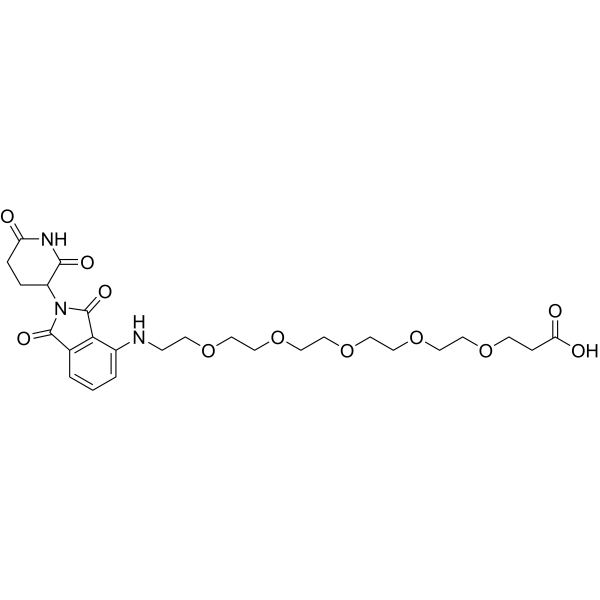
| DC42554 | Pomalidomide 4'-PEG5-acid Featured |
Pomalidomide 4'-PEG5-acid (Pomalidomide-PEG5-CO2H) is a synthesized E3 ligase ligand-linker conjugate that incorporates the Pomalidomide based cereblon ligand and 5-unit PEG linker used in PROTAC technology.
More description
|
|
| DC22207 | AP1903 Featured |
AP1903 (Rimiducid, AP-1903) is a potent, specific synthetic ligand of FKBP Phe36Val mutant (F36V-FKBP) with binding IC50 of 1.8 nM.
More description
|

|
| DC50065 | (S,R,S)-AHPC-CO-CI-Br Featured |
(S,R,S)-AHPC-CO-CI-Br is a novel protac building block,
More description
|

|
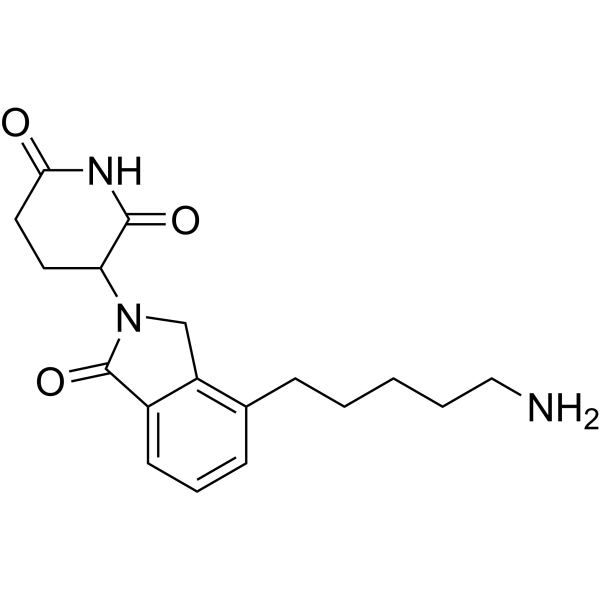
| DC11569 | E3 Ligand-Linker Conjugate 4 Featured |
E3 Ligand-Linker Conjugate 4 is the Lenalidomide-based Cereblon ligand used in the recruitment of CRBN protein. Lenalidomide-C5-NH2 can be connected to the ligand for protein by a linker to form PROTAC, such as MDM2 PROTAC degrader.
More description
|
|
| DC36456 | DMPAC-Chol Featured |
DMPAC-Chol is a cationic cholesterol derivative that has been used in liposome formation for gene transfection. Liposomes containing DMPAC-chol bind to DNA in a band shift assay and protect against serum nuclease degradation of DNA.
More description
|

|
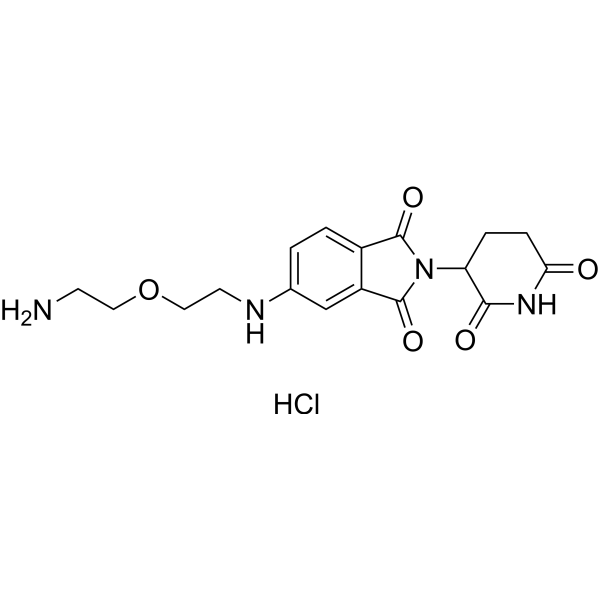
| DC67799 | Thalidomide-5-NH-PEG1-NH2 hydrochloride Featured |
Thalidomide-5-NH-PEG1-NH2 hydrochloride is a Thalidomide (HY-14658)-based cereblon ligand that recruits CRBN proteins.
More description
|
|