 To enhance service speed and avoid tariff delays, we've opened a US warehouse. All US orders ship directly from our US facility.
| Cat. No. | Product Name | Field of Application | Chemical Structure |
|---|---|---|---|
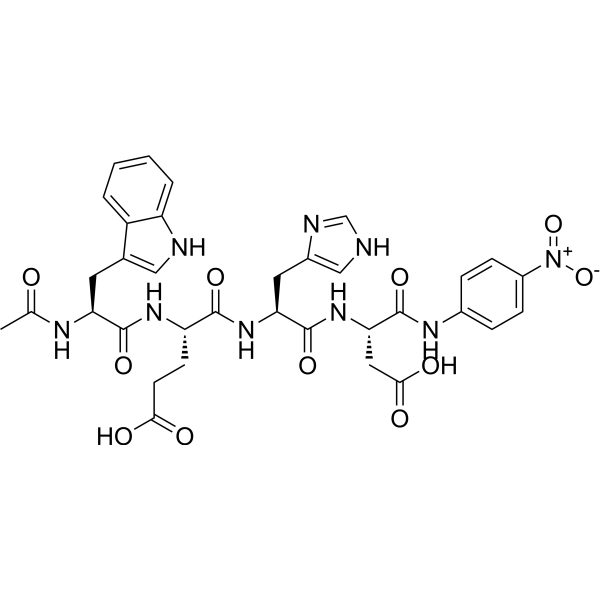
| DC20235 | Ac-WEHD-pNA(substrate for caspase-1 and caspase-4) Featured |
Ac-WEAD-pNA is a colorimetric substrate for caspase-1 and caspase-4.
More description
|
|
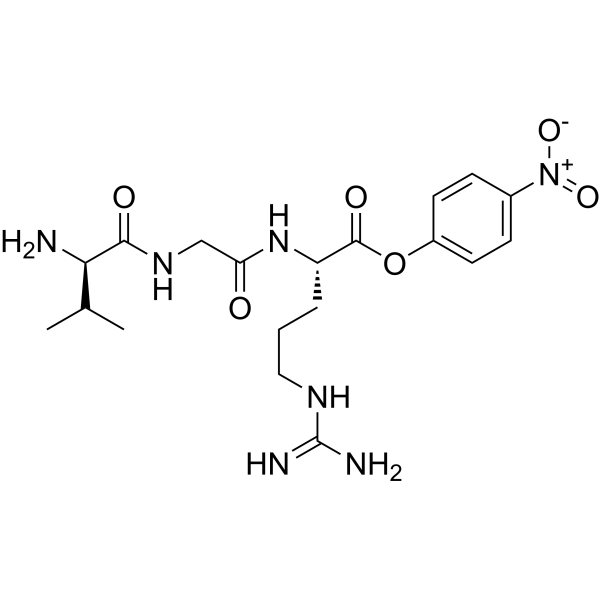
| DC67293 | D-Val-Gly-Arg-pNA Featured |
D-Val-Gly-Arg-p-nitroaniline (D-VGR-pNA) is a synthetic chromogenic peptide substrate specifically designed for assessing the enzymatic activity of tissue plasminogen activator (tPA), including its isoforms tPA I and tPA II. Upon cleavage by tPA, the release of p-nitroaniline (pNA) generates a measurable colorimetric signal, enabling precise quantification of amidolytic activity. This substrate is widely utilized in biochemical assays to study tPA’s role in fibrinolysis and to evaluate its enzymatic kinetics in both research and diagnostic applications.
More description
|
|
| DC41802 | RETF-4NA TFA Featured |
RETF-4NA TFA, a highly sensitive and selective substrate for chymase, effectively measures chymase activity both in its free form and when complexed with α2-macroglobulin (α2M). Its specificity makes it a valuable tool for studying chymase-related biochemical processes.
More description
|

|
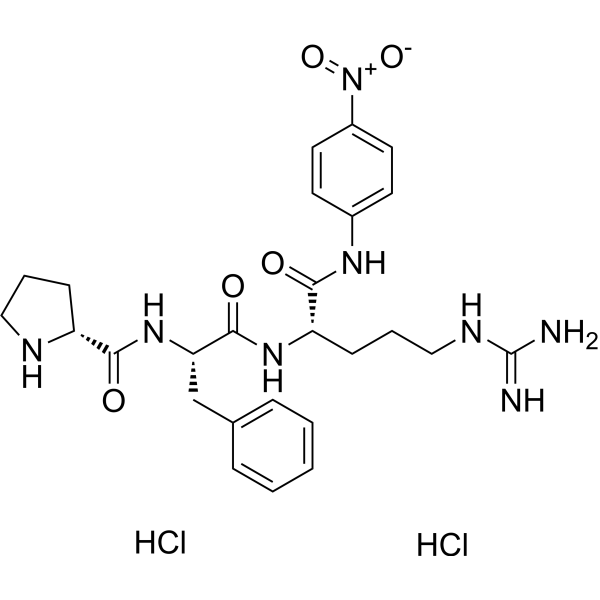
| DC80052 | H-D-Pro-Phe-Arg-pNA·2 HCl(S-2302,Chromogenic substrate) Featured |
S-2302 is a Chromogenic substrate for plasma kallikrein, factor XIa and factor XIIa.
More description
|
|
| DC60339 | Cephalofurimazine (CFz) Featured |
Cephalofurimazine (CFz) is a NanoLuc substrate optimized for enhanced brain performance. When paired with Antares luciferase, it generates over 20 times more signal from the brain compared to the traditional combination of D-luciferin and firefly luciferase.
More description
|
.gif)
|
| DC60823 | Ac-ATAD-AFC(Caspase-12 Substrate) Featured |
Ac-ATAD-AFC(Caspase-12 Substrate) is a fluorogenic substrate for caspase-12.
More description
|
.jpg)
|
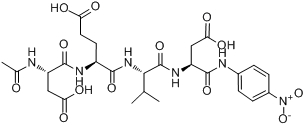
| DC67528 | Ac-AEVD-pN(Caspase-10 Substrate) Featured |
This product is a ready-to-use colorimetric substrate for Caspases that recognize the amino acid sequence AEVD. Caspase activity can be quantified by spectrophotometric detection of free pNA (l = 400 nm) after cleaved from the peptide substrate AEVD-pNA, using a spectrophotometer or multi-well plate reader.
More description
|
|
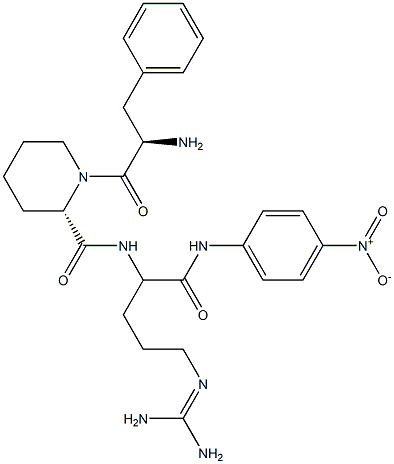
| DC40319 | H-D-Phe-Pip-Arg-pNA Featured |
H-D-Phe-Pip-Arg-pNA (S-2238), a chromogenic substrate, is patterned after the N-terminal portion of the A alpha chain of fibrinogen, which is the natural substrate of thrombin. H-D-Phe-Pip-Arg-pNA is specific for thrombin and is used to measure antithrombin-heparin cofactor (AT-III). The AT-III assay using H-D-Phe-Pip-Arg-pNA is sensitive, accurate, and easy to perform.
More description
|
|
| DC53059 | H-D-CHG-Ala-Arg-pNA.2AcOH(Substrate Th-1) Featured |
Chromogenic peptide substrate for the determination of thrombin and antithrombin III
More description
|

|
| DC71617 | Suc-Gly-Gly-Phe-pNA Featured |
The synthetic peptide Suc-Gly-Gly-Phe-pNA serves as a specific substrate for the enzyme chymotrypsin, demonstrating a Michaelis constant (Km) of 1.6 mM. This value reflects the substrate concentration at which the enzyme achieves half of its maximum reaction rate, indicating its affinity for the peptide.
More description
|

|
| DC67320 | Suc-Ile-Glu(γ-pip)-Gly-Arg-pNA hydrochloride Featured |
The activated factor X (FXa)-specific chromogenic substrate S-2732 is a short peptide covalently bound to pNA (4-nitroaniline). A free pNA will be cleaved off the peptide chain by activated factor X, thus enabling quantitive detection by a spectrophotometer.
More description
|
|
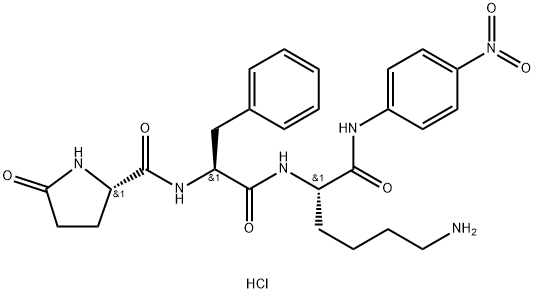
| DC67319 | S-2403(chromogenic substrate for plasmin and streptokinase-activated plasminoge) Featured |
S-2403 is a chromogenic substrate for plasmin and streptokinase-activated plasminoge
More description
|
|
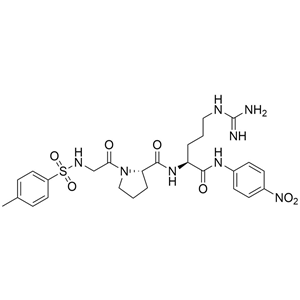
| DC11457 | Tos-Gly-Pro-Arg-pNA(Thrombin substrate) Featured |
Tos-Gly-Pro-Arg-pNa is a chromogenic substrate for Thrombin.
More description
|
|
| DC67279 | Rhobo6 Featured |
Rhobo6 is a cell-impermeable small-molecule fluorophore designed for labeling the extracellular matrix (ECM) in live tissues. It contains a phenylboronic acid group that binds to diols commonly found in ECM glycans, resulting in a significant increase in fluorescence and a red shift in emission spectra. This property allows Rhobo6 to effectively visualize ECM architecture without perturbing native structures, making it suitable for long-term imaging studies. Additionally, Rhobo6's low affinity for monosaccharides enables reversible binding, which prevents photobleaching and allows for dynamic imaging of ECM components. While Rhobo6 does not specifically target individual ECM components, it provides a holistic view of ECM distribution and is particularly useful for studying ECM-related biological phenomena in samples that are not amenable to genetic manipulation or ex vivo culture.Rhobo6 is available under license from the Howard Hughes Medical Institute.
More description
|

|
| DC39823 | Diphenylterazine (DTZ) Featured |
Diphenylterazine (DTZ) is a bioluminescence agent. Diphenylterazine alone yielded very little background, leading to excellent signal-to-background ratios.
More description
|

|
| DC10610 | CycLuc1(Luciferase substrate) Featured |
CycLuc1 is a luciferase substrate which offers brighter bioluminescence and improved imaging in mouse models at lower doses than the standard D-luciferin.
More description
|

|
| DCC1629 | Cycluc12 |
Cyclic alkylaminoluciferin substrate for firefly luciferase
More description
|
|
| DC65436 | AkaLumine hydrochloride Featured |
AkaLumine hydrochloride is a luciferin analogue, with a Km of 2.06 μM for recombinant Fluc protein.
More description
|

|
| DC34025 | AkaLumine Featured |
AkaLumine is a luciferin analogue. The bioluminescence produced by AkaLumine in reactions with native firefly luciferase is in the near-infrared wavelength ranges (λmax=677?nm), and yields significantly increased target-detection sensitivity from deep tissues with maximal signals attained at very low concentrations, as compared with D-luciferin and emerging synthetic luciferin CycLuc1.
More description
|
.gif)
|
| DC45080 | Suc-Ile-Glu(γ-pip)-Gly-Arg-pNA hydrochloride (factor Xa specific chromogenic substrate) Featured |
Suc-Ile-Glu(γ-pip)-Gly-Arg-pNA hydrochloride is a factor Xa specific chromogenic substrate.
More description
|
-Gly-Arg-pNA hydrochloride.gif)
|
| DC26055 | Caspase-1/4 Chromogenic Substrate(Suc-YVAD-pNA) Featured |
Suc-YVAD-pNA is a colorimetric substrate for caspase-1/interleukin-1β-converting enzyme (ICE) and caspase-4.
More description
|

|
| DC11334 | Suc-Ala-Ala-Pro-Abu-pNA trifluoroacetate salt Featured |
Suc-AAP-Abu-pNA is a chromogenic peptide substrate for pancreatic elastase.It is cleaved by elastase to release p-nitroalinide (p-NA), which can be quantified by colorimetric detection at 405 nm as a measure of enzyme activity.
More description
|

|
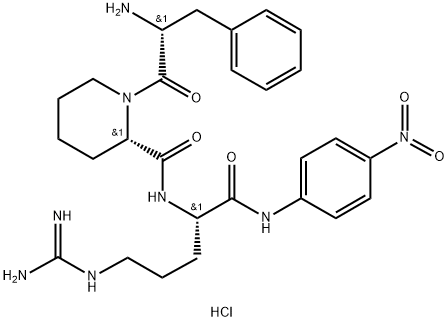
| DC40321 | H-D-Phe-Pip-Arg-pNA dihydrochloride Featured |
H-D-Phe-Pip-Arg-pNA (S-2238) dihydrochloride, a chromogenic substrate, is patterned after the N-terminal portion of the A alpha chain of fibrinogen, which is the natural substrate of thrombin. H-D-Phe-Pip-Arg-pNA dihydrochloride is specific for thrombin and is used to measure antithrombin-heparin cofactor (AT-III). The AT-III assay using H-D-Phe-Pip-Arg-pNA dihydrochloride is sensitive, accurate, and easy to perform.
More description
|
|
| DC26060 | H-Gly-Arg-PNA.HCl (colorimetric substrate for thrombin) Featured |
H-Gly-Arg-pNA is a colorimetric substrate for thrombin.
More description
|

|
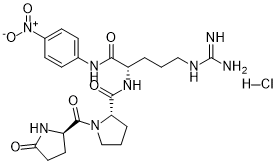
| DC67318 | S2366 HCl(chromogenic substrate for Factor XI ) Featured |
S2366 HCl is a chromogenic substrate for Factor XI in plasma.
More description
|
|
| DC53058 | CH3OCO-D-CHA-Gly-Arg-pNA (Chromogenic Substrate Pefachrome FXa) Featured |
CH3OCO-D-CHA-Gly-Arg-pNA acetate is a chromogenic substrate for factor Xa.
More description
|

|
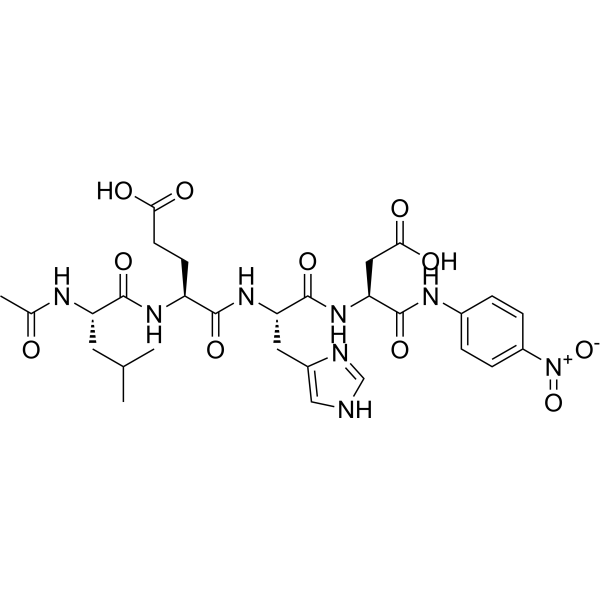
| DC11356 | Ac-LEHD-pNA(Caspase-9 substrate) Featured |
Ac-LEHD-pNA is a biological active peptide. (Caspase-9 substrate; pNA (4-nitroaniline)-derived caspase substrates are widely used for the colorimetric detection of various caspase activities. Cleavage of pNA peptides by caspases generates pNA that is monitored colorimetrically at ~405 nm. pNA has maximum absorption around 408 nm.)
More description
|
|
| DC26049 | Bz-IEGR-pNA (acetate) Featured |
Bz-IEGR-pNA is a colorimetric substrate for Factor Xa.
More description
|

|
| DC9806 | S-2765(FXa substrate,Z-D-Arg-Gly-Arg-pNA Dihydrochloride) Featured |
S-2765(FXa substrate,Z-D-Arg-Gly-Arg-pNA Dihydrochloride) is specific to activated factor X (FXa),short peptide covalently bound to pNA (4-nitroaniline).
More description
|

|
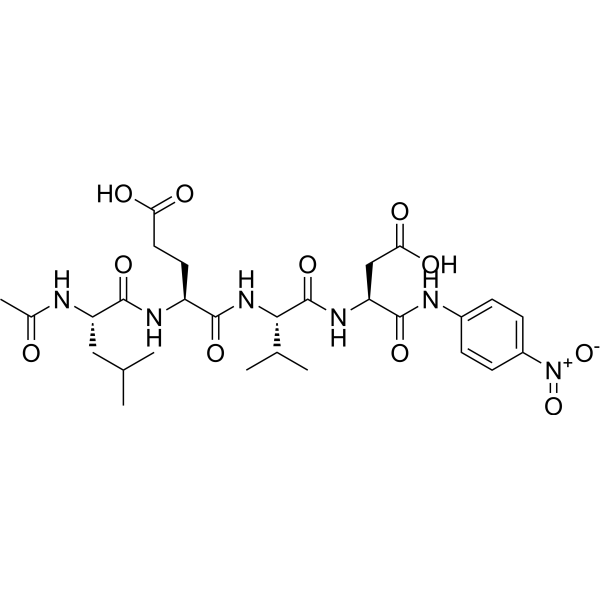
| DC67527 | Ac-LEVD-pNA(caspase-4 substrate) Featured |
Ac-LEVD-pNA is a chromogenic substrate for caspase-4 and can be used to detect caspase-4 activity.
More description
|
|
