 To enhance service speed and avoid tariff delays, we've opened a US warehouse. All US orders ship directly from our US facility.
| Cat. No. | Product Name | Field of Application | Chemical Structure |
|---|---|---|---|
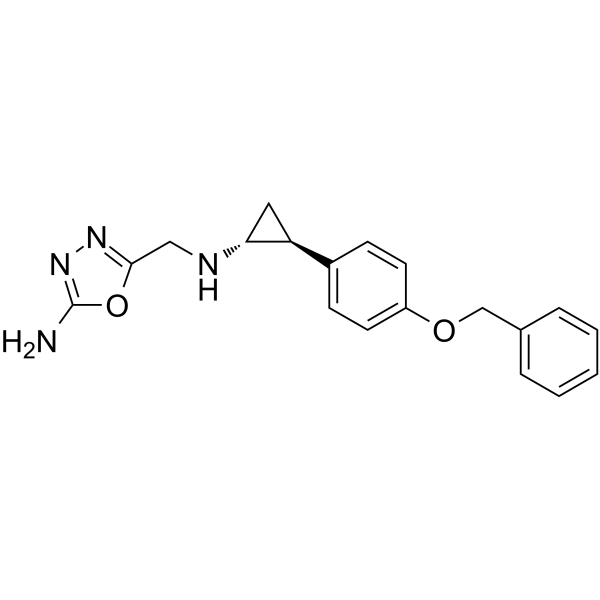
| DC11106 | Vafidemstat (ORY-2001) Featured |
Vafidemstat (ORY-2001) is an oral, brain penetrant drug that inhibits LSD1 and MAOB by reducing cognitive impairment, including memory loss and neuroinflammation. It also has neuroprotective effects.
More description
|
|
| DC31389 | SGD-1269(MCMMAF) Featured |
Mafodotin, also known as mc-MMAF and SGD-1269 or Maleimidocaproyl monomethylauristatin F, is a MMAF derivative having a Maleimidocaproyl linker (MC linker), which is ready to conjugate to antibody or other proteins or biopolymers. Mafodotin is a useful a
More description
|

|
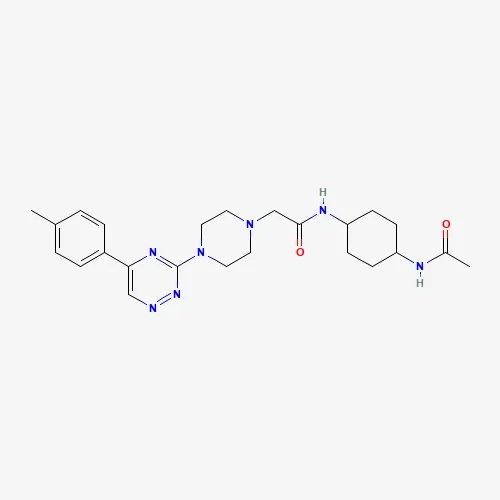
| DC71680 | Lorundrostat |
|
|
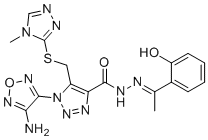
| DC73826 | RBF197 Featured |
RBF197 (RBF-197) is a novel highly potent and selective eIF4A inhibitor, inhibits human eIF4A helicase activity with IC50 of 55.2 pM.
More description
|
|
| DC74311 | HLQ2H Featured |
HLQ2H (Msi3 inhibitor 2H) is a first-in-class, specific inhibitor of fungal Hsp110 molecular chaperone Msi3, inhibits the holdase activity of Msi3 (IC50=5.02 uM) as well as the growth and viability of C. albicans.
More description
|
|
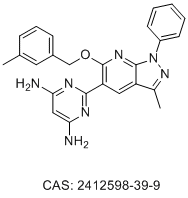
| DC74557 | PREX-in1 Featured |
PREX-in1 is a specific small-molecule inhibitor of P-Rex1 and P-Rex2 Rac-GEF activity with IC50 of 4.5 uM (P-Rex1 DHPH Rac-GEF activity) in liposome-based GEF assay, inhibits P-Rex1 and P-Rex2 through their catalytic DH domain.
More description
|

|
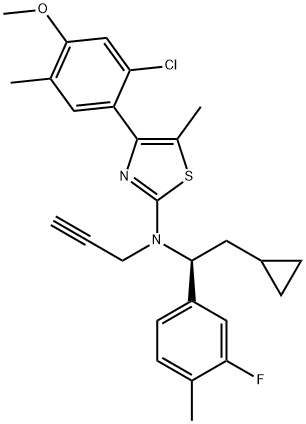
| DC22062 | SSR125543 Featured |
SSR125543 (Crinecerfont, SSR-125543) is a potent, nonpeptide, orally active corticotropin-releasing factor (CRF) receptor CRF1 antagonist, shows anxiolytic- and antidepressant-like activities in vivo. .
More description
|
|
| DC10319 | GLP-1(7-36), amide Featured |
GLP-1(7-36), amide is a physiological incretin hormone that stimulates insulin secretion.
More description
|

|
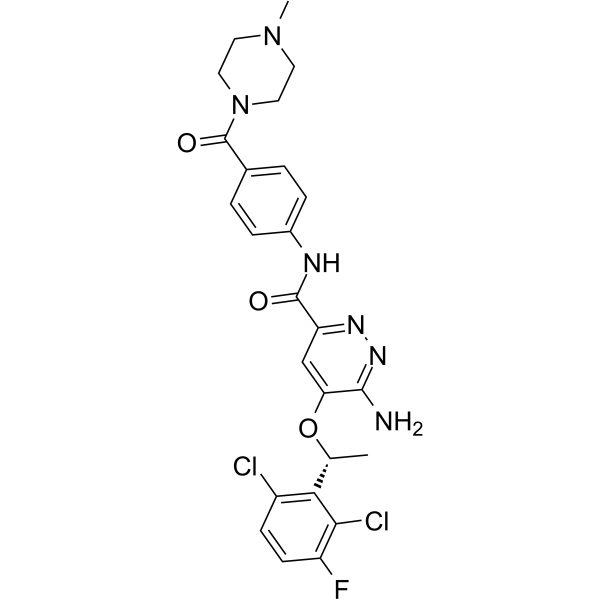
| DC10547 | X-376 Featured |
X-376 is a highly selective and potent inhibitor of ALK (anaplastic lymphoma kinase) tyrosine kinase, demonstrating strong activity with an IC50 of 0.61 nM. While it primarily targets ALK, it also exhibits inhibitory effects on MET kinase, though with slightly reduced potency (IC50 = 0.69 nM). Due to its robust kinase-blocking properties, X-376 shows significant anti-tumor efficacy, making it a promising candidate for cancer research and therapeutic development.
More description
|
|
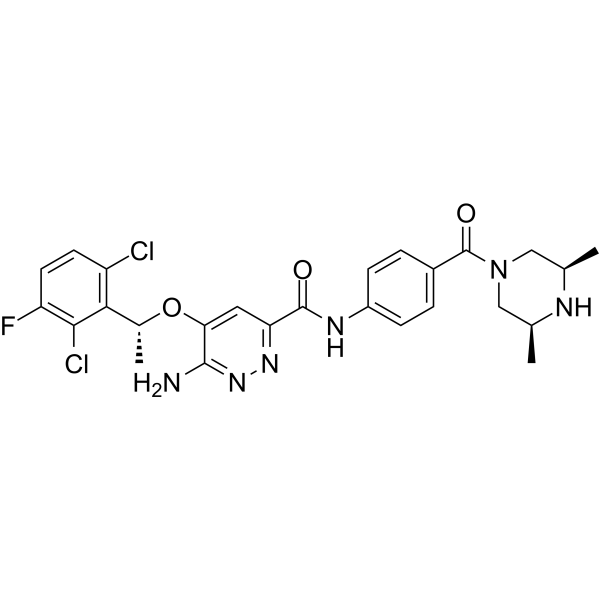
| DC31351 | X396 Featured |
Ensartinib, also known as X-396, is an orally available small molecule inhibitor of the receptor tyrosine kinase anaplastic lymphoma kinase (ALK) with potential antineoplastic activity. Upon oral administration, X-396 binds to and inhibits ALK kinase, ALK fusion proteins and ALK point mutation variants. Inhibition of ALK leads to the disruption of ALK-mediated signaling and eventually inhibits tumor cell growth in ALK-expressing tumor cells. ALK belongs to the insulin receptor superfamily and plays an important role in nervous system development.
More description
|
|
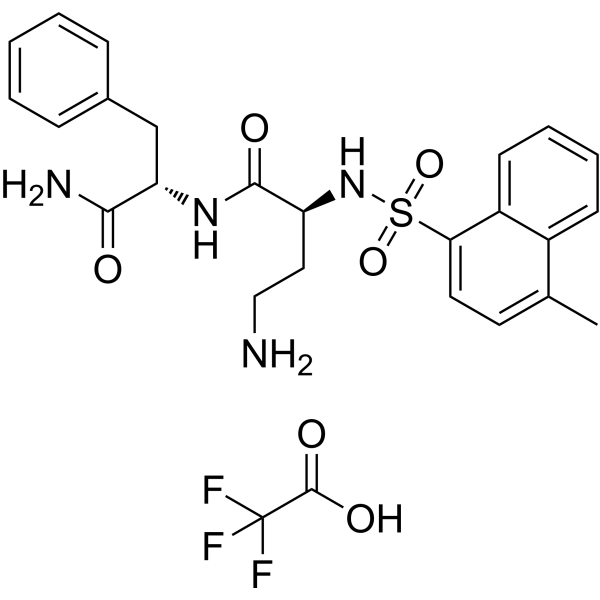
| DC44000 | J-2156 TFA Featured |
J-2156 TFA is a high potent, selective somatostatin receptor type 4 (SST4 receptor) agonist with IC50s of 0.05 nM and 0.07 nM for human and rat SST4 receptors, respectively. J-2156 TFA is used for the relief of mechanical allodynia and mechanical hyperalg
More description
|
|
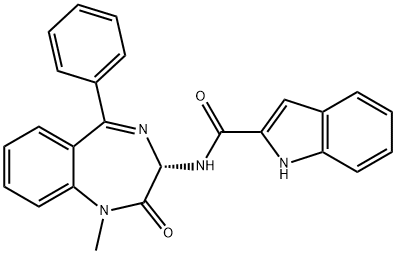
| DC32856 | Devazepide Featured |
Devazepide is a potent, and orally active CCK1 (CCK-A) receptor antagonist that displays appetite-stimulant effects. It blocks the anorectic response to CCK-8 and increases food intake in rats following systemic and i.c.v administration.
More description
|
|
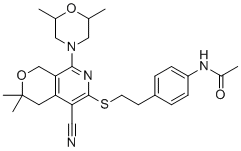
| DC70585 | MBX3132 Featured |
MBX3132 is a small mocule inhibitor of AcrB multidrug efflux pump, fully potentiates the activity of a broad range of antibiotics at 0.1 uM; does not exhibit membrane-disrupting or antibacterial activity.
More description
|
|
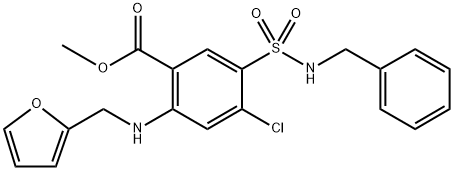
| DCC0689 | Aqf026 Featured |
Novel agonist of the water channel aquaporin-1 (AQP1)
More description
|
|
| DC40289 | VU0238441 Featured |
VU0238441 is a pan muscarinic acetylcholine receptor (mAChR) positive allosteric modulator (PAM) with EC50s of 3.2 μM, 2.8 μM, 2.2 μM, 2.1 μM, >10 μM for M1, M2, M3, M5 and M4, respectively.
More description
|
.gif)
|
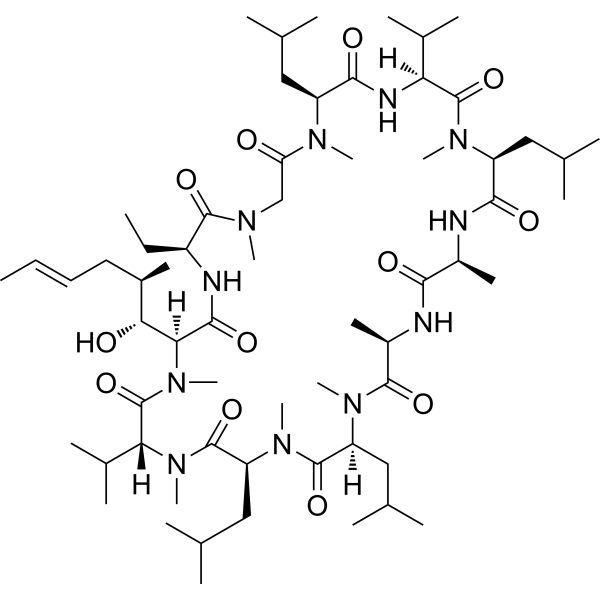
| DC7010 | Cyclosporin H Featured |
A potent inhibitor of tumor promoting phorbol ester TPA/PMA and inhibitor of Ca2+/calmodulin dependent EF-2 phosphorylation
More description
|
|
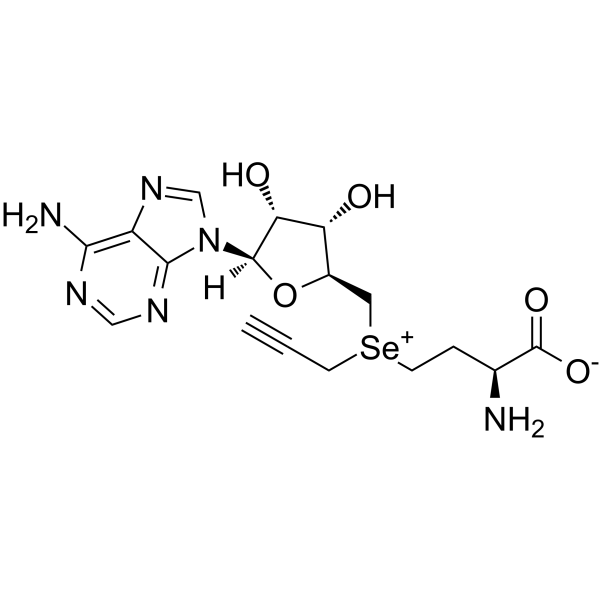
| DC47425 | ProSeAM Featured |
ProSeAM is a chemical tool for methylome analysis.
More description
|
|
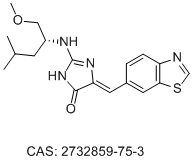
| DC74386 | Leucettinib-21 Featured |
Leucettinib-21 is a highly selective and potent dual inhibitor targeting both DYRK and CLK kinase families. It demonstrates nanomolar-level inhibitory activity, with IC50 values of 2.4 nM (DYRK1A), 6.7 nM (DYRK1B), 12 nM (CLK1), 33 nM (CLK2), and 5 nM (CLK4), respectively. This compound exhibits remarkable kinase selectivity, making it a valuable pharmacological tool for studying these kinase-mediated pathways.
More description
|
|
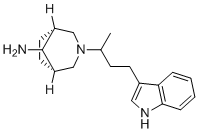
| DC70864 | UHMCP1 Featured |
UHMCP1 is a small molecule that prevents the SF3b155/U2AF65 interaction, binds to the hydrophobic pocket of the U2AF65 UHM domain (Kd=1-20 uM), impacts splicing and cell viability.
More description
|
|
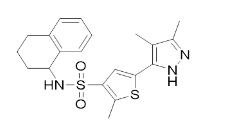
| DCC4062 | Pdsinh-c01 Featured |
Novel pendrin inhibitor, inhibiting Cl-/anion exchange mediated by mouse pendrin without affecting other major kidney tubule transporters
More description
|
|
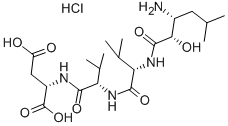
| DC33383 | BIMI-1803 Featured |
Amastatin HCl is an aminopeptidase inhibitor that also induces vasoconstriction.
More description
|
|
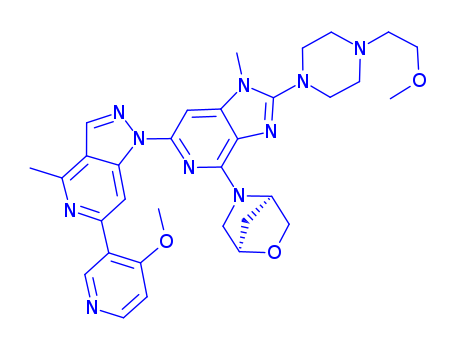
| DC74393 | BI-8128 Featured |
BI-8128 is a potent, selective, reversible and orally bioavailable fourth generation EGFR inhibitor, potently inhibits oncogenic EGFR variants del19 and L858R as well as the acquired EGFR resistance mutations T790M and C797S.
More description
|
|
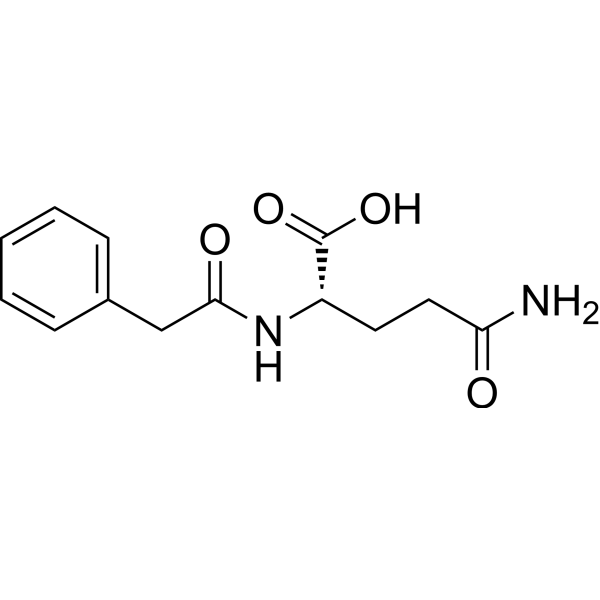
| DC37810 | Phenylacetylglutamine Featured |
Phenylacetylglutamine is used as biomarker for metabolic age.
More description
|
|
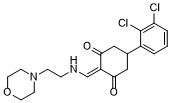
| DC48753 | DC-LC3in-D5 Featured |
DC-LC3in-D5 acts as an autophagy inhibitor by attenuating LC3B lipidation. DC-LC3in-D5 binds with LC3B. DC-LC3in-D5 disrupts the LC3B-LBP2 interaction with an IC50 of 200 nM. DC-LC3in-D5 may contribute to anti-HCV or combination treatments in cancer through inhibiting autophagy.
More description
|
|
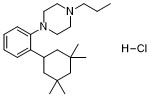
| DC22090 | ER-464195-01 Featured |
ER-464195-01 is a specific, orally active inhibitor that inhibits Calreticulin (CRT) binding to integrin α subunits (ITGAs) with IC50 of 0.17, 0.36, and 0.23 uM in the interaction between CRT and ITGA α4, αL, and αM/α2/α5.
More description
|
|
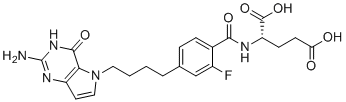
| DC73897 | AGF347 Featured |
AGF347 (AGF-347) is a small molecule inhibitor targeting mitochondrial C1 metabolism at SHMT2 (in vitro Ki=2.19 uM), also directly targers the purine biosynthetic enzymes GARFTase (Ki=3.13 uM) and AICARFTase (Ki=3.72 uM), and SHMT1 (Ki=2.91 uM).
More description
|
|
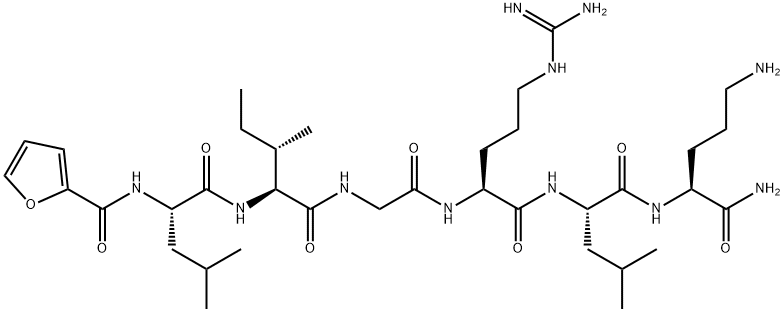
| DCC0193 | 2-furoyl-ligrlo-amide Featured |
2-Furoyl-LIGRLO-amide is a potent and selective proteinase-activated receptor 2 (PAR2) agonist with a pD2 value of 7.0.
More description
|
|
| DC23017 | R 59022 Featured |
A small molecule inhibitor of diacylglycerol kinase (DGK) with IC50 of 2.8 uM, inhibits the phosphorylation of OAG to OAPA with IC50 of 3.8 uM in intact platelets.
More description
|

|
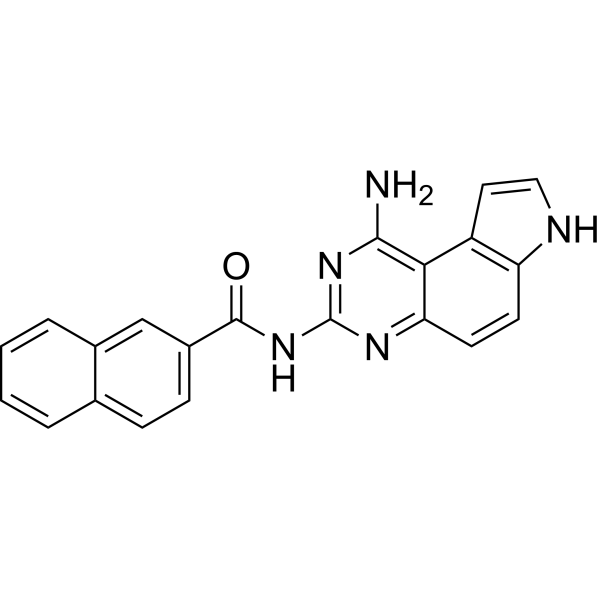
| DC21219 | LBL1 Featured |
LBL1 is a first-in-class pyrroloquinazoline small molecule that selectively targets the coiled-coil domain of lamin A (binding affinity Kd = 5.11 μM), demonstrating potent anticancer effects through nuclear lamina disruption.
More description
|
|
| DC70765 | SD-36 Featured |
SD-36 (STAT3 degrader SD-36) is a potent, selective STAT3 degrader (PROTAC), potently induces the degradation of STAT3 protein in vitro and in vivo.SD-36 is designed using an analogue of CRBN ligand lenalidomide and the STAT3 inhibitor SI-109, binds to recombinant STAT3 protein with Ki of 11 nM.SD-36 (250 nM) depleted >90% of STAT3 protein in MOLM-16 cells after 4 hr treatment and >50% of STAT3 protein in DEL, KI-JK and SU-DHL-1 cells after 7 hr treatment, also efficiently degraded STAT3 protein in murine cells.SD-36 displays extremely high cellular selectivity for degradation of STAT3 over other STATs.SD-36 effectively degrades both wild-type and mutated STAT3 proteins in cells, effectively degrades mutated STAT3 (D661Y, K658R mutant), also effectively degrades CRISPR-mutated homozygous Y705F mutant STAT3 protein in DLD-1/STAT3Y705F/Y705F cells.SD-36 displayed strong growth-inhibitory activities in a subset of leukemia and lymphoma cell lines (MOLM-16 cell line IC50, 35 nM), 100-fold more potent than SI-109.SD-36 (i.v. 25 mg/kg) effectively and selectively depletes STAT3 protein, achieves complete and long-lasting tumor regression in in mouse xenograft tumors.
More description
|

|
