 To enhance service speed and avoid tariff delays, we've opened a US warehouse. All US orders ship directly from our US facility.
| Cat. No. | Product Name | Field of Application | Chemical Structure |
|---|---|---|---|
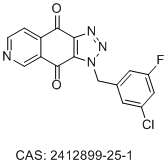
| DC74282 | HY041004 Featured |
HY041004 is the first small molecule inhibitor of deubiquitinase Josephin Domain-containing protein 2 (JOSD2) with IC50 of 0.26 uM for JOSD2 catalytic activity inhibition.
More description
|
|
| DC73178 | SNX631 Featured |
SNX631 (SNX-631) is a potent, selective inhibitor of CDK8/19 Mediator kinase with IC50 of 10.3 nM in the NF κB-dependent cell-based assays.
More description
|

|
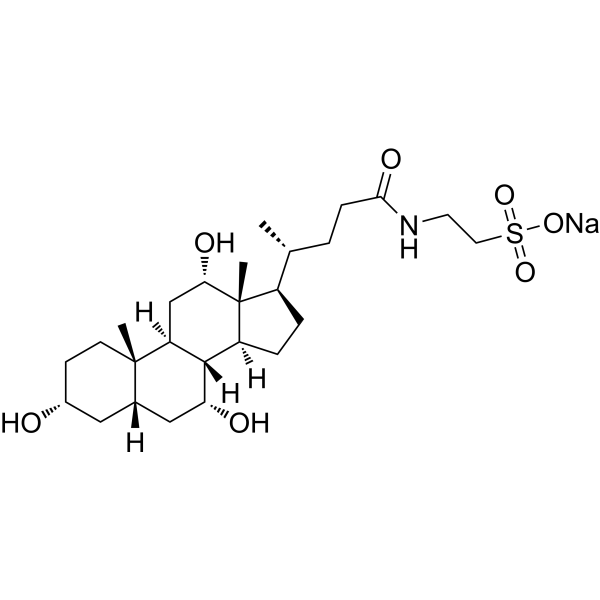
| DC33119 | Sodium taurocholate Featured |
Sodium taurocholate is a GPBAR1 protein agonist potentially for the treatment of type 2 diabetes and obesity in rats.
More description
|
|
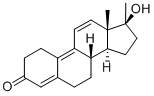
| DC23721 | Metribolone Featured |
An orally active anabolic-androgenic steroid and a 19-nortestosterone derivative that has been widely used in scientific research as a hot ligand in androgen receptor (AR) ligand binding assays (LBAs) and as a photoaffinity label for the AR..
More description
|
|
| DC73618 | NUCC-0200590 Featured |
NUCC-0200590 is a small-molecule inhibitor of the TRIP8b-HCN interaction with IC50 of 7.0 uM in AlphaScreen assays, effectively disrupts the TRIP8b-HCN interaction in vitro and in vivo.
More description
|

|
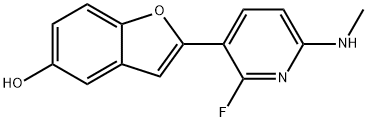
| DC46940 | AZD4694 Featured |
AZD4694, a fluorinated β-amyloid (Aβ) plaque neuroimaging PET radioligand, shows high affinity for Aβ fibrils (Kd = 2.3 nM).
More description
|
|
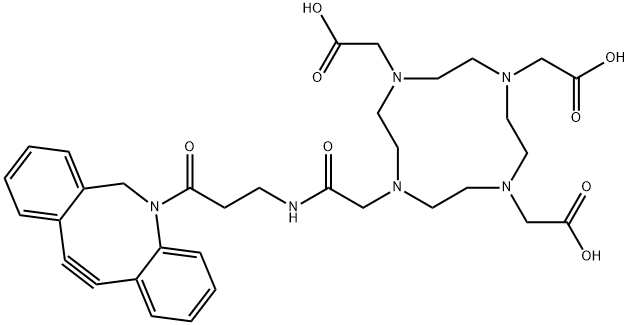
| DC21895 | DOTA-ADIBO Featured |
DOTA-ADIBO is a Click Chemistry intermidate used for antibody-drug conjugates..
More description
|
|
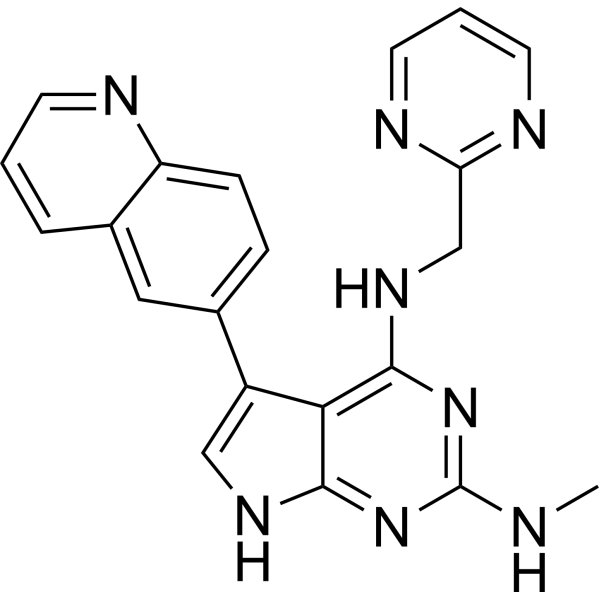
| DC77088 | T025 Featured |
T025 is as an orally available and potent inhibitor of Cdc2‐like kinases (CLKs) with an IC50s of 0.93 nM, 1 nM, 14 nM, 1.5 nM for CLK1, CLK2, CLK3, DYRK1B respectively. It exhibits anti‐tumor efficacy and can be used in MYC‐driven cancer research.
More description
|
|
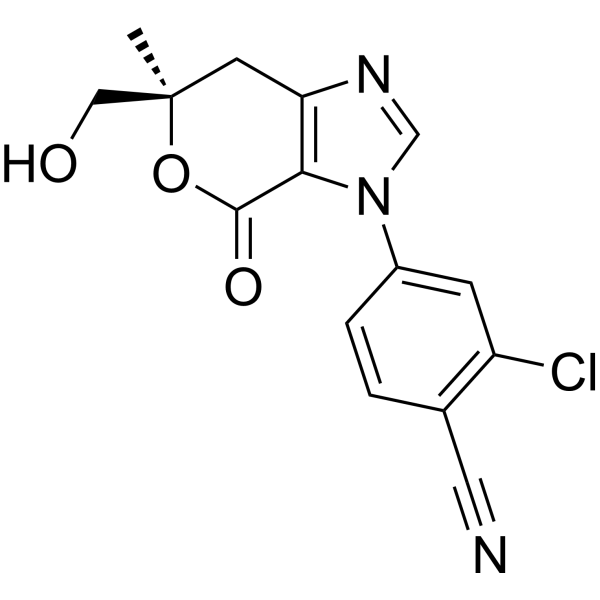
| DC77831 | Vicadrostat |
Vicadrostat (compound 29 A) is a potent and selective inhibitor of aldosterone synthase(CYP11B2) with an IC50 of 16 nM. It exhibits potential in renal disease, diabetic nephropathy, cardiovascular diseases and fibrotic disorder research.
More description
|
|
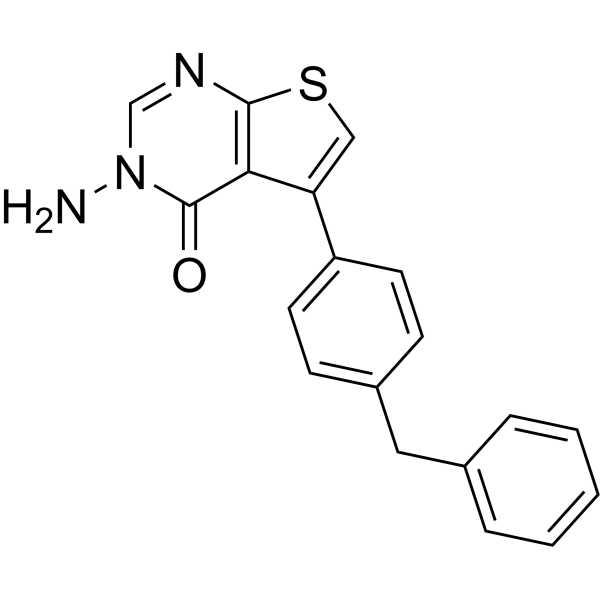
| DC20317 | Barbadin Featured |
Barbadin is a small molecule that selectively inhibits the β-arrestin/β2-adaptin interaction (IC50=19.1/15.6 uM for β-arrestin1/2) without effect on the formation of receptor/β-arrestin complexes.
More description
|
|
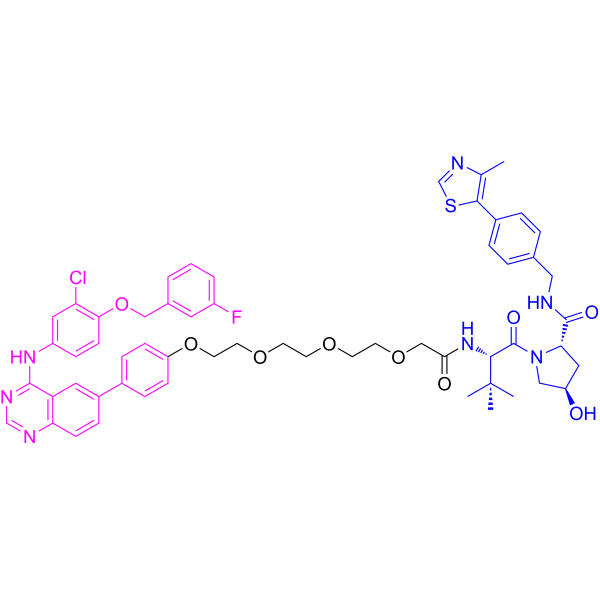
| DCC4750 | Sjf-1521 Featured |
SJF-1521 is a selective EGFR PROTAC degrader. SJF-1521 is capable of inducing EGFR degradation in OVCAR8 cells. SJF-1521 can be used for tumor research.
More description
|
|
| DC42025 | Temporin L Featured |
Temporin L is a potent antimicrobial peptide and is active against Gram-negative bacteria and yeast strains. Temporin L also has antiendotoxin properties.
More description
|

|
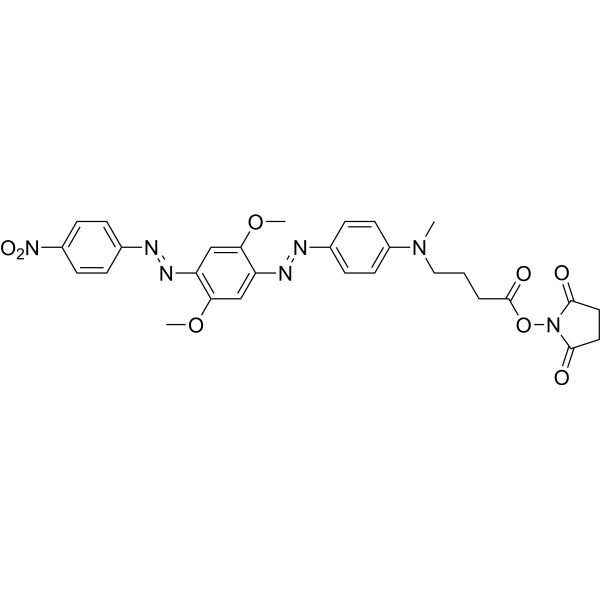
| DCC0967 | HCQ-2 NHS Featured |
HCQ-2 NHS is a dark quencher with no native emission due to the polyaromatic-azo backbone and a terminal NHS ester. UBHQ-2 NHS has a wide and intense quenching range from 560-670 nm, which makes it useful as an acceptor in fluorescence resonance energy transfer (FRET) applications in conjunction with orange to far-red emitting dyes. The NHS ester can be applied to label the primary amines (-NH2) of proteins, amine-modified oligonucleotides, and other amine-containing molecules.
More description
|
|
| DC70526 | JP-11646 Featured |
JP-11646 is a novel potent, selective, non-ATP competitive Pim2 inhibitor with IC50 of 0.5/1/24 nM for Pim2/3/1, respectively; shows less potency for other kinases in a kinase selectivity panel; exhibits 4-760-fold greater suppression of MM proliferation and viability than ATP-competitive PIM inhibitors; significant reduces tumor burden and increases median survival in xenogeneic myeloma murine models.
More description
|

|
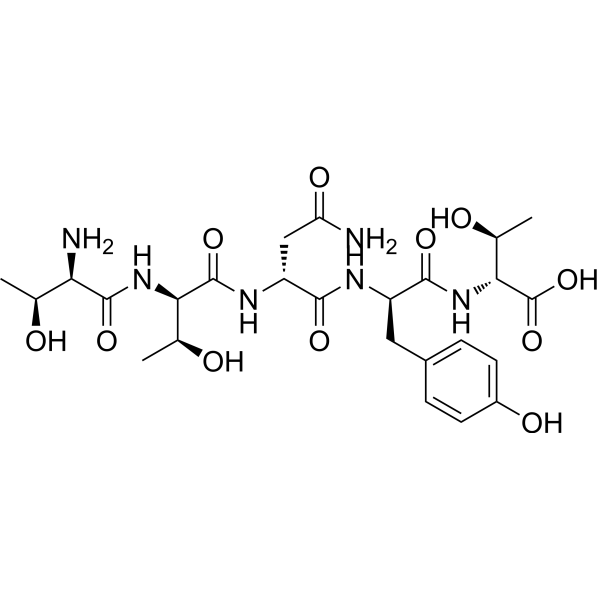
| DC73404 | RAP-103 Featured |
RAP-103 is an orally active, stabilized pentapeptide analog of DAPTA (D-ala-peptide T-amide), and multi-chemokine receptor antagonist.
More description
|
|
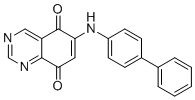
| DC21550 | QD325 Featured |
QD325 is a potent redox modulator that induces Nrf2-mediated oxidative stress and unfolded protein responses in PDAC cells (IC50=0.9 uM).
More description
|
|
| DCC5248 | Trpm2 Inhibitor A23 Featured |
Novel selective inhibitor of the transient receptor potential melastatin 2 (TRPM2) channel, exhibiting TRPM2 selectivity over TRPM8 and TRPV1 channels as well as phospholipase A2 and showing neuroprotective activity in vitro, and significantly reducing ce
More description
|

|
| DC10282 | ML385 Featured |
ML385 is a novel and specific NRF2 inhibitor.
More description
|
|
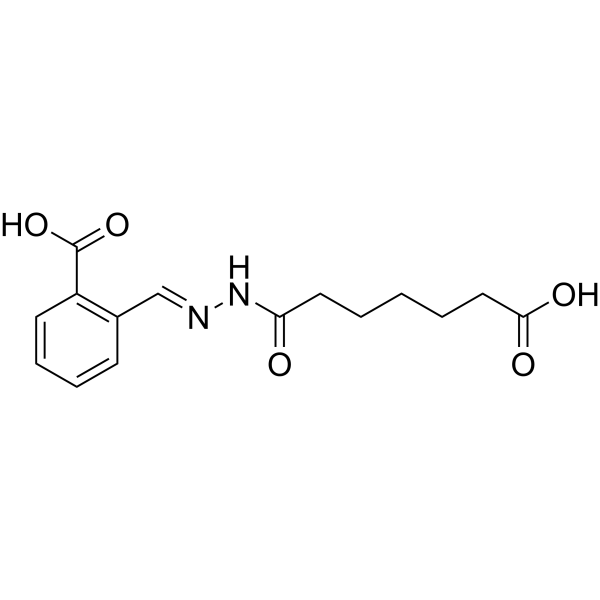
| DC9970 | IDE-1 Featured |
IDE-1 induces definitive endoderm formation in mouse and human embryonic stem cells (ESCs) (EC50 = 125 nM).
More description
|
|
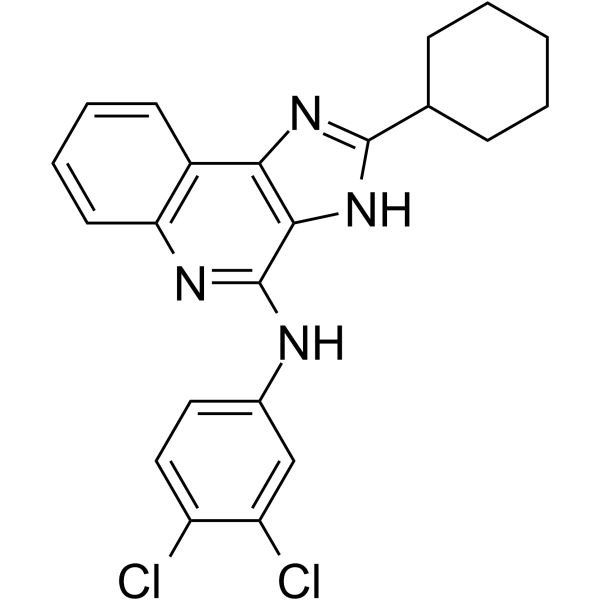
| DC22596 | LUF6000 Featured |
LUF6000 is a potent, selective, positive allosteric modulator (enhancer) of human A3 adenosine receptor, enhance Emax but without affecting agonist potency.
More description
|
|
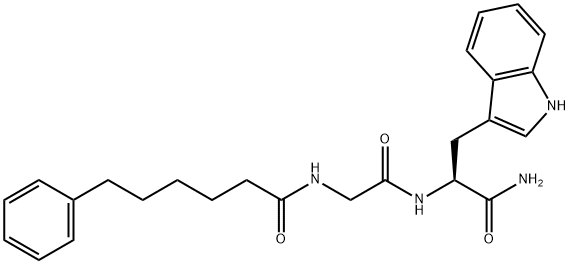
| DCC2223 | Gb-115 Featured |
Antagonist of central cholecystokinin receptors
More description
|
|
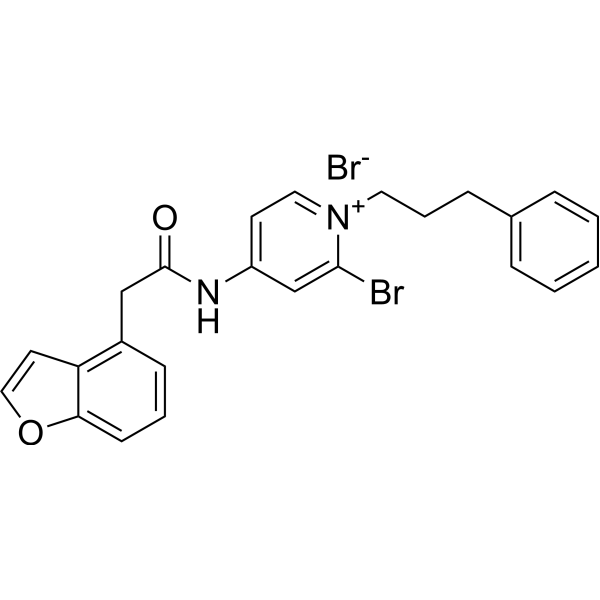
| DC78011 | CH0076989 Featured |
CH0076989 is a specific CCR3 agonist. CH0076989 activates eosinophils and transfectants expressing both wild-type CCR3 and a CCR1:CCR3 chimaeric receptor lacking the CCR3 amino-terminus. CH0076989 has a direct interaction with the transmembrane helices of CCR3, supported by the complete loss of its activity due to mutations of the residues Y41, Y113 and E287. CH0076989 can be used for the study of inflammation and allergic diseases (such as asthma).
More description
|
|
| DC71975 | TriGalNAc CBz Featured |
TriGalNAc CBz is a GalNAc derivative and tri-GalNAc is an asialoglycoprotein receptor (ASGPR) ligand. TriGalNAc CBz can be used for mRNA drug delivery as well as lysosomal targeted chimerism (LYTAC) studies.
More description
|

|
| DC46965 | Tri-GalNAc-COOH Featured |
tri-GalNAc-COOH is an asialoglycoprotein receptor (ASGPR) ligand that can be used for LYsosome TArgeting Chimera (LYTAC) research.
More description
|

|
| DC47877 | tri-GalNAc-COOH (acetylation) Featured |
tri-GalNAc-COOH acetylation is the acetylated and modified form of tri-GalNAc-COOH. tri-GalNAc-COOH acetylation can be used for the synthesis of LYTAC.
More description
|

|
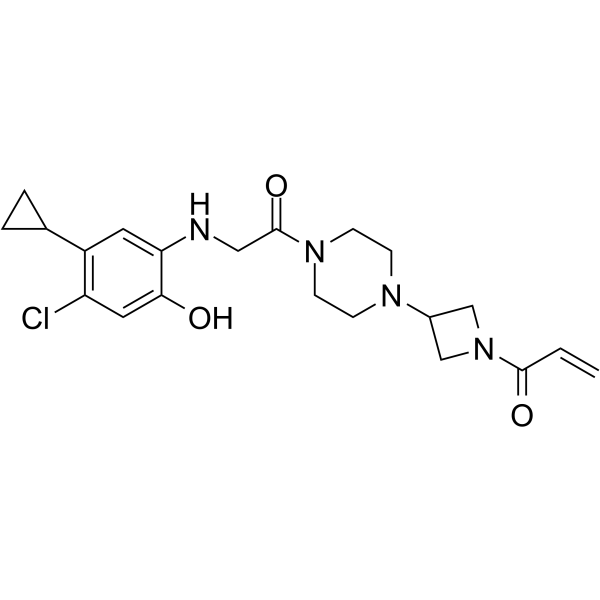
| DC22572 | K-Ras G12C-IN-2 Featured |
A novel and irreversible inhibitor of mutant K-ras G12C..
More description
|
|
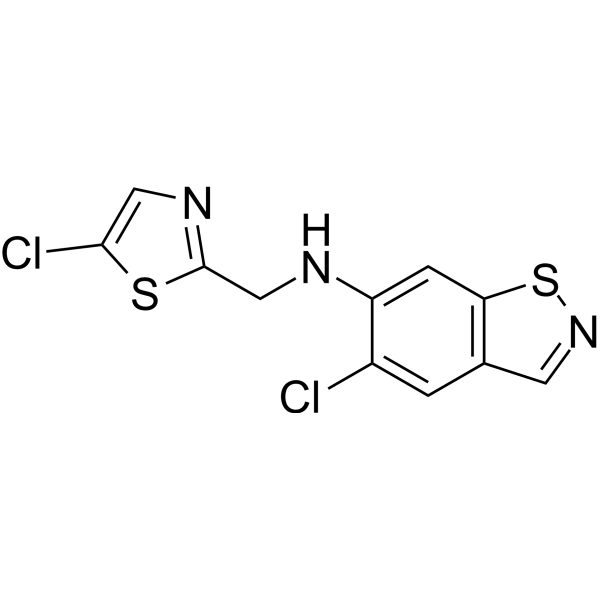
| DC81677 | TRPM5 agonist-1 Featured |
TRPM5 agonist-1 is an orally active TRPM5 agonist with a pEC50 of 8.1. TRPM5 agonist-1 shows excellent selectivity (> 100-fold) versus related cation channels (TRPM8, TRPV1, TRPV4, TRPA1, TRPM4). TRPM5 agonist-1 exhibits locally acting stimulatory effect on gastrointestinal transit in mice. TRPM5 agonist-1 can be used for research on promoting gastric motility.
More description
|
|
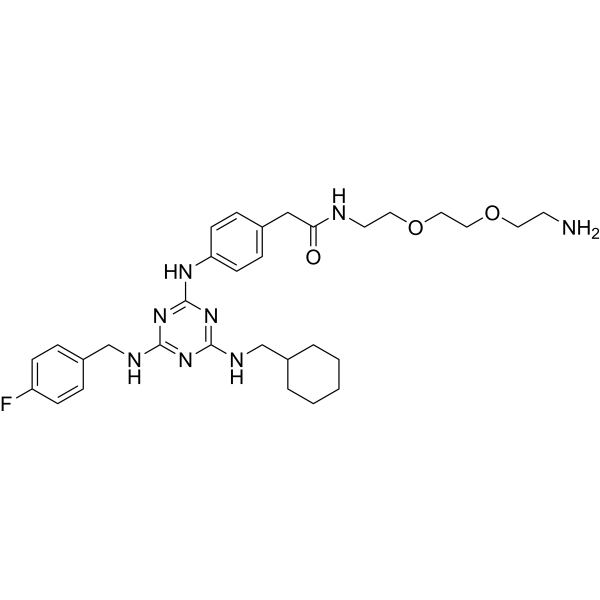
| DC7119 | AP-III-a4 Featured |
ENOblock(AP-III-a4) is a novel small molecule which is the first, nonsubstrate analogue that directly binds to enolase and inhibits its activity (IC50=0.576 uM); inhibit cancer cell metastasis in vivo.
More description
|
|
| DCC5183 | Tnks/usp25-in-c44 Featured |
Novel selective inhibitor of TNKS-USP25 interaction, effectively reducing prostate cancer cell proliferation and tumor growth
More description
|
.png)
|
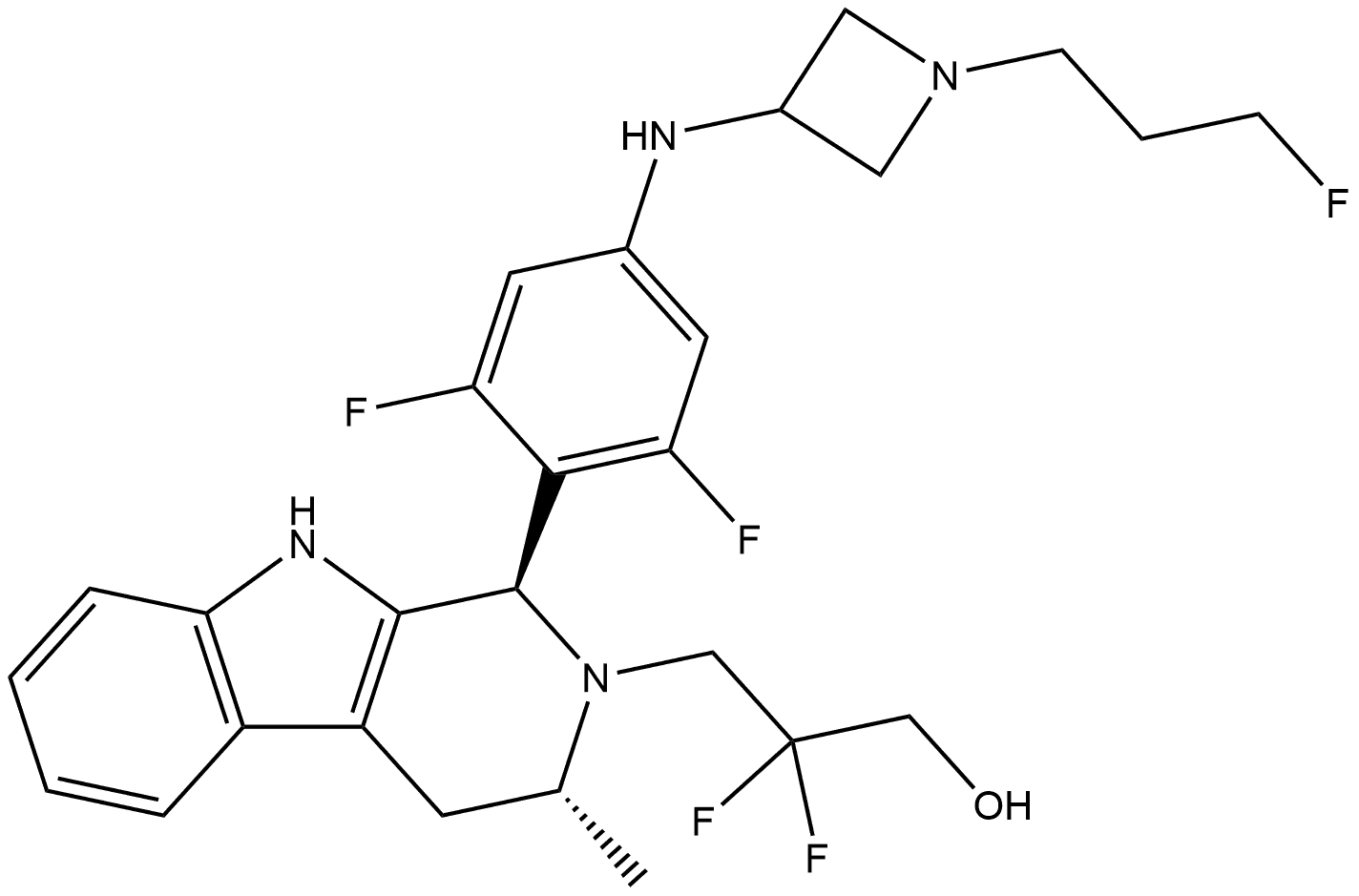
| DC40118 | Giredestrant Featured |
Giredestrant (GDC-9545), a non-steroidal estrogen receptor (ER) ligand, is an orally active and selective ER antagonist. Giredestrant potently competes with Estradiol for binding and induces a conformational change within the ER ligand binding domain. Gir
More description
|
|
