To enhance service speed and avoid tariff delays, we've opened a US warehouse. All US orders ship directly from our US facility.
| Cat. No. | Product Name | Field of Application | Chemical Structure |
|---|---|---|---|
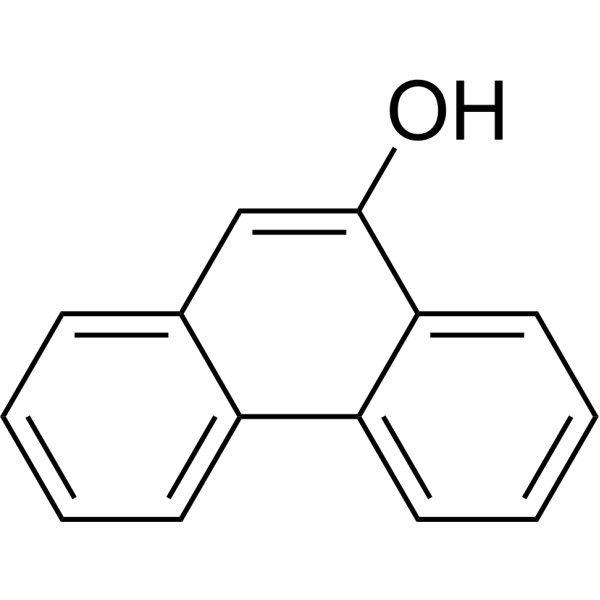
| DC46699 | 9-Phenanthrol Featured |
9-Phenanthrol (9-Hydroxyphenanthrene, Phenanthren-9-o, 9-Phenanthrenol) is a selective TRPM4 inhibitor with an IC50 in the range of 0.02 μM, without effects on TRPM5.
More description
|
|
| DC70804 | SSCI-1 Featured |
SSCI-1 is a highly potent, selective NaV1.7 inhibitor with IC50 of 27 and 82 nM on human and rhesus Nav1.7 channels, respectively.SSCI-1 showed robust selectivity over other human and rhesus Nav channel paralogs, with the exception of Nav1.2 channels (IC50 252 nM for hNaV1.2), shows no other channels and receptors in 114 enzymatic, radioligand binding, and cellular assays.SSCI-1 also exhibits high potency in manual patch clamp experiments (IC50=66/295 nM for huma/rhesus Nav1.7 channels).SSCI-1 does not affect myelinated nerve excitability as measured by TT, SSCI-1 inhibits odorant-induced olfaction in the olfactory bulb of rhesus monkeys, measured by fMRI.SSCI-1 inhibits withdrawal responses to noxious heat in rhesus monkeys.
More description
|

|
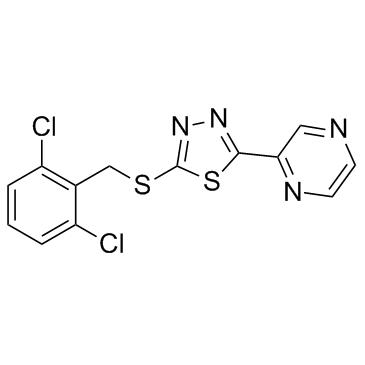
| DC10874 | GlyT2-IN-1(YODA 1) Featured |
Yoda 1 is a potent and selective Piezo1 agonist. Yoda 1 activates purified Piezo1 channels. Yoda 1 potently inhibits macropinocytosis induced by epidermal growth factor (EGF). Yoda 1 enhances Ca2+ influx followed by activation of the calcium-activated potassium channel KCa3.1 and inhibition of Rac1 activation.
More description
|
|
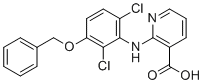
| DC70312 | CLC-2-IN AK42 Featured |
CLC-2-IN-AK42 (CLC-2 inhibitor AK42, AK42) is a potent, specific small-molecule inhibitor of voltage-gated chloride channel CLC-2 with IC50 of 17 nM (human CLC-2).AK42 displays unprecedented selectivity (>1,000-fold) over CLC-1, the closest CLC-2 homolog, and no off-target engagement a diverse panel of 61 CNS receptors, channels, and transporters expressed in brain tissue.AK-42 binds to an extracellular vestibule above the channel pore. AK-42 is almost three orders-of-magnitude more potent than MCFA, demonstrates high potency (IC50=14 nM for rat CLC-2) in manual patch-clamp experiments on CHO cells transiently transfected with rat CLC-2.AK-42 inhibits hyperpolarization-activated current in hippocampal cells, attenuates steady-state currents and eliminated relaxation currents in recorded neurons.AK-42 is a powerful tool for investigating CLC-2 neurophysiology.
More description
|
|
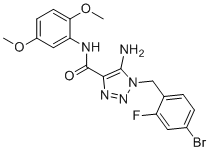
| DC73692 | GNE551 Featured |
GNE551 is a potent, selective, non-covalent agonist of TRPA1 ion channel with EC50 of 254 nM in Ca2+ influx assays.
More description
|
|
| DC70647 | Neurounina-1 Featured |
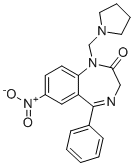
Neurounina-1 is a small molecule Na+/Ca2+ exchanger (NCX) activator, stimulates NCX1 and NCX2 activities with EC50 of 1.1-2.7 nM, does not affect NCX3 activity.Neurounina-1 (10 nM) reduced cell death of primary cortical neurons exposed to oxygen-glucose deprivation followed by reoxygenation, also reduced γ-aminobutyric acid (GABA) release, enhanced GABA(A) currents, and inhibited both glutamate release and N-methyl-d-aspartate receptors in vitro.Neurounina-1 effectively protects against stroke damage in vivo.
More description
|
|
| DC46528 | MCT4-IN-1 Featured |
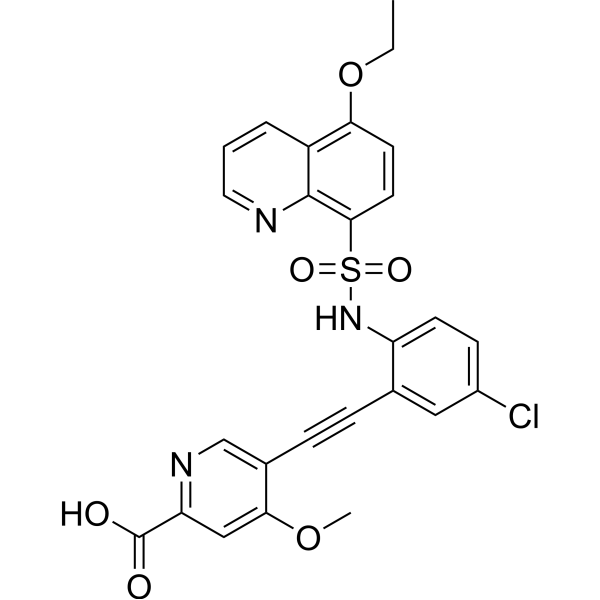
MCT4-IN-1 is an orally active and selective monocarboxylate transporter 4 (MCT4/SLC16A3) inhibitor with an IC50 of 77 nM and a Ki of 11 nM. MCT4-IN-1 targets to the cytosolic domain of MCT4. MCT4-IN-1 results in lactate efflux inhibition and reduction of cellular viability in MCT4 high expressing cells. MCT4-IN-1 has the potential for MCT4 transporter inhibition research.
More description
|
|
| DC70430 | GDC-0334 Featured |
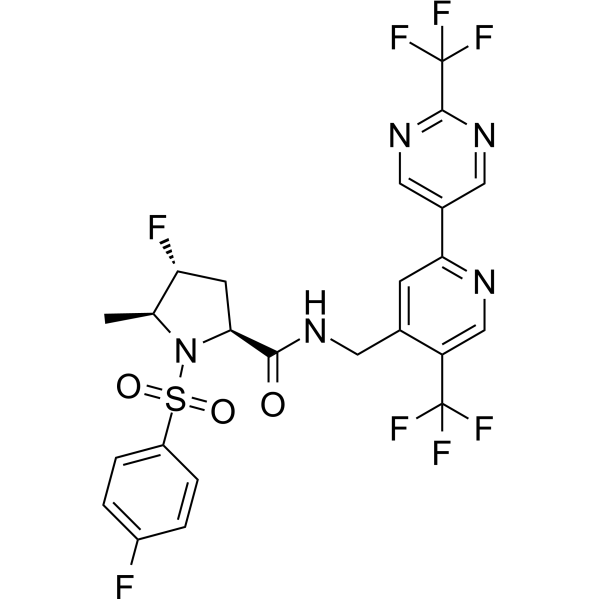
GDC-0334 (GDC0334) is a highly potent, selective, orally bioavailable TRPA1 antagonist with IC50 of 1.7 nM in cell-based assays.GDC-0334 demonstrated potent TRPA1 inhibition in several species, including human (IC50=1.7 nM), cynomolgus (IC50=3.6 nM), mouse (IC50=2.7 nM), guinea pig (IC50=11.1 nM), and dog (IC50=102 nM).GDC-0334 displays good selectivity against human TRPV1, TRPM8, and TRPC6 (all IC50s>10 uM).GDC-0334 also inhibits calcium flux in human primary cells, HASMCs and HLFs, treated with the TRPA1 agonist AITC.GDC-0334 suppresses AITC-induced edema in vivo in rat (1-10 mg/kg), reduces OVA-induced asthma model in rats and guinea pigs and guinea pig model of cough.GDC-0334 is a potent inhibitor of AITC-induced dermal blood flow (DBF) in vivo in rats and guinea pigs, reduces AITC-induced perfusion and nocifensive behavior in rats and itch and pain scores in humans.
More description
|
|
| DC72214 | Pyrantel Featured |
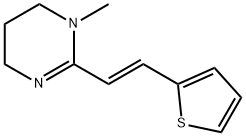
Pyrantel is an orally active anthelmintic and an agonist of the nicotinic acetylcholine receptor (nAChR). Pyrantel can cause spasmodic muscle paralysis in parasites. Pyrantel can be used in the study of parasitic infections such as ascariasis, hookworm infections, intestinal worms (pinworm infections), trichinosis and trichinosis.
More description
|
|
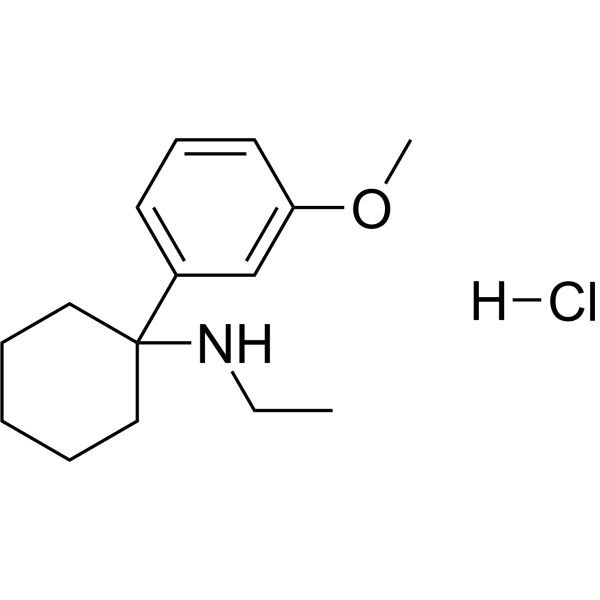
| DC76764 | 3-Methoxy PCE hydrochloride Featured |
3-Methoxy PCE (3-MEO PCE) hydrochloride is structurally classified as an arylcyclohexylamine and is an /b>NMDA receptor antagonist with a pKi value of 7.22.
More description
|
|
| DC79868 | F4-Trp |
F4-Trp (4,5,6,7-Tetrafluoro-L-tryptophan) is a ligand targeting the α3β4 nicotinic acetylcholine receptor (α3β4 nAChR). F4-Trp is promising for research of neurotransmission, addiction, and related diseases, such as neurological diseases.
More description
|

|
| DC79866 | IDOR-1104-0086 |
IDOR-1104-0086 is an orally active Kv7 potassium channel opener with an EC50 of 210 nM that can cross blood-brain barrier. IDOR-1104-0086 displays strong selectivity against the hERG channel with an IC20 of 25 μM. IDOR-1104-0086 exhibits efficacy in two rodent models of epilepsy and a favorable tolerability profile. IDOR-1104-0086 can used for the study of epilepsy.
More description
|
|
| DC79859 | SW016789 |
SW016789 is a hypersecretion-inducer targeting VDAC1. SW016789 can induce insulin hypersecretion and Ca2+ influx in β-cells directly. SW016789 induces a transient endoplasmic reticulum stress response (ER stress), but does not cause beta cell death. SW016789 has reversible and non-apoptotic characteristics. SW016789 can be used for the study of Diabetes mellitus type 2 (T2DM) β-cell dysfunction.
More description
|
|
| DC79855 | LY3526318 |
LY3526318 is an orally active, selective TRPA1 antagonist (IC50=5-6μM). LY3526318 blocks TRPA1 channels, inhibits pain signal transduction mediated by the channel, and exerts analgesic activity. LY3526318 is mainly used in the research of chronic pain-related fields, such as diabetic peripheral neuropathy, chronic low back pain, and pain caused by osteoarthritis.
More description
|
|
| DC79832 | Org 30029 hydrochloride |
Org 30029 (hydrochloride) is a Ca2+ sensitizer with positive inotropic effect. Org 30029 (hydrochloride) can be used for the research of cardiovascular disease.
More description
|
|
| DC79778 | L-703717 |
L-703717 is a NMDA receptor antagonist. L-703717 preferentially binds to cerebellar-specific NMDA receptors consisting of a GluRepsilon3 subunit and eventually accumulates in rodent cerebellum. L-703717 can be used for the research of neurological disease.
More description
|
|
| DC79720 | Hepoxilin A3 methyl ester |
Hepoxilin A3 methyl ester is the ester form of HxA3. Hepoxilin A3 methyl ester causes a receptor-induced rise in intracellular calcium through the release from intracellular stores in suspended human neutrophils.
More description
|
|
| DC79719 | AMG 7905 TFA |
AMG 7905 TFA is a hypothermia-inducing transient receptor potential vanilloid type 1 (TRPV1) antagonist. AMG 7905 TFA potentiates TRPV1 channels activation by protons and drives the reflectory inhibition of thermogenesis and tail-skin vasoconstriction, while potently blocking channel activation by capsaicin.
More description
|
|
| DC79713 | GPI-3000 |
GPI-3000 is a NMDA receptor antagonist. GPI-3000 can ameliorate metabolic injury and shows neuroprotective effect. GPI-3000 can be used for the researches of metabolic and neurological disease.
More description
|
|
| DC79707 | (S)-CPW 399 |
(S)-CPW 399 is a subtype-selective full agonist of AMPA receptors, with a 20-fold higher selectivity for GluA1 and GluA2 subunits over GluA3 and GluA4 subunits. (S)-CPW 399 can significantly increase the spontaneous firing rate (FR) of LC noradrenergic neurons by activating AMPA receptors containing GluA1 subunits. (S)-CPW 399 can be used for the study of neurological diseases.
More description
|
|
| DC79700 | KT 2-230 |
KT 2-230 is a sodium channel and calcium channel blocker with anti-inflammation effects.
More description
|
|
| DC79697 | Flumethiazide |
Flumethiazide (NSC 44626) is an orally active diuretic agent. Flumethiazide has marked diuretic and natruretic effects with significant effects on Sodium, Chloride and water but not on potassium excretion. Flumethiazide can be used for cardiac diseases like essential hypertension research.
More description
|
|
| DC79673 | Saviprazole |
Saviprazole is a Proton Pump inhibitor. Saviprazole can be used in research related to gastrointestinal diseases, such as gastric ulcers and acid reflux.
More description
|
|
| DC79654 | Perfluoroheptanesulfonic acid |
Perfluoroheptanesulfonic acid (1-Perfluoroheptanesulfonic acid; Perfluoroheptanesulphonic acid) is a perfluoroalkyl substance (PFAS). PFHpS can induce malformations in zebrafish larvae (EC50=168.1 μM). It has also been found in landfill leachate, and fetal exposure to PFHpS can lead to reduced birth weight.
More description
|
|
| DC79622 | Besonprodil |
Besonprodil (CI-1041) is a potent NMDA antagonist.
More description
|
|
| DC79607 | 5-Chloro-1,4-dihydro-2,3-quinoxalinedione |
5-Chloro-1,4-dihydro-2,3-quinoxalinedione (Compound 72) is a weak NMDA inhibitor with an IC50 of 56.3 μM. 5-Chloro-1,4-dihydro-2,3-quinoxalinedione can be used for the research of neurological disease.
More description
|
|
| DC79579 | BRL 55834 |
BRL 55834 is an orally and potent potassium channel activator. BRL 55834 exhibits great bronchodilator potency but reduces tendency to lower arterial blood pressure. BRL 55834 has the potential to use as a bronchodilator.
More description
|
|
| DC79578 | RWJ 29009 |
RWJ 29009 is a highly selective ATP-sensitive potassium channel agonist. RWJ 29009 activates potassium channel in vascular smooth muscle cells, promoting potassium efflux and membrane hyperpolarization to induce coronary and peripheral vasodilation. RWJ 29009 is promising for research of cardiovascular diseases such as acute myocardial ischemia and hypertension.
More description
|
|
| DC79563 | (S)-Padsevonil |
(S)-Padsevonil is the S-enantiomer of Padsevonil).Padsevonil (UCB0942) is a potent antiepileptic agent that selectively acts on presynaptic and postsynaptic targets. Padsevonil binds to synaptic vesicular protein 2 (SV2) with high affinity. Padsevonil is also a positive allosteric modulator and partial agonist of GABAAR, with high potency against α1 and α5 receptors. Padsevonil has antiepileptic effects in a variety of rodent models.
More description
|
|
| DC79562 | RO-488684 |
RO-488684 is a benzodiazepine receptor agonist. RO-488684 can be used for research on sleep and conscious sedation.
More description
|
|