To enhance service speed and avoid tariff delays, we've opened a US warehouse. All US orders ship directly from our US facility.
| Cat. No. | Product Name | Field of Application | Chemical Structure |
|---|---|---|---|
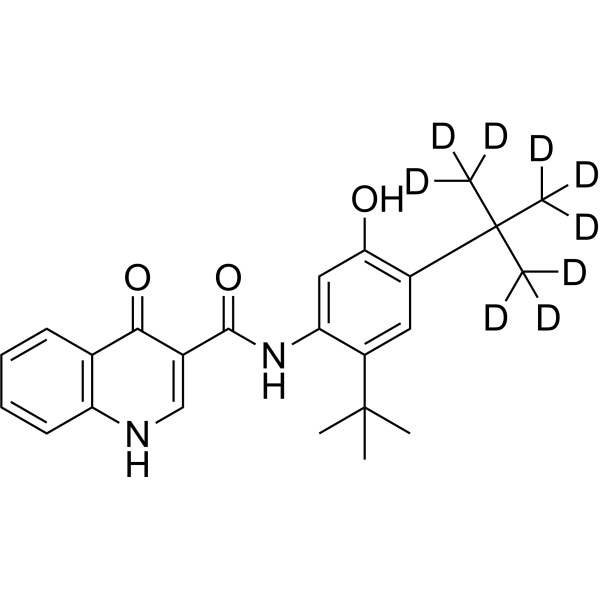
| DC42510 | Ivacaftor-D9 Featured |
Ivacaftor-D9 (CTP-656) is a potent CFTR modulator and exhibits an EC50 value of 255 nM for CFTR potentiation in G551D/F508del HBE Cells. Ivacaftor-D9 acts as an orally active and improved deuterated Ivacaftor analog for cystic fibrosis research.
More description
|
|
| DC73683 | LTGO-33 Featured |
LTGO-33 is a potent, selective inhibitor of voltage-gated sodium channel NaV1.8 with IC50 of 44 nM (hNaV1.8), 600-fold selectivity against NaV1.1-NaV1.7 and NaV1.9.
More description
|

|
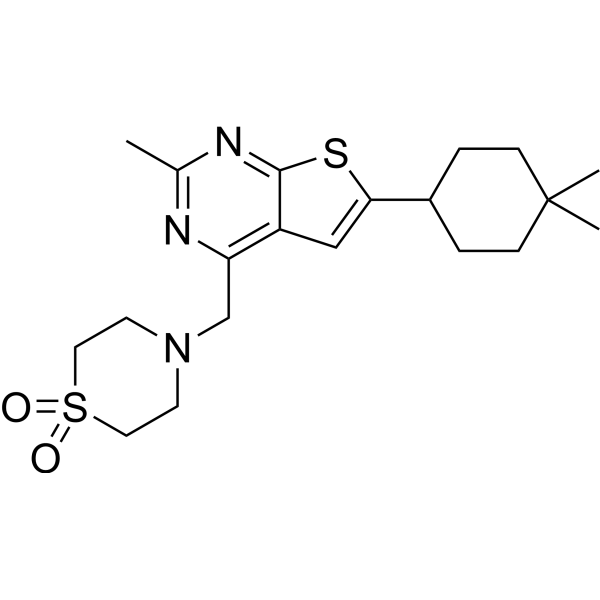
| DC73617 | NV-6297 Featured |
NV-6297 (NV6297) is a potent, selective mTORC1 pathway signaling inhibitor without inhibition on mTORC2, inhibits S6K1 phosphorylation (pS6K1 T389) in MCF7 cells with IC50 of 120 nM, directly and selectively targets GLUT-1.
More description
|

|
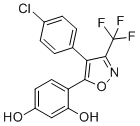
| DC73604 | TMEM16A blocker 1PBC Featured |
1PBC is a small molecule blocker of calcium-activated chloride channel TMEM16A, blocks TMEM16A completely with an IC50 of 4 uM at zero mV and saturating Ca2+ concentration (2 uM).
More description
|

|
| DC70327 | CTIBD Featured |
CTIBD is a novel potent activator of the BKCa channel with EC50 of 3.9 uM.CTIBD showed significantly higher potency compared with three other known BKCa activators: NS 1619, NS 11021, and rottlerin.CTIBD induced a reversible potentiation of macroscopic outward currents of the BKCa channel, CTIBD activates both rSlo/rβ1 and rSlo/rβ4 coexpressed channels mainly by decreasing the closing rate of the channel.CTIBD concentration-dependently reduced ACh-induced contractions in isolated rat urinary bladder strips. CTIBD effectively restored frequent voiding contraction and lowered voiding volume without affecting other bladder function parameters in acetic acid-induced overactive bladder (OAB) model (i.p. 20 mg/kg).
More description
|
|
| DC73618 | NUCC-0200590 Featured |
NUCC-0200590 is a small-molecule inhibitor of the TRIP8b-HCN interaction with IC50 of 7.0 uM in AlphaScreen assays, effectively disrupts the TRIP8b-HCN interaction in vitro and in vivo.
More description
|

|
| DC73609 | ASP8062 Featured |
ASP8062 is a potent, selective GABA B receptor positive allosteric modulator (PAM), positive allosteric modulating activity for human and rat GABAB receptors, exerts analgesic effects in rat model of fibromyalgia.
More description
|
|
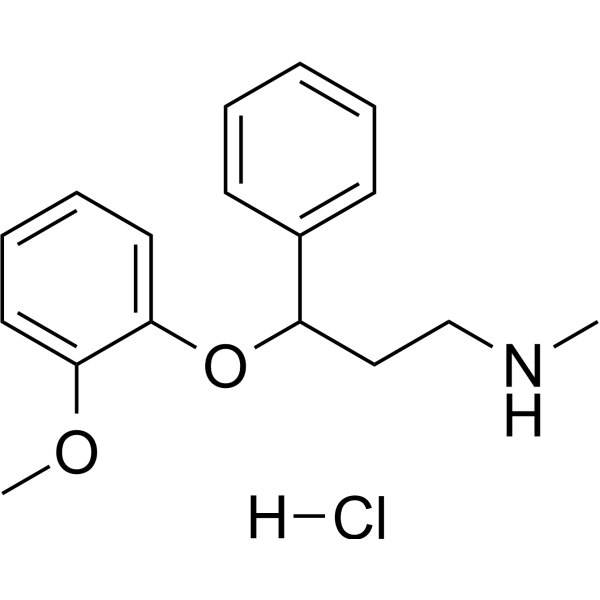
| DC41234 | Nisoxetine hydrochloride Featured |
Nisoxetine hydrochloride is a potent and selective inhibitor of noradrenaline transporter (NET), with a Kd of 0.76 nM. Nisoxetine hydrochloride is an antidepressant and local anesthetic, it can block voltage-gated sodium channels.
More description
|
|
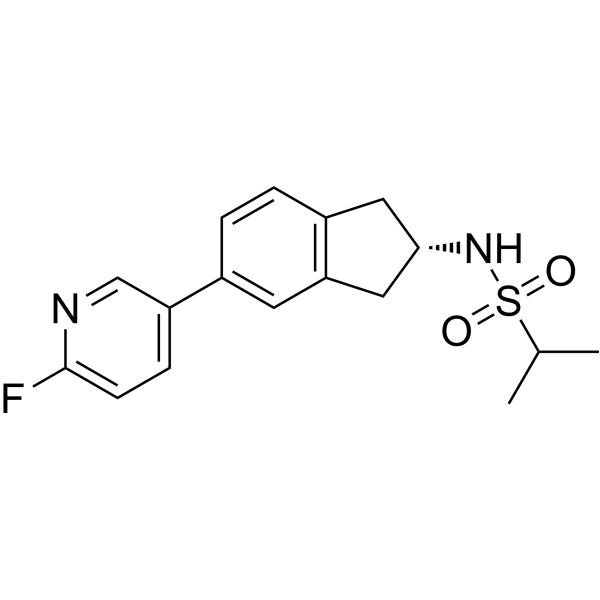
| DC11197 | UoS12258 Featured |
UoS12258 (UoS-12258) is a selective, positive allosteric modulator of the AMPA receptor with pEC50 of 5.6.
More description
|
|
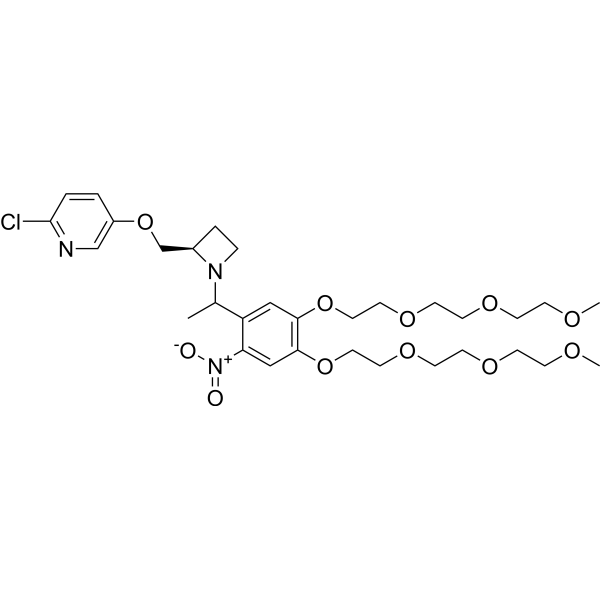
| DC46413 | DPNB-ABT594 Featured |
DPNB-ABT594 is a nitrobenzyl-caged ABT594 and activates nAChRs containing the α4β2 subunits with good selectivity than the α7 subunit. DPNB-ABT594 can be used to map the distribution of nAChRs on neurons of the medial habenula (MHb) and helps to gain a deeper understanding of the nAChR‐mediated Ca2+ signalling in the MHb.
More description
|
|
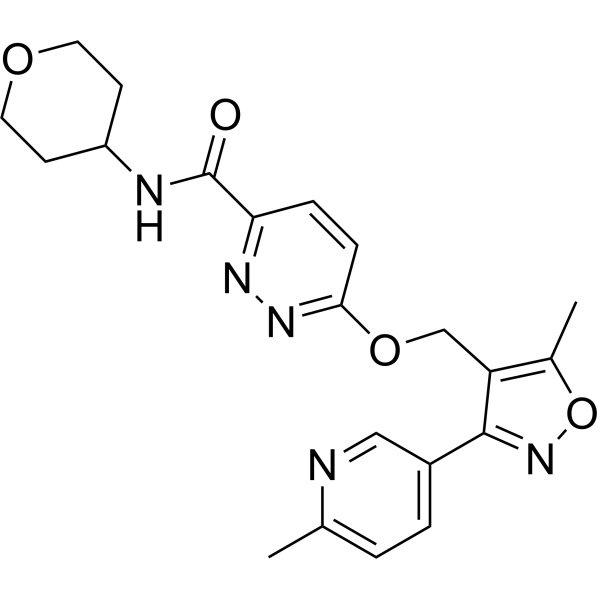
| DC47033 | Alogabat Featured |
Alogabat (example 8) is a GABAA α5 receptor positive allosteric modulators (PAMs) (extracted from patent WO2018104419A1).
More description
|
|
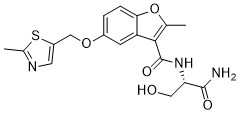
| DC60946 | ARV-102(S-enantiomer ) Featured |
S-enantiomer of ARV-102. ARV-102 is a highly potent, orally bioavailable PROTAC that targets LRRK2 with a of 0.14 nM, designed to cross the blood-brain barrier to address neurodegenerative diseases. By hijacking the body’s ubiquitin-proteasome system, it achieves deep and sustained degradation of LRRK2 protein in both peripheral tissues and the central nervous system, offering a potentially superior therapeutic approach over traditional kinase inhibitors.
More description
|
.png)
|
| DC80295 | Ponometrep(BBO-11818) Featured |
BBO-11818 is an orally active, highly selective (relative to NRAS and HRAS), non-covalent pan-KRAS inhibitor (IC50=28-120 nM). BBO-11818 specifically binds to the Switch-II/Helix 3 pocket, disrupts the KRAS:RAF1 interaction by inducing conformational changes, and blocks the MAPK signaling pathway. BBO-11818 exhibits significant anti-tumor activity, which not only inhibits cell proliferation and induces apoptosis, but also drives tumor regression in xenograft models. BBO-11818 produces synergistic effects when combined with Cetuximab, anti-PD-1 antibody or PI3Kα inhibitor. BBO-11818 is used in the research of KRAS mutation-related malignancies such as pancreatic cancer, non-small cell lung cancer and colorectal cancer.
More description
|
|
| DC81807 | α-Obscurine derivative-1 |
α-Obscurine derivative-1 (Compound 7) is a α-Obscurine derivative. α-Obscurine derivative-1 inhibits CaV3.1 ion channel current with an IC50 of 0.19 μM. α-Obscurine derivative-1 can be used in the research of neurological disorders.
More description
|

|
| DC81805 | α-Glucosidase-IN-113 |
α-Glucosidase-IN-113 is an α-glucosidase inhibitor with an IC50 of 17.52 μM. α-Glucosidase-IN-113 shows antiglycating activity and inhibits advanced glycation end-product formation. α-Glucosidase-IN-113 can be used for the research of type 2 diabetes.
More description
|
|
| DC81751 | Xanthine oxidase-IN-22 |
Xanthine oxidase-IN-22 is an orally active inhibitor of xanthine oxidase (XO) (IC50: 0.0034 μM). Xanthine oxidase-IN-22 exhibits a mixed-type inhibition mode against XO. Xanthine oxidase-IN-22 reduces serum uric acid levels in mice. Xanthine oxidase-IN-22 can be used in research related to hyperuricemia and gout.
More description
|
|
| DC81739 | WIN 64338 |
WIN 64338 is a non-peptide bradykinin B2 receptor antagonist. WIN 64338 can inhibit bradykinin-evoked trigeminal nerve stimulation.
More description
|
|
| DC81717 | Valyllysine |
Valyllysine (Val-Lys) is a renoprotective peptide. Valyllysine can be found in G. chorda soluble proteins following hydrolysis by thermolysin. Valyllysine effectively ameliorates pathological renal injury.
More description
|
|
| DC81696 | Tyk2-IN-23 |
Tyk2-IN-23 is a potent, orally active, selective TYK2 inhibitor (IC50 = 18 nM), exhibiting more than > 70-fold selectivity over JAK1/2/3 isoforms. Tyk2-IN-23 potently inhibits p-STAT3 in TYK2-dependent signaling activated by IFN-α and IL-10. Tyk2-IN-23 potently inhibits IFN-α-induced STAT1 phosphorylation in H9 cells. Tyk2-IN-23 can be used for the study of alopecia areata and allergic Rhinitis.
More description
|
|
| DC81667 | Topoisomerase ll/ME-1-IN-1 |
Topoisomerase ll/ME-1-IN-1 (Compound 7a) is a Topoisomerase ll and ME-1 inhibitor with an IC50 of 5.03 μM against Topoisomerase ll. Topoisomerase ll/ME-1-IN-1 functionally inhibits the activity of Topoisomerase II and functionally blocks the activity of ME-1. Topoisomerase ll/ME-1-IN-1 induces Autophagy by upregulating the expression of Beclin-1 and LC3-II. Topoisomerase ll/ME-1-IN-1 promotes Apoptosis. Topoisomerase ll/ME-1-IN-1 exhibits antiproliferative activity against breast cancer cells and shows no toxicity to normal mammary epithelial cells. Topoisomerase ll/ME-1-IN-1 can be used in studies related to breast cancer (including triple-negative breast cancer).
More description
|
|
| DC81643 | TIPARP-IN-1 |
TIPARP-IN-1 (Compound 15) is a selective PARP7 (TIPARP) (2,3,7,8-Tetrachlorodiben-zo-p-dioxin(TCDD)-inducible PARP) inhibitor with an IC50 of 2.15 nM. TIPARP-IN-1 can restore IFN signaling pathway in tumors by inhibiting TIPARP. TIPARP-IN-1 selectively activates the anti-tumor immune response in the tumor microenvironment and avoids the production of systemic cytokines. TIPARP-IN-1 can be used for research of head and neck squamous cell carcinoma.
More description
|
|
| DC81600 | TBC-4746 |
TBC-4746 is a α4β1/α4β7 integrin antagonist. TBC-4746 can be used in the research of asthma and multiple sclerosis.
More description
|
|
| DC81591 | T3SS-IN-6 |
T3SS-IN-6 is a thiazolidin-2-cyanamide derivative and type III secretion system (T3SS) inhibitor targeting Xanthomonas oryzae pv. oryzae (Xoo). T3SS-IN-6 exhibits no effect on Xoo growth. T3SS-IN-6 shows no measurable acute toxicity to silkworms and earthworms.
More description
|
|
| DC81571 | STAT6 degrader-1 |
STAT6 degrader-1 (Compound 21) is a bifunctional molecular glue degrader of STAT6 that recruits E3 ubiquitin ligase. STAT6 degrader-1 induces proteasomal degradation of STAT6. STAT6 degrader-1 is applicable to the research of cancer, inflammatory diseases and colorectal cancer.
More description
|
|
| DC81547 | SM-11044 |
SM-11044 is a β-adrenoceptor agonist with Ki values of 18.1 μM (β1), 4.1 μM (β2) and 1.3 μM (β3), showing higher binding selectivity for the β3-adrenoceptor. SM-11044 stimulates cAMP accumulation in cells expressing this receptor. SM-11044 mediates ileal relaxation, tracheal relaxation, pulmonary parenchymal relaxation, increased right atrial heart rate and adipocyte lipolysis.
More description
|
|
| DC81543 | SK-129 |
SK-129 is a blood-brain barrier-permeable inhibitor of α-synuclein (αS) oligomers with a Kd of 221 nM. SK-129 preferentially binds to neurotoxic αS oligomers over physiological αS monomers, inhibits αS aggregation, blocks the interaction and co-aggregation of αS with tau protein, and prevents the maturation of αS-tau condensates into amyloid aggregates. SK-129 reduces ROS production, rescues dopaminergic neuron degeneration, improves motor function, restores endogenous dopamine synthesis, increases the number of Tyrosine Hydroxylase-positive neurons, prevents brain histopathological changes, alleviates neuroinflammation, and improves survival rates in relevant models. SK-129 can be used in research related to Parkinson's disease (PD) and Lewy body dementia (LBD).
More description
|
|
| DC81508 | SCH-720881 |
SCH-720881 is the active metabolite of Rolapitant. Rolapitant (SCH619734) is a potent, selective, long-acting and orally active neurokinin 1 (NK1) receptor antagonist with a Ki of 0.66 nM. Rolapitant does not interact with CYP3A4. Rolapitant shows potent anti-emetic activity in a ferret emesis model.
More description
|
|
| DC81394 | PROTAC SARS-CoV-2 Mpro degrader-8 |
PROTAC SARS-CoV-2 Mpro degrader-8 is an antiviral PROTAC degrader targeting the SARS-CoV-2 main protease (Mpro), with weak direct binding affinity to Mpro (Kd=80.5 μM). PROTAC SARS-CoV-2 Mpro degrader-8 exhibits broad-spectrum antiviral activity against SARS-CoV-2 and the human endemic coronavirus HCoV-OC43. It can be used for research on coronavirus infections.
(Pink: SARS-CoV Target protein ligand; Blue: VHL ligand ; Black: ).
More description
|
|
| DC81354 | PROTAC EZH2 Degrader-16 |
PROTAC EZH2 Degrader-16 (compound 51) is a PROTAC protein degrader targeting EZH2 with an IC50 of 13.74 μM in SU-DHL-6 cells. PROTAC EZH2 Degrader-16 exerts antiproliferative activity against diffuse large B-cell lymphoma cells. PROTAC EZH2 Degrader-16 can be used for the research of diffuse large B-cell lymphoma.
(Pink: Histone Methyltransferase ligand ; Blue: Cereblon ligand ; Black: linker).
More description
|
|
| DC81352 | PROTAC EZH2 Degrader-14 |
PROTAC EZH2 Degrader-14 is an EZH2 PROTAC degrader, with an IC50 of 18.21 μM against diffuse large B-cell lymphoma cells, and exhibits no antiproliferative activity against non-target cells at concentrations up to 30.00 μM. PROTAC EZH2 Degrader-14 can be used in studies related to diffuse large B-cell lymphoma.
(Pink: Histone Methyltransferase ligand ; Blue: Ligands for E3 Ligase ligand ; Black: linker).
More description
|
|