 To enhance service speed and avoid tariff delays, we've opened a US warehouse. All US orders ship directly from our US facility.
| Cat. No. | Product Name | Field of Application | Chemical Structure |
|---|---|---|---|
| DC52025 | SM-102 Featured |
SM-102 is an ionizable amino lipid that has been used in combination with other lipids in the formation of lipid nanoparticles.Administration of luciferase mRNA in SM-102-containing lipid nanoparticles induces hepatic luciferase expression in mice. Formulations containing SM-102 have been used in the development of lipid nanoparticles for delivery of mRNA-based vaccines.
More description
|

|
| DC82301 | IC-8(lipid MIC5) Featured |
IC8 is an ionizable cationic lipid. It has been used in combination with other lipids for the formation of lipid nanoparticles (LNPs). Immunization with severe acute respiratory coronavirus 2 (SARS-CoV-2) spike glycoprotein mRNA in IC8- and manganese-containing LNPs induces IgG responses to SARS-CoV-2 Delta and Omicron variants in mice.1 Administration of mRNA encoding B7-H3 X CD3 bispecific T cell engaging (BiTE) antibodies in IC8-containing LNPs reduces tumor growth in MV4-11 and A375 mouse xenograft models.
More description
|

|
| DC60478 | ALC-0366 Featured |
ALC 0366 is an ionizable cationic lipid (pKa = 6.25) from Biontech,which is derived from ALC-0315. ALC0366 has been used as a key component of LNP to deliver BNT142, a lipid nanoparticle (LNP)-formulated RNA (RNA-LNP) encoding a T cell-engaging bispecific antibody that monovalently binds the T cell marker CD3 and bivalently binds claudin 6 (CLDN6), an oncofetal antigen that is absent from normal adult tissue but expressed on various solid tumors.
More description
|

|
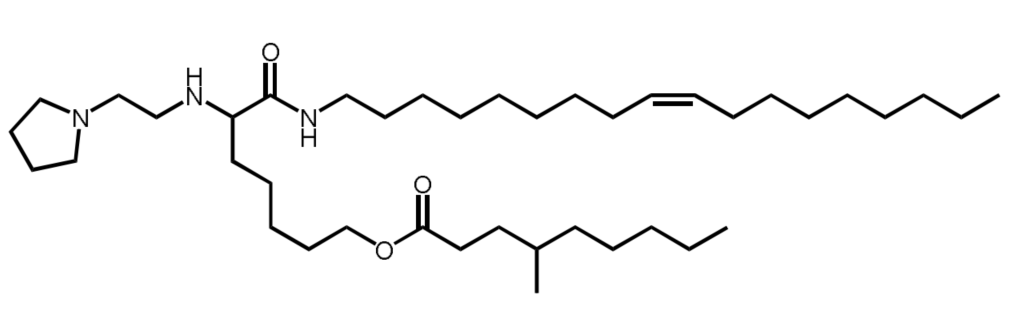
| DC60510 | Iso-A11B5C1 Featured |
Iso-A11B5C1 is an ionizable lipid. The iso-A11B5C1 LNP demonstrates a high level of muscle-specific mRNA delivery efficiency. exhibiting transfection efficiency comparable to the commercially available lipid SM-102, while considerably reducing inadvertent mRNA expression in main organs such as the liver and spleen.Additionally, study results show that intramuscular administration of mRNA formulated with iso-A11B5C1 LNP caused potent cellular immune responses, even with limited expression observed in lymph nodes.
More description
|
|
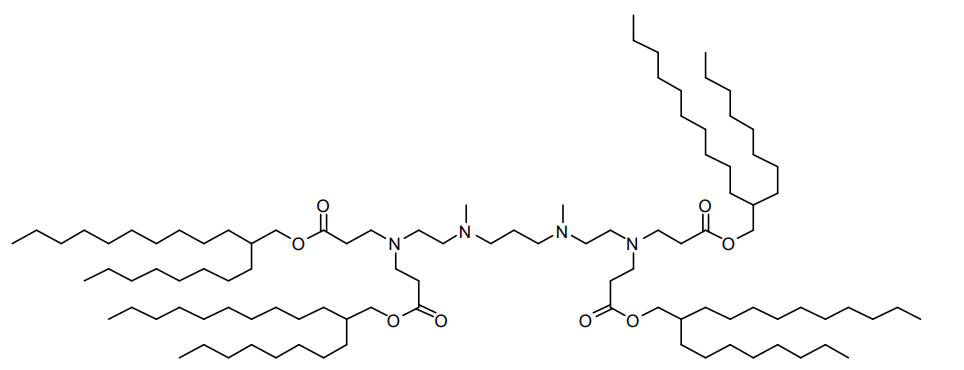
| DC60808 | 503O8,12 Featured |
503O8,12 is an ionizable lipidoid synthesized via Michael addition, combining a hydrophilic amine headgroup ("503" series) with two hydrophobic branched acrylate tails (C8 and C12 chains, likely with unsaturated bonds). Its design emphasizes organ-specific delivery, exhibiting spleen-tropic targeting in vivo.
More description
|
|
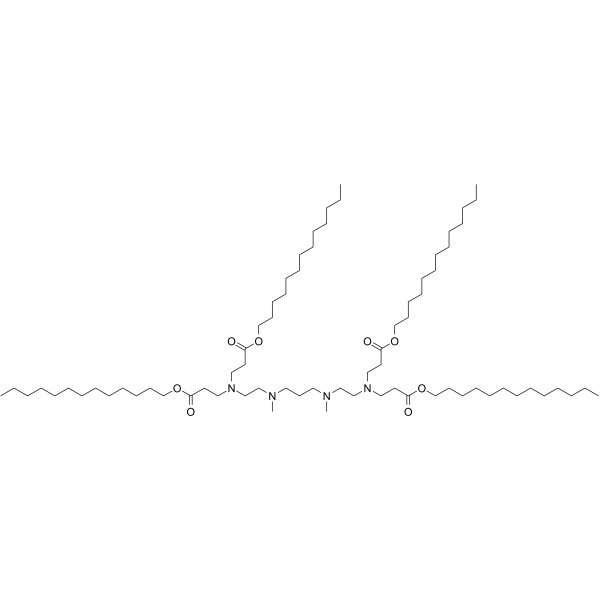
| DC49889 | 503O13 Featured |
503O13 is a next-generation, biodegradable lipid nanoparticle (LNP) engineered for highly efficient and targeted siRNA delivery. Designed through rational structure-activity criteria—including optimal tail length (O13), tertiary amines, and a surface pKa ≥5.5—this single-component LNP achieves unparalleled gene silencing with an ultra-low EC50 of 0.01 mg/kg in preclinical models.503O13 outperforms non-degradable counterparts (e.g., C12-200) with improved toxicity profiles—no hepatic necrosis or pancreatic inflammation—while maintaining rapid blood clearance (t1/2: 6 min) and organ-specific accumulation (liver/spleen).
More description
|
|
| DC59002 | ssPalmO-Phe Featured |
ssPalmO-Phe(SS-OP) is a self-degradable material for the delivery of oligonucleotides. ssPalmO-Phe is a self-degradable derivative of ssPalm that is self-degraded in the intraparticle space by a specific hydrolytic reaction. ssPalmO-Phe is beneficial for overcoming the plasma/endosomal membrane, LNP-ssPalmO-Phe can be used to deliver both nucleic acids.
More description
|

|
| DC82001 | 4A3-SC8 Featured |
4A3-SC8 is a novel Ionizable amino lipid for RNA delivery.The CRISPR-Cas9 gene editing system has been a hotspot in the
field of gene therapy, especially the gene correction induced by
homology-directed repair (HDR). However, its application has
various obstacles, such as large molecular weight, poor stability,
off-target risk, and the complexity of codeliver multiple genes.
Farbiak et al. established a novel ionizable lipid library consisting
of four distinct amine cores (3A3, 3A5, 4A1, 4A3) and nine
peripheries with different alkyl chain lengths (SC5-SC14), and screened out a class of iLNPs with ability of encapsulating
Cas9 mRNA, sgRNA and donor DNA simultaneously.
The delivery efficiency (quantified by luciferase mRNA expression)
and iLNPs toxicity were evaluated with three different cell
lines (HEK293T, HeLa, and IGROV-1), indicating the formulation
containing 4A3-SC8 was the best. 4A3-SC8 iLNPs successfully
induced HDR in HEK293 cells by one-pot delivery of Cas9
mRNA, sgRNA, and the correct ssDNA template. Confocal
microscopy imaging showed that a portion of blue fluorescence
in cells was corrected to green fluorescence. Furthermore, the
nucleic acid ratios of Cas9: sgRNA: donor DNA loading in
iLNPs at a ratio of 2:1:3 could maximize the HDR efficiency with
the editing efficiency up to 23%, which breaks through the current
bottleneck of HDR efficiency of only 1–5%. This progress is
undoubtedly an important advance in the gene therapy field to
cure diseases caused by genetic mutations.
More description
|

|
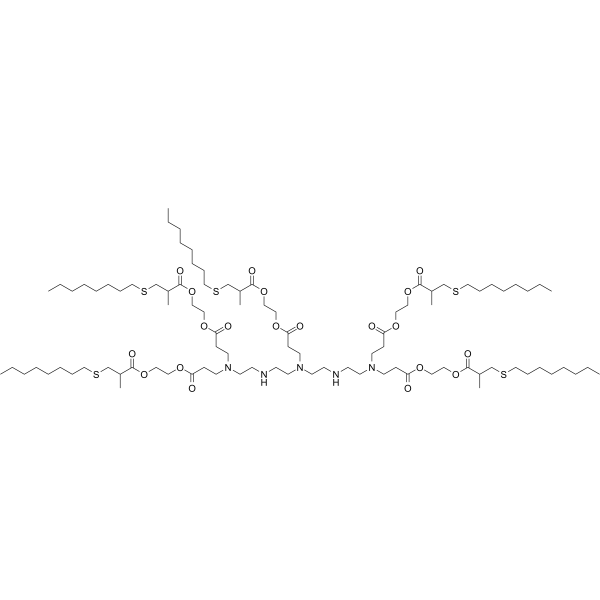
| DC49907 | 5A2-SC8 Featured |
5A2-SC8 is a dendrimer for miRNA delivery to late-stage liver tumors with low hepatotoxicity. 5A2-SC8 shows potent EC50 < 0.02 mg/kg (siRNA against FVII (siFVII)) in dose-response experiments, and well tolerated in separate toxicity studies in chronically ill mice bearing MYC-driven tumors. 5A2-SC8 is a degradable lipid-like compound (ester-based dendrimer) for small RNAs delivery.5A2-SC8, was obtained by screening a large library of more than 1500 ester-based dendrimers
containing ionizable amino groups, which have three
tertiary amine heads and five lipid tails. Based on this library,
the in vitro transfection efficiency of different formulations of
5A2-SC8 iLNPs was evaluated, discovering the optimal formulation
(5A2-SC8, DOPE, cholesterol, PEG at a molar ratio of
15:15:30:3) of 5A2-SC8 iLNPs for delivering fumarylacetoacetate
hydrolase (FAH) mRNA to liver.After the intravenous injection
via tail, the model mice of hepatorenal tyrosinemia type I
had strong FAH protein expression, which prevented
body weight loss and increased the survival rate of hepatorenal
tyrosinemia mice . In addition to introducing utility of
5A2-SC8 iLNPs for the therapeutic intervention, the 5A2-SC8
iLNPs containing DOTAP have been used to establish complex
mouse models via intravenous injection, including in situ liverspecific
cancer model and in situ lung-specific cancer model.
Based on this iLNPs delivery system, 5A2-SC8 induced model
construction method overcomes the time-consuming and costly
disadvantages of traditional animal models establishing methods,
including transgenesis and gene engineering in embryonic
stem cells.
More description
|
|
| DC60789 | SM-86 Analog-1 Featured |
SM-86 Analog-1 is a novel ionizable lipid designed to improve the delivery of RNA via lipid nanoparticles (LNPs) It is derived from SM-86,with 8 carbon within its hydrophobic tail.
More description
|

|
| DC60508 | 4A3-SCC-10 Featured |
4A3-SCC-10 is a disulfide bond-containing biodegradable ionizable cationic lipid (pKa = 6.22) that has been used in the generation of lipid nanoparticles (LNPs) for the delivery of mRNA in vitro and in vivo. LNPs containing 4A3-SCC-10 and encapsulating a Cy5-RNA reporter have improved endosomal escape ability over Cy5-RNA-encapsulated LNPs containing 4A3-SC-10, which does not contain disulfide bonds, in HeLa cells. Intravenous administration of LNPs containing 4A3-SCC-10 and encapsulating an mRNA luciferase reporter selectively accumulate in mouse liver.
More description
|

|
| DC67515 | CICL-207 Featured |
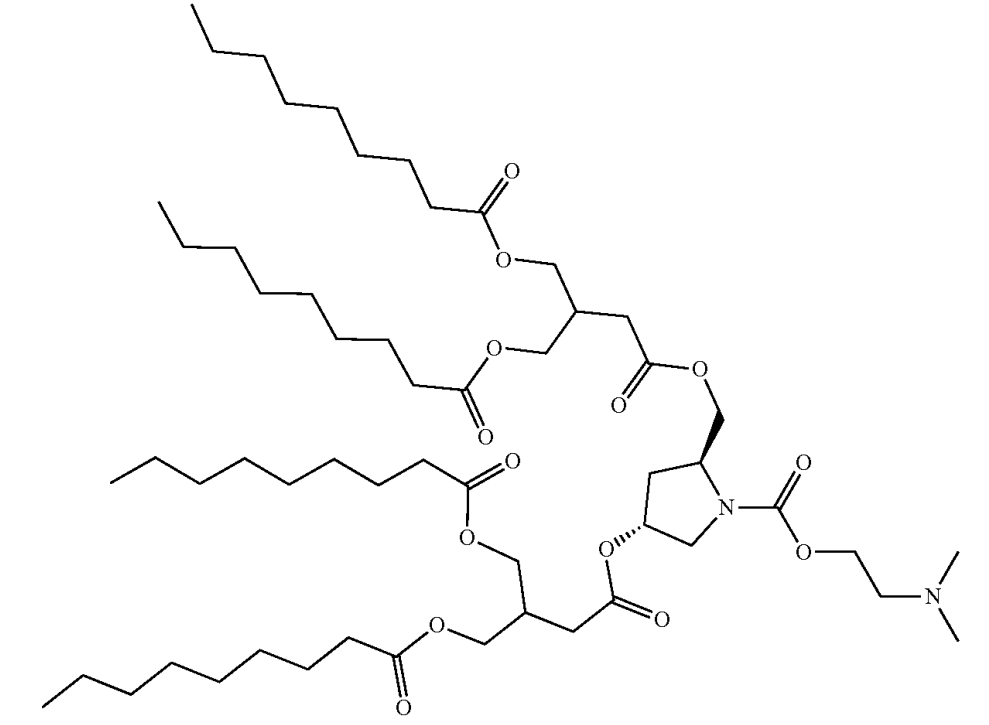
CICL 207 is structurally optimized based on Lipid CICL-1. CICL207 is a constrained ionizable cationic lipid designed for lipid nanoparticle (LNP) delivery systems developed by Capstan. Its structure features a rigid cyclic backbone (e.g., pyrrolidine-derived core) paired with a tertiary amine group that ionizes at acidic pH (pKa ~6.5–7.0), enhancing endosomal escape. The lipid includes asymmetric hydrophobic tails (likely C14–C18 alkyl/ester chains) to stabilize LNP membranes and improve nucleic acid encapsulation. Integrated into LNPs (e.g., 58% CICL-207, 10% DSPC, 30.5% cholesterol, PEG-lipids), it enables targeted delivery to T cells (anti-CD5/CD8 tLNPs) with high transfection efficiency (spleen T cells >70% mCherry+), reduced liver uptake, and low toxicity (no significant ALT/AST elevation in rats). Its constrained design balances stability, tissue specificity, and biocompatibility for gene therapy applications.CICL 207 (F50) significantly outperforms CICL-1 by delivering dramatically enhanced target cell transfection with reduced off-target effects. It achieves >50% transfection efficiency in splenic T-cells—nearly double that of CICL-1—while slashing off-target expression in liver cells to <5% (versus >15% for CICL-1. This precision translates to superior therapeutic outcomes: CICL-207 enables ~95% B-cell depletion in CAR-T applications, far exceeding CICL-1 ’s ~60% efficacy. Critically, it maintains an exceptional safety profile, showing no significant liver toxicity or inflammatory cytokine elevation even at high doses. Furthermore, CICL-207 demonstrates 2-fold higher transfection efficiency in hematopoietic stem cells, enabling robust gene editing. Its optimized pKa (~6.5) and constrained amine structure enhance endosomal escape while minimizing Kupffer cell uptake, making it ideal for targeted therapeutics requiring both potency and safety.
More description
|
|
| DC60639 | Acid-degradable Anionic Lipid (ADA) Featured |
ADA (Acid-Degradable Anionic Lipids) is revolutionizing mRNA delivery with its unique azido-acetal linker, enabling rapid hydrolysis in endosomes (pH ~6.0). This breakthrough technology ensures efficient endosomal escape, significantly enhancing mRNA delivery to target cells. ADA-LNPs excel in delivering mRNA to the spleen and liver, making them ideal for immune-related therapies.By degrading into biocompatible byproducts, ADA minimizes long-term tissue persistence and toxicity.ADA-LNPs outperform traditional LNPs, delivering mRNA more effectively to immune cells like macrophages and B cells.
More description
|
.png)
|
| DC60636 | Acid-degradable Cationic Lipid (ADC) Featured |
Acid-degradable Cationic Lipid (ADC) composed of cationic lipid is synthesized with the azido-acetal linker and used to generate RD-LNPs, which significantly improves the performance of LNP-mRNA complexes in vitro and in vivo.
More description
|
.png)
|
| DC49952 | 246C10 Featured |
246C10 is a synthesized ionizable lipid. 246C10 can be formulated into lipid nanoparticles (LNPs) with dioleoylphosphatidylethanolamine (DOPE), cholesterol, and C16-PEG2000 ceramide (PEG-lipid) as well as mRNA. The lipid nanoparticle formulations can be used for mRNA delivery. To obtain iLNPs that could specifically target liver sinusoidal
endothelial cells (LSECs), six different ionizable lipids (241C10
to 246C10) were synthesized by an epoxide ring-opening
reaction with piperazine- or piperidine-containing amines.
Biodistribution and gene regulation of various iLNPs were
assessed in vivo, and the results showed that the 246C10
iLNPs (containing piperazine amine) had the highest luciferase
expression in the liver. When further analyzing the
246C10 iLNPs transfection efficiency in different types of liver
cells, it was found that tdTomato fluorescence was mainly concentrated
in hepatocytes, not in LSECs. Figure 6f shows that 80%
of hepatocytes are fluorescent, 40% of LSECs are fluorescent, and
20% of Kupffer cells are fluorescent. Due to the mannose receptor
on LSECs, mannose-PEG lipid was introduced into 246C10
iLNPs to alter the distribution of iLNPs in different liver cells. As
shown in Figure 6g, tdTomato fluorescence distribution was 15%
of hepatocytes, 70% of LSECs, and 15% of Kupffer cells, significantly
improved the ability of iLNPs to actively target LSECs.
In contrast, this work indirectly shows that the iLNPs with piperazine
head lipid are more able to deliver mRNA to the liver and
translate the target protein than the iLNPs with piperidine
head lipid. It is worth mentioning that the preparation buffer of 246C10
iLNPs could influence the encapsulation efficiency of mRNA.
With the addition of sodium chloride in the citrate buffer, the
encapsulation efficiency of CRISPR-Cas9 mRNA and sgRNA
was increased. These iLNPs were able to treat hemophilia safely,
without causing hepatotoxicity, the immune response induced by
Cas9 and off-target editing.
More description
|

|
| DC60825 | lipid 11-10-8 Featured |
11-10-8 is an ionizable cationic lipid (pKa = 6.22) that has been used in the generation of lipid nanoparticles (LNPs) for mRNA delivery in vivo.1 LNPs containing 11-10-8 and encapsulating mRNA encoding the Cas9 nuclease and small-guide RNA (sgRNA) targeting transthyretin (TTR), a thyroid hormone carrier protein, decrease serum levels of TTR in mice. LNPs containing 11-10-8 and encapsulating mRNA encoding human fibroblast growth factor 21 (hFGF21) increase serum levels of hFGF21, decrease body and liver weights, and reduce the liver steatosis score in a mouse model of obesity induced by a high-fat diet.
More description
|

|
| DC57046 | ATX-126(ATX-0126, lipid 10p) Featured |
ATX-126(ATX-0126, 10p) is an ionizable cationic lipid (pKa = 6.38).It has been used in the generation of lipid nanoparticles (LNPs) for the delivery of siRNA. Intravenous administration of LNPs containing ATX-126(ATX-0126, 10p) and encapsulating Factor VII siRNA decrease Factor VII blood levels in mice.
More description
|

|
| DC60782 | Lipid A4B4-S3 Featured |
A4B4-S3 is a novel biodegradable ionizable lipid that has been meticulously designed through modular platforms and optimized specifically for mRNA delivery. It serves as a critical component of lipid nanoparticles (LNPs) and enhances mRNA delivery efficiency by facilitating endosomal escape. The structural design of A4B4-S3 leverages the Passerini reaction, a highly efficient and modular chemical method that enables the rapid generation of diverse lipid libraries. The design focuses on optimizing the methylene units between lipid headgroups and linkages to strengthen hydrogen bonding interactions with mRNA ribophosphate complexes. This enhanced hydrogen bonding allows for more effective release of mRNA from endosomes, thereby boosting delivery efficiency. Concurrently, the structural optimization improves biodegradability, reducing potential long-term toxicity risks.
In experimental studies, A4B4-S3 has demonstrated superior gene editing efficacy in mouse liver compared to SM-102, a clinically prevalent lipid used in Moderna's COVID-19 vaccine. It also shows potential for repeat-dose protein replacement therapies, suggesting enhanced stability and safety for long-term treatment regimens. Technologically, A4B4-S3 not only provides a more efficient LNP formulation but also deepens the understanding of the relationship between structure and delivery efficiency. This offers new directions for the development of future mRNA therapeutics. In summary, A4B4-S3 represents a next-generation delivery carrier achieved through rational design and high-throughput screening strategies. Its performance enhancements and biodegradable properties position it as a promising candidate for gene therapies and vaccine applications.
More description
|

|
| DC65329 | ALC-0315 analogue-2 Featured |
ALC-0315 analogue-2 is an analogue of ALC-0315. ALC-0315 is an ionisable aminolipid that is responsible for mRNA compaction and aids mRNA cellular delivery and its cytoplasmic release through suspected endosomal destabilization. ALC-0315 can be used to form lipid nanoparticle (LNP) delivery vehicles. Lipid-Nanoparticles have been used in the research of mRNA COVID-19 vaccine.
More description
|
|
| DC42537 | ALC-0315 Featured |
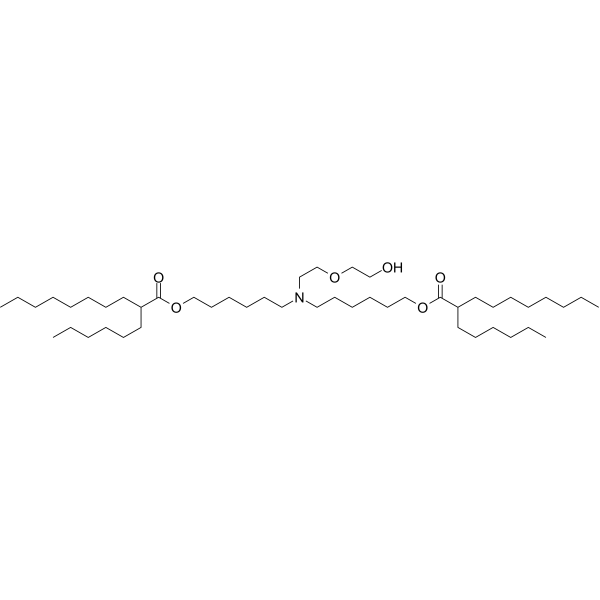
ALC-0315 is an ionisable aminolipid that used for mRNA compaction and aids mRNA cellular delivery. ALC-0315 can be used to form lipid nanoparticle (LNP) delivery vehicles.
More description
|

|
| DC66219 | Lipid 88 Featured |
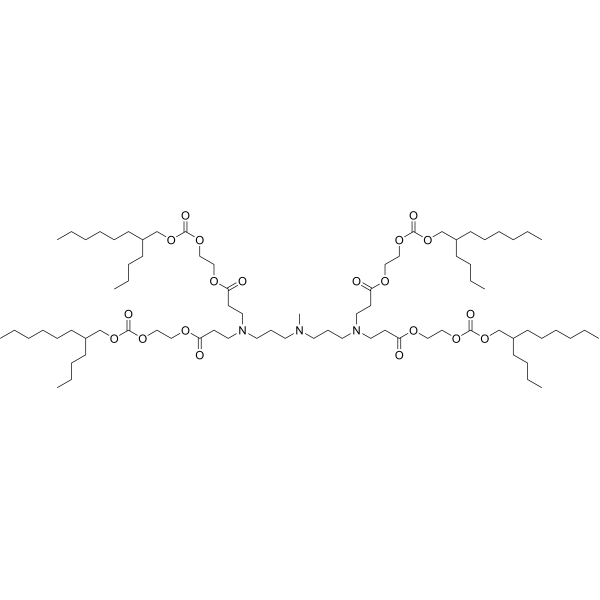
Lipid88 is a high-performance, novel ionizable lipid component engineered for advanced mRNA-LNP vaccine delivery. LNP88 formulation demonstrates superior biodistribution, achieving >10-fold higher transfection efficiency in spleen and lymph nodes compared to benchmark lipids like ALC-0315 via intramuscular delivery. When encapsulating antigen-encoding mRNA (e.g., optimized mCSA construct), Lipid-88 based LNPs drive robust humoral and cellular immunity, enabling complete protection against challenging SARS-CoV-2 variants (WA1/2020, Omicron BA.1, BQ.1) in preclinical models. Its design prioritizes potent immunogenicity with favorable safety profiles.
More description
|
|
| DC60856 | DMA4-H228 Featured |
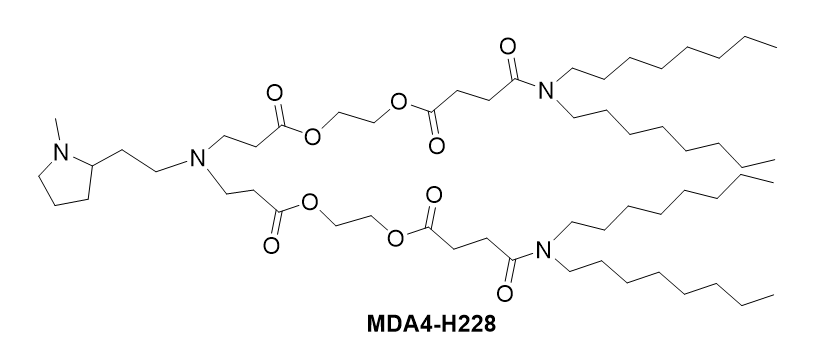
DMA4-H228 is a novel, biodegradable lipidoid specifically engineered for spleen-targeted mRNA delivery. Its structure combines a dimethylamino (DMA4) headgroup with a unique hyperbranched lipid tail (H228) synthesized via Michael addition, incorporating ester bonds for enhanced biodegradability. This design enables the formation of stable lipid nanoparticles (LNPs) (~170 nm) with high mRNA encapsulation efficiency (>96%).
Critically, DMA4-H228 exhibits exceptional intrinsic tropism for the spleen (>98% targeting efficiency after IV administration), requiring no external targeting ligands. It selectively delivers mRNA to splenic antigen-presenting cells (APCs), including dendritic cells, macrophages, and B cells. This triggers potent immune activation: rapid IFNα secretion, upregulation of APC maturation markers (CD86/CD40), and robust antigen-specific immune responses.
Demonstrating significant therapeutic potential, DMA4-H228-based mRNA vaccines effectively inhibit tumor growth in melanoma models (e.g., B16F10-OVA). This correlates with increased tumor-infiltrating CD8⁺ T cells, a shift towards pro-inflammatory M1 macrophages, elevated antigen-specific antibodies (IgG), and strong T cell responses (evidenced by IFNγ⁺ spots). Its ability to bypass liver tropism and directly activate splenic APCs makes DMA4-H228 a powerful platform for next-generation mRNA vaccines and cancer immunotherapy.
More description
|
|
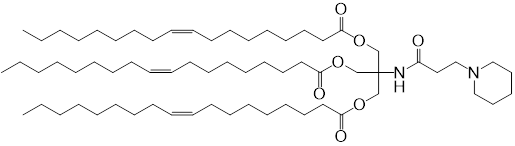
| DC60821 | Lipid TOT-5 Featured |
TOT-5, a tri-oleoyl-Tris ionizable lipid (pKa 6.2), enables splenic B cell-targeted mRNA delivery via 15% DSPC-incorporated LNPs. Its charge-neutral, hydrophobic surface minimizes hepatic ApoE uptake and enhances complement C3 adsorption, facilitating CD21/35-mediated uptake by marginal zone B cells. In vivo, intravenous 15%DSPC-LNPs showed 8-fold higher spleen-to-liver luciferase expression vs 3%DSPC, with anti-CD21/35 blocking 60% B cell uptake. Intramuscular administration induced robust OVA-specific IgG (10^5 titer) and CTL responses (3.5% tetramer+ CD8+ T cells) while reducing hepatotoxicity (ALT/AST levels ≤40 U/L vs SM-102-LNPs' 80-120 U/L). Cryo-ET confirmed stable lamellar structures (80-100 nm, ζ-potential -2 mV). This formulation achieves safe, ligand-free splenic targeting for mRNA vaccines.
More description
|
|
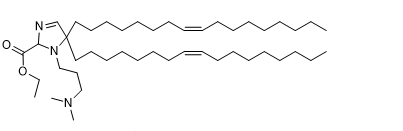
| DC82003 | A12-Iso5-2DC18 |
A12-Iso5-2DC18 is a novel amine containing lipid can be used for mRNA delivery, activate the stimulator of interferon genes (STING) pathway, and exhibit anti-tumor immunity.
More description
|
|
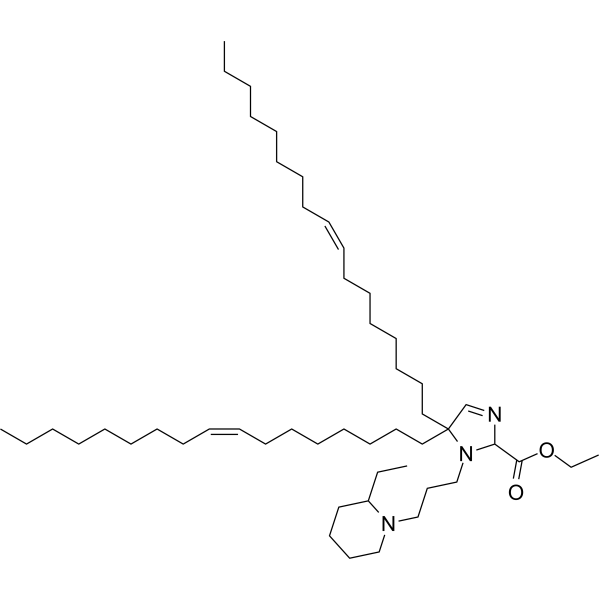
| DC80071 | A18-Iso5-2DC18 Featured |
A18-Iso5-2DC18 that could not only deliver mRNA vaccines robustly but also activate the stimulator
of interferon genes (STING) pathway.
More description
|
|
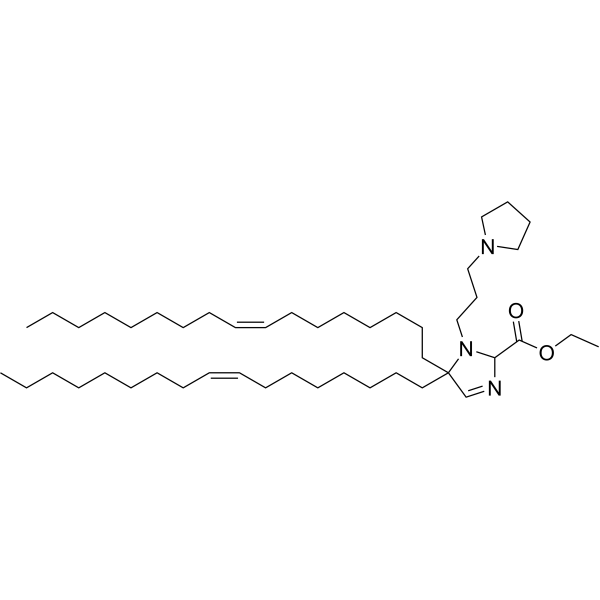
| DC80070 | A2-Iso5-2DC18 Featured |
A2-Iso5-2DC18 is a top-performing lipid for mRNA delivery in bone marrow-derived dendritic cells (BMDCs), BMDMs and HeLa cells.
More description
|
|
| DC67537 | DM3-BTA-14 Featured |
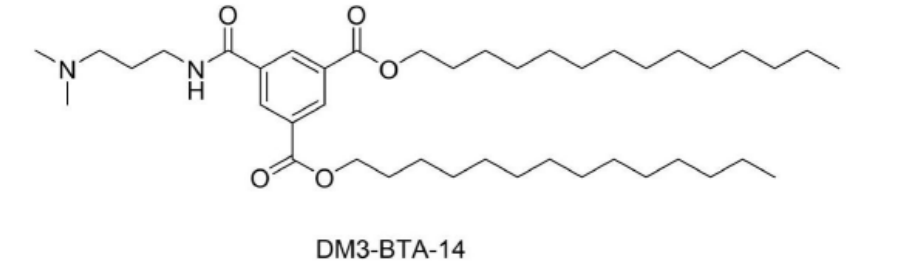
DM3-BTA-14 is a cationic lipid compound engineered for high-efficiency mRNA delivery developed by Hefei AlphaNA Biotechnology. Its structure features a rigid benzene-1,3,5-tricarboxamide core linked to a protonatable dimethylamino headgroup (-N(CH₃)₂) via a propylene spacer (-CH₂CH₂CH₂-) and two saturated C14 alkyl chains. This design enables ≈90% endosomal escape efficiency , superior lymph node targeting for vaccines , and effective tumor-specific mRNA delivery . It outperforms benchmark lipids while maintaining low cytotoxicity, forming stable nanoparticles with cholesterol/DSPC/DSPE-PEG (50:39:10:1 ratio) for therapeutic applications.
More description
|
|
| DC80065 | 113-O12B Featured |
113-O12B LNP, an LN-targeting LNP delivery system, is developed for a mRNA cancer vaccine.
More description
|
.gif)
|
| DC80080 | OF-C4-Deg-Lin Featured |
OF-C4-Deg-Lin is a novel ionizable lipid for RNA delivery.
More description
|

|
| DC80050 | LIPID A6 Featured |
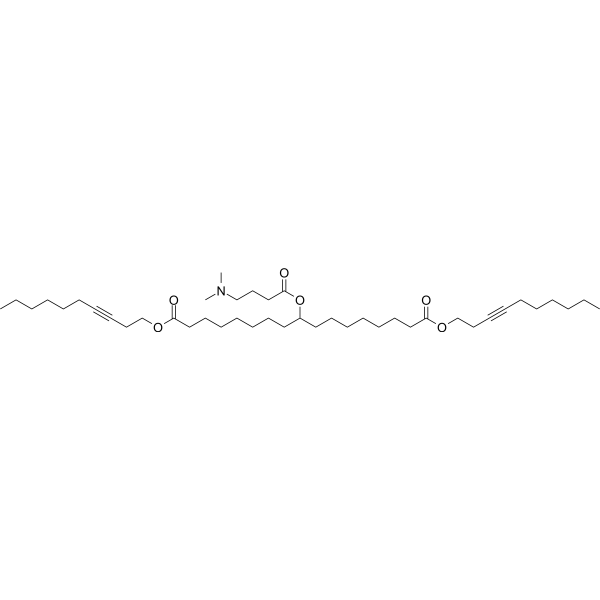
Lipid A6 is an ionizable cationic and biodegradable alkyne lipid (pKa = 6.65).It has been used with other lipids in the formation of lipid nanoparticles (LNPs) for the delivery of mRNA. LNPs containing lipid A6 and encapsulating mRNA encoding human erythropoietin (EPO) increase and then maintain homeostatic levels of hemoglobin in the blood in an adenine-induced mouse model of renal anemia.
More description
|
|
