 To enhance service speed and avoid tariff delays, we've opened a US warehouse. All US orders ship directly from our US facility.
| Cat. No. | Product Name | Field of Application | Chemical Structure |
|---|---|---|---|
| DC50065 | (S,R,S)-AHPC-CO-CI-Br Featured |
(S,R,S)-AHPC-CO-CI-Br is a novel protac building block,
More description
|

|
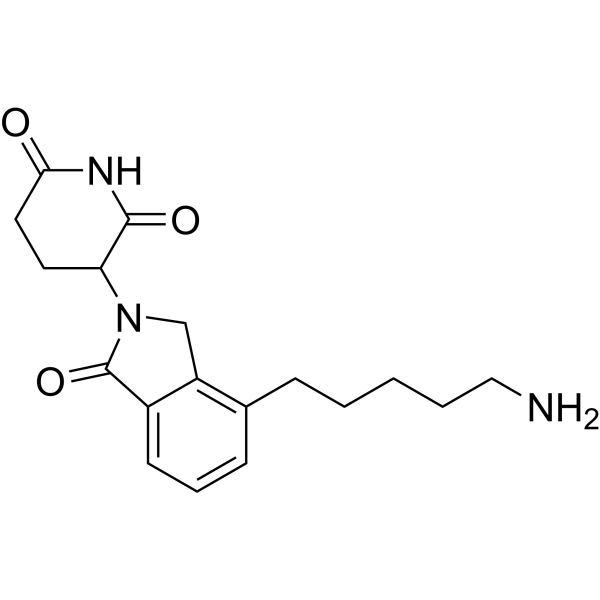
| DC11569 | E3 Ligand-Linker Conjugate 4 Featured |
E3 Ligand-Linker Conjugate 4 is the Lenalidomide-based Cereblon ligand used in the recruitment of CRBN protein. Lenalidomide-C5-NH2 can be connected to the ligand for protein by a linker to form PROTAC, such as MDM2 PROTAC degrader.
More description
|
|
| DC36456 | DMPAC-Chol Featured |
DMPAC-Chol is a cationic cholesterol derivative that has been used in liposome formation for gene transfection. Liposomes containing DMPAC-chol bind to DNA in a band shift assay and protect against serum nuclease degradation of DNA.
More description
|

|
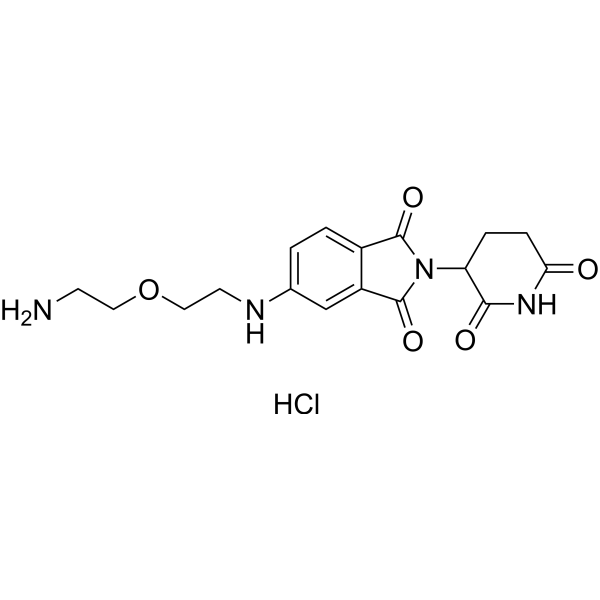
| DC67799 | Thalidomide-5-NH-PEG1-NH2 hydrochloride Featured |
Thalidomide-5-NH-PEG1-NH2 hydrochloride is a Thalidomide (HY-14658)-based cereblon ligand that recruits CRBN proteins.
More description
|
|
| DC67798 | 5-[(6-aminobutyl)amino]-2-(2,6-dioxo-3-piperidinyl)-1H-Isoindole-1,3(2H)-dione, Featured |
amino]-2-(2,6-dioxo-3-piperidinyl)-1H-Isoindole-1,3(2H)-dione,.gif)
|
|
| DC67796 | 6H-Thieno[3,2-f][1,2,4]triazolo[4,3-a][1,4]diazepine-6-acetic acid, 4-(4-chlorophenyl)-2,3,9-triMethyl-, (6R)- Featured |
-2,3,9-triMethyl-, (6R)-.gif)
|
|
| DC26169 | MS1943 Featured |
MS1943 is a first-in-class, orally bioavailable EZH2 selective degrader, with an IC50 of 120 nM. MS1943 significantly reduces EZH2 protein levels in numerous triple-negative breast cancer (TNBC) and other cancer and noncancerous cell lines.
More description
|

|
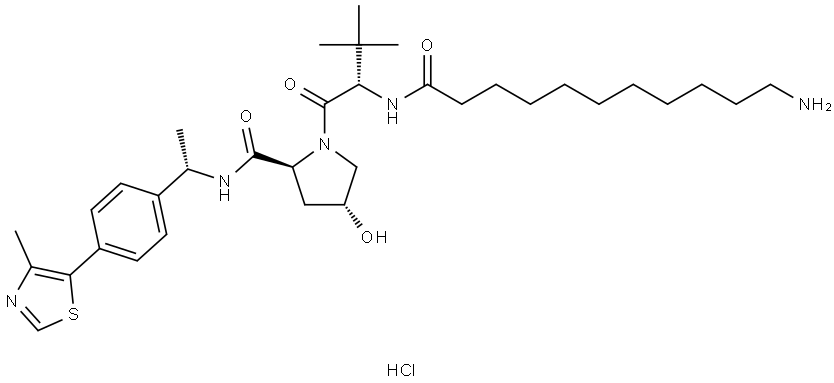
| DC67795 | INDEX NAME NOT YET ASSIGNED Featured |
|
|
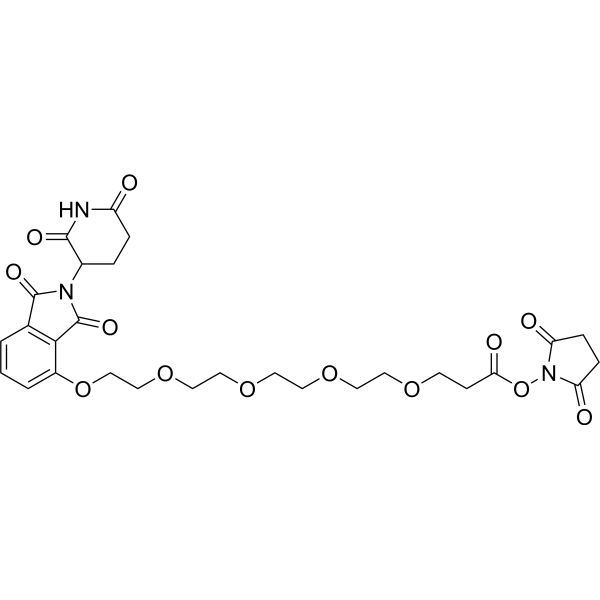
| DC67794 | Thalidomide-O-PEG4-NHS ester Featured |
Thalidomide-O-PEG4-NHS ester is a PEG-based PROTAC linker that can be used in the synthesis of PROTACs.
More description
|
|
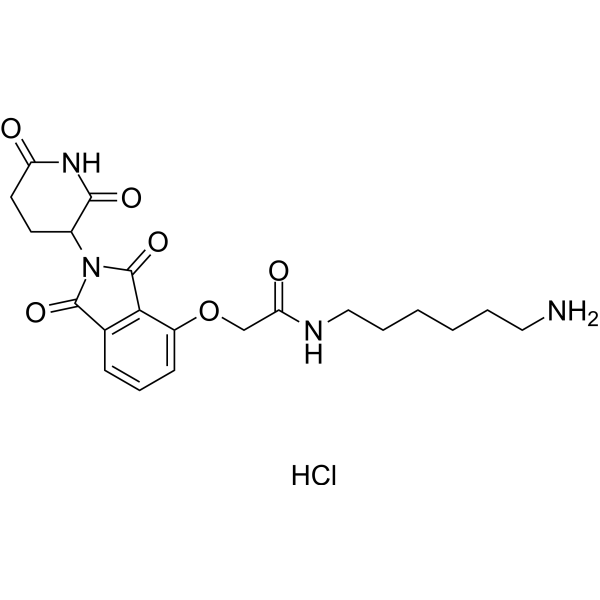
| DC67793 | Thalidomide-O-amido-C6-NH2 hydrochloride Featured |
Thalidomide-O-amido-C6-NH2 hydrochloride, a synthesized E3 ligase ligand-linker conjugate that incorporates the Thalidomide based cereblon ligand and a linker, can be used in the synthesis of PROTACs.
More description
|
|
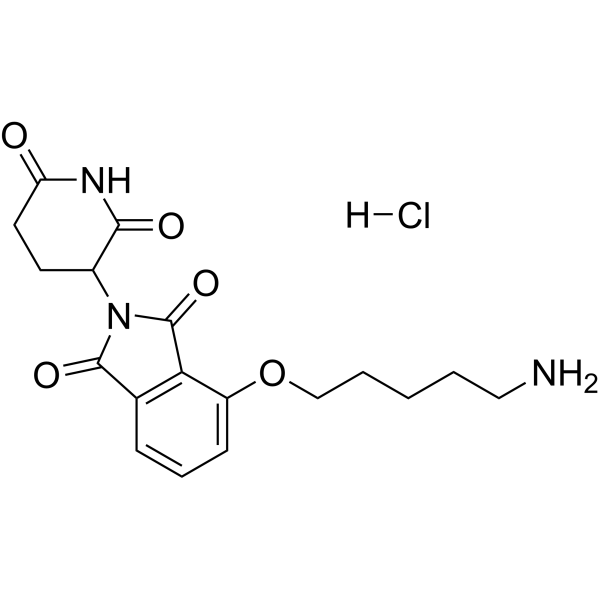
| DC45727 | Thalidomide-O-C5-NH2 hydrochloride Featured |
Thalidomide-O-C5-NH2 hydrochloride is a synthesized E3 ligase ligand-linker conjugate that incorporates the Thalidomide based cereblon ligand and a linker used in PROTAC technology.
More description
|
|
| DC8261 | (-)-JQ-1 Featured |
The (-)-JQ1 stereoisomer has no appreciable affinity to BET bromodomains,it is the negative control of +JQ-1.
More description
|

|
| DC5019 | (+)-JQ1 Featured |
(+)-JQ1 is a BET bromodomain inhibitor, binding to all bromodomains of the BET family, but not to bromodomains outside the BET family.
More description
|
-JQ-1.gif)
|
| DC67791 | 5-(Benzyloxy)pyridine-2-carboxylic Acid Featured |
pyridine-2-carboxylic Acid.gif)
|
|
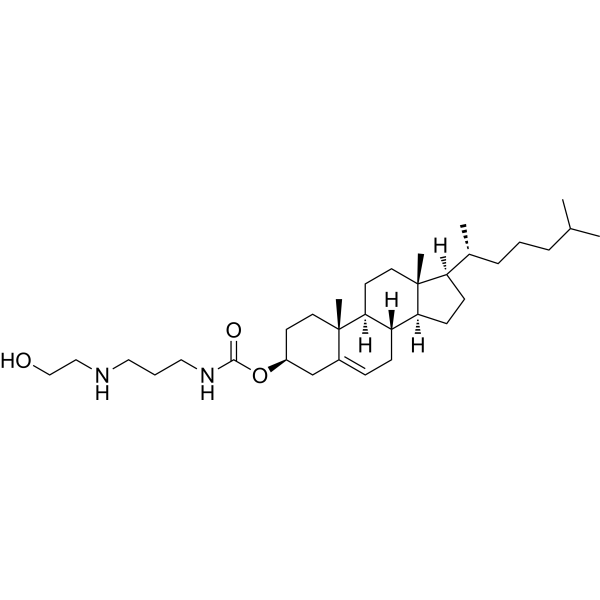
| DC36442 | HAPC-Chol Featured |
HAPC-Chol is a cationic cholesterol. HAPC-Chol, as part of a lipoplex with DOPE, has been used for siRNA delivery and gene silencing in MCF-7 cells in a luciferase assay without affecting cell viability. It has also been used to deliver siRNA into mice via intravenous injection, resulting in HAPC-chol accumulation in the lungs.
More description
|
|
| DC67786 | Benzoic acid, 2-(6-azaspiro[2.5]oct-6-yl)-4-iodo- Featured |
-4-iodo-.gif)
|
|
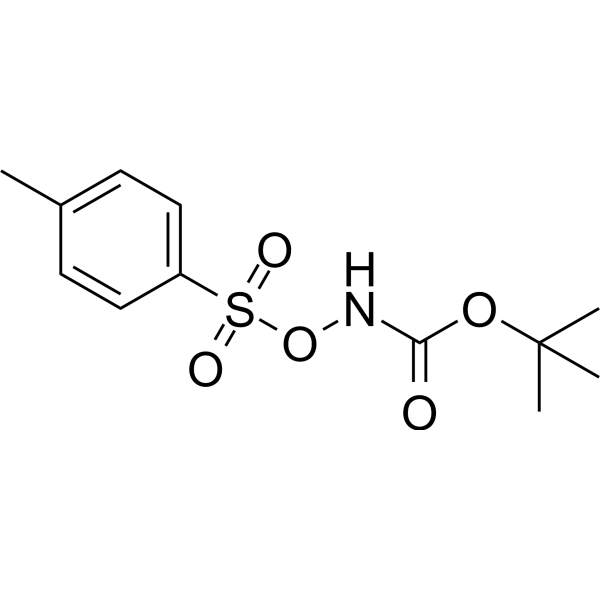
| DC67784 | N-Boc-O-tosyl hydroxylamine Featured |
N-Boc-O-tosyl hydroxylamine is used as a safe and efficient nitrogen source for the N-amination of aryl and alkyl amines.
More description
|
|
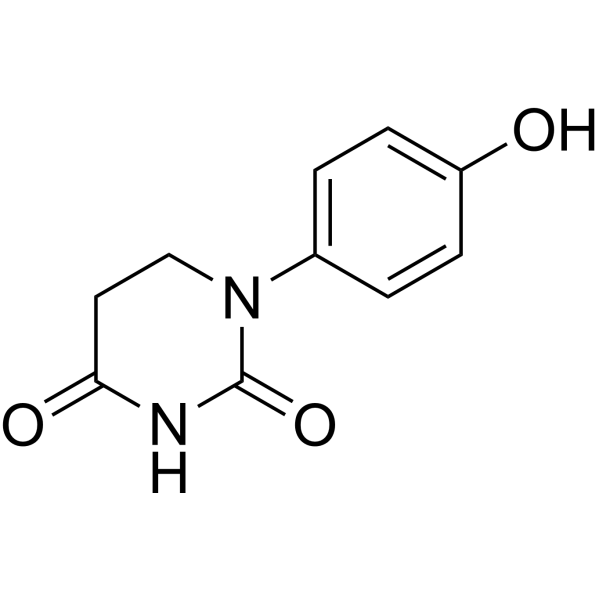
| DC67783 | CRBN ligand-225 Featured |
CRBN ligand-225 is an E3 ubiquitin ligase cereblon (CRBN) ligand used to recruit the cereblon protein.
More description
|
|
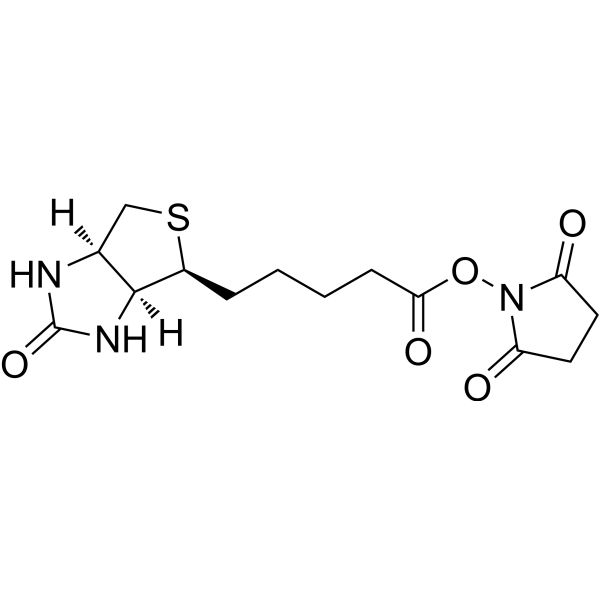
| DC67782 | Biotin NHS Featured |
Biotin NHS is an amino reactive biotin reagent used in the preparation of biotinylated surfaces or polypeptides.
More description
|
|
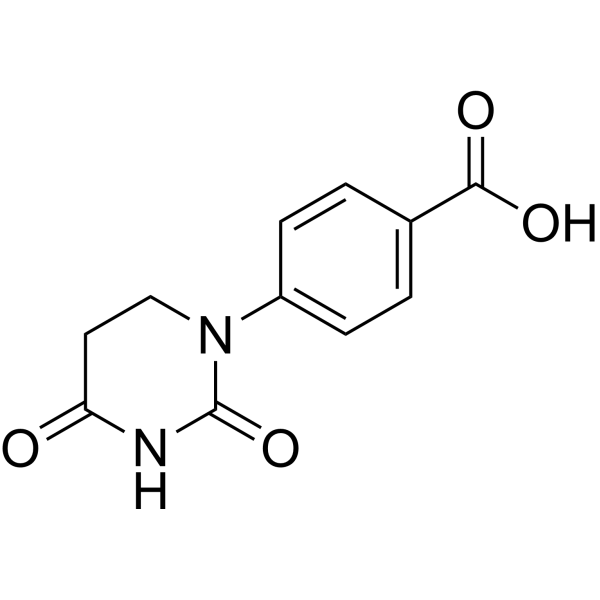
| DC67781 | CRBN ligand-224 Featured |
CRBN ligand-224 is an E3 ubiquitin ligase cereblon (CRBN) ligand used to recruit the cereblon protein. CRBN ligand-224 can be linked to a target protein ligand via a linker to form a PROTAC.
More description
|
|
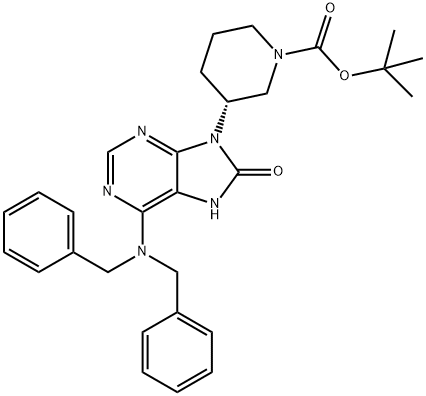
| DC67778 | Purine Related Compound 1 Featured |
|
|
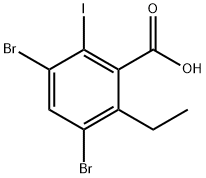
| DC67777 | Benzoic acid, 3,5-dibromo-2-ethyl-6-iodo- Featured |
|
|
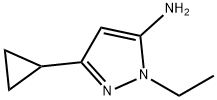
| DC67776 | 3-Cyclopropyl-1-ethyl-1H-pyrazol-5-amine Featured |
|
|
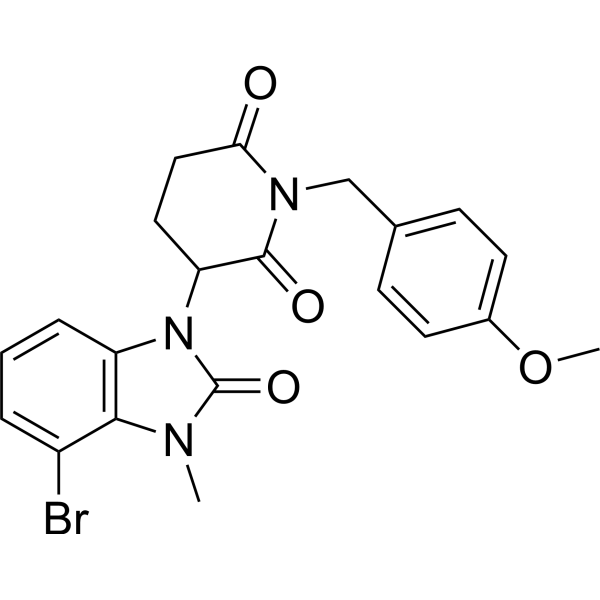
| DC67775 | E3 ligase Ligand 63-N-CH2-Ph-O-CH3 Featured |
E3 ligase Ligand 63-N-CH2-Ph-O-CH3 is an E3 ligase ligand-linker conjugate containing a CRBN-based ligand and linker, which can be used to synthesize PROTAC.
More description
|
|
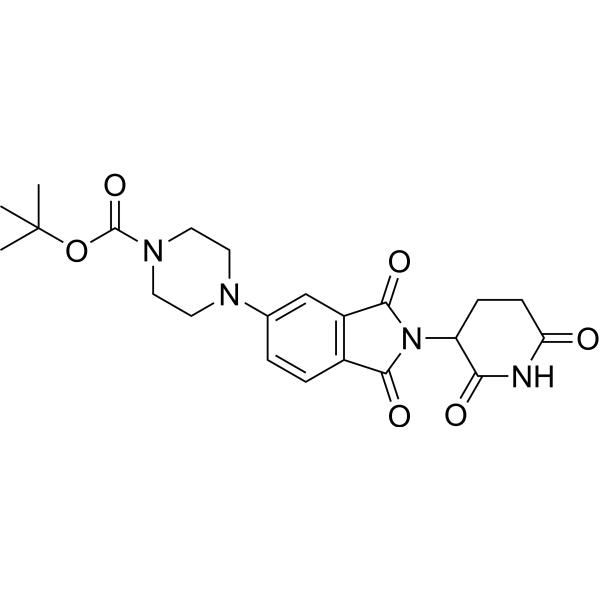
| DC45714 | Thalidomide-piperazine-Boc Featured |
Thalidomide-piperazine-Boc is an intermediate that can be used in the synthesis of B-cell lymphoma 6 protein (BCL6) PROTAC.
More description
|
|
| DC67773 | (S)-4-(2-Chloro-6-(iodomethyl)pyrimidin-4-YL)-3-methylmorpholine Featured |
-4-(2-chloro-6-(iodomethyl)pyrimidin-4-yl)-3-methylmorpholine.gif)
|
|
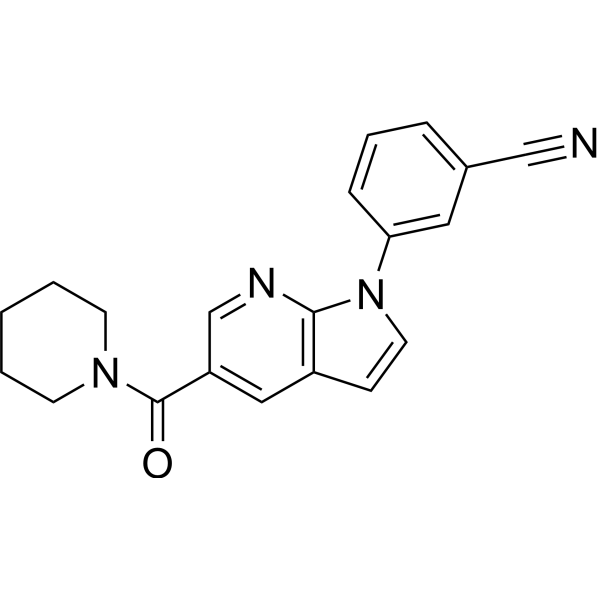
| DC78715 | MF-DH-300 Featured |
MF-DH-300 is a 15-PGDH inhibitor with an IC50 of 1.6 nM. MF-DH-300 blocks binding of 15-PGDH to PGE2 and increases stem cell proliferation and muscle force, as well as improves mitochondrial function. MF-DH-300 increases survival motor neuron (SMN) protein expression. MF-DH-300 can be used for muscle disorders like spinal muscular atrophy (SMA) research.
More description
|
|
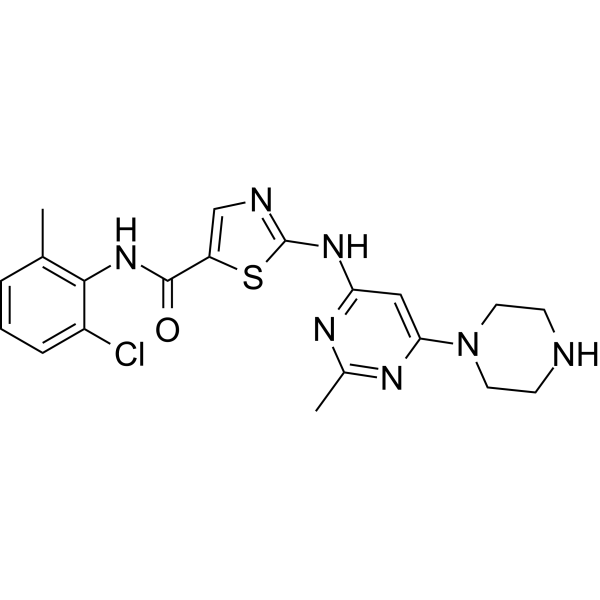
| DC67769 | N-Deshydroxyethyl Dasatinib Featured |
N-Deshydroxyethyl Dasatinib (N-Deshydroxyethyl BMS-354825) is a metabolite of Dasatinib, Dasatinib is a multi-kinase inhibitor that potently inhibits Bcr-Abl, Src family and platelet-derived growth factor receptor kinases.
More description
|
|
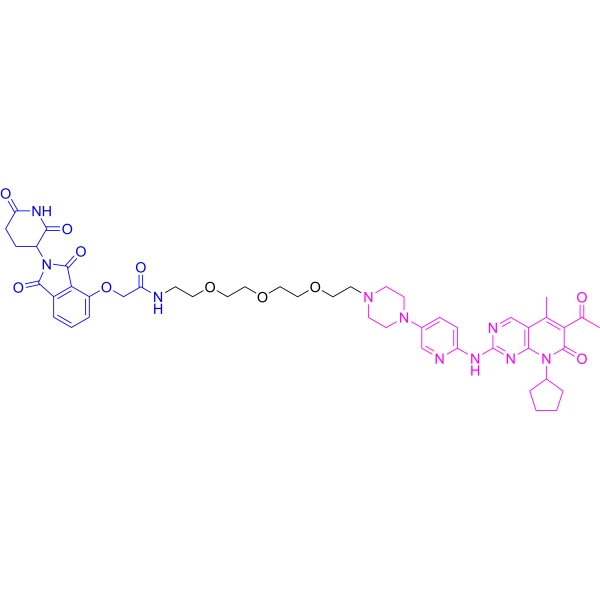
| DC12380 | BSJ-03-123 Featured |
BSJ-03-123 is a potent, CDK6-selective small-molecule degrader (PROTAC) that uniquely enables rapid pharmacological interrogation of CDK6-dependent functions.
More description
|
|
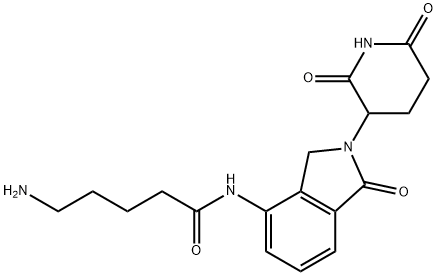
| DC67752 | 5-Amino-N-[2-(2,6-dioxo-3-piperidinyl)-2,3-dihydro-1-oxo-1H-isoindol-4-yl]pentanamide Featured |
|
