To enhance service speed and avoid tariff delays, we've opened a US warehouse. All US orders ship directly from our US facility.
| Cat. No. | Product Name | Field of Application | Chemical Structure |
|---|---|---|---|
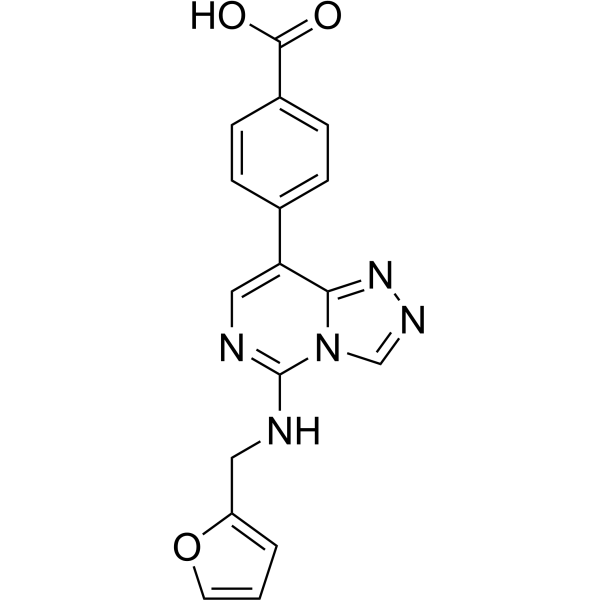
| DC60277 | Eed226-cooh Featured |
EED226-COOH is an EED226-derived ligand for target protein EED ligand for PROTAC, binds to a ligand for VHL via linker to form UNC6852 (HY-130708) to degrade PRC2.
More description
|
|
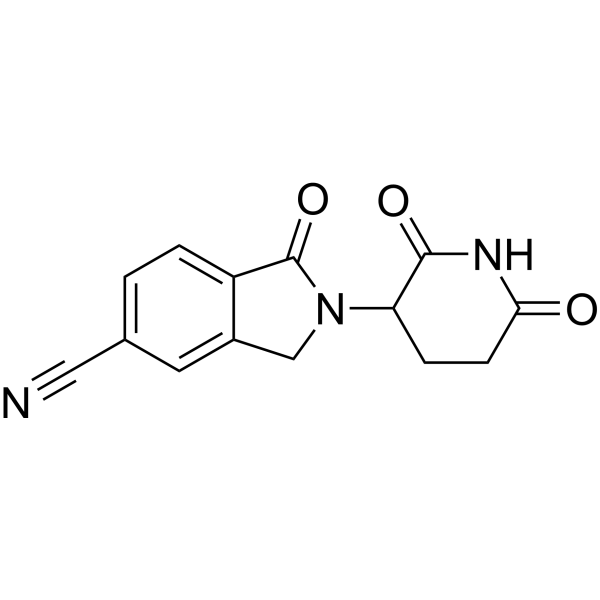
| DC67750 | Desamino lenalidomide-5-acetonitrile Featured |
Desamino lenalidomide-5-acetonitrile is an E3 ubiquitin ligase cereblon (CRBN) ligand used to recruit the cereblon protein. Desamino lenalidomide-5-acetonitrile can be linked to a target protein ligand via a linker to form a PROTAC.
More description
|
|
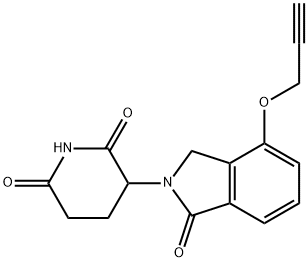
| DC67747 | 2,6-Piperidinedione, 3-[1,3-dihydro-1-oxo-4-(2-propyn-1-yloxy)-2H-isoindol-2-yl]- Featured |
|
|
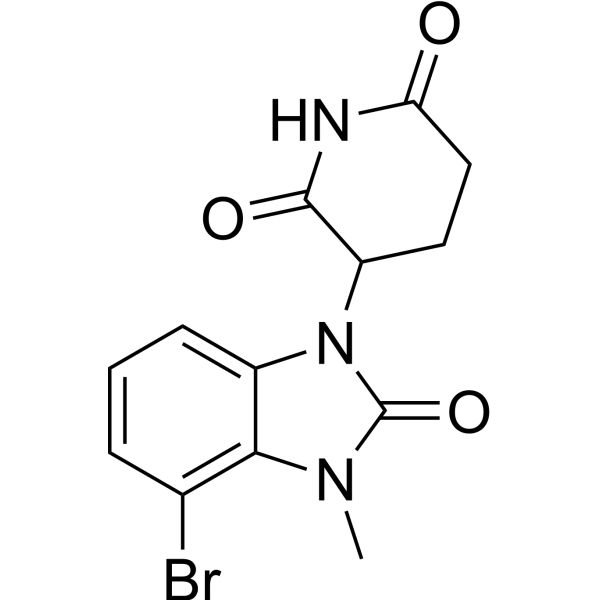
| DC67746 | E3 ligase Ligand 63 Featured |
E3 ligase Ligand 63 is an E3 ligase ligand that can be used to synthesize CDK2 degrader 2 (HY-163815).
More description
|
|
| DC70978 | Thalidomide-piperazine hydrochloride Featured |
Thalidomide-piperazine hydrochloride represents a chemically modified derivative of the prototypic immunomodulatory drug, featuring a piperazine moiety that enhances solubility while preserving the compound's unique biological properties.
More description
|

|
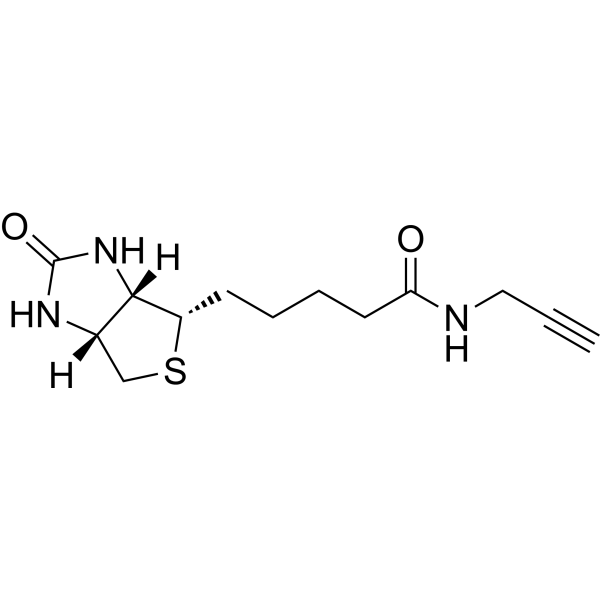
| DC33984 | Biotin alkyne Featured |
Biotin alkyne for the preparation of various biotinylated conjugates via Click Chemistry.
This alkyne reacts with various azides, including biomolecules containing azide groups. Biotinylated conjugates can be used for various assays and applications requiring affinity binding.
Our recommended protocol can be used for the conjugation.
More description
|
|
| DC50073 | (S,R,S)-AHPC-PEG3-NH2 hydrochloride(E3 ligase Ligand-Linker Conjugates 5) Featured |
(S,R,S)-AHPC-PEG3-NH2 hydrochloride is a synthesized E3 ligase ligand-linker conjugate that incorporates the (S,R,S)-AHPC based VHL ligand and 3-unit PEG linker used in PROTAC technology.
More description
|
-AHPC-PEG3-NH2 hydrochloride.gif)
|
| DC7150 | Birabresib (OTX015) Featured |
OTX-015 is a new potent BRD2/3/4 inhibitor with evident anti-proliferative activity in several cell lines representative of mature B-cell tumors.
More description
|

|
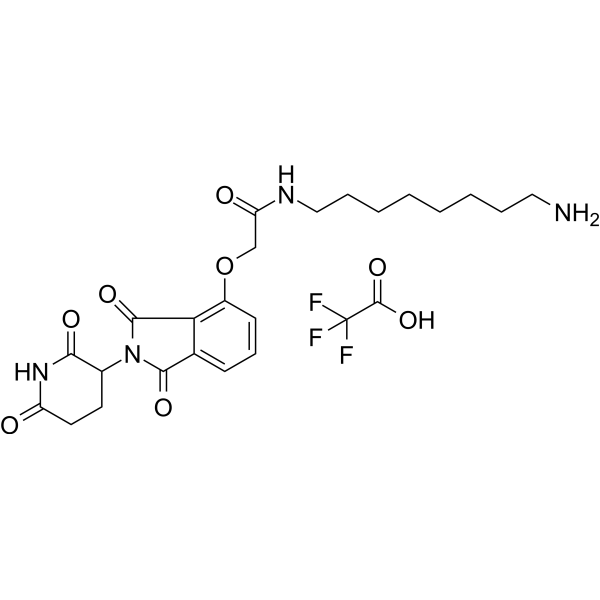
| DC12675 | E3 ligase Ligand-Linker Conjugates 17 Featured |
E3 ligase Ligand-Linker Conjugates 17 is a synthesized compound that incorporates an E3 ligase ligand and a linker used in PROTAC technology.
More description
|
|
| DC50071 | (S,R,S)-AHPC-PEG2-NH2 hydrochloride Featured |
(S,R,S)-AHPC-PEG2-NH2 hydrochloride (VH032-PEG2-NH2 hydrochloride) is a synthesized E3 ligase ligand-linker conjugate that incorporates the (S,R,S)-AHPC based VHL ligand and 2-unit PEG linker used in the synthesis of PROTACs.
More description
|
-AHPC-PEG2-NH2 hydrochloride.gif)
|
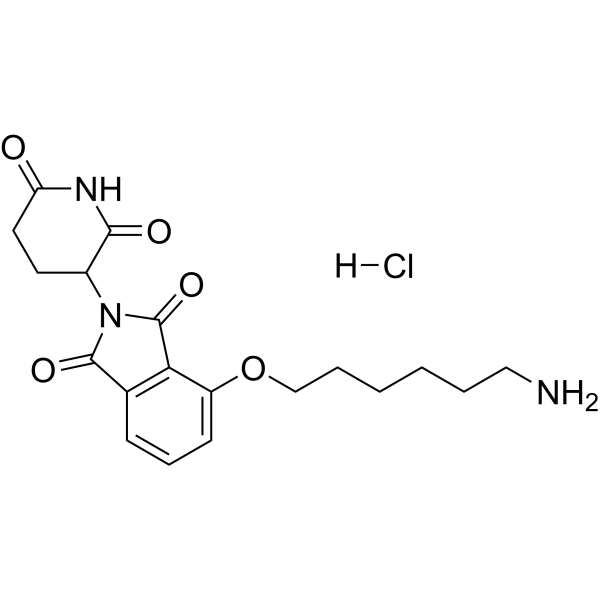
| DC67737 | Thalidomide-O-C6-NH2 hydrochloride Featured |
Thalidomide-4-O-C6-NH2 hydrochloride is a synthesized E3 ligase ligand-linker conjugate used in the PROTAC dTAG-13, a degrader of FKBP12F36V and BET.
More description
|
|
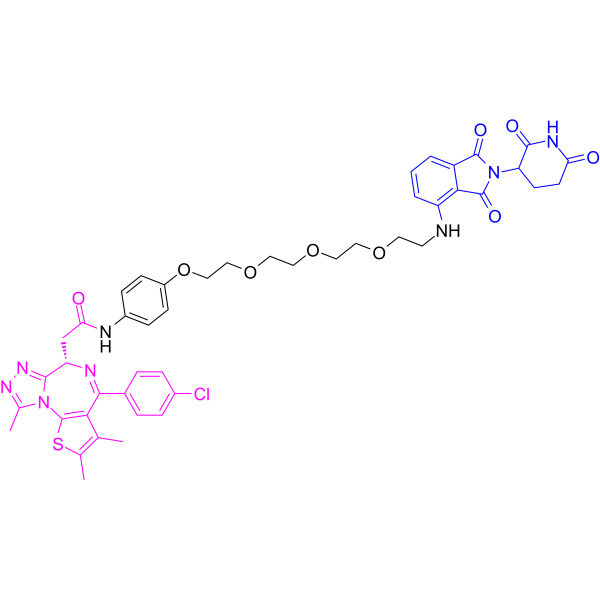
| DC12024 | ARV-825 Featured |
ARV-825 is a BRD4 Inhibitor based on PROTAC technology. ARV-825 binds to BD1 and BD2 of BRD4 with Kds of 90 and 28 nM, respectively.
More description
|
|
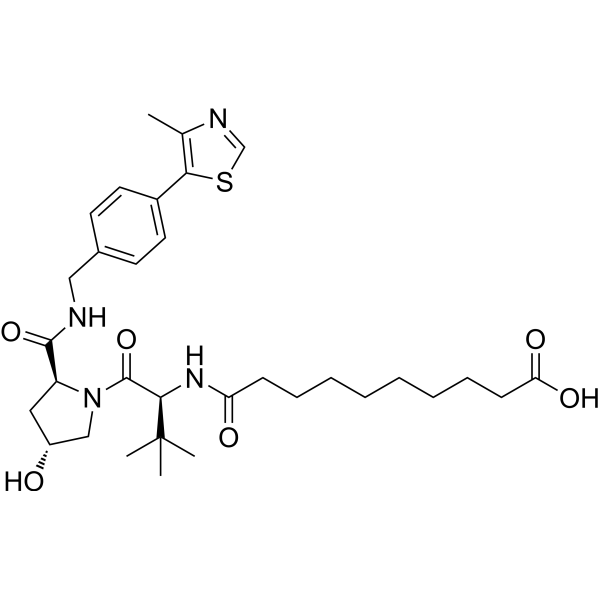
| DC67735 | VH032-C7-COOH Featured |
VH032-C7-COOH is a functionalized von-Hippel-Lindau (VHL) protein ligand for PROTAC research and development. VH032-C7-COOH contains an E3 ligase ligand and an alkyl linker with a terminal amine for conjugation of target protein ligands.
More description
|
|
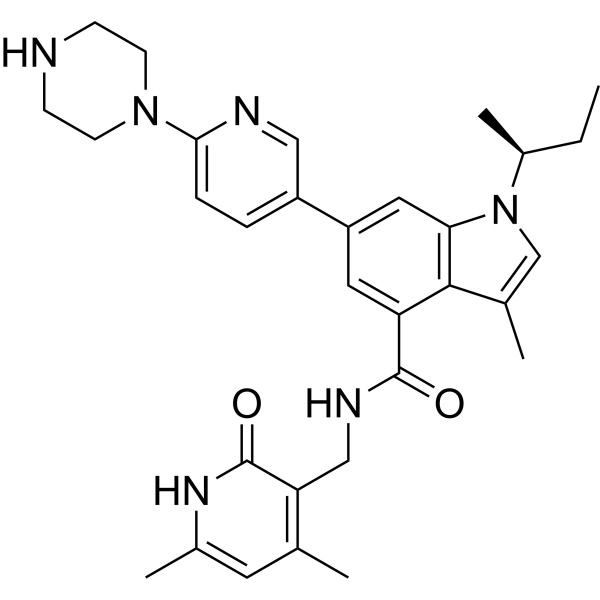
| DC7042 | GSK-126 Featured |
GSK126 is a potent, highly selective, S-adenosyl-methionine-competitive, small-molecule inhibitor of EZH2 methyltransferase with Ki value of 0.5 nM.
More description
|
|
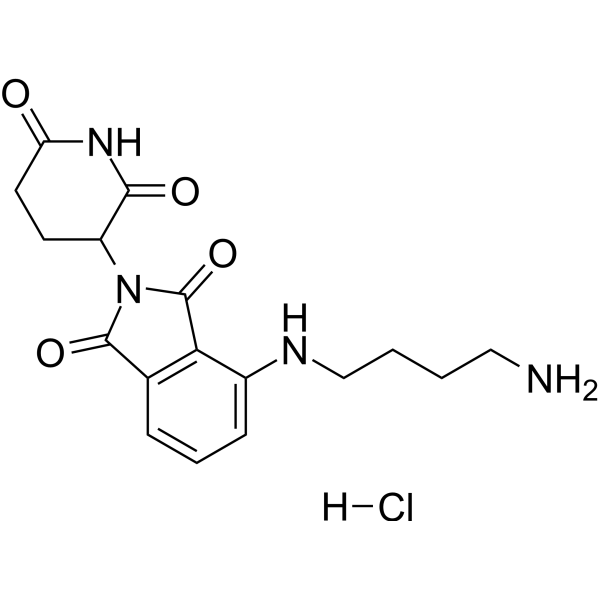
| DC45721 | Pomalidomide-C4-NH2 hydrochloride Featured |
Pomalidomide-C4-NH2 hydrochloride is a synthesized E3 ligase ligand-linker conjugate that incorporates the Pomalidomide based cereblon ligand and a linker used in PROTAC technology.
More description
|
|
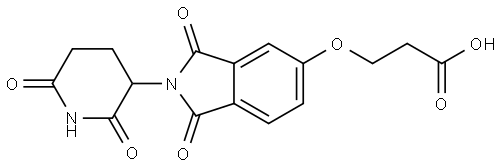
| DC67732 | 3-((2-(2,6-Dioxopiperidin-3-yl)-1,3-dioxoisoindolin-5-yl)oxy)propanoic acid Featured |
|
|
| DC47886 | Thalidomide-Piperazine 5-fluoride Featured |
Thalidomide-Piperazine 5-fluoride is a synthesized E3 ligase ligand-linker conjugate that incorporates the Thalidomide based cereblon ligand and a linker used in PROTAC technology.
More description
|

|
| DC67699 | 2-(2,6-dioxopiperidin-3-yl)-1-oxo-2,3-dihydro-1H-isoindole-4-carboxylic acid Featured |
2-(2,6-dioxopiperidin-3-yl)-1-oxo-2,3-dihydro-1H-isoindole-4-carboxylic acid is a lenalidomide analog that can be useful in PROTAC research.
More description
|
-1-oxo-2,3-dihydro-1H-isoindole-4-carboxylic acid.jpg)
|
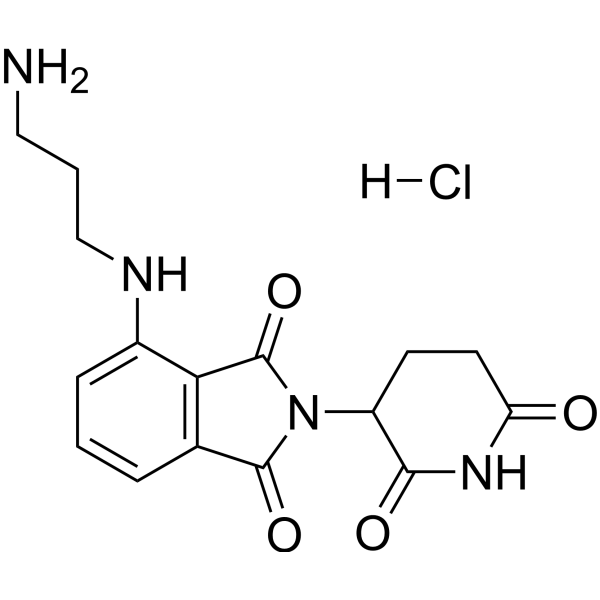
| DC45706 | Pomalidomide-C3-NH2 hydrochloride Featured |
Pomalidomide-C3-NH2 hydrochloride is a synthesized E3 ligase ligand-linker conjugate that incorporates the Pomalidomide based cereblon ligand and a linker used in PROTAC technology.
More description
|
|
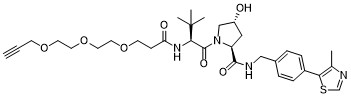
| DC67730 | VHN22300 Featured |
VHN22300, also known as (S,R,S)-AHPC-PEG3-Alkyne, is a ProTAC building block. This conjugate contains a von Hippel-Lindau (VHL)-recruiting ligand and a PEGylated crosslinker with pendant alkyne for click chemistry with an azide on the target ligand. When used with other protein degrader building blocks with a pendant alkyne group, parallel synthesis can be used to more quickly generate ProTAC libraries that feature variation in crosslinker length, composition, and E3 ligase ligand.
More description
|
|
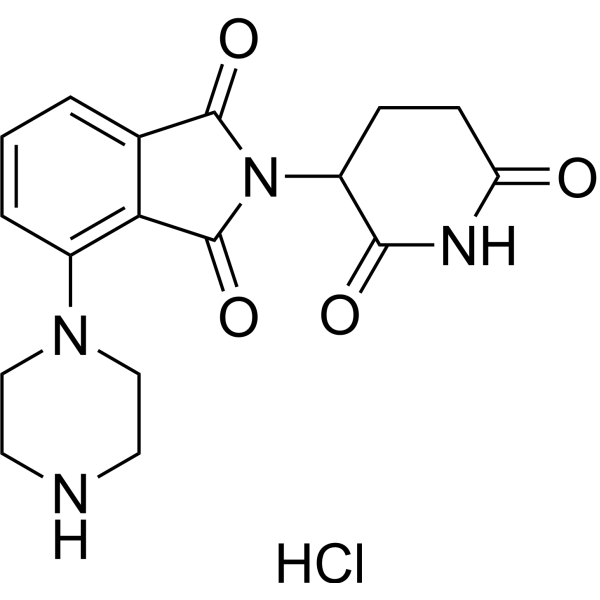
| DC67728 | Pomalidomide-piperazine hydrochloride Featured |
Pomalidomide-piperazine hydrochloride is an E3 ligase ligand-linker conjugate containing a CRBN-based ligand and linker, which can be used to synthesize PROTAC.
More description
|
|
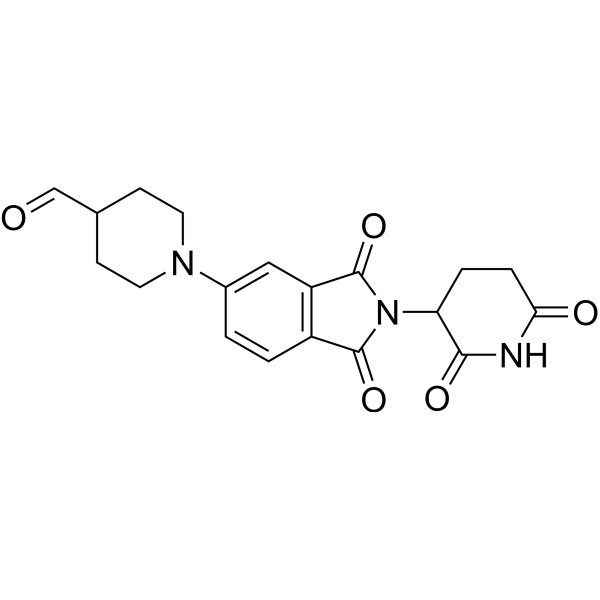
| DC67726 | BWA-522 intermediate-1 Featured |
BWA-522 intermediate-1 is an intermediate in the synthesis of PROTAC BWA-522 (HY-149433) and serves as a ligand molecule for cereblon E3 ubiquitin ligase. BWA-522 is an orally active small molecule protein-targeting chimera (PROTAC) that has significant degradation effects on AR-FL and AR-V7.
More description
|
|
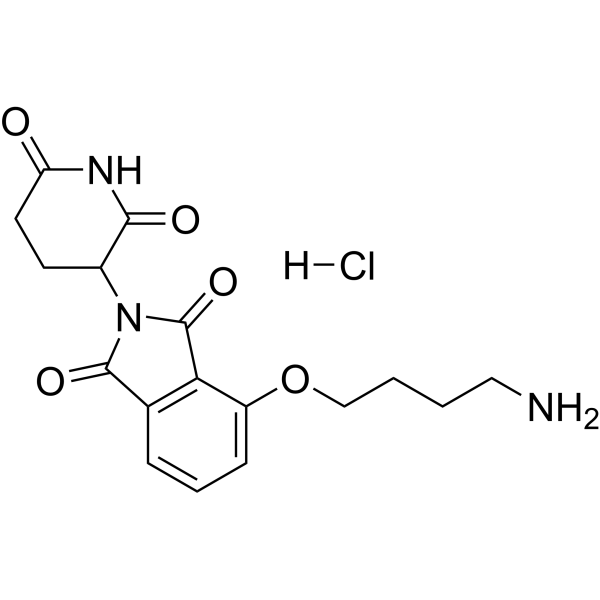
| DC67725 | Thalidomide-4-O-C4-NH2 hydrochloride Featured |
Thalidomide-4-O-C4-NH2 hydrochloride is a synthesized E3 ligase ligand-linker conjugate that incorporates the Thalidomide (HY-14658) based cereblon ligand and a linker used in PROTAC technology.
More description
|
|
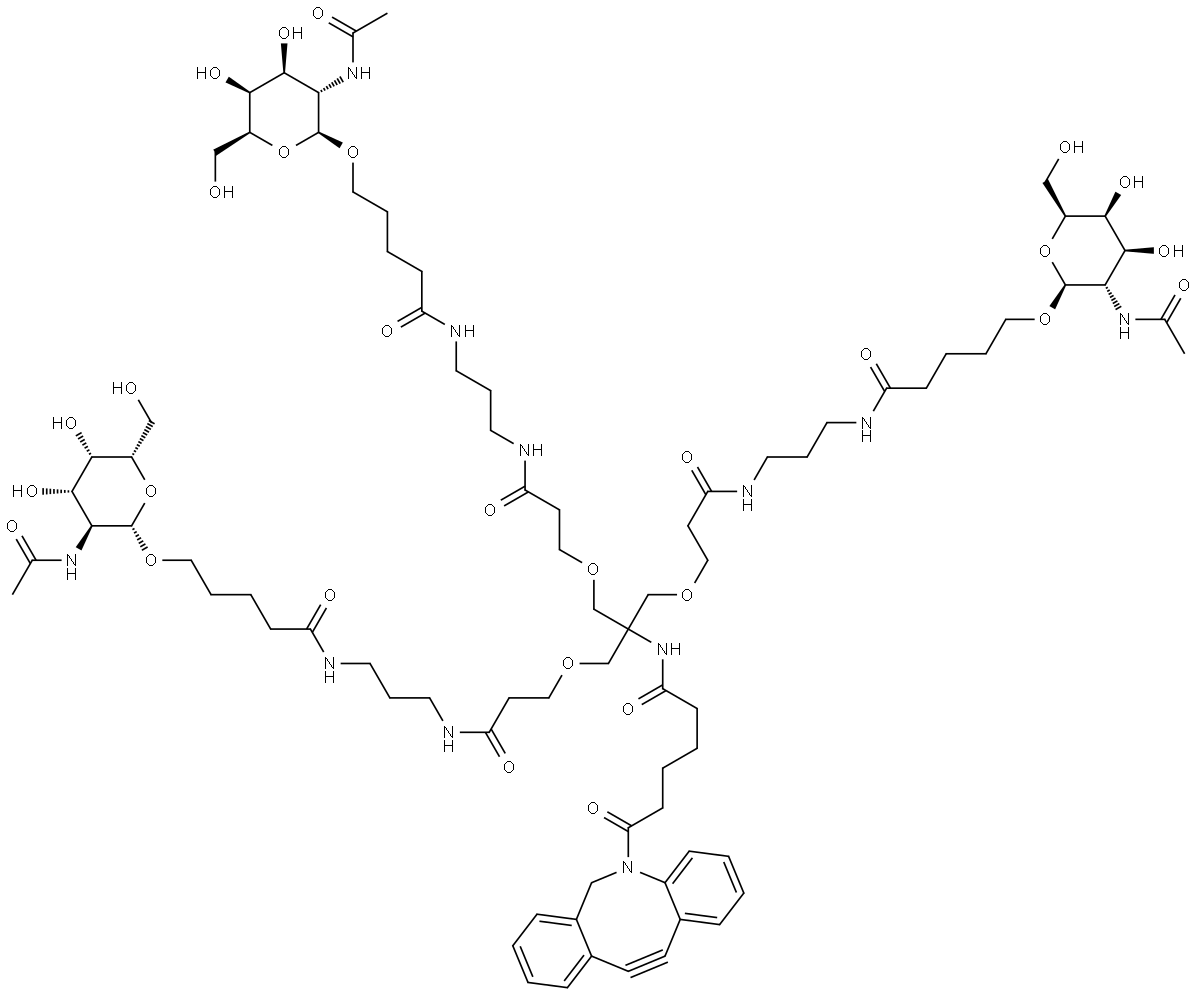
| DC60913 | Tri-GalNAc-DBCO Featured |
Tri-GalNAc-DBCO is a PIP-GalNAc coupling compound that binds ASGPR to drive protein down-regulation and target compounds for protein degradation via copper-free strain-promoted azide-alkyne cycloaddition coupled to azide on a non-specifically labeled antibody.
More description
|
|
| DC49350 | M-MoDE-A (2) Featured |
M-MoDE-A (2) is a bifunctional small molecule that mediates the degradation of extracellular proteins through the asialoglycoprotein receptor (ASGPR).
More description
|
.png)
|
| DC49347 | D-MoDE-A (1) Featured |
D-MoDE-A (1) is a bifunctional small molecule that mediates the degradation of extracellular proteins through the asialoglycoprotein receptor (ASGPR).
More description
|
.png)
|
| DC67080 | Tri-GalNAc(OAc)3-Perfluorophenyl Featured |
Tri-GalNAc(OAc)3-Perfluorophenyl is a pentafluorophenyl modified Tri-GalNAc(OAc)3 (HY-148118), a tri-GalNAc ligand that can be used for the synthesis of GalNAc-LYTAC. GalNAc-LYTAC engages the asialoglycoprotein receptor for targeted protein degradation. tri-GalNAc: triantenerrary N-acetylgalactosamine; LYTAC: lysosome-targeting chimera.
More description
|

|
| DC65965 | Tri-GalNAc(OAc)3 Featured |
Tri-GalNAc(OAc)3 is a triantenerrary N-acetylgalactosamine (tri-GalNAc) with an amino group, which is useful precursor for synthesis of GalNAc-LYTAC that engage the asialoglycoprotein receptor for targeted protein degradation. Tri-GalNAc(OAc)3 was first reported in Nat Chem Biol. 2021 Sep;17(9):937-946 (compound ). This product has no formal name at the moment.
More description
|

|
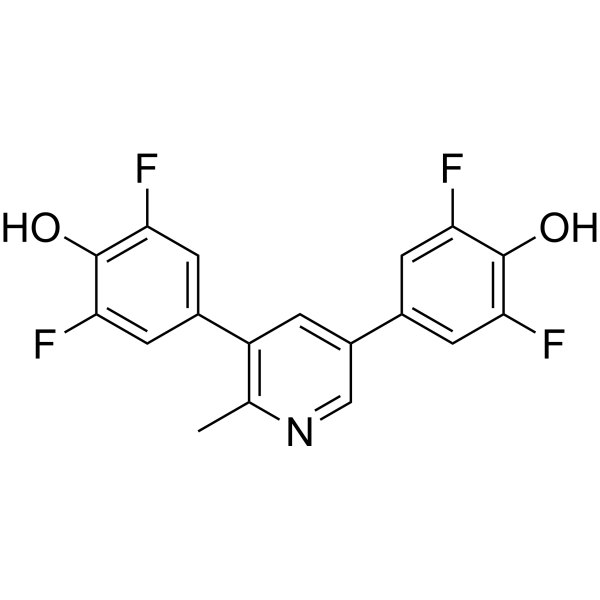
| DC45616 | VRK-IN-1 Featured |
VRK-IN-1 is a potent and selective inhibitor of vaccinia-related kinases 1 (VRK1), with an IC50 of 150 nM. VRK1 is human Ser/Thr protein kinases associated with increased cell division and neurological disorders.
More description
|
|
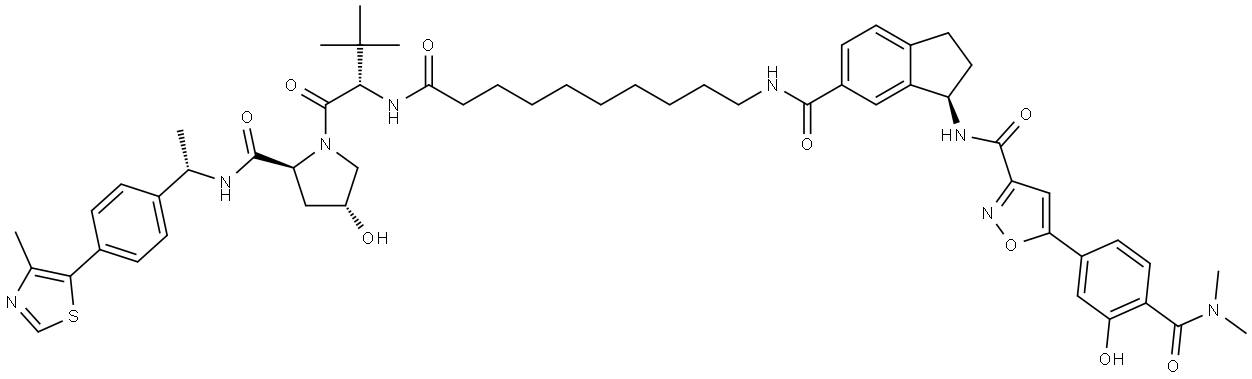
| DC60902 | MS41 Featured |
MS41 is a selective eleven-nineteen leukemia (ENL) PROTAC degrader, with DC50s of 3.50 nM (MV4;11), 2.84 nM (SEMK2), 3.03 nM (Jurkat), and 26.58 nM (KASUMI1), respectively. MS41 effectively inhibits the growth of ENL-dependent leukemia cells, induces G1 cell cycle arrest and increases apoptosis. MS41 reduces the chromatin occupancy of ENL-associated transcription elongation machinery, and suppresses oncogenic gene expression and leukemia progression.
More description
|
|