To enhance service speed and avoid tariff delays, we've opened a US warehouse. All US orders ship directly from our US facility.
| Cat. No. | Product Name | Field of Application | Chemical Structure |
|---|---|---|---|
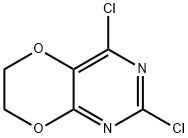
| DC68186 | AB639552 Featured |
|
|
| DC79876 | (±)-U-50488 Featured |
(±)-U-50488 ((±)-trans-(1R,2R)-U-50488) is a selective kappa opioid receptor agonist. (±)-U-50488 can improve symptoms related to status epilepticus, but has no significant effect on spontaneous seizure episodes. (±)-U-50488 can be used for research of epilepsy.
More description
|
-U-50488.gif)
|
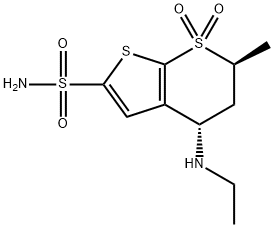
| DC31663 | UNII 9JDX055TW1 Featured |
Dorzolamide is a carbonic anhydrase inhibitor. It is an anti-glaucoma agent, and acts by decreasing the production of aqueous humour. It is administered as a topical ophthalmic in the form of a 2% solution.
More description
|
|
| DC68204 | Eloralintide Featured |
Eloralintide (LY-3841136) is an amylin receptor agonist with human AMY1R EC50 23.9 pM and human AMY3R EC50 253.8 pM. Eloralintide induces decreased appetite, reduced food intake, body weight and fat mass loss, prolonged plasma calcium2+ reduction, and weak conditioned taste avoidance.
More description
|

|
| DC12631 | IM176OUT05 Featured |
IM176OUT05 is a novel, and safe small molecule that improves the acquisition and maintenance of stem cell pluripotency, inhibits electron transport chain (ETC) in the A549 lung carcinoma cell line with IC50 of 3.2 uM.
More description
|

|
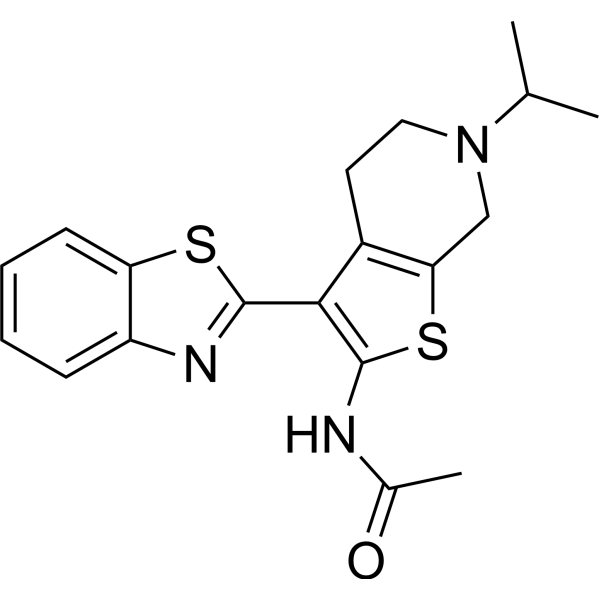
| DC68203 | APE1-IN-1 Featured |
APE1-IN-1 is a potent and blood-brain barrier (BBB) penetrant apurinic/apyrimidinic (AP) endonuclease 1 (APE1) inhibitor with an IC50 value of 2 μM. APE1-IN-1 can potentiate the cytotoxicity of the alkylating agents Methylmethane sulfonate and Temozolomide (HY-17364) to cancer cell.
More description
|
|
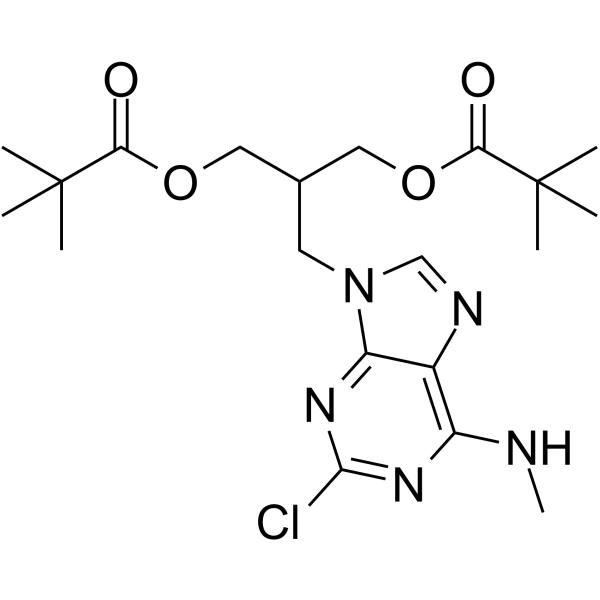
| DC49652 | MRS2395 Featured |
MRS2395, an dipivaloyl derivative, is a potent P2Y12 receptor antagonist. MRS2395 inhibits ADP-induced platelet activation with a Ki of 3.6 μM. MRS2395 inhibits cAMP induced by ADP in rat platelets in the presence of PGE1 with an IC50 of 7 µM. MRS2395 enhances platelet dense granule release in response to TRAP-6.
More description
|
|
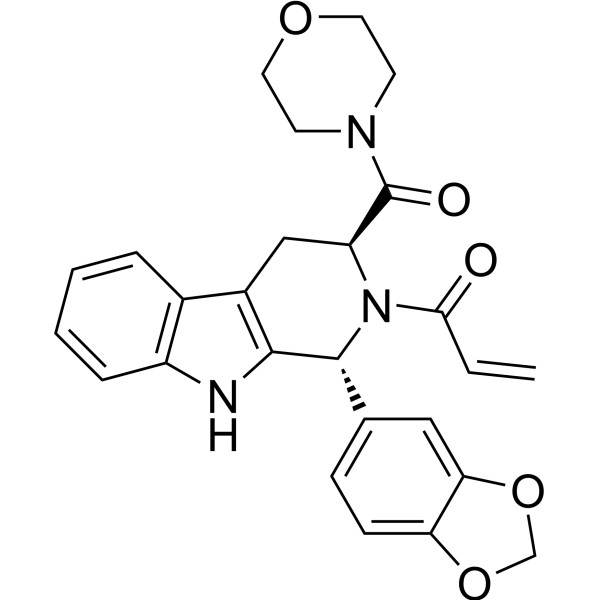
| DC81747 | WX-02-23 Featured |
WX-02-23 is a small-molecule probe that stereoselectively and site-specifically binds to C258 of FOXA1 and C1111 of SF3B1. WX-02-23 remodels FOXA1's chromatin binding and pioneer activity in a DNA-dependent manner, disrupts spliceosome assembly, and enhances the thermal stability of SF3B1. WX-02-23 inhibits tumor cell proliferation and induces apoptosis. WX-02-23 can be used for research on cancers such as prostate cancer.
More description
|
|
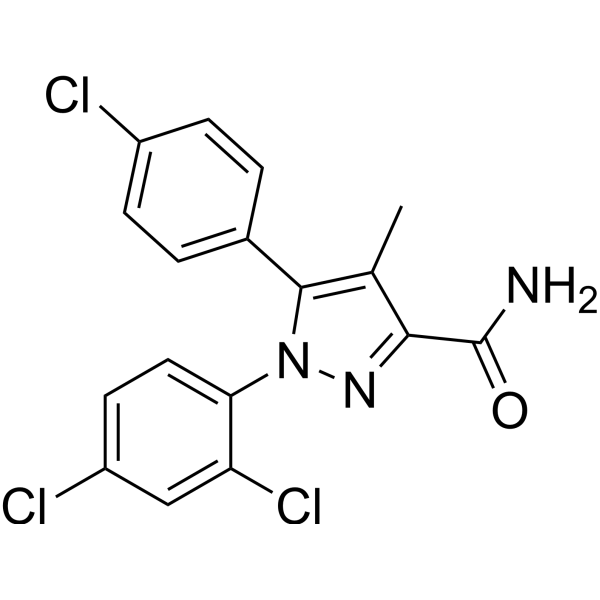
| DC32882 | AM4113 Featured |
AM4113 is a cannabinoid receptor 1 (CB1)-selective antagonist.
More description
|
|
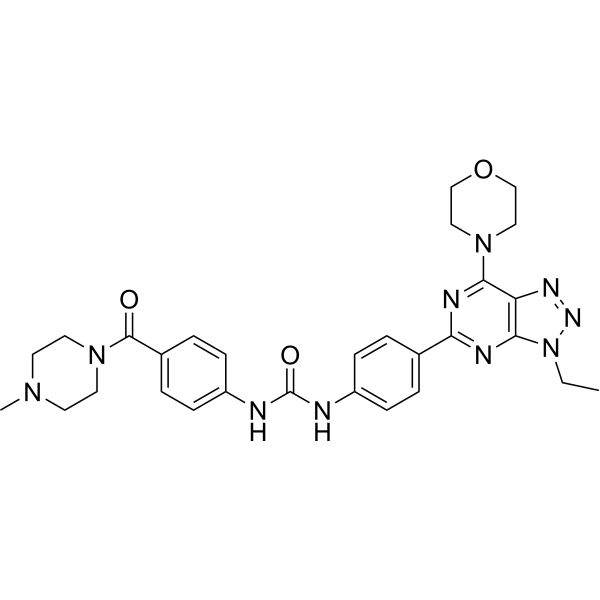
| DC7123 | PKI-402 Featured |
PKI-402 is a potent dual pan-PI3K/mTOR inhibitor targeting PI3Kα/β/γ/δ and mTOR with IC50 of 2 nM/7 nM/16 nM/14 nM and 3 nM, respectively; also potent to PI3Kα mutants E545K and H1047R.
More description
|
|
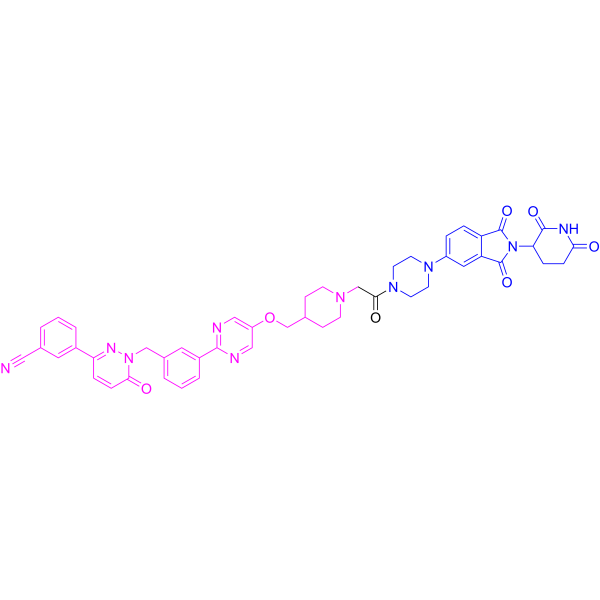
| DC81346 | PROTAC c-Met Degrader-4 Featured |
PROTAC c-Met Degrader-4 (compound D15) is a potent orally active PROTAC c-MET degrader. PROTAC c-Met Degrader-4 demonstrates excellent intracellular degradation potency with a DC50 < 0.5 nM. PROTAC c-Met Degrader-4 induces cell cycle arrest and apoptosis, inhibits cell invasion and migration, thereby suppressing cell proliferation. PROTAC c-Met Degrader-4 inhibits the growth of Hs746T xenograft tumors in nude mice. PROTAC c-Met Degrader-4 can be used for cancer research, such as non-small cell lung cancer and gastric cancer.
More description
|
|
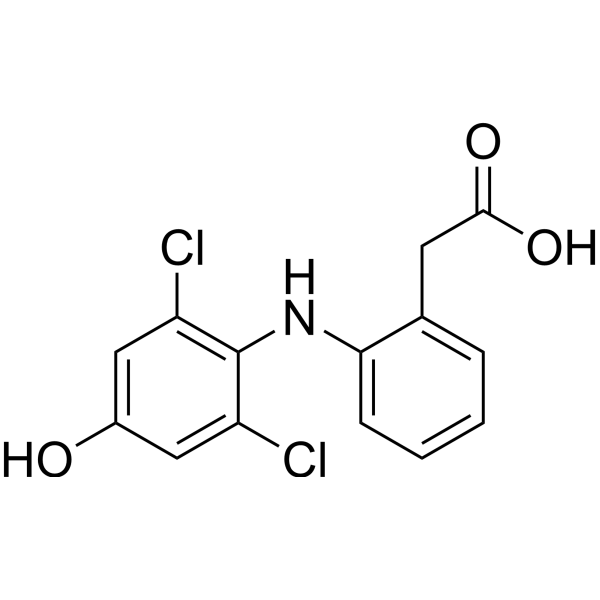
| DC41081 | 4'-Hydroxy diclofenac Featured |
4'-Hydroxy diclofenac is an orally active metabolite of Diclofenac by cytochrome P450 2C9 (CYP2C9). 4'-Hydroxy diclofenac has anti-inflammatory and analgesic properties.
More description
|
|
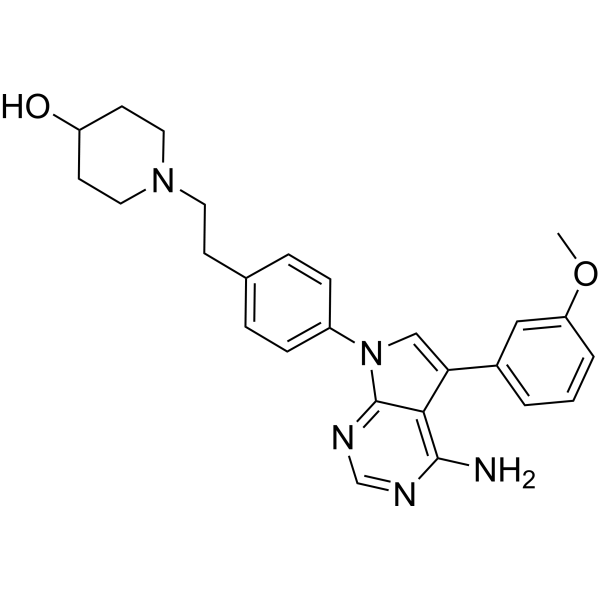
| DC32842 | CGP-77675 Featured |
CGP-77675 is a potent and selective Src family kinase (SFK) inhibitor. CGP-77675 inhibited phosphorylation of peptide substrates and autophosphorylation of purified Src (IC50: 5-20 and 40 nM, respectively). The dual inhibition of Src and GSK-3 signaling by CGP 77675 and CHIR 99021 was found to maintain mouse embryonic stem cell (mESC) self-renewal and pluripotency marker expression as efficiently as the dual inhibition of MAPK and GSK-3 by PD 0325901 and CHIR 99021.
More description
|
|
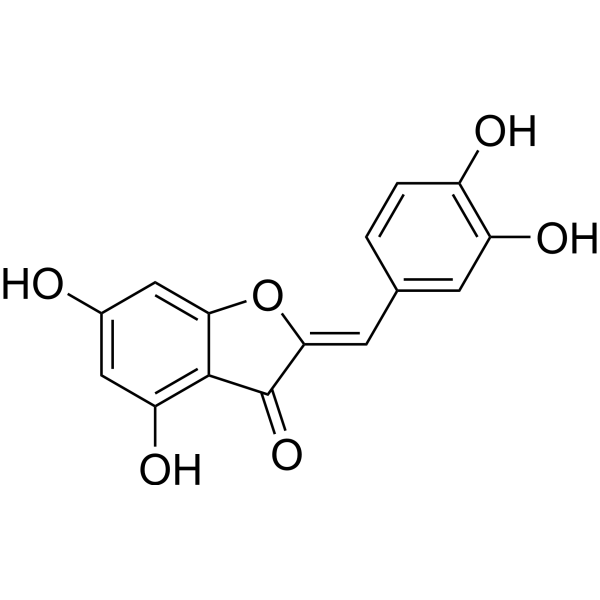
| DCC0786 | Aureusidin Featured |
Aureusidin is an aurone with high antioxidant and lipoxygenase inhibitory activity. Aureusidin also shows anti-inflammatory effects.
More description
|
|
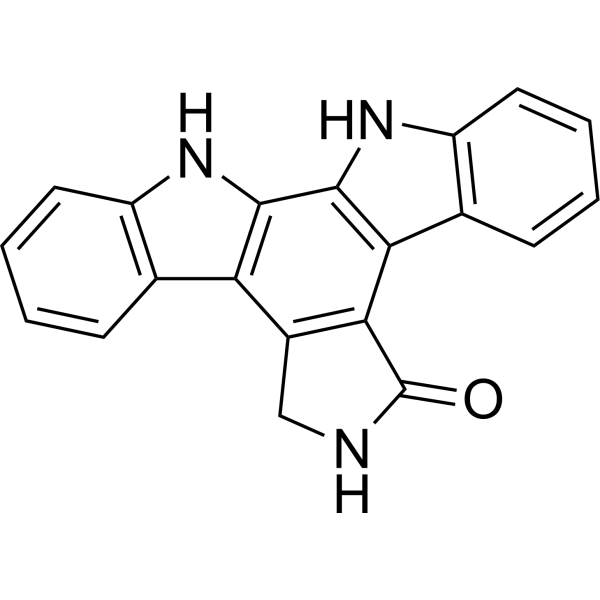
| DC33490 | staurosporine aglycone Featured |
K252c is a staurosporine analog and inhibitor of PKC and PKA. It inhibits proliferation of human cytomegalovirus and induces apoptosis in cancer cells.
More description
|
|
| DC28116 | Tiotidine Featured |
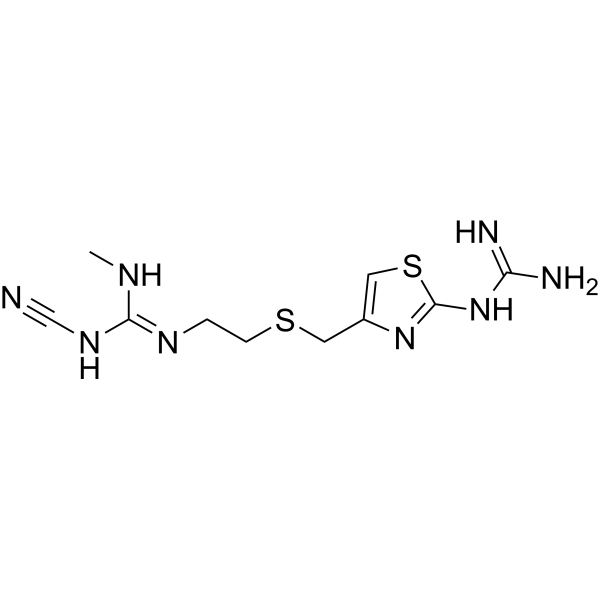
Tiotidine (ICI 125211) is a potent and selective antagonist of histamine H2-receptor (pA2=7.3-7.8 for guinea-pig right atrium). Tiotidine has low affinity for both the H1 and the H3 receptors.
More description
|
|
| DC66884 | Clenpenterol Hydrochloride Featured |
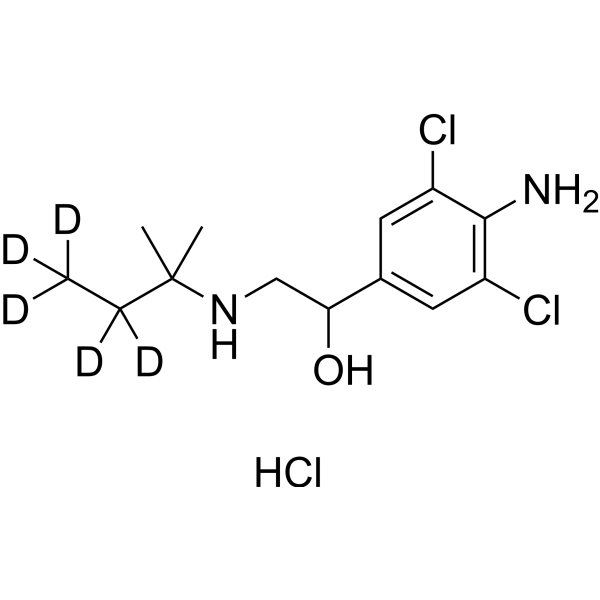
Clenpenterol-d5 (hydrochloride) is deuterium labeled Clenpenterol (hydrochloride).
More description
|
|
| DC65891 | GI 181771 Featured |
GI 181771 is a cholecystokinin 1 receptor agonist investigated for the treatment of obesity.
More description
|

|
| DC70573 | LSN3172176 Featured |
LSN3172176 is a novel potent, selectiive M1 mAChR partial agonist (EC50 2.4-7.0nM, Emax 43%-73%), shows binding selectivity for M1 mAChRs (Kd=1.5 nM); LSN3172176 is a potential PET tracer for assessment of M1 mAChR target engagement in the clinic and to further elucidate the function of M1 mAChRs in health and disease.
More description
|
|
| DC68202 | Desamino lenalidomide-4-COOH Featured |
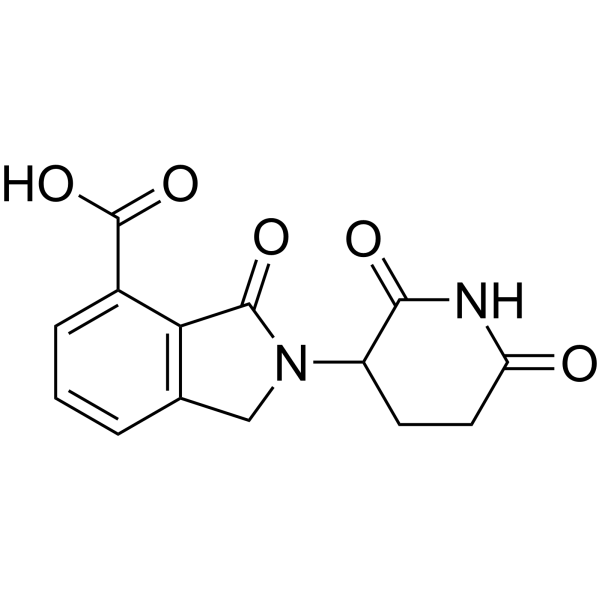
Desamino lenalidomide-4-COOH is an E3 ubiquitin ligase cereblon (CRBN) ligand used to recruit the cereblon protein. Desamino lenalidomide-4-COOH can be linked to a target protein ligand via a linker to form a PROTAC.
More description
|
|
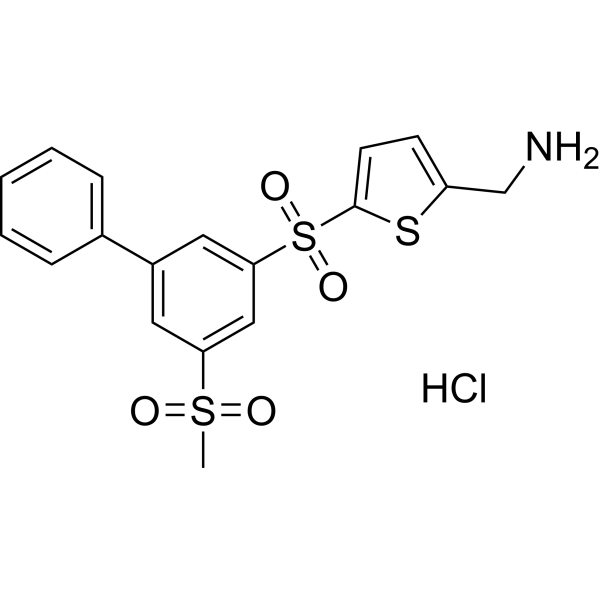
| DC20875 | CCT 365623 hydrochloride Featured |
CCT 365623 (CCT365623) hydrochloride is a potent, orally active small molecule inhibitor of lysyl oxidase (LOX) with IC50 of 0.89 uM.
More description
|
|
| DC12474 | VU6007477 Featured |
VU6007477 is a novel potent, selective, CNS penetrant M1 positive allosteric modulator (PAM) with EC50 of 230 nM, 93% ACh max with minimal M1 agonist activity.
More description
|

|
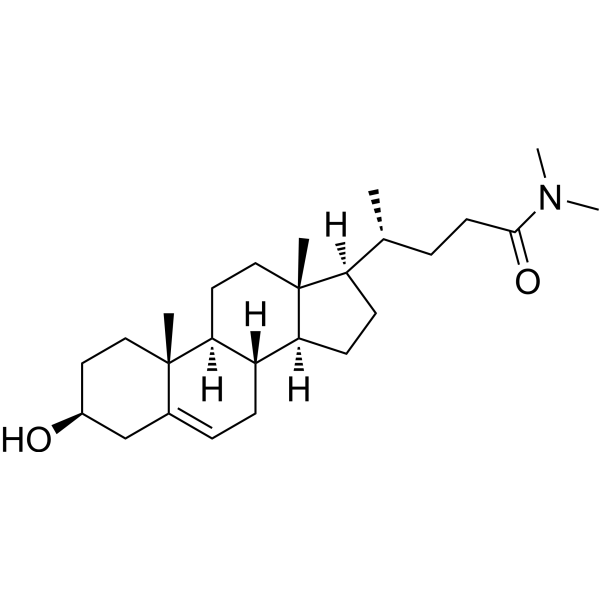
| DC43931 | DMHCA Featured |
Gene-selective LXR modulator that mediates potent transcriptional activation of ABCA1 gene expression while exhibiting minimal effects on SREBP-1c
More description
|
|
| DC68201 | 5-(2,3,4-Trihydroxyphenyl)-3-isoxazolecarboxylic acid Featured |
-3-isoxazolecarboxylic acid.GIF)
|
|
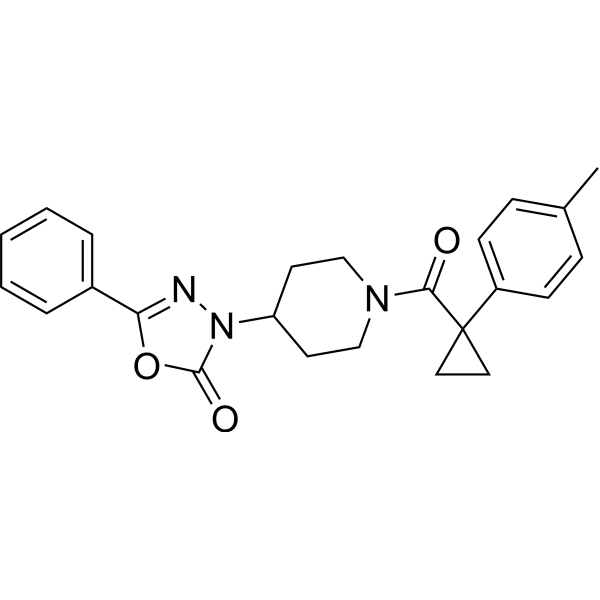
| DC22156 | ML-191 Featured |
ML-191 is a potent, selective GPR55 antagonist with 160 nM potency for GPR55 and >100-fold selectivity against GPR35, CB1 and CB2.
More description
|
|
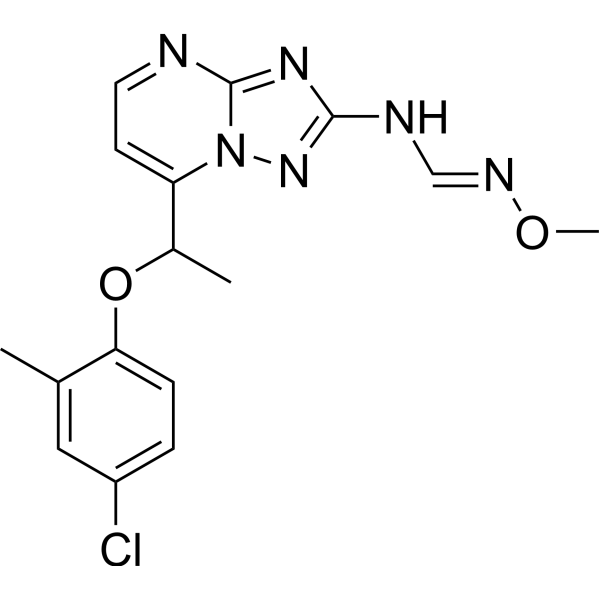
| DC90067 | (-)-cm-tpmf Featured |
CM-TPMF is a K(Ca)2 channel modulator with selective activation and inhibition of K(Ca)2.1 subtypes. CM-TPMF can act on K(Ca)2.1 channels as an activator or inhibitor, and its activity is affected by the stereochemical structure.
More description
|
|
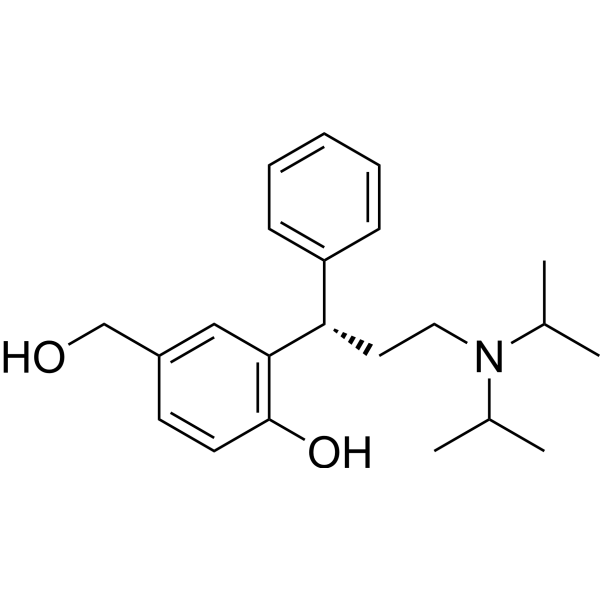
| DC68200 | Tolterodine impurity 1 Featured |
Tolterodine impurity 1 is an impurity of Tolterodine.
More description
|
|
| DC68199 | 2,2'-[(5,6,11,12-Tetradehydrodibenzo[a,e]cyclooctene-2,8-diyl)bis(oxy)]bis[N,N-dimethyl-ethanamine] dihydrochloride Featured |
|
|
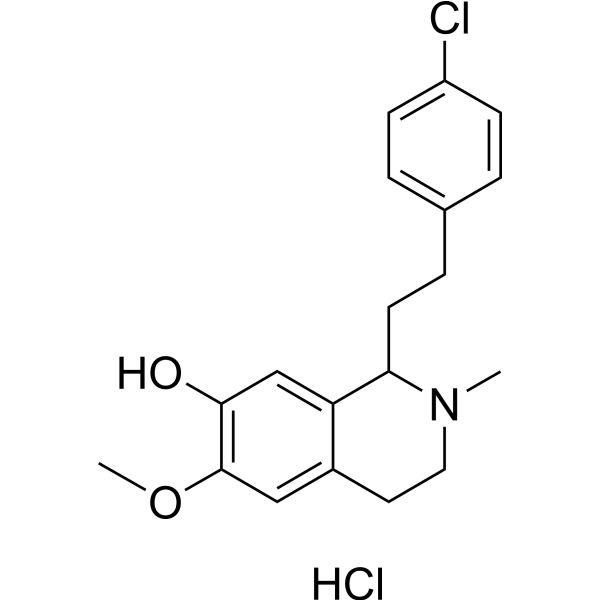
| DCC4446 | Ro 04-5595 Hydrochloride |
Selective antagonist of NMDA receptors NR2B subunits
More description
|
|
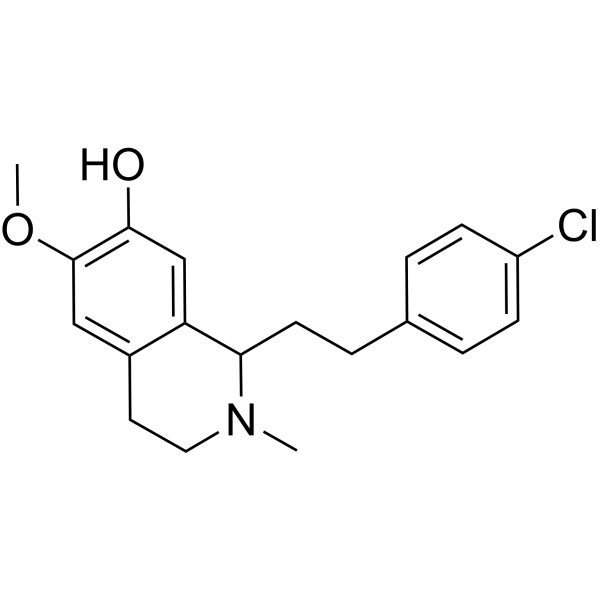
| DC68198 | Ro 04-5595 Featured |
Ro 04-5595 is a selective antagonist with specific activity against the NR2B subunit of the NMDA receptor. Ro 04-5595 exhibits favorable pharmacokinetic properties in in vitro and in vivo studies, with rapid uptake and clearance.
More description
|
|