 To enhance service speed and avoid tariff delays, we've opened a US warehouse. All US orders ship directly from our US facility.
| Cat. No. | Product Name | Field of Application | Chemical Structure |
|---|---|---|---|
| DC60256 | N-0385 Featured |
N-0385 is a novel highly potent inhibitor of TMPRSS2-like proteases (IC50 = 1.9 nM) that blocks SARS-CoV-2 VOCs (B.1.1.7, P.1, B.1.351 and B.1.617.2) and is broadly protective against infection and mortality in mice. N-0385 demonstrates potent inhibition of SARS-CoV-2 infection in Calu-3 cells with EC50 of 2.8 nM and a SI of > 10E6.
More description
|

|
| DC60950 | FL0445 Featured |
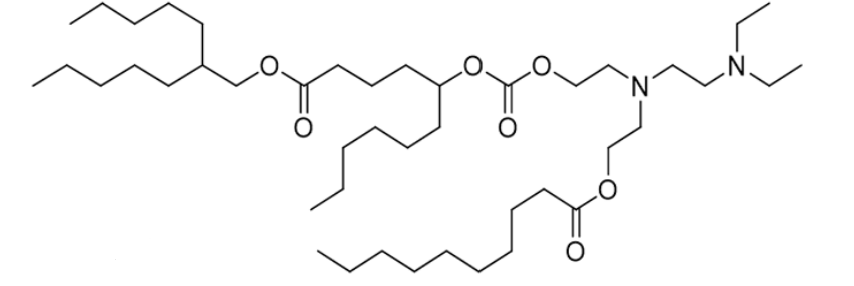
FL0445 is a biodegradable, multi-branched ionizable lipid featuring an ionizable amine-containing headgroup together with ester and carbonate linkages. When formulated with DOPE, cholesterol, and a PEG lipid, FL0445-LNP enabled efficient delivery of both linear mRNA and structurally constrained capped circular RNA (Cap-cirRNA). In the reported study, the optimized formulation produced substantially higher in vitro protein expression than benchmark LNPs based on MC3, SM-102, or ALC-0315 and demonstrated functional nucleic-acid delivery following intravenous, intramuscular, and subcutaneous administration in mice. The platform was also evaluated for mRNA vaccination, ASO-mediated gene silencing, pDNA delivery, and GLP-1-encoding Cap-cirRNA. FL0445-LNP induced comparatively low inflammatory cytokine responses and showed favorable single-dose tolerability in the tested mouse models, supporting its further evaluation as a versatile preclinical delivery lipid for mRNA, circular RNA, and other nucleic-acid modalities.
More description
|
|
| DC68151 | KC-34(SPC-A9) Featured |
KC-34 (SPC-A9) is a novel stereopure, diketopiperazine-based ionizable cationic lipid engineered to overcome traditional liver-restricted delivery, achieving balanced multi-organ mRNA transfection. Upon systemic intravenous administration, its precisely optimized chiral configuration allows the lipid nanoparticles (LNPs) to efficiently cross endothelial barriers and target the bone marrow, offering immense therapeutic potential for in vivo hematopoietic stem cell gene editing. Concurrently, KC-34 mediates robust and long-lasting protein expression in the spleen and lungs with minimal hepatic off-target toxicity. Its stable structure provides excellent biocompatibility and high in vivo tolerance, making it ideal for systemic, multi-dose mRNA therapies.
More description
|
.png)
|
| DC68021 | BIP-20 Featured |
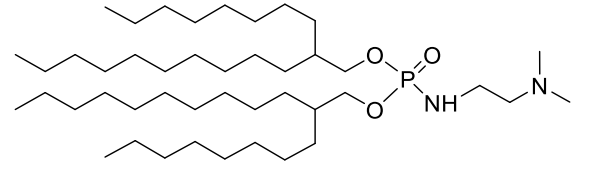
BiP-20 is a branched ionizable phospholipid identified as a lead compound for efficient hepatic mRNA delivery.BiP-20 is a novel, efficient, and safe liver-targeted LNP delivery vehicle. With an ideal pKa of 6.56, it achieves highly efficient liver targeting and endosomal escape primarily through the ApoE/LDL-R pathway. It demonstrates exceptional performance in gene editing at very low doses: for CRISPR-Cas9-mediated editing of TTR, a 10 μg dose achieved ~64% efficiency, which is 8-fold higher than the clinical benchmark lipid LP-01. In Prime Editing targeting the PCSK9 gene, its efficiency (4.30%) also significantly surpassed that of MC3, SM102, and LPO1. Furthermore, it mediates a 5.9-fold increase in hepatic protein expression compared to MC3. Safety assessments indicate it does not induce liver function abnormalities, showing strong therapeutic potential.
More description
|
|
| DC68177 | L52715 Featured |
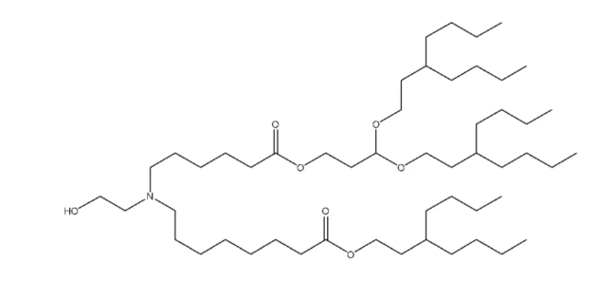
L52715 is a novel ionizable lipid developed by Shanghai Vitalgen, used to deliver mRNA.
More description
|
|
| DC57046 | ATX-126(ATX-0126, lipid 10p) Featured |
ATX-126(ATX-0126, 10p) is an ionizable cationic lipid (pKa = 6.38).It has been used in the generation of lipid nanoparticles (LNPs) for the delivery of siRNA. Intravenous administration of LNPs containing ATX-126(ATX-0126, 10p) and encapsulating Factor VII siRNA decrease Factor VII blood levels in mice.
More description
|

|
| DC60260 | ML901 Featured |
ML901 is a specific reagent that hijacks a single aminoacyl transfer RNA (tRNA) synthetases (aaRSs) in the malaria parasite Plasmodium falciparum. ML901 inhibits the growth of the malaria parasite Plasmodium falciparum in vitro and in animals but was not toxic to human cells.
More description
|

|
| DC60266 | S3-15 Featured |
S3-15 selectively interrupts soluble RANKL-RANK interaction and without interfering with the membrane RANKL-RANK interaction. S3-15 exhibits anti-osteoporotic effects without causing immunosuppression.
More description
|

|
| DC60268 | Compound 16 (UNC-CA94) Featured |
Compound 16 (UNC-CA94) is a reversible inhibitor of PKN3 with IC50 of 14 nM. Compound 16 (UNC-CA94) is a potential tool compound to study the cell biology of PKN3.
More description
|
.jpg)
|
| DC60272 | Comopound X1 (Xist) Featured |
Comopound X1 (Xist) binds the non-coding RNA prototype Xist, specifically the RepA motif, with Kd of 0.4 μM. X1 binding reduces the conformational space of RepA, displaces cognate interacting protein factors (PRC2 and SPEN), suppresses histone H3K27 trimethylation, and blocks initiation of X-chromosome inactivation.
More description
|
.jpg)
|
| DC60270 | D11 (NSC 379099) Featured |
D11 is a potent and selective inhibitor of protein kinase CK2 with Ki of 5 nM.
More description
|

|
| DC60269 | WC36 Featured |
WC36 is a novel nonlipidic inhibitor of the lipid-SH2 domain interaction. WC36 is effective against RAS-mutated HL-60 AML cells that shows de novo resistance to entospletinib.
More description
|

|
| DC60285 | GD20 Featured |
GD20 is a cell-permeable, nucleotide-inactive-state-selective inhibitor of Gαs, with high selectivity over other G protein subfamilies. GD20 inhibits Gαs steady-state GTPase activity with IC50 of 1.15 μM.
More description
|

|
| DC60288 | (R)-70 Featured |
(R)-70 is a 5-HT2AR partial agonists with EC50 of 110 nM, and shows 6.4-fold/51-fold selectivity over 5HT2BR/5HT2CR. (R)-70 has substantial brain permeability in mouse pharmacokinetic studies and dose not possess locomotor-stimulating or reinforcing activity.
More description
|
-70.png)
|
| DC60286 | (R)-69 Featured |
(R)-69 is a 5-HT2AR partial agonists with EC50 of 41 nM, and shows 4.6-fold/29-fold selectivity over 5HT2BR/5HT2CR. (R)-69 has substantial brain permeability in mouse pharmacokinetic studies and dose not possess locomotor-stimulating or reinforcing activity.
More description
|
-69.jpg)
|
| DC60336 | UT-143 Featured |
UT-143 is a selective androgen receptor irreversible covalent antagonist and inhibits AR transactivation with IC50 of 150 nM. UT-143 covalently and selectively binds to C406 and C327 in the AF-1 region and inhibits PCa cell proliferation and tumor growth.
More description
|

|
| DC8001 | CPI 169 R-enantiomer Featured |
CPI-169 R is a novel and potent EZH2 inhibitor with IC50 <1 nM(inhibition of the catalytic activity of PRC2.
More description
|

|
| DC60351 | PL-SNS-032 Featured |
PL-SNS-032 conjugate 955 can potently degrade CDK9 in a ubiquitin-proteasome-dependent manner and is much more potent than SNS-032 against various tumor cells in vitro.
More description
|

|
| DC60338 | PABK (para-azidobenzyloxycarbonyl lysine) Featured |
PABK (para-azidobenzyloxycarbonyl lysine) is a site-specific small molecule-activated amino acids which could be installed into proteins in the zebrafish embryo and enable fast and tunable activation of the function of several enzymes.
More description
|

|
| DC70801 | SRX3305 Featured |
SRX 3305 is a potent, triple BTK/PI3K/BRD4 inhibitor with IC50 of 6.5 nM, 15 nM, and 4 nM toward BTK, PI3Kɑ and PI3Kδ respectively, inhibits BRD4 BD1 and BD2 with IC50 of 77 and 95 nM.SRX3305 showed enhanced binding to the drug-resistant C481S mutant of BTK compared to SRX-3262 (IC50=9 uM and 25 uM, respectively).SRX3305 displayed cytotoxicity aginst MCL cell lines JeKo-1, Mino, Granta with IC50 of 58 nM, 1 nM, 1.1 uM, respectively.SRX3305 inhibited cell vbiability of JeKo-1 BTK C481S and Mino BTK C481S mutant cell lines with IC50 of 1 uM and 47 nM, respectively, with minimally toxic to healthy donor PBMCs.SRX3305 showed improved efficacy in MCL and Ibrutinib-resistant MCL cells, SRX3305 impacted gene expression, perturbs the cell cycle and promotes apoptosis in MCL.
More description
|

|
| DC70709 | PRL-295 Featured |
PRL295 is a small molecule Keap1-Nrf2 protein–protein interaction inhibitor.PRL295 binds to Keap1 in the cellular environment, disrupting its interaction with Nrf2, which leads to enhanced gene expression of the classical Nrf2 target NQO1 in cells and in vivo in the mouse liver.PRL-295 increases the thermostability of Keap1 in cell lysates and in live cells.PRL 295 decreased the levels of plasma alanine aminotransferase and aspartate aminotransferase upon acetaminophen-induced hepatic injury.
More description
|

|
| DC60434 | Bendamustine HCL Monohydrate Featured |

|
|
| DC70865 | UHRF1 PHD inhibitor MLD4 Featured |
UHRF1 PHD inhibitor MLD4 is a specific compound that selectively inhibits the UHRF1-histone interaction (IC50=12.4 uM), targets the PHD finger of UHRF1, specifically disrupting histone H3 arginine 2 interactions with the PHD finger.UHRF1 PHD inhibitor MLD4 inhibited binding between H3K9me3(FAM) and UHRF1 with IC50 of 24-26 uM, displace UHRF1-histone H3 binding in cells.
More description
|

|
| DC70653 | NJH-2-075 Featured |
NJH-2-075 is an alkyne-functionalized probe of EN523, retains binding to OTUB1 in vitro.
More description
|

|
| DC70866 | UHRF1 PHD inhibitor MLD5 |
UHRF1 PHD inhibitor MLD5 is a specific compound that selectively inhibits the UHRF1-histone interaction (IC50=7.4 uM), targets the PHD finger of UHRF1, specifically disrupting histone H3 arginine 2 interactions with the PHD finger.UHRF1 PHD inhibitor MLD5 inhibited binding between H3K9me3(FAM) and UHRF1 with IC50 of 24-26 uM, displace UHRF1-histone H3 binding in cells.
More description
|

|
| DC65027 | 9H-Purin-6-amine, 2-chloro-N-[(4,6-dimethyl-3-pyridinyl)methyl]-9-(1-methylethyl)- Featured |

|
|
| DC65149 | CPD3236 Featured |

|
|
| DC65059 | 5-Methylsulfonyl-2-(2,2,2-trifluoro-1-Methylethoxy)benzoic acid Featured |

|
|
| DC60454 | BRD-K56819078 Featured |
BRD-K56819078 is a small-molecule senolytics and significantly decreases senescent cell burden and mRNA expression of senescence-associated genes in the kidneys of aged mices.
More description
|

|
| DC60456 | HHS-166 Featured |
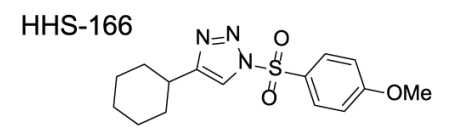
HHS-166 shows dose-dependent inhibition of arsenite-induced stress granule (SG) formation, and liganded G3BP1 Y40 in the NTF2 dimerization domain of this essential nucleating protein for SG regulation.
More description
|
|
