To enhance service speed and avoid tariff delays, we've opened a US warehouse. All US orders ship directly from our US facility.
| Cat. No. | Product Name | Field of Application | Chemical Structure |
|---|---|---|---|
| DC67702 | 2-(2,6-Dioxo-3-piperidyl)-1-oxoisoindoline-5-carboxylic Acid Featured |
-1-oxoisoindoline-5-carboxylic Acid.GIF)
|
|
| DC74495 | HDAC3 PROTAC P7 Featured |
HDAC3 PROTAC P7 is a potent and selective HDAC3-directed PROTAC with IC50 of 40 nM (HDAC3 deacetylase activity), effectively induces HDAC3 degradation with DC50 of 0.6 nM in THP-1 cells (Emax=90%).
More description
|

|
| DC79845 | SK2188 Featured |
SK2188 is a highly efficient and selective PROTAC degrader targeting AURKA (DC50 = 3.9 nM). SK2188 induces DNA damage and cell apoptosis. SK2188 indirectly degrades MYCN, inhibits tumor cell proliferation, and provides insights into the study of MYCN-amplified neuroblastoma.
More description
|

|
| DC46956 | Thalidomide-5-COOH Featured |
Thalidomide-5-COOH is the Thalidomide-based cereblon ligand used in the recruitment of CRBN protein. Thalidomide-5-COOH can be connected to the ligand for protein by a linker to form PROTACs.
More description
|

|
| DC67705 | (±)-JQ1 Featured |
(±)-JQ1 is the racemate of (+)-JQ-1 (HY-13030).
More description
|
-JQ1.gif)
|
| DC47889 | Thalidomide-5-NH2-CH2-COOH Featured |
Thalidomide-5-NH2-CH2-COOH (compound 114) is a potent and selective inhibitor of tropomyosin receptor kinase (trk). Thalidomide-5-NH2-CH2-COOH is a ligand of E3 ligase. Thalidomide-5-NH2-CH2-COOH has the potential for the treatment of one or more diseases (extracted from patent WO2021170109A1) .
More description
|

|
| DC67706 | (R,S,S)-AHPC hydrochloride Featured |
-AHPC hydrochloride.gif)
|
|
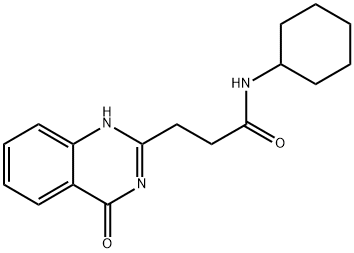
| DC67714 | WAY-620124 Featured |
|
|
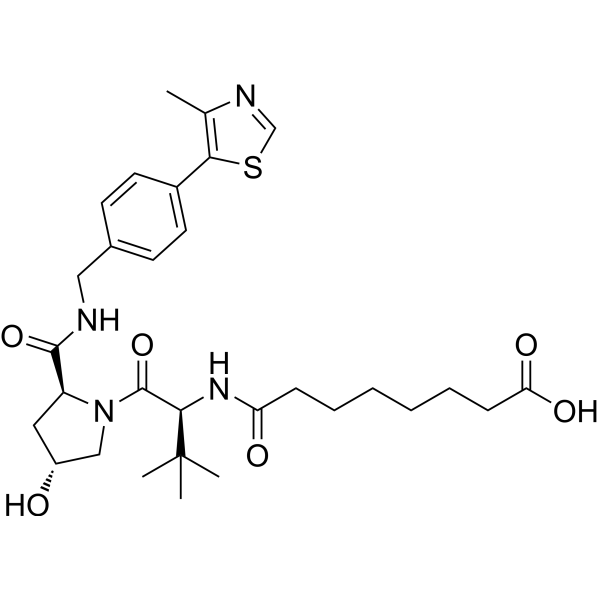
| DC67713 | VH 032 amide-alkylC6-acid Featured |
VH 032 amide-alkylC6-acid ((S,R,S)-AHPC-CO-C6-COOH) is a VH032 analog that acts as a ligand for VHL, recruiting von Hippel-Lindau (VHL) protein. VH 032 amide-alkylC6-acid can be used in the synthesis of PROTACs.
More description
|
|
| DC67716 | (S,R,S)-AHPC-PEG2-C4-Cl Featured |
(S,R,S)-AHPC-PEG2-C4-Cl (VH032-PEG2-C4-Cl) is a conjugate of ligands for E3 and 13-atom-length linker. The connector of linker is Halogen group. (S,R,S)-AHPC-PEG2-C4-Cl incorporates the (S,R,S)-AHPC based VHL ligand and an alkyl/ether-based linker. (S,R,S)-AHPC-PEG2-C4-Cl is capable of inducing the degradation of GFP-HaloTag7 in cell-based assays.
More description
|
-AHPC-PEG2-C4-Cl.gif)
|
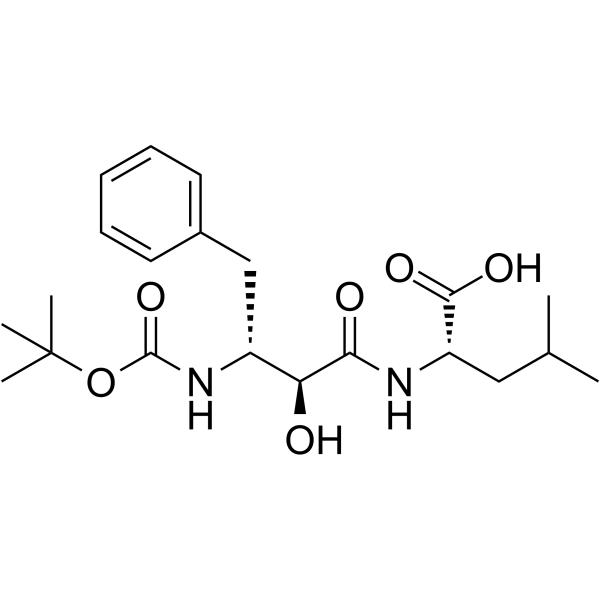
| DC67715 | E3 ligase Ligand 9 Featured |
E3 ligase Ligand 9 is a ligand for E3 ubiquitin ligase. E3 ligase Ligand 9 can be connected to the ligand for protein by a linker to form PROTACs or SNIPERs. PROTACs are inducers of ubiquitination-mediated degradation of cancer-promoting proteins.
More description
|
|
| DC67717 | 1H-Indazole-4-carboxamide, 6-bromo-N-[(1,2-dihydro-4,6-dimethyl-2-oxo-3-pyridinyl)methyl]-1-(1-methylethyl)- Featured |
methyl]-1-(1-methylethyl)-.gif)
|
|
| DC67719 | (S,R,S)-CO-C2-acid Featured |
(S,R,S)-CO-C2-acid (VH 032 amide-alkylC2-acid) is a functionalized von-Hippel-Lindau (VHL) protein ligand that can be used in PROTAC research and development. (S,R,S)-CO-C2-acid contains an E3 ligand alkyl ligand for conjugation of target protein ligands.
More description
|
-CO-C2-acid.gif)
|
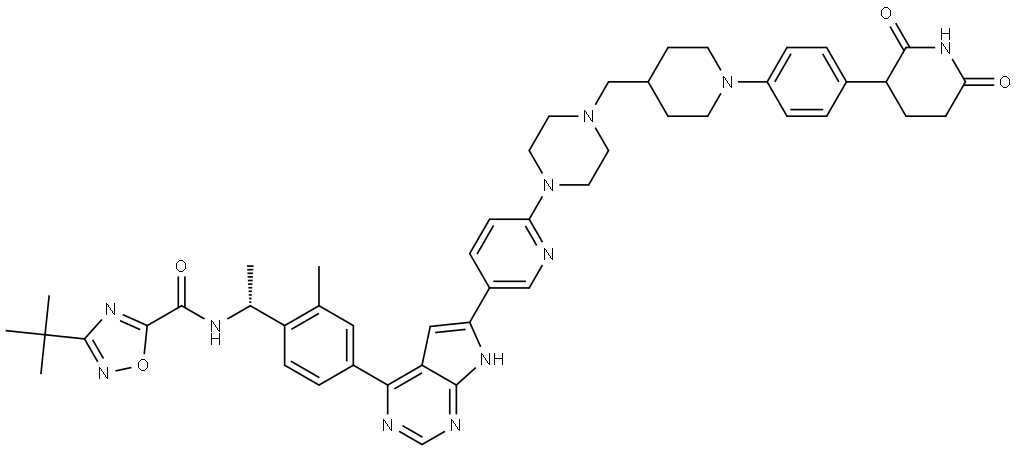
| DC60901 | PROTAC BTK Degrader-11 Featured |
PROTAC BTK Degrader-11 is a PROTAC degrader that can break down BTK, with a DC50 of 1.7 nM.
More description
|
|
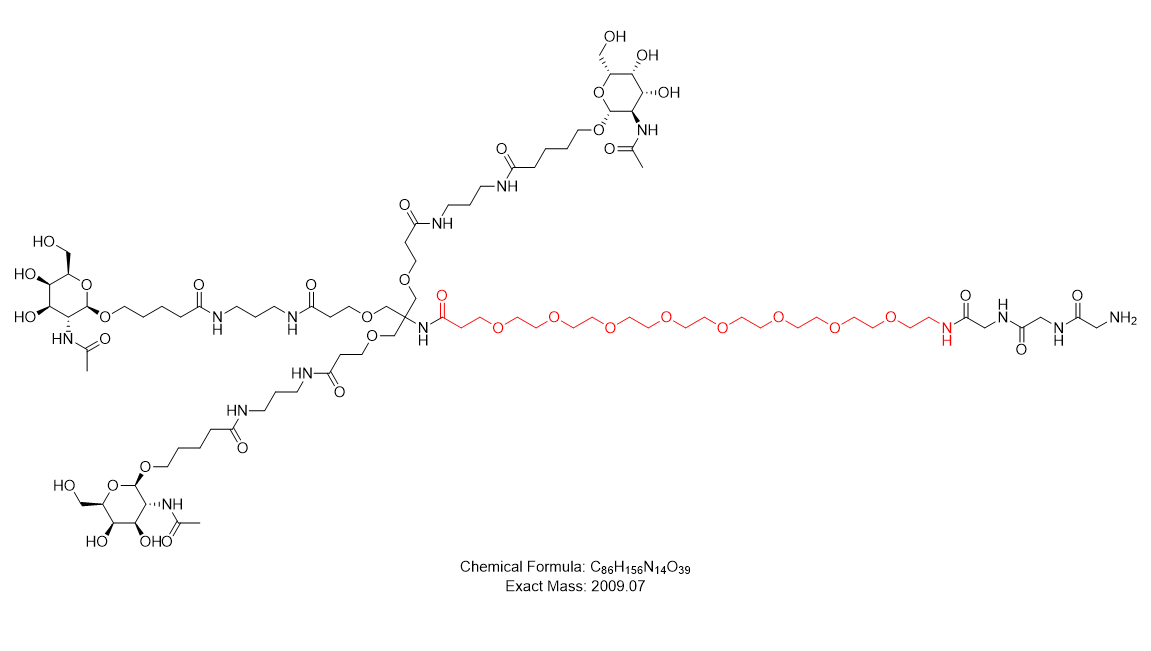
| DC60914 | Tri-GalNAc-PEG8-Gly-Gly-Gly(Tri-GalNAc-G3) Featured |
Tri-GaNAc-PEG8-Gly-Gly-Gly is a compound that targets the asialoglycoprotein receptor (ASGPR) and is utilized to conjutate with antibody.
More description
|
|
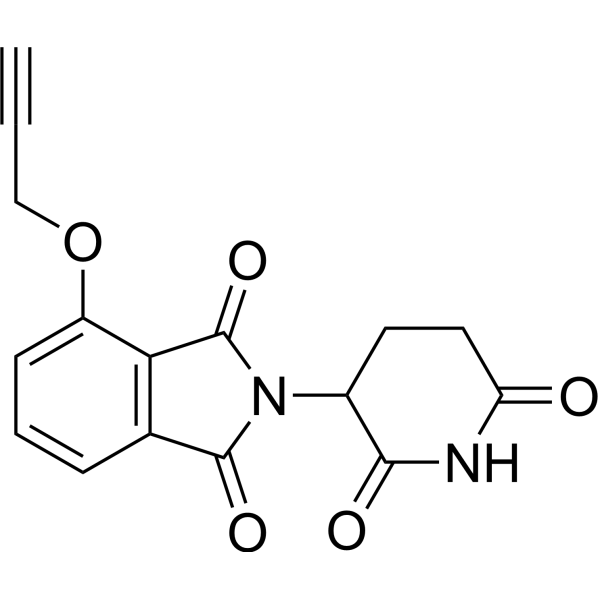
| DC67724 | Thalidomide-propargyl Featured |
Thalidomide-propargyl is the Thalidomide-based Cereblon ligand used in the recruitment of CRBN protein. Thalidomide-propargyl can be connected to the ligand for protein by a linker to form the IMiD containing PROTACs[1]. Thalidomide-propargyl is a click chemistry reagent, it contains an Alkyne group and can undergo copper-catalyzed azide-alkyne cycloaddition (CuAAc) with molecules containing Azide groups.
More description
|
|
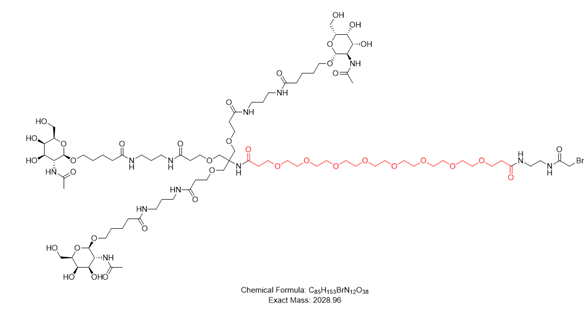
| DC60915 | Tri-GalNAc-PEG8-NH2-CH2CH2-NH2-bromoacetyl (Tri-GalNAc-Haloacetyls) Featured |
Tri-GaNAc-PEG8-NH2-CH2CH2-NH2-bromoacetyl is a compound that targets the asialoglycoprotein receptor (ASGPR) and is utilized to conjutate with antibody.
More description
|
|
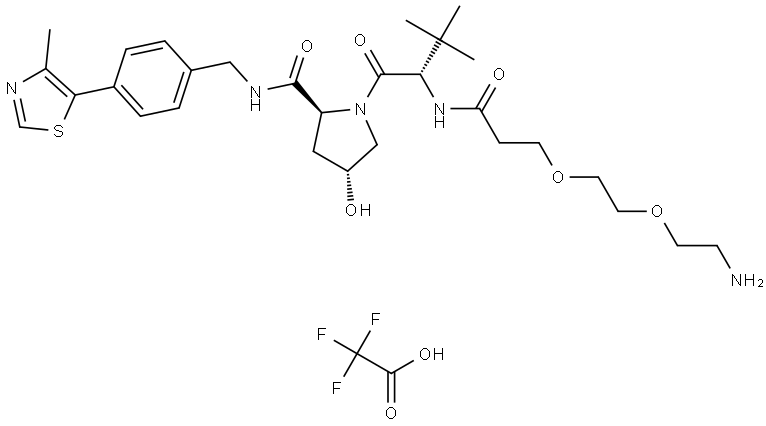
| DC67727 | (2S,4R)-1-((S)-2-(3-(2-(2-aminoethoxy)ethoxy)propanamido)-3,3-dimethylbutanoyl)-4-hydroxy-N-(4-(4-methylthiazol-5-yl)benzyl)pyrrolidine-2-carboxamide 2,2,2-trifluoroacetate Featured |
|
|
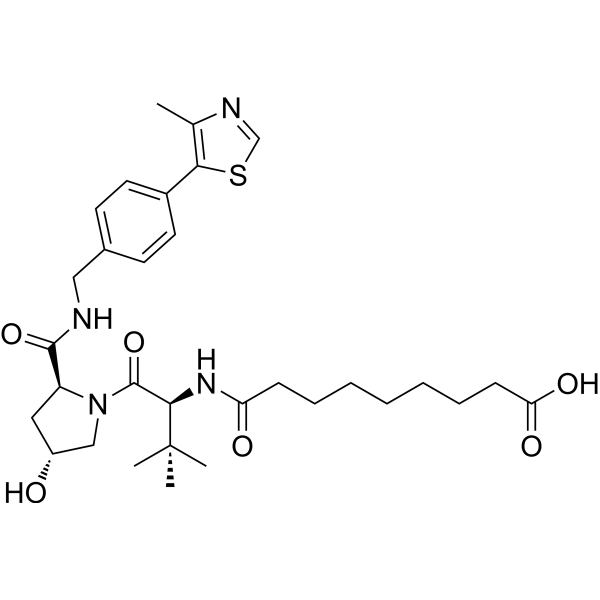
| DC67729 | (S,R,S)-AHPC-amido-C7-acid Featured |
(S,R,S)-AHPC-amido-C7-acid incorporates a VHL ligand for the E3 ubiquitin ligase and a PROTAC linker. (S,R,S)-AHPC-amido-C5-acid can be used to design PROTACs.
More description
|
|
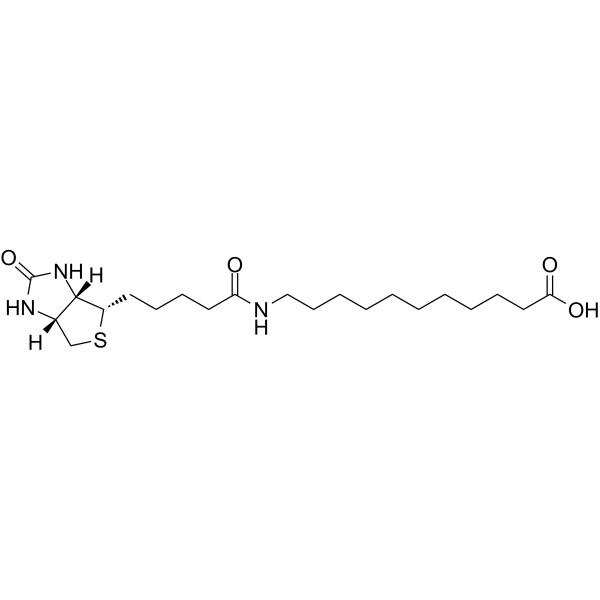
| DC67733 | Biotin-SLC Featured |
(+)-Biotin-SLC is an alkyl chain-based PROTAC linker that can be used in the synthesis of PROTACs.
More description
|
|
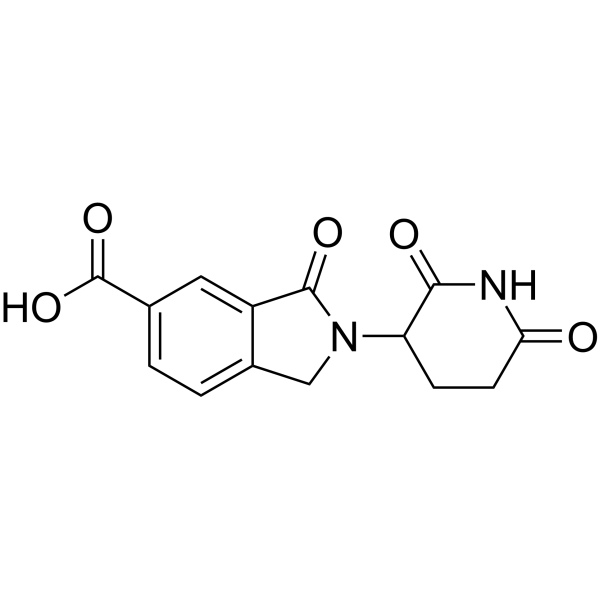
| DC67731 | Desamino lenalidomide-5-COOH Featured |
Desamino lenalidomide-5-COOH is an E3 ubiquitin ligase cereblon (CRBN) ligand used to recruit the cereblon protein. Desamino lenalidomide-5-COOH can be linked to a target protein ligand via a linker to form a PROTAC.
More description
|
|
| DC67736 | 1H-Isoindole-1,3(2H)-dione, 4-[(10-aminodecyl)amino]-2-(2,6-dioxo-3-piperidinyl)- Featured |
-dione, 4-[(10-aminodecyl)amino]-2-(2,6-dioxo-3-piperidinyl)-.gif)
|
|
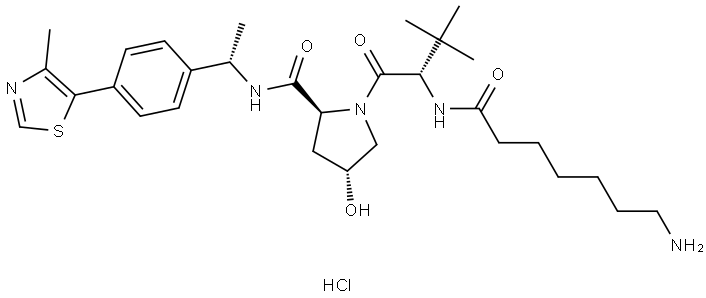
| DC67734 | (2S,4R)-1-((S)-2-(7-aminoheptanamido)-3,3-dimethylbutanoyl)-4-hydroxy-N-((S)-1-(4-(4-methylthiazol-5-yl)phenyl)ethyl)pyrrolidine-2-carboxamide hydrochloride Featured |
|
|
| DC67738 | Glycine, N-[2-(2,6-dioxo-3-piperidinyl)-2,3-dihydro-1-oxo-1H-isoindol-4-yl]- Featured |
-2,3-dihydro-1-oxo-1H-isoindol-4-yl]-.gif)
|
|
| DC67740 | Acetamide, 2-[2-(2-chloroethoxy)ethoxy]-N-[2-(2,6-dioxo-3-piperidinyl)-2,3-dihydro-1,3-dioxo-1H-isoindol-5-yl]- Featured |
ethoxy]-N-[2-(2,6-dioxo-3-piperidinyl)-2,3-dihydro-1,3-dioxo-1H-isoindol-5-yl]-.gif)
|
|
| DC67739 | N-((4,6-dimethyl-2-oxo-1,2-dihydropyridin-3-yl)methyI)-1-isopropyl-6-(6-(4-(2-(3-mercaptopropanamido)ethyl)piperazin-1-yl)pyridin-3-yl)-1H-indazole-4-carboxamide Featured |
methyI)-1-isopropyl-6-(6-(4-(2-(3-mercaptopropanamido)ethyl)piperazin-1-yl)pyridin-3-yl)-1H-indazole-4-carboxamide.gif)
|
|
| DC67741 | (2S,4R)-1-((S)-2-(Hex-5-ynamido)-3,3-dimethylbutanoyl)-4-hydroxy-N-(4-(4-methylthiazol-5-yl)benzyl)pyrrolidine-2-carboxamide Featured |
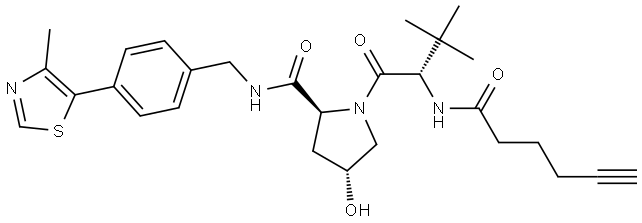
|
|
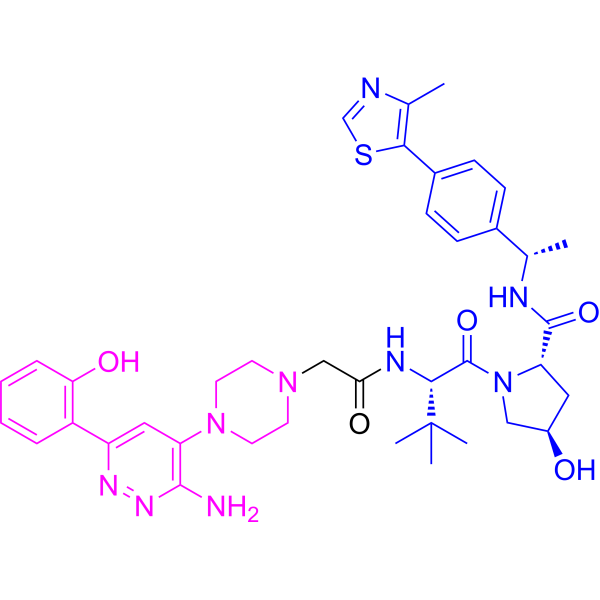
| DC48049 | AU-15330 Featured |
AU-15330 is a proteolysis-targeting chimera (PROTAC) degrader of the SWI/SNF ATPase subunits, SMARCA2 and SMARCA4. AU-15330 induces potent inhibition of tumour growth in xenograft models of prostate cancer and synergizes with the AR antagonist enzalutamide. AU-15330 induces disease remission in castration-resistant prostate cancer (CRPC) models without toxicity.
More description
|
|
| DC67742 | L-Proline, 1-[(2S)-2-(1,3-dihydro-1-oxo-2H-isoindol-2-yl)-3-methyl-1-oxobutyl]-4-hydroxy-, (4R)- Featured |
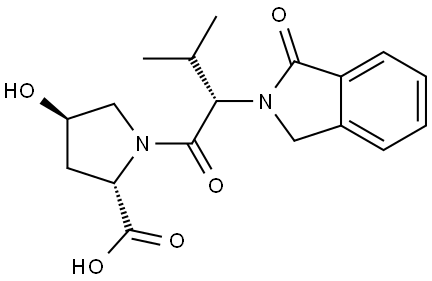
|
|
| DC67743 | 9H-Pyrimido[4,5-b]indole-2-carboxylic acid, 4-chloro-7-(3,5-dimethyl-4-isoxazolyl)-6-methoxy-, methyl ester Featured |
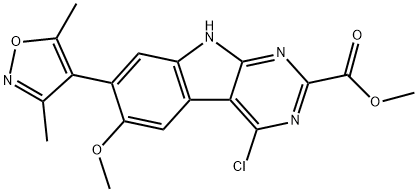
|