To enhance service speed and avoid tariff delays, we've opened a US warehouse. All US orders ship directly from our US facility.
| Cat. No. | Product Name | Field of Application | Chemical Structure |
|---|---|---|---|
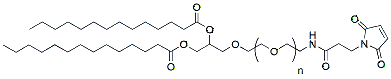
| DC67603 | DMG-PEG-Mal, MW 2,000 Featured |
DMG-PEG-Mal, MW 2,000 is a lipid PEG consisting of DMG and maleimide for reacting with thiols between pH 6.5 to 7.5
More description
|
|
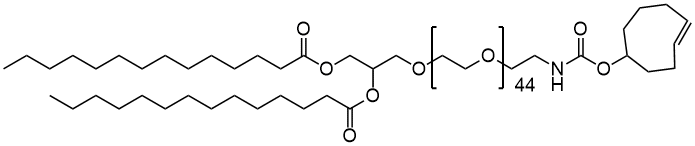
| DC67619 | DMG-PEG-TCO (MW2000) Featured |
DMG-PEG2000-TCO offer the ability to easily conjugate to specific biomolecules via metal free click chemistry to tetrazines. By changing the PEG length, one can change the micelle size, immunological safety, and change the drug release rate.
More description
|
|
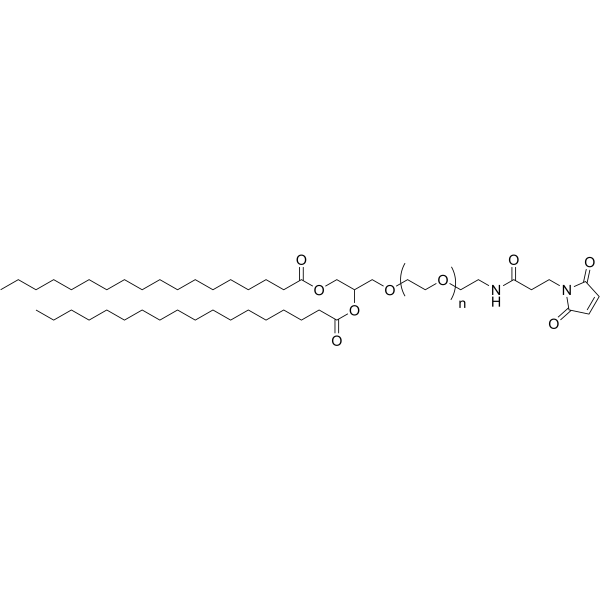
| DC68214 | DSG-PEG3400-Mal Featured |
DSG-PEG3400-Mal is a conjugate composed of DSG, PEG chains, and maleimide (Mal). The maleimide group in DSG-PEG3400-Mal can undergo a specific Michael addition reaction with thiol-containing (-SH) biomolecules (such as peptides, antibodies, and aptamers), enabling targeted modification of liposomes/nanoparticles.
More description
|
|
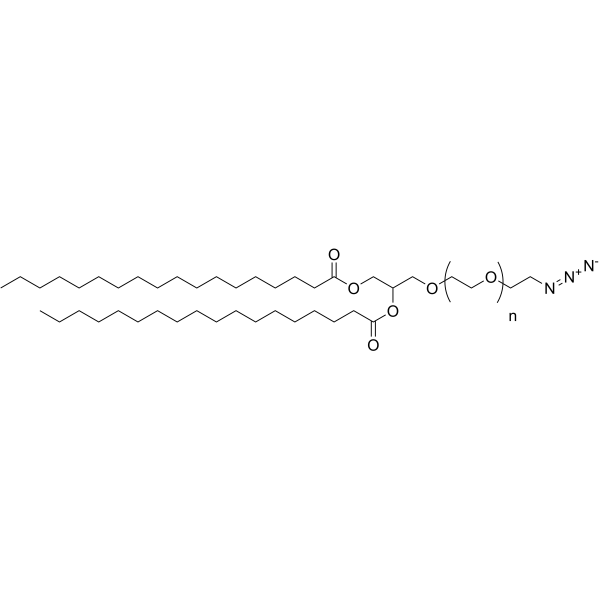
| DC68215 | DSG-PEG3400-N3 Featured |
DSG-PEG3400-N3 is a conjugate composed of DSG, PEG chains, and terminal azido groups (-N3). DSG-PEG3400-Azide is a click chemistry reagent used for the targeted modification of liposomes/nanoparticles.
More description
|
|
| DC68163 | DSPE-PEG-DSS6 Featured |
DSS6-PEG-DSPE,DSPE-PEG-DSS6 is a composite molecule composed of phospholipids(DSPE),polyethylene glycol(PEG),and bone targeting peptide DSS6,mainly used for bone targeted drug delivery and bone tissue repair. Its core structure achieves precise targeting and efficient delivery through the synergistic effect of three parts.The DSS6 peptide consists of six Asp-Ser-Ser amino acid repeat sequences and can specifically recognize hydroxyapatite(HAp)in bone tissue.
More description
|

|
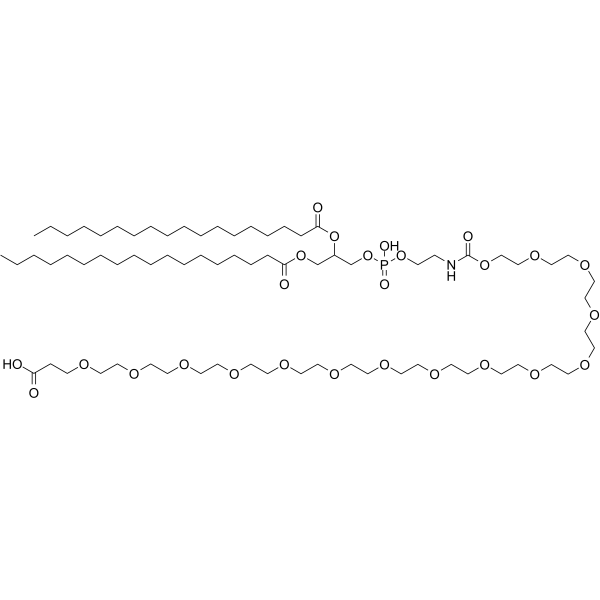
| DC44401 | DSPE-PEG14-COOH Featured |
DSPE-PEG14-COOH is a PEG-based PROTAC linker that can be used in the synthesis of PROTACs.
More description
|
|
| DC68155 | DMG-PEG2000-Biotin Featured |
DMG-PEG2000-Biotin is a synthetic amphiphilic molecule composed of dimyristoyl glycerol (DMG), polyethylene glycol (PEG2000), and biotin functionalities. It is commonly employed in biomedical research for surface modification of lipid-based delivery platforms, such as lipid nanoparticles (LNPs) and liposomes. The PEG moiety enhances colloidal stability, prolongs circulation time, and reduces rapid clearance in vivo. The biotin termination facilitates conjugation to streptavidin-tagged biomolecules, exploiting the highly specific biotin-streptavidin interaction. Thus, DMG-PEG2000-Biotin is valuable for drug-delivery optimization, targeted therapeutic approaches, and in vitro diagnostic assay development.
More description
|

|
| DC68154 | Thiol-PEG2000-DMG Featured |
Thiol-PEG2000-DMG is a phospholipid polyPEG which can be used to prepare liposomes or nanoparticles. The terminal thiol group reacts with maleimide, OPSS, vinylsulfone and transition metal surfaces including gold, silver, etc.
More description
|

|
| DC68153 | DMG-PEG2000-OH Featured |
DMG-PEG2000-OH is a PEG derivative that can be used to construct drug delivery vehicles.
More description
|

|
| DC68152 | DMG-PEG2000-SH Featured |
DMG-PEG2000-SH is a PEG derivative that can be used to construct drug delivery vehicles.
More description
|

|
| DC65966 | Tri-GalNAc-DSPE-PEG2000 Featured |
DSPE-PEG2K-triGalNAc is a polar lipid composed of DSPE and tri-N-acetylgalactosamine that can be used to construct liposomes target to asialoglycoprotein receptor (ASGPR).
More description
|

|
| DC40351 | DSPE-PEG(2000)-Amine Featured |
DSPE-PEG(2000)-Amine is used in the synthesis of solid lipid and thermosensitive liposomal nanoparticles for the delivery of anticancer agents.
More description
|

|
| DC58047 | DSPE-mPEG2000((sodium salt)) Featured |
mPEG2000-DSPE is used in COVID 19 mRNA vaccines. It is a PEGylated derivative of 1,2-distearoyl-sn-glycero-3-PE . Formulations containing DSPE-MPEG(2000) have been used to prepare liposomes with long circulation time for the delivery of anticancer and antimalarial agents.. mPEG2000-DSPE has also been widely used as hydrophilic surface modifying agent for a variety types of hydrophobic nanoparticles, including recently reported lipid nanoparticle mRNA vaccines.
More description
|

|
| DC65786 | DSPE-PEG2000-OH (DSPE-PEG hydroxyl) Featured |
DSPE-PEG2000-OH is used for creating micelles that are able to carry drugs with low solubility.
More description
|

|
| DC66175 | DMPE-PEG-Rhodamine B Featured |
DMPE-PEG, a synthetic lipid, possesses unique properties and finds extensive applications as liposomes. Firstly, DMPE-PEG exhibits excellent biocompatibility and solubility, allowing for its stable presence and efficient absorption and metabolism in vivo. Additionally, DMPE-PEG possesses good surface activity, aiding in the stabilization of liposome structures and enhancing their stability.
More description
|
|
| DC66226 | DOPE-PEG-NBD Featured |
DOPE-PEG is a versatile phospholipid derivative with unique properties that make it suitable for various applications. Its hydrophobic and hydrophilic nature enables efficient encapsulation and delivery of drugs and nucleic acids, making it a valuable tool in drug delivery systems and gene therapy.
Additionally, DOPE-PEG can enhance the stability and circulation time of liposomes, improving their efficacy as drug carriers.
More description
|
|
| DC66164 | DSPE-PEG-Streptavidin (MW2000) Featured |
DSPE-PEG-Streptavidin is an important biocoupling molecule widely used in biomedical research, especially in drug delivery, targeted therapies, immunodiagnostics and biosensors. Through the specific binding between streptavidin and biotin, DSPE-PEG-Streptavidin can help to achieve efficient loading and targeted action in targeted delivery systems. In addition, the molecule is widely used in molecular imaging and bioassays, especially for molecular recognition using the strong affinity between streptavidin and biotin in assay platforms that require high sensitivity and specificity.
More description
|
|
| DC35377 | TAMRA-PEG4-NHS ester |
TAMRA-PEG4-NHS ester is a TAMRA red fluorescent dye derivative containing an NHS ester group which can be used to label the primary amines (-NH2) of proteins, amine-modified oligonucleotides, and other amine-containing molecules.
More description
|

|
| DC66277 | DSPE-PEG-TCO (MW 2000) Featured |
DSPE-PEG-TCO (2000 Da) is a functionalized polyethylene glycol lipid conjugate engineered to enhance drug delivery systems. This amphiphilic polymer-lipid hybrid demonstrates unique capabilities in optimizing the bioavailability and targeted distribution of hydrophobic therapeutic compounds. Its molecular architecture combines a lipid anchor with a biocompatible PEG chain terminated by a trans-cyclooctene (TCO) group, enabling precise tissue-specific interactions while improving pharmacokinetic profiles. Researchers frequently employ this advanced biomaterial in developing nanoparticle formulations and ligand-directed therapeutic platforms for enhanced precision medicine applications.
More description
|

|
| DC66162 | DSPE-PEG-Transferrin Featured |
The transferrin receptor (TfR) is a transmembrane glycoprotein whose function is to mediate iron absorption through its interaction with transferrin. In normal cells, the expression level of the receptor is low, and the expression of the transferrin receptor in cells (chronic lymphocytic non-Hodgkin tumors) is significantly increased due to the increased demand for iron in rapidly growing cells [2-4]. At present, two transferrin receptors, TfR1 and TfR2, have been found, both of which are type II transmembrane glycoproteins that bind to transferrin and mediate iron absorption. TfR1 is expressed in many cells (such as red blood cells, hepatocytes, monocytes), and can change its conformation according to the change of environmental pH, and convert the results of conformational change into a change in the binding strength of transferrin. TfR2 is mainly expressed in the liver, and its main function may be to regulate and maintain the homeostasis of iron ions in the body, while its role in transporting iron ions to rapidly dividing tissues is weak. Using the effective targeting function of transferrin receptor, the cross-linking of transferrin and drugs can improve the specific binding ability of drugs, but also improve the effect.
More description
|

|
| DC67097 | DSPE-PEG(2000)-amine (sodium salt) Featured |
DSPE-PEG(2000)-amine is a PEGylated derivative of 1,2-distearoyl-sn-glycero-3-PE (DSPE; Item No. 15095). It has been used in the synthesis of solid lipid and thermosensitive liposomal nanoparticles for the delivery of anticancer agents. DSPE-PEG(2000)-amine has also been used in the synthesis of fluorescein isothiocyanate-loaded mesoporous silica nanoparticles for imaging applications.4 It can be conjugated to a variety of functional molecules for improved cellular targeting and uptake of DSPE-PEG(2000)-amine-containing nanoparticles.
More description
|

|
| DC66268 | DSPE-Hyd-PEG-Mal (MW 2000) Featured |
DSPE-Hyd-PEG, also known as distearoylphosphoethanolamine-hydrazide-polyethylene glycol, is a type of lipid-based polymer that has various applications in drug delivery and biomedical research.
One of the main applications of DSPE-Hyd-PEG is in the field of targeted drug delivery. It is often used as a component of liposomes or lipid nanoparticles to improve the stability and targeting ability of drug carriers. DSPE-Hyd-PEG can be conjugated with targeting ligands, such as antibodies or peptides, to specifically bind to receptors on the surface of target cells. This targeted drug delivery system allows for more efficient and selective delivery of therapeutic agents to the desired site, while minimizing off-target effects.
More description
|

|
| DC49306 | DSPE-PEG-Maleimide (MW 2000) Featured |
DSPE-PEG-Maleimide, MW 2,000 is a PEG compound with DSPE and maleimide groups. The DSPE-PEGs have been FDA approved for medical applications. The hydrophobic properties of the DSPE allow for the encapsulation and congregation of other hydrophobic drugs. The hydrophilic polyPEG increases the water solubility of the overall compound allowing for the delivery of the drug. Maleimide groups can react with thiol groups between pH 6.5 to 7.5.
More description
|

|
| DC66296 | DSPE-PEG-alkyne (MW 2000) Featured |
The phospholipid polyethylene glycol alkyne (DSPE PEG Alkyne) can be used to modify proteins, peptides and other materials or small molecules. Alkynyl (- ALK) can react with copper catalyzed azide in aqueous solution. 2-Distearoyl-sn-Glycero-3-Phosphoethanolamine (DSPE) conjugated polyethylene glycol is a combination of phospholipid and polyethylene glycol with hydrophilicity and hydrophobicity. Polyethylene glycol phospholipid liposomes form high-quality materials, which can be used for drug delivery, gene transfection and vaccine delivery. PEGylated phospholipid can significantly improve blood circulation time and stabilize drug encapsulation. These materials can also be used for targeted drug delivery by modifying ligands with target surfaces such as antibodies and peptides.
More description
|

|
| DC66149 | DSPE-m-PEG-NHS (MW 3400) Featured |
DSPE-m-PEG-NHS (MW 3400) is a pegylated phospholipid derivatives which can be used to prepare liposome or lipid nanoparticles for targeted drug delivery system, such as DNA or mRNA vaccine.
More description
|

|
| DC66112 | DSPE-PEG-Biotin (MW 2000) Featured |
DSPE-PEG-Biotin (MW 1000) is a PEG-based PROTAC linker
More description
|

|
| DC66270 | DSPE-Hyd-PEG-Cholesterol Featured |
DSPE-Hyd-PEG, also known as distearoylphosphoethanolamine-hydrazide-polyethylene glycol, is a type of lipid-based polymer that has various applications in drug delivery and biomedical research.
One of the main applications of DSPE-Hyd-PEG is in the field of targeted drug delivery. It is often used as a component of liposomes or lipid nanoparticles to improve the stability and targeting ability of drug carriers. DSPE-Hyd-PEG can be conjugated with targeting ligands, such as antibodies or peptides, to specifically bind to receptors on the surface of target cells. This targeted drug delivery system allows for more efficient and selective delivery of therapeutic agents to the desired site, while minimizing off-target effects.
More description
|
|
| DC66298 | DSPE-PEG-Cy5(MW 2000 ) Featured |
The molecules can be labeled in the aqueous phase without organic solvents. Therefore, the product is especially suitable for labeling proteins that are easily denatured in the organic phase and proteins with low solubility.
Polyethylene glycol phospholipid liposomes form high-quality materials, which can be used for drug delivery, gene transfection and vaccine delivery. Pegylated phospholipids can significantly improve blood circulation time and stabilize drug encapsulation. These materials can also be used for targeted drug delivery by modifying surface ligands such as antibodies and peptides. (DSPE) conjugated polyethylene glycol is a combination of phospholipids and polyethylene glycol, which has hydrophilicity and hydrophobicity. These materials can also be used for targeted drug delivery by modifying ligands with target surfaces, such as antibodies and peptides.
Cyanogen dye cyanine is often used in biomolecular labeling, fluorescence imaging and other fluorescent biological analysis. Cy5 (sulfo-cyanine5) is a reactive dye used to label amino groups of peptides, proteins and oligonucleotides. Excitation wavelength (nm): 649, emission wavelength (nm): 670.
More description
|

|
| DC66127 | DSPE-SS-PEG-Galactose Featured |
|
|
| DC66111 | DSPE-PEG-SH, MW 2000 Featured |
DSPE-PEG-SH, MW 2000 is a pegylated phospholipid with thiol group which is reactive with maleimide to form a covalent thioether linkage. The amphiphatic polymer can form lipid bilayer in aqueous solution and be used to encapsulate agents for drug delivery system, such as mRNA vaccine.
More description
|

|