
Alternate TextTo enhance service speed and avoid tariff delays, we've opened a US warehouse. All US orders ship directly from our US facility.
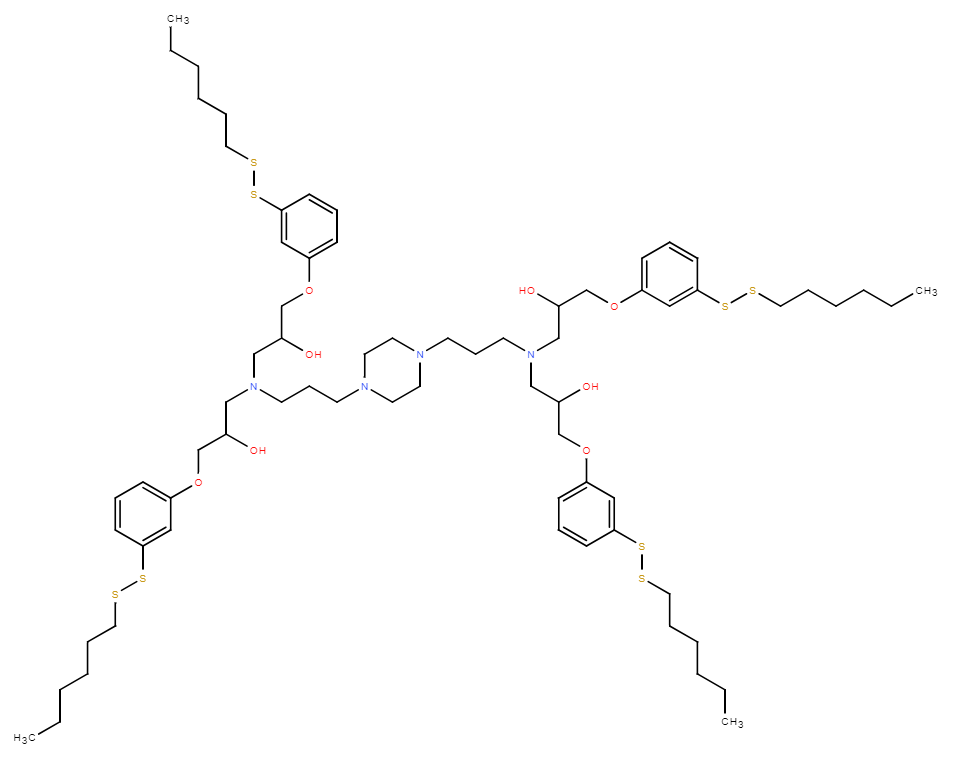

C6mPhE-383

  Cat. No.:  DC68030   Featured
Chemical Structure
For research use only. We do not sell to patients.
We match the best price and quality on market.
Email:order@dcchemicals.com  sales@dcchemicals.com
Tel:+86 21 58447131
We are official vendor of:
  • 20
  • 19
  • 18
  • 17
  • 16
  • 15
  • 14
  • 12
  • 11
  • 10
  • 9
  • 8
  • 13
  • 6
  • 5
  • 4
  • 3
  • 2
  • 1
More than 5000 active chemicals with high quality for research!
Field of application
C6mPhE-383 is a top-performing ionizable lipid featuring an aromatic ring and a bioreducible disulfide bond. Formulated into lipid nanoparticles, it preferentially delivers mRNA to lymphoid tissues (lymph nodes/spleen) while minimizing off-target liver accumulation after intramuscular injection. In a SARS-CoV-2 vaccine study, it elicited strong antibody responses, promoted protective effector memory T cells, and exhibited enhanced safety by significantly reducing systemic inflammatory cytokines compared to the standard SM-102 LNP.
Cas No.:
Chemical Name: C6mPhE-383
Synonyms: C6mPhE383;C6mPhE 383
Purity: >98%
Sotrage: 2 years -20°C Powder, 2 weeks 4°C in DMSO, 6 months -80°C in DMSO
Cat. No. Product name Field of application
DC68030 C6mPhE-383 C6mPhE-383 is a top-performing ionizable lipid featuring an aromatic ring and a bioreducible disulfide bond. Formulated into lipid nanoparticles, it preferentially delivers mRNA to lymphoid tissues (lymph nodes/spleen) while minimizing off-target liver accumulation after intramuscular injection. In a SARS-CoV-2 vaccine study, it elicited strong antibody responses, promoted protective effector memory T cells, and exhibited enhanced safety by significantly reducing systemic inflammatory cytokines compared to the standard SM-102 LNP.
DC67650 EB-Lipid EB-Lipid is an innovatively engineered ionizable lipid designed to replace conventional PEG-lipid in mRNA vaccine formulations. Its structure comprises three key components: an Evans Blue-derived headgroup with high affinity for albumin, a tetraethylene glycol linker that enhances colloidal stability, and dual oleate tails for anchoring into lipid bilayers. This molecular design enables EB-Lipid to actively recruit endogenous albumin, forming an albumin-rich protein corona on the surface of lipid nanoparticles (LNPs). Following intramuscular administration, these albumin-bound EB-LNPs are preferentially transported through lymphatic vessels rather than entering the bloodstream, thereby avoiding hepatic accumulation and associated hepatotoxicity risks.Experimental data demonstrate that EB-LNPs achieve significantly higher accumulation in lymph nodes, where they are efficiently internalized by dendritic cells via albumin receptor-mediated endocytosis (e.g., gp60). This process enhances antigen presentation and activates robust cellular and humoral immune responses. In both tumor models (B16-OVA and HPV-associated) and infectious disease models (H1N1 and SARS-CoV-2 Omicron), EB-LNP-based mRNA vaccines elicited potent cytotoxic T-cell activation and durable neutralizing antibody production at low doses. Unlike traditional PEG-LNPs, EB-LNPs show minimal liver distribution, reduced immunogenicity, and improved safety profiles after repeated administrations.By leveraging albumin’s natural trafficking pathway, EB-Lipid represents a transformative delivery platform that combines targeted lymph node delivery with enhanced biosafety, positioning it as a promising candidate for next-generation mRNA vaccines and therapeutics.
X