 To enhance service speed and avoid tariff delays, we've opened a US warehouse. All US orders ship directly from our US facility.
| Cat. No. | Product Name | Field of Application | Chemical Structure |
|---|---|---|---|
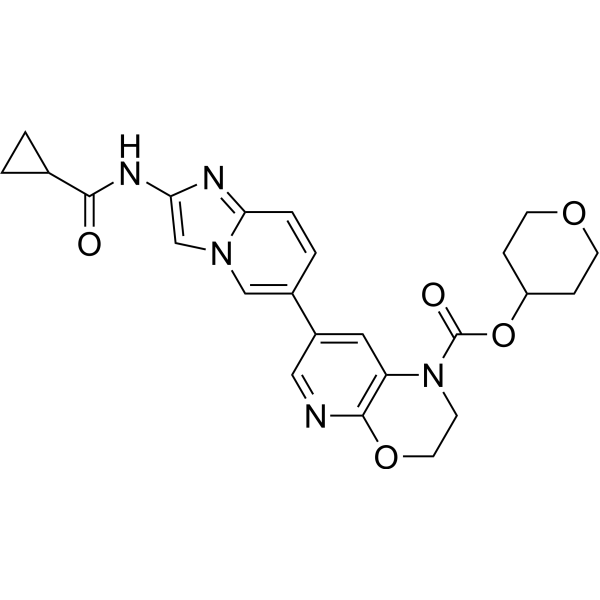
| DC73130 | AC-003 Featured |
AC-003 is a novel, orally administered small-molecule inhibitor targeting receptor-interacting protein kinase 1 (RIPK1), demonstrating therapeutic potential for the treatment of idiopathic pulmonary fibrosis (IPF).
More description
|
|
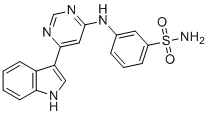
| DC70170 | AC3573 Featured |
AC3573 (AC-3573) is a potent, specific small molecule inhibitor of HER3.AC3573 abrogates HER2–HER3 signalling in cells and is more specific for HER3, inhibits NRG (heregulin)-induced HER3 phosphorylation with IC50 of 10 uM, abrogates the formation of the active HER2-HER3 heterodimer, inhibits oncogenic downstream signalling in SK-BR-3 breast cancer cells.
More description
|
|
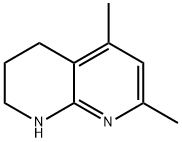
| DC73284 | F1957-0088 Featured |
F1957-0088 is a small molecule targeting the UHRF1 tandem Tudor domain (TTD) with TR-FRET (TTD vs. H3K9me3) EC50 of 45.1 uM.
More description
|
|
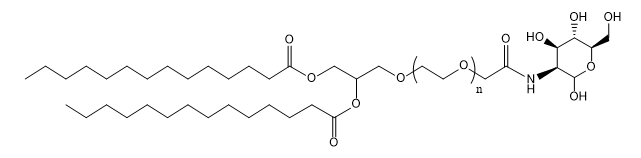
| DC67571 | DMG-PEG-Mannose Featured |
DMG-PEG-Mannose is a specialized functionalized lipid used primarily for the targeted delivery of lipid nanoparticles (LNPs) and liposomes to cells expressing mannose receptors, such as macrophages and dendritic cells. It combines a 1,2-dimyristoyl-sn-glycerol (DMG) lipid anchor with a polyethylene glycol (PEG) spacer and a terminal mannose sugar moiety.
More description
|
|
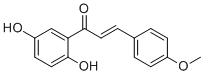
| DC74181 | SPI-21 Featured |
SPI-21 (Spt5-Pol II inhibitor 21) is a small-molecule inhibitor of Spt5-Pol II with IC50 of 25.2 uM.
More description
|
|
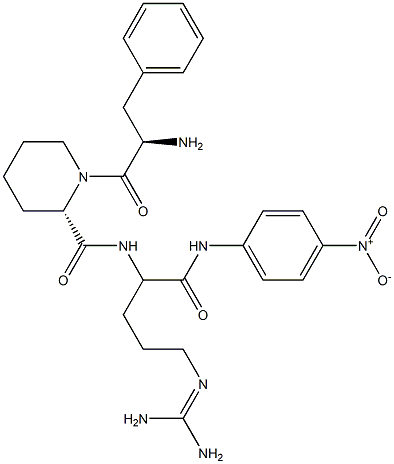
| DC40319 | H-D-Phe-Pip-Arg-pNA Featured |
H-D-Phe-Pip-Arg-pNA (S-2238), a chromogenic substrate, is patterned after the N-terminal portion of the A alpha chain of fibrinogen, which is the natural substrate of thrombin. H-D-Phe-Pip-Arg-pNA is specific for thrombin and is used to measure antithrombin-heparin cofactor (AT-III). The AT-III assay using H-D-Phe-Pip-Arg-pNA is sensitive, accurate, and easy to perform.
More description
|
|
| DC53059 | H-D-CHG-Ala-Arg-pNA.2AcOH(Substrate Th-1) Featured |
Chromogenic peptide substrate for the determination of thrombin and antithrombin III
More description
|

|
| DC71617 | Suc-Gly-Gly-Phe-pNA Featured |
The synthetic peptide Suc-Gly-Gly-Phe-pNA serves as a specific substrate for the enzyme chymotrypsin, demonstrating a Michaelis constant (Km) of 1.6 mM. This value reflects the substrate concentration at which the enzyme achieves half of its maximum reaction rate, indicating its affinity for the peptide.
More description
|

|
| DC67320 | Suc-Ile-Glu(γ-pip)-Gly-Arg-pNA hydrochloride Featured |
The activated factor X (FXa)-specific chromogenic substrate S-2732 is a short peptide covalently bound to pNA (4-nitroaniline). A free pNA will be cleaved off the peptide chain by activated factor X, thus enabling quantitive detection by a spectrophotometer.
More description
|
|
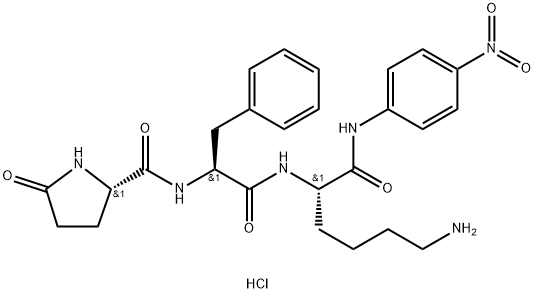
| DC67319 | S-2403(chromogenic substrate for plasmin and streptokinase-activated plasminoge) Featured |
S-2403 is a chromogenic substrate for plasmin and streptokinase-activated plasminoge
More description
|
|
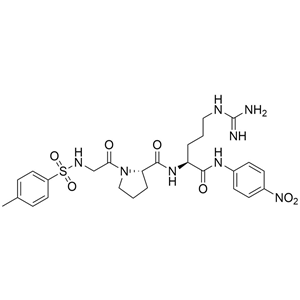
| DC11457 | Tos-Gly-Pro-Arg-pNA(Thrombin substrate) Featured |
Tos-Gly-Pro-Arg-pNa is a chromogenic substrate for Thrombin.
More description
|
|
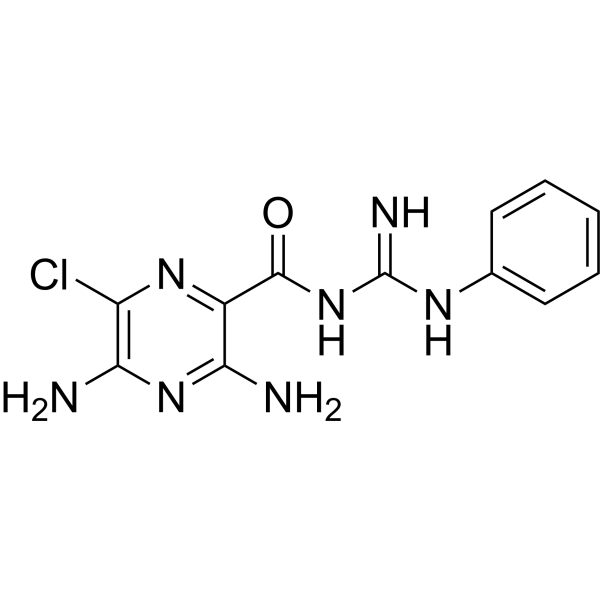
| DC43231 | Phenamil Featured |
Irreversible inhibitor of amiloride-sensitive Na channels; derivative of amiloride
More description
|
|
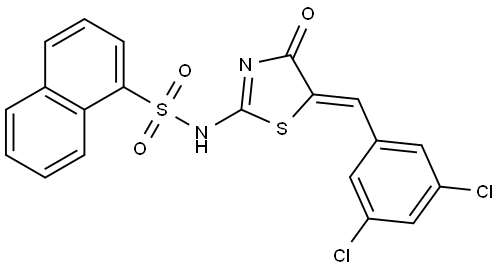
| DC67594 | Pitstop2-100 Featured |
|
|
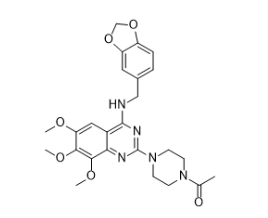
| DC73706 | ER-001135935 Featured |
ER-001135935 is a potent selective inhibitor of aldehyde dehydrogenase family 1 member A3 (ALDH1A3) with IC50 of 64 nM, Ki value of 106 nM.
More description
|
|
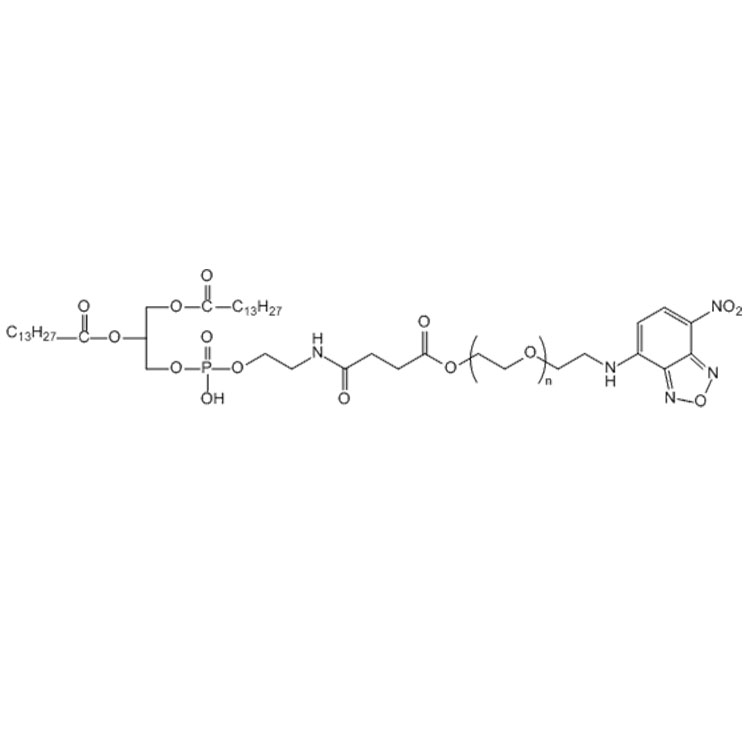
| DC66199 | DMPE-PEG-NBD (PEG2000) Featured |
DMPE-PEG, a synthetic lipid, possesses unique properties and finds extensive applications as liposomes. Firstly, DMPE-PEG exhibits excellent biocompatibility and solubility, allowing for its stable presence and efficient absorption and metabolism in vivo. Additionally, DMPE-PEG possesses good surface activity, aiding in the stabilization of liposome structures and enhancing their stability.
More description
|
|
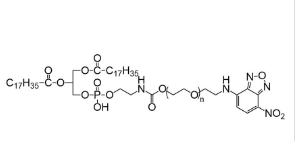
| DC66294 | DSPE-PEG-NBD(PEG2000) Featured |
DSPE-PEG-NBD is a fluorescent phospholipid PEG conjugate, which can be used as a lipid membrane probe. The excitation/emission wavelength of NBD is 460 nm/534 nm.
More description
|
|
| DC66293 | DSPE-PEG-N3(DSPE-PEG-Azide, MW2000) Featured |
DSPE-PEG-N3 is a click chemical PEG reagent. Azide group is easy to react with alkynyl group under the catalysis of copper catalyst. It can also react directly with DBCO without any catalyst. DSPE (1,2-distearoyl-sn-glycerol-3-phosphoethanolamine) is a saturated 18 carbon phospholipid, which is commonly used in the synthesis of liposomes. Polyethylene glycol (PEG) - coupled DSPE is hydrophilic and can be used for drug delivery, gene transfection and biomolecular modification. The PEG of phospholipid significantly improved the blood circulation time and stability of the capsule drug. Polyethylene glycol can enhance the solubility and stability, reduce the non-specific binding of charged molecules on the surface, and reduce the immunogenicity of polypeptides.
Azide (- N3) can react with copper catalyzed alkynes in aqueous solution and be reduced to amino groups. Polyethylene glycol can increase solubility and stability. It can also inhibit the nonspecific binding of charged molecules on the modified surface.
More description
|

|
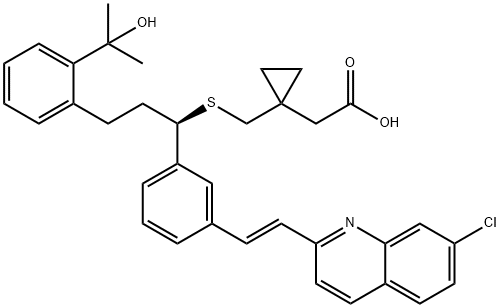
| DC40582 | Montelukast Featured |
Montelukast is a potent, selective and orally active antagonist of cysteinyl leukotriene receptor 1 (CysLT1). Montelukast can be used for the reseach of asthma and liver injury. Montelukast also has an antioxidant effect in intestinal ischemia-reperfusion injury, and could reduce cardiac damage.
More description
|
|
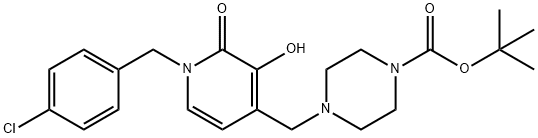
| DC48260 | Izilendustat Featured |
Izilendustat is a potent inhibitor of prolyl hydroxylase which can stabilize hypoxia inducible factor- 1 alpha (HIF- lα) and hypoxia inducible factor-2 (HIF-2). Izilendustat has the potential for researching diseases that relate to the body’s inmmune response like colitis and other inflammatory bowel diseases (extracted from patent WO2011057115A1 and WO2011057121A1).
More description
|
|
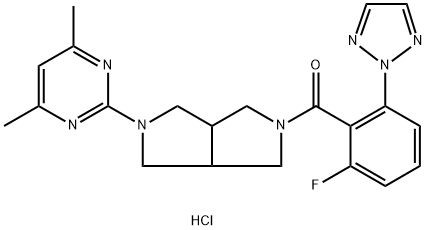
| DC28252 | Seltorexant hydrochloride Featured |
Seltorexant hydrochloride (JNJ-42847922 hydrochloride) is an orally active, high-affinity, and selective OX2R antagonist (pKi values of 8.0 and 8.1 for human and rat OX2R). Seltorexant hydrochloride crosses the blood-brain barrier and quickly occupies OX2R binding sites in the rat brain.
More description
|
|
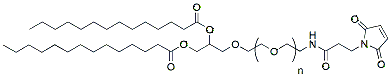
| DC67603 | DMG-PEG-Mal, MW 2,000 Featured |
DMG-PEG-Mal, MW 2,000 is a lipid PEG consisting of DMG and maleimide for reacting with thiols between pH 6.5 to 7.5
More description
|
|
| DC74503 | KH-103 Featured |
KH103 is a highly potent, catalytically-driven glucocorticoid receptor (GR) PROTAC degrader, demonstrate excellent performance in passively preventing ligand-induced gene expression activation in the absence of partial agonistic transcriptional triggering and crosstalk inhibition. KH 103 efficiently degrades glucocorticoid receptor (GR) in vitro and in vivo. In HEK293 cells, KH-103 (1 µM) induced rapid and nearly complete GR degradation within one hour. This degradation was highly potent, with significant depletion observed at 10 nM and near-complete depletion at 100 nM. KH-103 demonstrated effective and reversible GR degradation across diverse in vitro models from multiple tissues and species.Mechanistically, KH-103 promoted GR nuclear translocation but did not activate GR-mediated gene transcription and exhibited no nonspecific transcriptional effects alone. Furthermore, KH-103 effectively blocked dexamethasone (DEX)-induced GR signaling, demonstrating greater potency than comparator inhibitors.Critically, KH-103 also effectively depleted GR protein in the mouse pituitary gland in vivo and modulated corticosterone levels, confirming pharmacological activity beyond cell-based systems.
More description
|

|
| DC73230 | SD133 Featured |
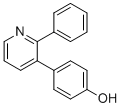
SD133 (Sd-133) is a drug-like small molecule inhibitor of adhesion molecule cadherin 11 (CDH11), binds specifically to the CDH11 binding pocket with KD of 25.2 uM in SPR assays.
More description
|
|
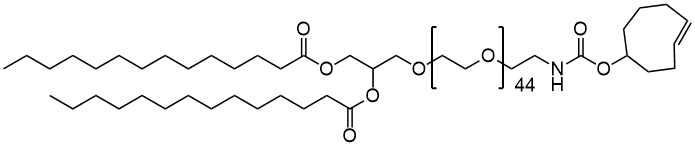
| DC67619 | DMG-PEG-TCO (MW2000) Featured |
DMG-PEG2000-TCO offer the ability to easily conjugate to specific biomolecules via metal free click chemistry to tetrazines. By changing the PEG length, one can change the micelle size, immunological safety, and change the drug release rate.
More description
|
|
| DC60665 | JNJ-74856665 Featured |
JNJ-74856665 is an orally bioavailable, potent, and selective DHODH inhibitor with IC50 of 0.40 nM. JNJ-74856665 shows favorable physicochemical properties and has been selected for clinical development in patients with AML and myelodysplastic syndromes (MDS).
More description
|

|
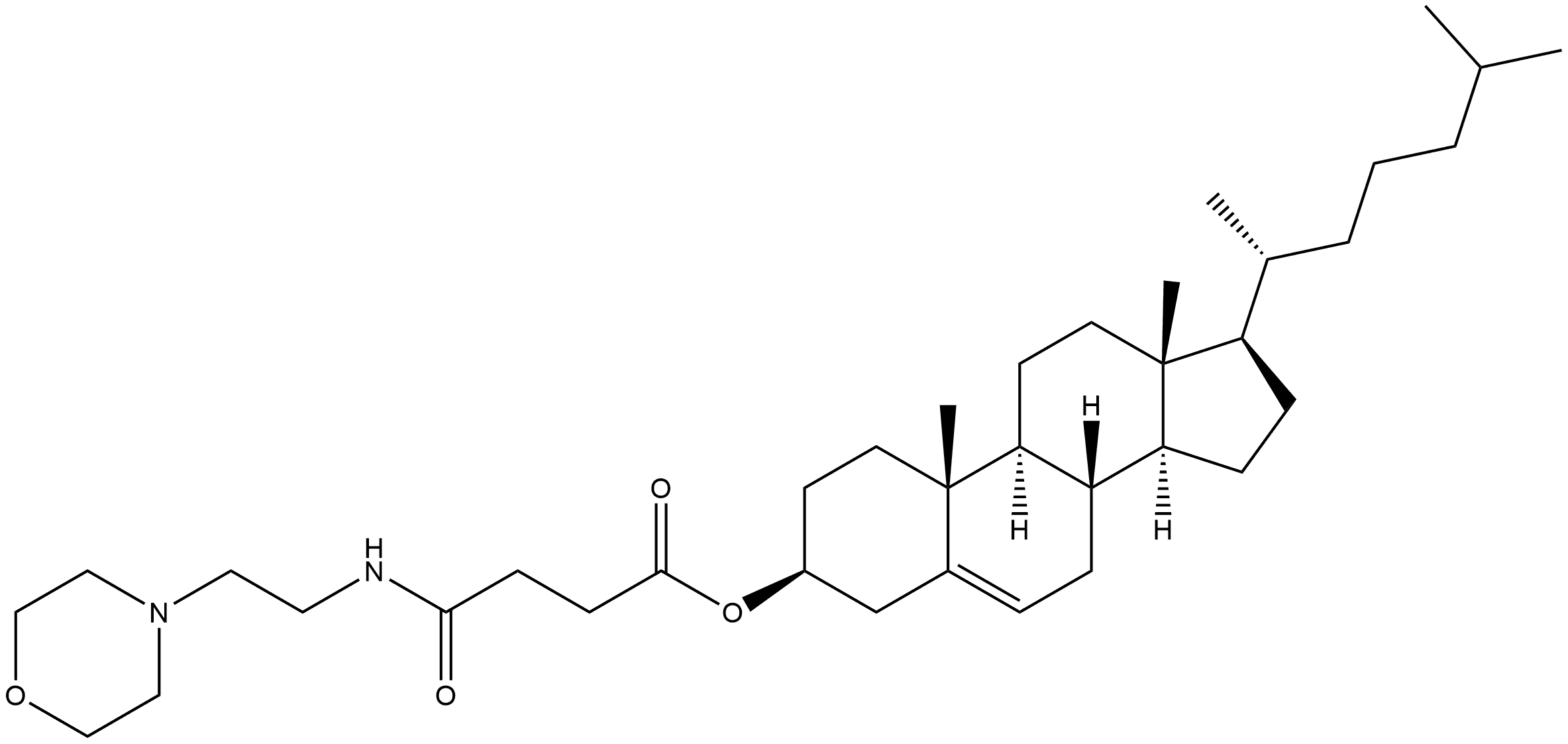
| DC67623 | MOCHOL Featured |
MOCHOL is an ionizable morpholine-modified cholesterol derivative. Unlike ordinary cholesterol that only stabilizes lipid bilayers, its tertiary amine head protonates in acidic endosomes to boost mRNA release via proton sponge effect. It reduces LNP hemolysis and serum lipid exchange, weakens hepatic tropism, and works compatibly with SM-102, AO12 and other ionizable lipids for extrahepatic mRNA delivery.
More description
|
|
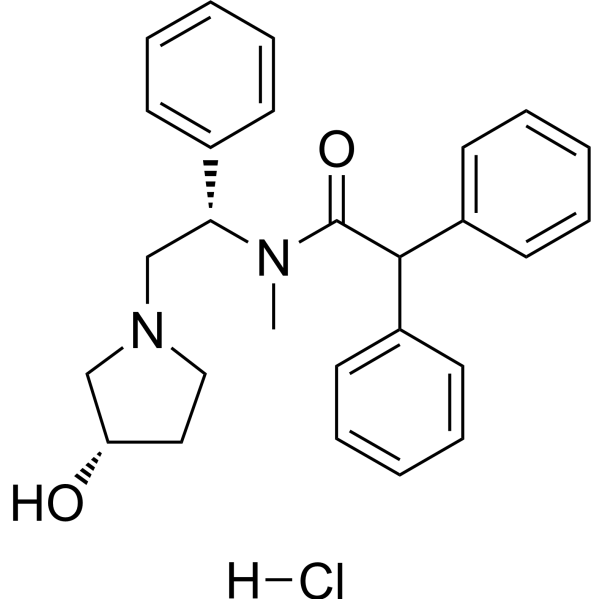
| DC33138 | N-[(1S)-2-[(3S)-3-hydroxy-1-pyrrolidinyl]-1-phenylethyl]-N-methyl-a-phenyl-benzeneacetamide hydrochloride Featured |
Asimadoline HCl is a κ-opioid receptor agonist potentially for the treatment of pruritus. Asimadoline has also been shown to be used in the treatment of irritable bowel syndrome.
More description
|
|
| DC74555 | GYS32661 Featured |
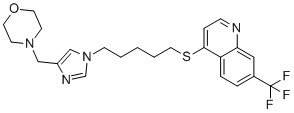
GYS32661 is a potent, small-molecule inhibitor of RAC1 and its isoform RAC1B, specifically designed to target the Sonic Hedgehog (Shh) signaling pathway in cancers like medulloblastoma and colorectal carcinoma. Distinguishing itself from other RAC1 inhibitors, GYS32661 exhibits exceptional blood-brain barrier (BBB) permeability with an approximately 50% brain-to-plasma ratio, making it a premier candidate for treating CNS-related malignancies. It functions by disrupting the activation of RAC1 (IC50 ≈ 1.18 μM), subsequently reducing the expression of downstream transcription factors GLI1 and GLI2, which effectively halts tumor proliferation and metastasis. In preclinical in vivo models, the compound has demonstrated significant anti-tumor efficacy and a favorable safety profile without systemic toxicity. Due to its hydrophobic nature, it is typically formulated in a vehicle of DMSO, PEG300, and saline for administration. As a non-toxic clinical candidate, GYS32661 represents a promising therapeutic strategy for overcoming chemoresistance and improving survival rates in Shh-driven pediatric and adult tumors.
More description
|
|
| DC74282 | HY041004 Featured |
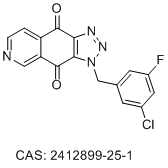
HY041004 is the first small molecule inhibitor of deubiquitinase Josephin Domain-containing protein 2 (JOSD2) with IC50 of 0.26 uM for JOSD2 catalytic activity inhibition.
More description
|
|
| DC73178 | SNX631 Featured |
SNX631 (SNX-631) is a potent, selective inhibitor of CDK8/19 Mediator kinase with IC50 of 10.3 nM in the NF κB-dependent cell-based assays.
More description
|

|
