To enhance service speed and avoid tariff delays, we've opened a US warehouse. All US orders ship directly from our US facility.
| Cat. No. | Product Name | Field of Application | Chemical Structure |
|---|---|---|---|
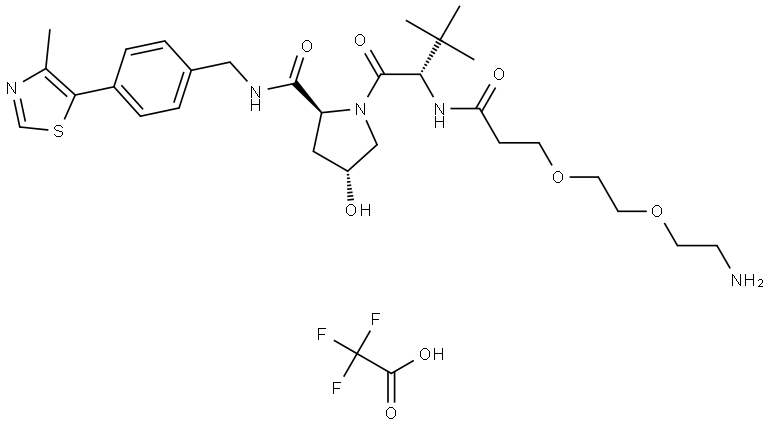
| DC67727 | (2S,4R)-1-((S)-2-(3-(2-(2-aminoethoxy)ethoxy)propanamido)-3,3-dimethylbutanoyl)-4-hydroxy-N-(4-(4-methylthiazol-5-yl)benzyl)pyrrolidine-2-carboxamide 2,2,2-trifluoroacetate Featured |
|
|
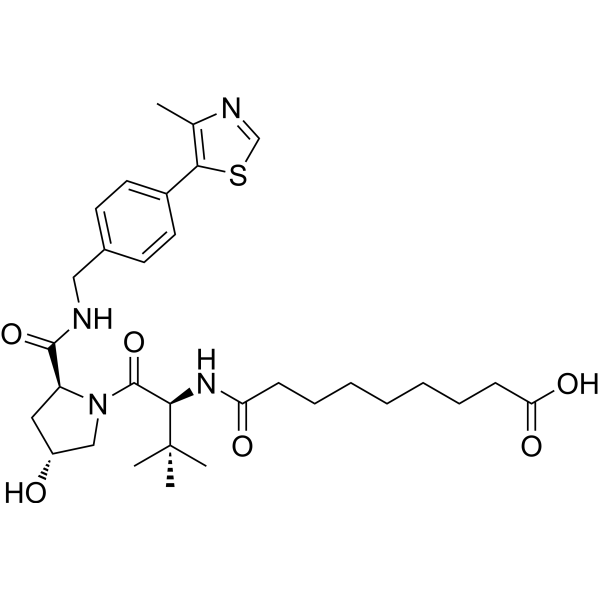
| DC67729 | (S,R,S)-AHPC-amido-C7-acid Featured |
(S,R,S)-AHPC-amido-C7-acid incorporates a VHL ligand for the E3 ubiquitin ligase and a PROTAC linker. (S,R,S)-AHPC-amido-C5-acid can be used to design PROTACs.
More description
|
|
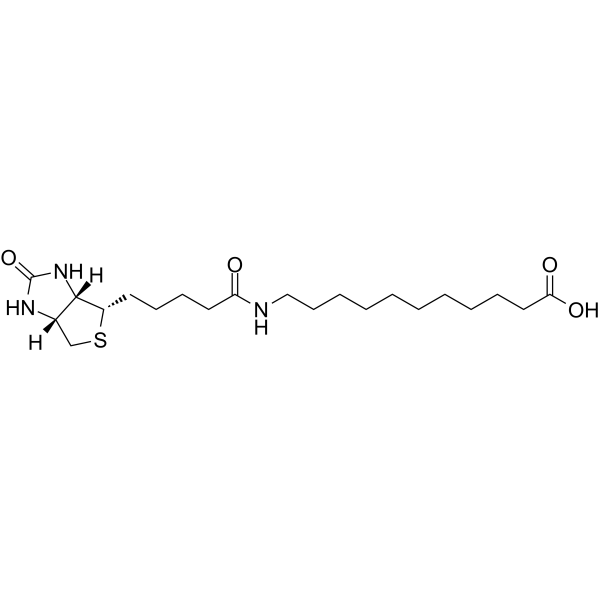
| DC67733 | Biotin-SLC Featured |
(+)-Biotin-SLC is an alkyl chain-based PROTAC linker that can be used in the synthesis of PROTACs.
More description
|
|
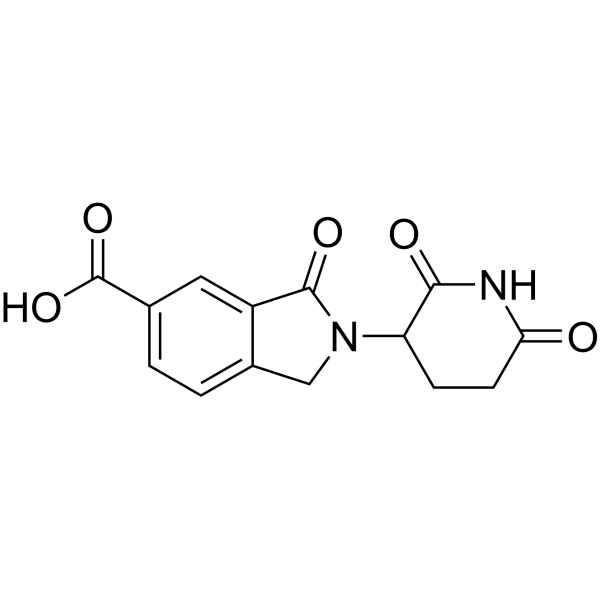
| DC67731 | Desamino lenalidomide-5-COOH Featured |
Desamino lenalidomide-5-COOH is an E3 ubiquitin ligase cereblon (CRBN) ligand used to recruit the cereblon protein. Desamino lenalidomide-5-COOH can be linked to a target protein ligand via a linker to form a PROTAC.
More description
|
|
| DC67736 | 1H-Isoindole-1,3(2H)-dione, 4-[(10-aminodecyl)amino]-2-(2,6-dioxo-3-piperidinyl)- Featured |
-dione, 4-[(10-aminodecyl)amino]-2-(2,6-dioxo-3-piperidinyl)-.gif)
|
|
| DC67734 | (2S,4R)-1-((S)-2-(7-aminoheptanamido)-3,3-dimethylbutanoyl)-4-hydroxy-N-((S)-1-(4-(4-methylthiazol-5-yl)phenyl)ethyl)pyrrolidine-2-carboxamide hydrochloride Featured |
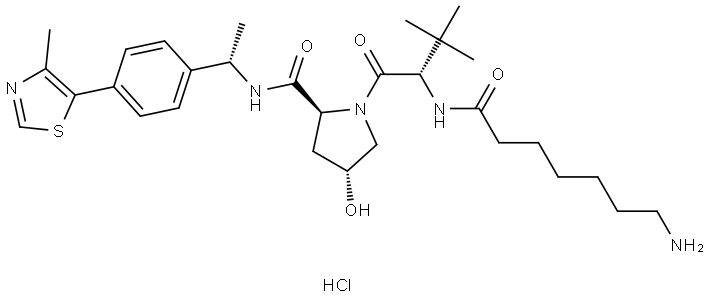
|
|
| DC67738 | Glycine, N-[2-(2,6-dioxo-3-piperidinyl)-2,3-dihydro-1-oxo-1H-isoindol-4-yl]- Featured |
-2,3-dihydro-1-oxo-1H-isoindol-4-yl]-.gif)
|
|
| DC67740 | Acetamide, 2-[2-(2-chloroethoxy)ethoxy]-N-[2-(2,6-dioxo-3-piperidinyl)-2,3-dihydro-1,3-dioxo-1H-isoindol-5-yl]- Featured |
ethoxy]-N-[2-(2,6-dioxo-3-piperidinyl)-2,3-dihydro-1,3-dioxo-1H-isoindol-5-yl]-.gif)
|
|
| DC67739 | N-((4,6-dimethyl-2-oxo-1,2-dihydropyridin-3-yl)methyI)-1-isopropyl-6-(6-(4-(2-(3-mercaptopropanamido)ethyl)piperazin-1-yl)pyridin-3-yl)-1H-indazole-4-carboxamide Featured |
methyI)-1-isopropyl-6-(6-(4-(2-(3-mercaptopropanamido)ethyl)piperazin-1-yl)pyridin-3-yl)-1H-indazole-4-carboxamide.gif)
|
|
| DC67741 | (2S,4R)-1-((S)-2-(Hex-5-ynamido)-3,3-dimethylbutanoyl)-4-hydroxy-N-(4-(4-methylthiazol-5-yl)benzyl)pyrrolidine-2-carboxamide Featured |
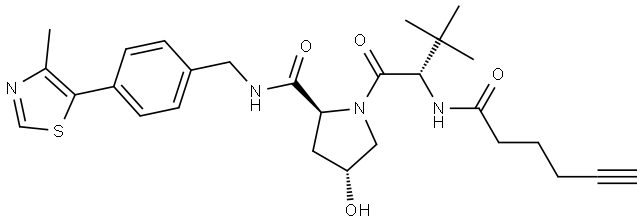
|
|
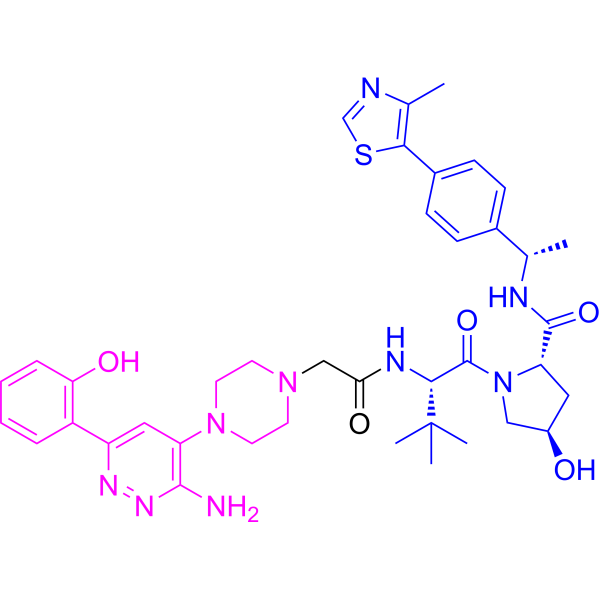
| DC48049 | AU-15330 Featured |
AU-15330 is a proteolysis-targeting chimera (PROTAC) degrader of the SWI/SNF ATPase subunits, SMARCA2 and SMARCA4. AU-15330 induces potent inhibition of tumour growth in xenograft models of prostate cancer and synergizes with the AR antagonist enzalutamide. AU-15330 induces disease remission in castration-resistant prostate cancer (CRPC) models without toxicity.
More description
|
|
| DC67742 | L-Proline, 1-[(2S)-2-(1,3-dihydro-1-oxo-2H-isoindol-2-yl)-3-methyl-1-oxobutyl]-4-hydroxy-, (4R)- Featured |
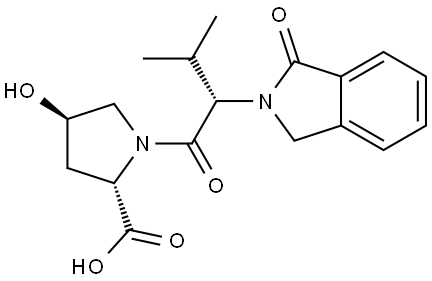
|
|
| DC67743 | 9H-Pyrimido[4,5-b]indole-2-carboxylic acid, 4-chloro-7-(3,5-dimethyl-4-isoxazolyl)-6-methoxy-, methyl ester Featured |
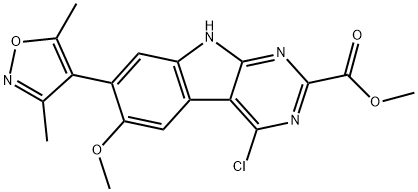
|
|
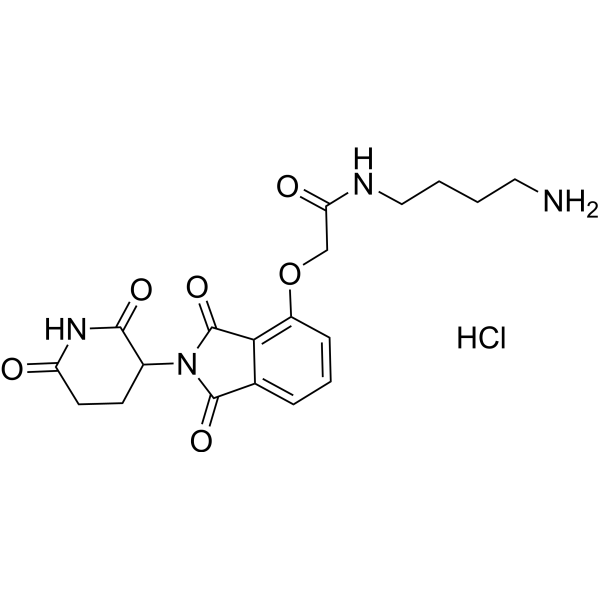
| DC67744 | Thalidomide-O-amido-C4-NH2 hydrochloride Featured |
Thalidomide-O-amido-C4-NH2 hydrochloride, a synthesized E3 ligase ligand-linker conjugate that incorporates the Thalidomide based cereblon ligand and a linker, can be used in the synthesis of PROTACs.
More description
|
|
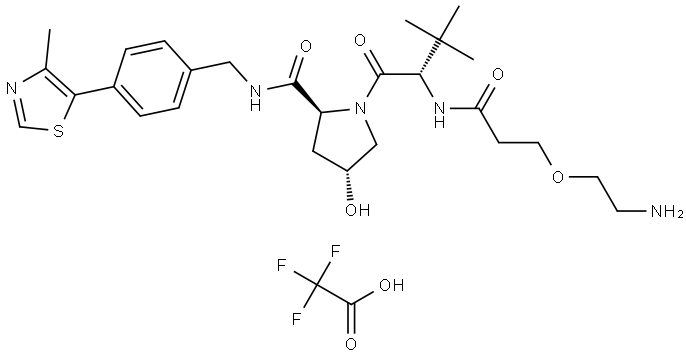
| DC67745 | (S,R,S)-AHPC--CO-PEG1-C2-amine HCl Featured |
|
|
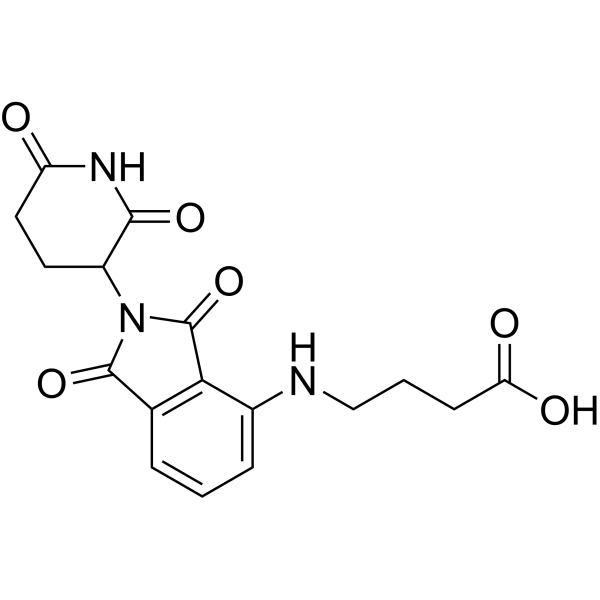
| DC67748 | Pomalidomide 4'-alkylC3-acid Featured |
Pomalidomide 4'-alkylC3-acid is the E3 ligase ligand-linker conjugate used in the recruitment of CRBN protein. Pomalidomide 4'-alkylC3-acid can be used to synthesize PROTACs.
More description
|
|
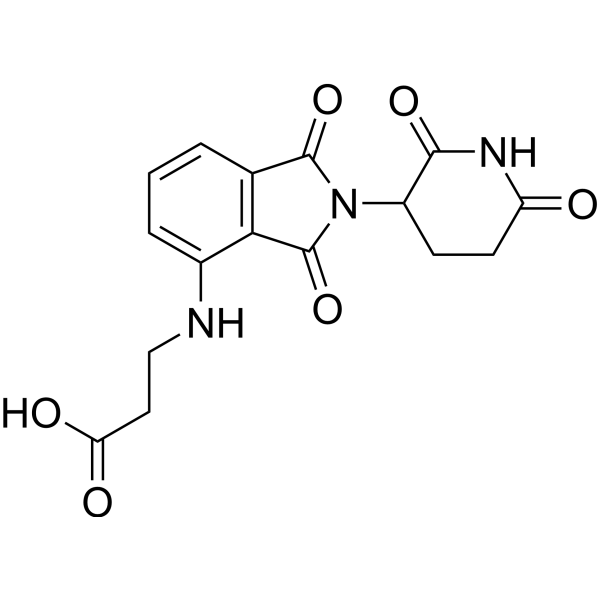
| DC67749 | Pomalidomide-C2-acid Featured |
Pomalidomide-C2-acid is a synthesized E3 ligase ligand-linker conjugate that incorporates the Pomalidomide based cereblon ligand and a linker used in PROTAC technology.
More description
|
|
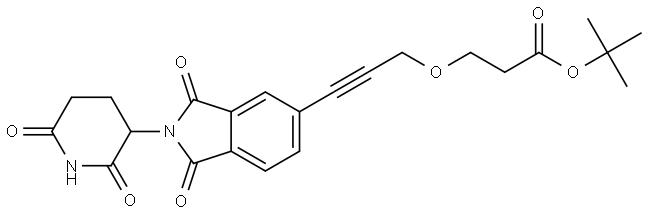
| DC67751 | tert-butyl 3-({3-[2-(2,6-dioxopiperidin-3-yl)-1,3-dioxoisoindol-5-yl]prop-2-yn-1-yl}oxy)propanoate Featured |
|
|
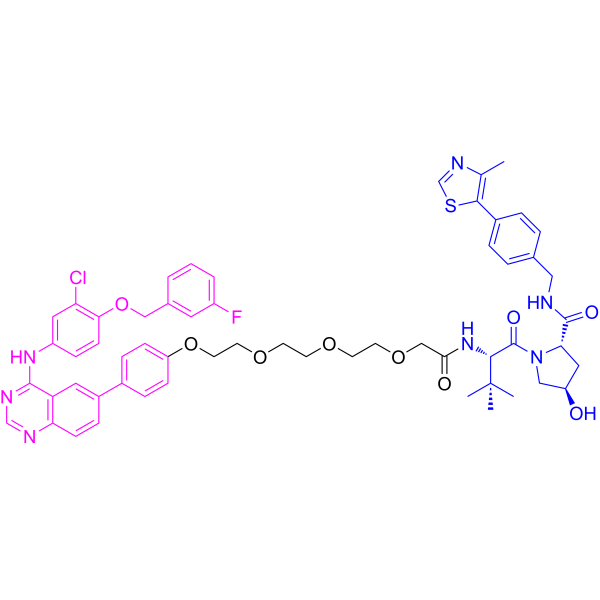
| DCC4750 | Sjf-1521 Featured |
SJF-1521 is a selective EGFR PROTAC degrader. SJF-1521 is capable of inducing EGFR degradation in OVCAR8 cells. SJF-1521 can be used for tumor research.
More description
|
|
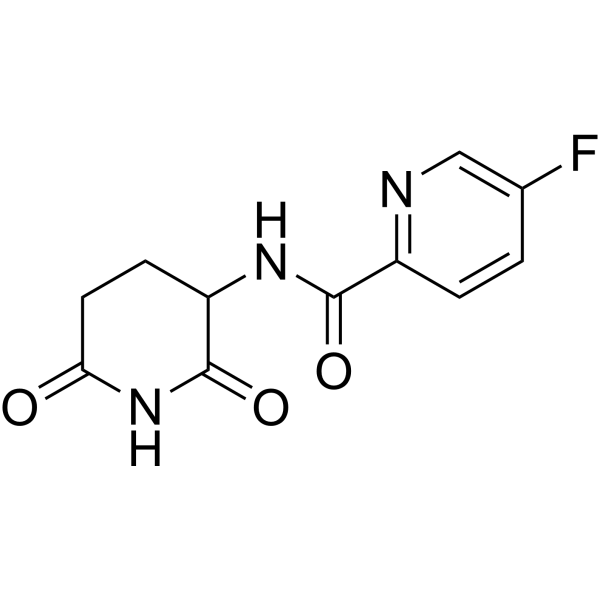
| DC67762 | CRBN ligand-204 Featured |
CRBN ligand-204 is an E3 ubiquitin ligase cereblon (CRBN) ligand used to recruit the cereblon protein. CRBN ligand-204 can be linked to a target protein ligand via a linker to form a PROTAC.
More description
|
|
| DC67768 | tert-Butyl (14-((2-(2,6-dioxopiperidin-3-yl)-1-oxoisoindolin-4-yl)amino)-14-oxo-3,6,9,12-tetraoxatetradecyl)carbamate Featured |

|
|
| DC67770 | (S,R,S)-AHPC-C5-COOH Featured |
(S,R,S)-AHPC-C5-COOH (VH032-C5-COOH) is a synthesized E3 ligase ligand-linker conjugate, contains the VH032 VHL-based ligand and a linker to form PROTACs. VH-032 is a selective and potent inhibitor of VHL/HIF-1α interaction with a Kd of 185 nM, has the potential for the study of anemia and ischemic diseases.
More description
|
-AHPC-C5-COOH.gif)
|
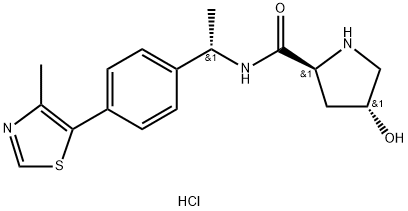
| DC67771 | (2S,4R)-4-hydroxy-N-((S)-1-(4-(4-methylthiazol-5-yl)phenyl)ethyl)pyrrolidine-2-carboxamide hydrochloride Featured |
|
|
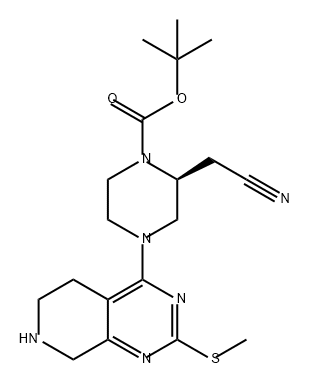
| DC67772 | tert-butyl (2S)-2-(cyanomethyl)-4-(2-methylsulfanyl-5,6,7,8-tetrahydropyrido[3,4-d]pyrimidin-4-yl)piperazine-1-carboxylate Featured |
|
|
| DC67774 | 2-(4-Chloro-phenylamino)-thiazole-4-carboxylic acid Featured |
-thiazole-4-carboxylic acid.gif)
|
|
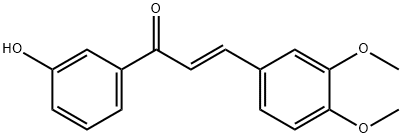
| DC67779 | (E)-3-(3,4-DIMETHOXYPHENYL)-1-(3-HYDROXYPHENYL)-1-PROPENONE Featured |
|
|
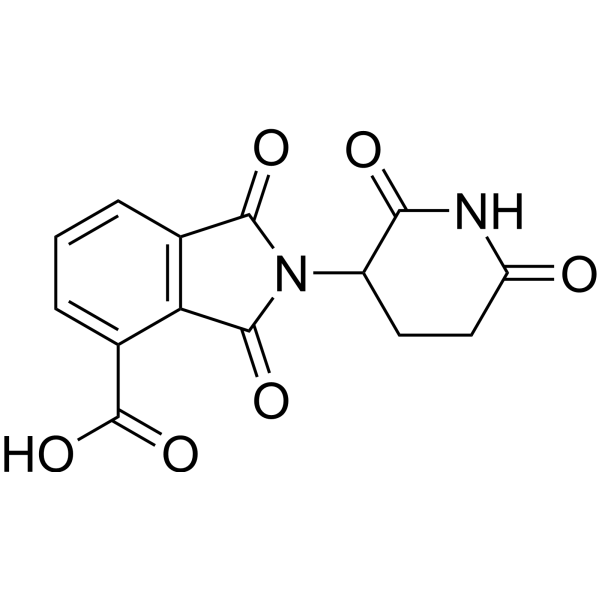
| DC67780 | Thalidomide acid Featured |
Thalidomide acid is a Thalidomide analog that can be useful in PROTAC research.
More description
|
|
| DC67790 | Benzoic acid, 4-chloro-3-(tetrahydro-2,4-dioxo-1(2H)-pyrimidinyl)- Featured |
-pyrimidinyl)-.gif)
|
|
| DC67787 | 4-BROMO PHTHALIC ANHYDRUS Featured |
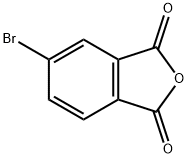
|
|
| DC67792 | Benzonitrile, 4-(4-methyl-5-thiazolyl)-2-(phenylmethoxy)- Featured |
-2-(phenylmethoxy)-.gif)
|