To enhance service speed and avoid tariff delays, we've opened a US warehouse. All US orders ship directly from our US facility.
| Cat. No. | Product Name | Field of Application | Chemical Structure |
|---|---|---|---|
| DC20164 | PF-04965842 (Abrocitinib) Featured |
PF-04965842 is a selective Janus kinase 1 (JAK1) inhibitor, demonstrating potent activity against JAK1 with an IC50 of 29 nM. Its selectivity is evident from its significantly higher IC50 values for other JAK family members: 803 nM for JAK2, > 10,000 nM for JAK3, and 1,250 nM for TYK2. This selectivity profile suggests that PF-04965842 preferentially targets JAK1 over other JAK isoforms, which could be advantageous in reducing off-target effects and improving therapeutic outcomes in conditions where JAK1 signaling is implicated.
More description
|

|
| DC45033 | RapiFluor-MS Featured |
RapiFluor-MS can be used a marker for LC-MS/MS analysis of N-glycans, which provides the highest MS signal enhancement for neutral glycans.
More description
|

|
| DC22747 | AICP Featured |
AICP is a highly potent and selective GluN2C-containing NMDA receptor agonist that specifically targets the glycine-binding site of these receptors. It exhibits an EC50 of 1.7 nM at GluN1/GluN2C NMDA receptors, making it a powerful tool for studying the functional roles of GluN2C-containing NMDA receptors in the central nervous system.
More description
|

|
| DC74218 | UT-59 Featured |
UT-59 is a specific inhibitor that targets the cholesterol-sensing membrane protein Scap (SREBP cleavage-activating protein). It functions by binding to Scap's cholesterol-binding site, which prevents Scap from interacting with SREBPs (sterol regulatory element-binding proteins). This inhibition blocks the activation of SREBPs, which are key transcription factors involved in lipid and cholesterol biosynthesis. As a result, UT-59 effectively suppresses lipid synthesis, making it a potential therapeutic candidate for conditions associated with dysregulated lipid metabolism, such as hyperlipidemia, atherosclerosis, or metabolic disorders.
More description
|

|
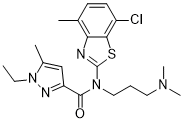
| DC42587 | Bexin-1 Featured |
Bexin-1 is a specific inhibitor that targets Munc13-4, a protein critical for regulated exocytosis, particularly in secretory cells such as immune cells (e.g., cytotoxic T lymphocytes, mast cells) and neuroendocrine cells. Munc13-4 plays a key role in vesicle priming and fusion with the plasma membrane, a process essential for the release of secretory granules containing hormones, neurotransmitters, or immune mediators.
More description
|
|
| DC72629 | Eucatropine Featured |
Eucatropine is a synthetic anticholinergic agent that acts as a potent inhibitor of muscarinic acetylcholine receptors (mAChRs). These receptors are part of the parasympathetic nervous system and play a key role in mediating the effects of acetylcholine, a neurotransmitter involved in various physiological processes such as smooth muscle contraction, glandular secretion, and heart rate regulation.
More description
|

|
| DC9605 | Dienogest Featured |
Dienogest(STS-557) is a specific progesterone receptor agonist with potent oral endometrial activity and is used in the treatment of endometriosis.
More description
|

|
| DC73789 | K306 Featured |
K306 is a small molecule agonist that specifically targets SH2-containing 5' inositol phosphatase 1 (SHIP1), an enzyme involved in regulating cellular signaling pathways. SHIP1 is a lipid phosphatase that hydrolyzes the 5' phosphate of phosphatidylinositol-3,4,5-trisphosphate (PIP3), converting it to phosphatidylinositol-3,4-bisphosphate (PI(3,4)P2). This activity modulates the PI3K (phosphoinositide 3-kinase) signaling pathway, which is critical for cell survival, proliferation, and immune responses.
More description
|

|
| DC72952 | Savirin Featured |
Savirin (S. aureus virulence inhibitor) is a small molecule that targets the agr (accessory gene regulator) quorum sensing system in Staphylococcus aureus (S. aureus). The agr system is a key regulatory pathway that controls the expression of virulence factors in S. aureus, which are critical for its pathogenicity. The system involves a two-component signal transduction pathway consisting of AgrC (a histidine kinase) and AgrA (a response regulator).
More description
|

|
| DC47821 | Ricinine Featured |
Ricinine is a pyridine alkaloid found in the seeds and leaves of the castor oil plant (Ricinus communis). While Ricinus communis is primarily known for producing ricin, a highly toxic protein, ricinine itself is a less toxic compound and has been studied for its potential pharmacological properties, including hepatoprotective effects.
More description
|

|
| DC28765 | Ethacizine hydrochloride Featured |
Ethacizine hydrochloride (Ethacizin; NIK-244) is a Class Ic antiarrhythmic agent, which means it is part of a group of drugs that primarily act by blocking sodium channels in the heart. This class of antiarrhythmic agents is known for their potent effects on slowing conduction in the heart, particularly in the atria, ventricles, and the His-Purkinje system.
More description
|

|
| DC1037 | AZD2461 Featured |
AZD2461 is indeed a novel poly (ADP-ribose) polymerase (PARP) inhibitor that has been investigated for its potential to overcome resistance mechanisms associated with other PARP inhibitors, such as Olaparib. One of the key resistance mechanisms to Olaparib is mediated by P-glycoprotein (Pgp), an efflux pump that can reduce intracellular concentrations of the drug, thereby diminishing its efficacy.
More description
|

|
| DC1069 | AZD6244 (Selumetinib,ARRY-142886) Featured |
AZD6244 (Selumetinib, ARRY-142886) is highly potent to inhibit MEK1 with IC50 of 14 nM.
More description
|

|
| DCAPI1187 | Nobiletin (Hexamethoxyflavone) Featured |
Nobiletin is a poly-methoxylated flavone from the citrus peel that improves memory loss. Nobiletin is a retinoid acid receptor-related orphan receptors (RORs) agonist. Nobiletin can reduce reactive oxygen species (ROS) levels in differentiated C2C12 myotubes and has anti-inflammation and anti-cancer properties, including anti-angiogenesis, anti-proliferation, anti-metastasis and induced apoptosis.
More description
|

|
| DC12282 | Semaglutide (sodium salt) Featured |
Semaglutide, a long-acting GLP-1 analogue, is a glucagon-like peptide-1 (GLP-1) receptor agonist that can be used in the treatment of type 2 diabetes.
More description
|

|
| DC45570 | Tirzepatide (LY3298176) Featured |
Tirzepatide (LY3298176, GIP/GLP-1 RA, TZP) is a dual GIP/GLP-1 receptor agonist. Tirzepatide differentially induces internalization of the GIP and GLP-1 receptors with EC50 values of 18.2 nM and 18.1 nM, respectively.
More description
|

|
| DCC3875 | Octreotideacetate Featured |
Agonist of sst2, sst3 and sst5 somatostatin receptors
More description
|

|
| DC37766 | Eptifibatide Featured |
Eptifibatide is a potent glycoprotein IIb/IIIa antagonist (GPIIb/IIIa; Kd = 120 nM) that inhibits platelet aggregation. Eptifibatide prevents binding of the adhesion proteins fibrinogen and von Willebrand factor to GPIIb/IIIa on the surface of activated platelets to prevent aggregation and thrombus formation. It inhibits ADP-induced citrated blood aggregation (IC50 = 0.11-0.22 μg/ml) in vitro and in vivo (IC50 = 52 μg/ml in porcine plasma). Formulations containing eptifibatide have been used to reduce risk of thrombolysis in myocardial infarction in patients undergoing percutaneous coronary intervention.
More description
|

|
| DC23914 | Thymalfasin Featured |
An immunoactive peptide that has been shown to inhibit cell proliferation and induce apoptosis in human leukemia, non-small cell lung cancer, melanoma, and other human cancers.
More description
|

|
| DC9553 | Carbetocin Featured |
Carbetocin (marketed under brand names such as Lonactene and Duratocin) is a synthetic analogue of oxytocin, specifically designed for use in obstetrics to prevent and manage postpartum hemorrhage (PPH), a leading cause of maternal mortality worldwide. It is a long-acting agonist of peripheral oxytocin receptors, making it highly effective in inducing uterine contractions and reducing bleeding after childbirth.
More description
|

|
| DC70134 | Oxytocin Featured |
A peptide hormone and neuropeptide that is released into the bloodstream as a hormone in response to stretching of the cervix and uterus during labor and with stimulation of the nipples from breastfeeding.
More description
|

|
| DC23939 | Atosiban Featured |
Atosiban (RW22164; RWJ22164) is indeed a nonapeptide and a competitive antagonist of the vasopressin and oxytocin receptors. It is structurally similar to oxytocin but lacks the amino group at the N-terminus, making it a desamino-oxytocin analogue. Atosiban is primarily used as a tocolytic agent, which means it helps to inhibit premature labor by blocking the action of oxytocin on the uterus. This makes it particularly valuable in the management of spontaneous preterm labor, as it can help delay delivery, providing critical time for administering corticosteroids to enhance fetal lung maturity or for transferring the mother to a facility with appropriate neonatal care.
More description
|

|
| DC73949 | CMP05-7 Featured |
CMP05-7 (Endosomolytic compound CMP05-7) is a novel endosomolytic small-molecule compound that exhibits higher transfection efficiency/ability to induce endosomal escape of oligonucleotides (ONs) than current compounds such as chloroquine.
More description
|

|
| DC74372 | CDD-1281 Featured |
CDD-1281 (CDD1281) is a potent, selective inhibitor of BMP type 2 receptor BMPR2 with IC50 of 1.2 nM and Kiapp value of 8 nM.
More description
|

|
| DC74224 | XST-20 Featured |
XST-20 is a small molecule that selectively targets the DNA-binding domain (DBD) of FOXM1, atranscription factor involved in cell cycle progression, proliferation, and cancer development. Witha surface plasmon resonance (SPR)-derived binding affinity (Kd) of 20 uM, XST-20 effectivelysuppresses FOXM1's transcriptional activities, making it a promising candidate for targetingFOXM1-driven cancers, such as ovarian cancer.
More description
|

|
| DC73863 | ODH-08 Featured |
ODH-08 is a novel specific small molecule ligand and agonist of RORα with KD value of 8.4 um, shows potent antifibrotic effect.
ODH-08 does not activate other nuclear receptors involved in lipid metabolism such as PPARα, PPARγ, PPARδ, and LXRα.
ODH-08 reduces hepatic collagen deposition and expression levels of fibrogenic markers such as α-smooth muscle actin and collagen type I alpha 1 chain in Western diet-fed mice.
ODH-08 suppresses the expression of fibrogenic proteins in hepatic stellate cells (HSCs).
ODH-08 suppresses the activity of SMAD2 and 3, which are the primary downstream proteins of transforming growth factor β.
More description
|

|
| DC21170 | JNJ525 Featured |
JNJ525 is a small molecule inhibitor that targets tumor necrosis factor alpha (TNFα), a cytokine involved in inflammation and immune regulation. TNFα exerts its biological effects by binding to its receptors, TNFR1 (TNF receptor 1) and TNFR2 (TNF receptor 2). JNJ525 works by preventing the formation of TNFα complexes with these receptors, thereby inhibiting TNFα-mediated signaling pathways.
More description
|

|
| DC74454 | aNDR1 Featured |
aNDR1 (NDR1 agonist) is a specific small-molecule agonist of Nuclear Dbf2-related kinase 1 (NDR1, STK38), specifically inhibits CRPC cells and promotes kinase activity of NDR1.
More description
|

|
| DCC1166 | BU99008 Featured |
BU99008 is non-radiolabled compound. 11C-BU99008 is a PET Ligand for the imidazoline2 Binding Sites in Rhesus Brain.
More description
|

|
| DCC3584 | NCGC00161856 Featured |
NCGC00161856 is identified as the first small-molecule ligand and inverse agonist of the thyroid-stimulating hormone receptor (TSHR). It inhibits basal cAMP production in HEK-EM 293 cells that stably express TSHRs, with a half-maximal inhibitory concentration (IC50) of 3.0 µM. This means that NCGC00161856 effectively reduces the constitutive activity of TSHR, which is the receptor's activity in the absence of its natural ligand (thyroid-stimulating hormone, TSH).
More description
|

|