Alternate TextTo enhance service speed and avoid tariff delays, we've opened a US warehouse. All US orders ship directly from our US facility.
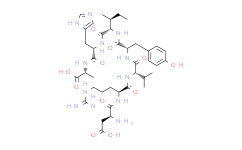

A-779

  Cat. No.:  DC11372   Featured
Chemical Structure
159432-28-7
For research use only. We do not sell to patients.
We match the best price and quality on market.
Email:order@dcchemicals.com  sales@dcchemicals.com
Tel:+86 21 58447131
We are official vendor of:
  • 20
  • 19
  • 18
  • 17
  • 16
  • 15
  • 14
  • 12
  • 11
  • 10
  • 9
  • 8
  • 13
  • 6
  • 5
  • 4
  • 3
  • 2
  • 1
More than 5000 active chemicals with high quality for research!
Field of application
A-779 is a peptide antagonist of the Mas receptor, also known as the angiotensin (1-7) (Ang (1-7)) receptor (IC50 = 0.3 nM in a radioligand binding assay).
Cas No.: 159432-28-7
Chemical Name: 1-7-Angiotensin II,5-L-isoleucine-7-D-alanine-
Synonyms: (D-Ala7)-Angiotensin I/II (1-7) A-779;(D-ALA7)-ANGIOTENSIN I/II (1-7);1-7-Angiotensin II,5-L-isoleucine-7-D-alanine-;(D-Ala?)-AngiotensinI;A-779;II (1-7) A-779;II (1-7);H-ASP-ARG-VAL-TYR-ILE-HIS-D-ALA-OH;DRVYIHA;DRVYIH{d-ALA};ASP-ARG-VAL-TYR-ILE-HIS-D-ALA;(D-ALA7)-ANGIOTENSIN I
SMILES: CC[C@H](C)[C@H](NC([C@H](CC1=CC=C(O)C=C1)NC([C@@H](NC([C@H](CCCNC(N)=N)NC([C@@H](N)CC(O)=O)=O)=O)C(C)C)=O)=O)C(N[C@@H](CC1=CN=CN1)C(N[C@H](C)C(O)=O)=O)=O
Formula: C39H60N12O11
M.Wt: 872.96750831604
Purity: >98%
Sotrage: 2 years -20°C Powder, 2 weeks 4°C in DMSO, 6 months -80°C in DMSO
Description: A 779 is a specific antagonist of G-protein coupled receptor (Mas receptor), which is an Ang1-7 receptor distinct from the classical AngII.
In Vivo: Infusion of Ang(1-7) and A-779 (400 ng/kg/min, s.c.) alone or combined for 6 weeks does not prevent uterus atrophy or inhibit the body weight gain of OVX rats. A-779 markedly elevates serum bone specific alkaline phosphatase (BALP), telopeptides of collagen type I (CTX), tartarate resistant acid phosphatase (TRAcP 5b), osteocalcin (OC) and urinary deoxypyridinoline (DPD). Infusion of Ang(1-7) and/or A-779 does not significantly change serum minerals concentrations in sham or OVX groups. A-779 in the OVX animals does not change AngII, Ang(1-7), AT1R, AT2R, ACE, ACE-2, Mas receptor, RANKL and OPG proteins expressions in relation to OVX group, while AngII (P < 0.05), AT1R (P < 0.05), ACE (P < 0.01) and RANKL (P < 0.01) expressions are significantly higher and Ang(1-7), AT2R, ACE-2, MasR and OPG are significantly (P < 0.01) lower than sham group. Blocking of the G-protein coupled receptor (Mas) by A-779 markedly abolishes Ang(1-7) favorable effects on bone health suggesting the vital role of Mas receptor in mediating Ang(1-7) osteo-protective effects[1]. Inhibition of Ang1-7 cascade by A-779 (400 ng/kg/min) significantly eradicates captopril protective effects on bone metabolism, mineralization and micro-structure. A-779 also restores OVX effects on RANKL expression and ACE-1/AngII/AT1R cascade and down-regulates OPG expression and ACE-2/Ang1-7/Mas pathway[2].
In Vitro: A-779 inhibits the effect of Ang-(1-7), which suppresses the proliferating cell nuclear antigen (PCNA) protein expression up-regulated by Ang II, but A-779 alone has no effect to induce proliferation and migration of VSMCs. Pretreatment with Ang-(1-7) significantly retards Ang II-induced inflammatory responses of VSMCs associated with up-regulated MCP-1, VCAM-1 and IL-1β expressions, and this effect of Ang-(1-7) is blocked by A-779. But A-779 alone has no effect to induce inflammatory response of VSMCs. Pretreatment VSMCs with Ang-(1-7) for 5 min significantly inhibits Akt and ERK1/2 phosphorylation induced by Ang II, and this effect is also blocked by A-779, but alone has no effect to induce phosphorylation of Akt and ERK1/2 in VSMCs[3].
Animal Administration: A bilateral OVX operation is use to induce postmenopausal osteoporosis in female Wistar albino rats. The animals are generally anesthetized using single IP injection of ketamine + xylazine combination (80 mg/kg and 5 mg/kg; respectively). After ligation, the ovaries are excised from a longitudinal incision made on the dorsolateral body region. Sham rats have the same procedure without the ligation and excision. The risk of postoperative infection is eliminated by applying fusidic acid topical antibiotic cream twice weekly for 4 weeks. Following the sham and OVX operations, animals are divided into eight groups (n = 8/group) including, Sham, Sham + Ang(1-7), Sham + A-779, Sham + Ang(1-7)+A-779, OVX, OVX + Ang(1-7), OVX + A-779 and OVX + Ang(1-7)+A-779. Eight weeks following sham and OVX operations, osmotic pumps are implanted subcutaneously to deliver Ang(1-7) (200 ng/kg/min), A-779 (400 ng/kg/min) or a mixture of Ang(1-7) and A-779 (200 ng/kg/min and 400 ng/kg/min; respectively) for 6 consecutive weeks. Body weights of all animals are monitored and recorded at the beginning and every week throughout the study. Animals' general health is maintained during periods of treatments. At the end of treatments periods, animals are placed fasting in metabolic cages for 16 hr and urine samples are collected and frozen at −70°C. Then, the blood samples are collected by cardiac puncture under ketamine + xylazine anesthesia and serum samples are obtain by centrifugation at 4000 RPM to. Animals are then sacrificed by decapitation and the uterine tissues and femoral bones are removed and cleaned. Uterine tissues are cleaned from fats and the wet weights are determined directly and expressed as g/100 g body weight. In each rat, both femurs are removed and cleaned from soft tissues. The left femoral bone samples are frozen at −70°C until analyzed, while the right femoral bones are kept in 10% formalin for mico-CT and minerals analysis.
References: [1]. Abuohashish HM, et al. Angiotensin (1-7) ameliorates the structural and biochemical alterations of ovariectomy-induced osteoporosis in rats via activation of ACE-2/Mas receptor axis. Sci Rep. 2017 May 23;7(1):2293. [2]. Abuohashish HM, et al. ACE-2/Ang1-7/Mas cascade mediates ACE inhibitor, captopril, protective effects in estrogen-deficient osteoporotic rats. Biomed Pharmacother. 2017 Aug;92:58-68. [3]. Yan WF, et al. Effects and related mechanism of angiotensin-(1-7) on Toll-like receptor 4-mediated oxidative stress in human umbilical vein endothelial cells. Zhonghua Xin Xue Guan Bing Za Zhi. 2017 Mar 24;45(3):223-229.
Cat. No. Product name Field of application
DC31079 Abarelix Abarelix is a synthetic decapeptide and antagonist of naturally occurring gonadotropin-releasing hormone (GnRH). Abarelix directly and competitively binds to and blocks the gonadotropin releasing hormone receptor in the anterior pituitary gland, thereby inhibiting the secretion and release of luteinizing hormone (LH) and follicle stimulating hormone (FSH). In males, the inhibition of LH secretion prevents the release of testosterone. As a result, this may relieve symptoms associated with prostate hypertrophy or prostate cancer, since testosterone is required to sustain prostate growth.
DC31074 Isopropyl myristate Isopropyl myristate is the ester of isopropyl alcohol and myristic acid.
DC79856 EVT0185 EVT0185 is an orally active ATP citrate lyase (ACLY) inhibitor. EVT0185 is converted to a CoA thioester in the liver by SLC27A2 and interacts with the CoA-binding site of ACLY. EVT0185-CoA inhibits ACLY activity with an IC50 of 2.5 μM. EVT0185 can phenocopy the immune and antitumour effects of genetic ACLY deletion. EVT0185 can increase tumour-infiltrating B cells and chemokine CXCL13 levels. EVT0185 can be used for the research of cancer, such as hepatocellular carcinoma (HCC).
DC79609 NCGC00685960 NCGC00685960 is a Nicotinamide N-methyltransferase (NNMT) inhibitor with an IC50 < 10  nM. NCGC00685960 has potent antitumor activity. NCGC00685960 increases H3K27 trimethylation levels in ovarian cancer cells and inhibits α-SMA expression in NNMT-expressing ovarian fibroblasts. NCGC00685960 reduces 1-MNA levels, reverses SAM and H3K27 hypomethylation and significantly impairs collagen contractility in cancer-associated fibroblasts (CAFs). NCGC00685960 can be used for cancers research.
DC79112 Simepdekinra Simepdekinra (Compound 221) is a IL-17A modulator with IC50s ≤10  nM and 10-100 nM for IL-17A/A HEK-Blue and IL-17A/F HEK-Blue cells. Simepdekinra can be used for inflammatory diseases such as psoriasis, ankylosing spondylitis and psoriatic arthritis research.
DC78751 RSL3-NH2 RSL3-NH2 is a GPX4 inhibitor and Ferroptosis inducer. RSL3-NH2 can be used as a cytotoxic payload for synthesis of antibody-drug conjugates (ADCs).
DC77831 Vicadrostat Vicadrostat (compound 29 A) is a potent and selective inhibitor of aldosterone synthase(CYP11B2) with an IC50 of 16 nM. It exhibits potential in renal disease, diabetic nephropathy, cardiovascular diseases and fibrotic disorder research.
DC77813 Zeltociclib Zeltociclib is a cyclin-dependent kinase inhibitor with antitumor effects.
DC77784 UNC10013 UNC10013 is a SETDB1 allosteric modulator that forms a covalent bond with Cys385 in the 3TD domain, exhibiting negative allosteric regulatory activity. It has a kinact/KI value of 1.0 × 10⁶ M-1*s-1. UNC10013 effectively disrupts SETDB1-mediated Akt methylation and holds potential value for research in cancer and neurodegenerative diseases.
DC77740 T0080 T0080 is a FPR-1 antagonist. T0080 reduces the cell apoptosis, inhibits ROS production and pro-inflammatory cytokines (TNF-α and IL-1β) from plaque macrophages, which attenuates atherosclerotic progression in ApoE−/− mice.
X