To enhance service speed and avoid tariff delays, we've opened a US warehouse. All US orders ship directly from our US facility.
| Cat. No. | Product Name | Field of Application | Chemical Structure |
|---|---|---|---|
| DC85555 | YK-009 Featured |
YK-009 is an advanced, biodegradable ionizable lipid designed for efficient mRNA delivery. Via intramuscular injection, it demonstrates superior targeting to draining lymph nodes, boosting immune cell transfection for vaccines. When administered intravenously, it distributes to the liver but leverages a highly degradable chemical backbone to ensure rapid clearance post-endosomal escape. This effectively eliminates the risk of long-term tissue accumulation and liver toxicity seen in traditional lipids. Delivering a balance of high transfection efficiency and exceptional biocompatibility, YK-009 is an ideal component for safe and potent lipid nanoparticle (LNP) formulations.
More description
|

|
| DC60843 | CF3-2N6-UC18 Featured |
CF3-2N6-UC18 is a rationally designed chloroquine-inspired ionizable lipid that enables robust mRNA delivery and genome editing. It integrates three modular components: a 7-trifluoromethyl-substituted quinoline scaffold (mimicking chloroquine’s endosomolytic properties), a hexamethylenediamine linker with two ionizable nitrogen atoms (pH-responsive protonation), and two unsaturated oleyl (C18:1) hydrophobic tails (enhancing membrane fusion and nanoparticle stability). This lipid self-assembles into ecoLNPs (endosomolytic chloroquine-like lipid nanoparticles) with spherical morphology (~200 nm diameter, 98% mRNA encapsulation). Its pH-sensitive activity triggers endosomal escape through dual mechanisms: proton sponge effect (buffering endo-lysosomal pH) and saposin B-mediated membrane disruption (molecular docking confirms chloroquine-like binding to lysosomal saposin B). In vitro, ecoLNPs outperform commercial reagents (18.9-fold higher mRNA delivery than Lipofectamine 2000) and penetrate 3D cell models. They resist serum/RNase degradation and retain >90% activity after 7-day storage at 4°C. In vivo, ecoLNPs achieve tissue-specific mRNA expression via multiple routes (intravenous, intramuscular, etc.), with strong lymph node tropism (90.2% after intramuscular injection) comparable to SM-102 LNPs (Moderna’s COVID-19 vaccine carrier). They mediate efficient Cre mRNA-driven recombination and CRISPR-Cas9 editing in transgenic mice. CF3-2N6-UC18’s modular design, stability, and dual endosomal escape strategies position it as a versatile platform for mRNA vaccines, gene therapy, and genome editing applications.
More description
|

|
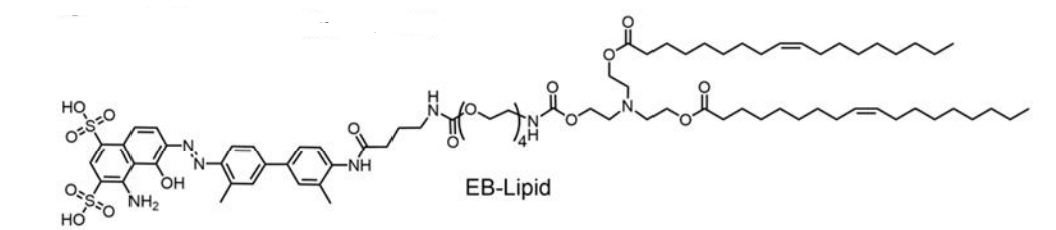
| DC67650 | EB-Lipid Featured |
EB-Lipid is an innovatively engineered ionizable lipid designed to replace conventional PEG-lipid in mRNA vaccine formulations. Its structure comprises three key components: an Evans Blue-derived headgroup with high affinity for albumin, a tetraethylene glycol linker that enhances colloidal stability, and dual oleate tails for anchoring into lipid bilayers. This molecular design enables EB-Lipid to actively recruit endogenous albumin, forming an albumin-rich protein corona on the surface of lipid nanoparticles (LNPs). Following intramuscular administration, these albumin-bound EB-LNPs are preferentially transported through lymphatic vessels rather than entering the bloodstream, thereby avoiding hepatic accumulation and associated hepatotoxicity risks.Experimental data demonstrate that EB-LNPs achieve significantly higher accumulation in lymph nodes, where they are efficiently internalized by dendritic cells via albumin receptor-mediated endocytosis (e.g., gp60). This process enhances antigen presentation and activates robust cellular and humoral immune responses. In both tumor models (B16-OVA and HPV-associated) and infectious disease models (H1N1 and SARS-CoV-2 Omicron), EB-LNP-based mRNA vaccines elicited potent cytotoxic T-cell activation and durable neutralizing antibody production at low doses. Unlike traditional PEG-LNPs, EB-LNPs show minimal liver distribution, reduced immunogenicity, and improved safety profiles after repeated administrations.By leveraging albumin’s natural trafficking pathway, EB-Lipid represents a transformative delivery platform that combines targeted lymph node delivery with enhanced biosafety, positioning it as a promising candidate for next-generation mRNA vaccines and therapeutics.
More description
|
|
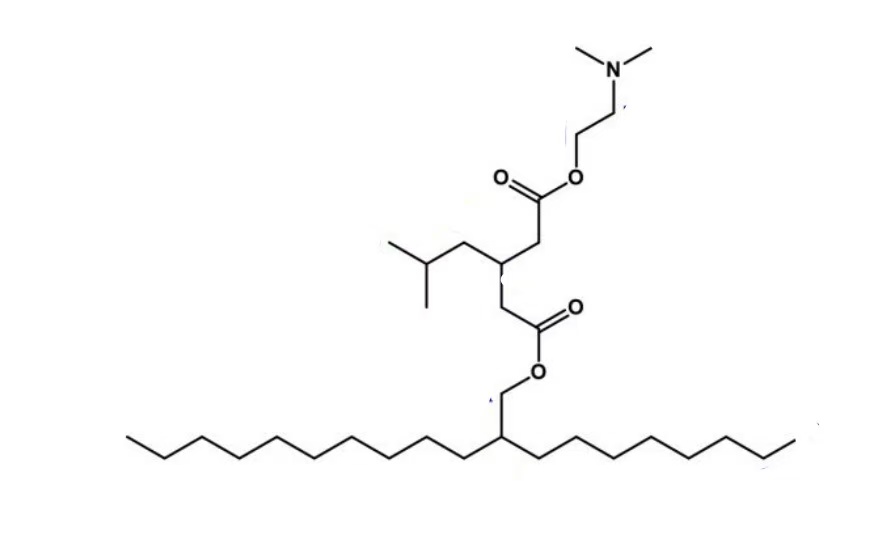
| DC67294 | Lipid B1 |
Lipid B1 is a next-generation ionizable lipid engineered for superior mRNA delivery, featuring a patented β-isobutylglutarate branching linker that optimizes nanoparticle assembly and intracellular release. Its unique structure combines a pH-responsive tertiary amine headgroup with twin C18 alkyl tails connected via biodegradable ester bonds, enabling precise control over lipid packing and endosomal escape. Preclinical studies demonstrate that Lipid B1-based LNPs (bLNPs) achieve **>75% transfection efficiency in vitro at ultra-low mRNA doses (1 μg), outperforming commercial benchmarks like SM-102. In vivo, subcutaneous administration of bLNPs delivers 10-fold higher luciferase expression** than linear-chain analogs, with targeted biodistribution to lymph nodes and tumor sites. Clinically relevant data show 100% tumor prevention in prophylactic cancer vaccine models and 70% tumor regression in therapeutic settings when combined with checkpoint inhibitors. The ester-based backbone ensures rapid metabolic clearance, minimizing systemic toxicity risks (NOAEL >10 mg/kg in mice). Compatible with mRNA, siRNA, and CRISPR-Cas9 payloads, Lipid B1 is ideal for vaccines, gene therapies, and immuno-oncology. Its scalable 3-step synthesis (yield >80%) and lyophilization stability (-80°C, 12 months) make it a cost-effective solution for GMP-grade production. For advanced delivery with unmatched safety and efficacy, Lipid B1 sets a new standard in nucleic acid therapeutics.
More description
|
|
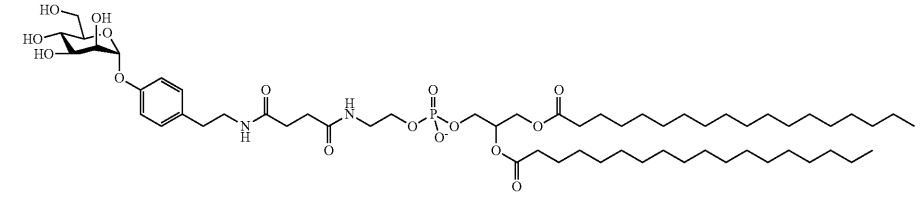
| DC67995 | Lipid 22 Featured |
Compound 22, as detailed in United States Patent US 2026/0014089 A1, is a bifunctional ionizable lipid engineered for precision drug delivery. Its structure integrates a monosaccharide targeting headgroup, designed to bind specifically to DC-SIGN receptors on dendritic cells, via a sophisticated linker connected to a biodegradable lipid anchor. This design enables it to serve as a key component of lipid nanoparticles (LNPs), forming a targeted delivery system. By leveraging the specific carbohydrate-receptor interaction, these LNPs are preferentially internalized by dendritic cells, critical for initiating adaptive immune responses. In vivo studies from the patent, such as the biodistribution data shown in Figure 5, confirm effective accumulation in lymphoid tissues like the spleen and lymph nodes. Consequently, this targeted delivery enhances the potency of encapsulated payloads (e.g., mRNA vaccines) by ensuring professional antigen presentation, eliciting a stronger and more specific immune response—evidenced by higher neutralizing antibody titers—making it a powerful tool for next-generation vaccines and therapeutics.
More description
|
|
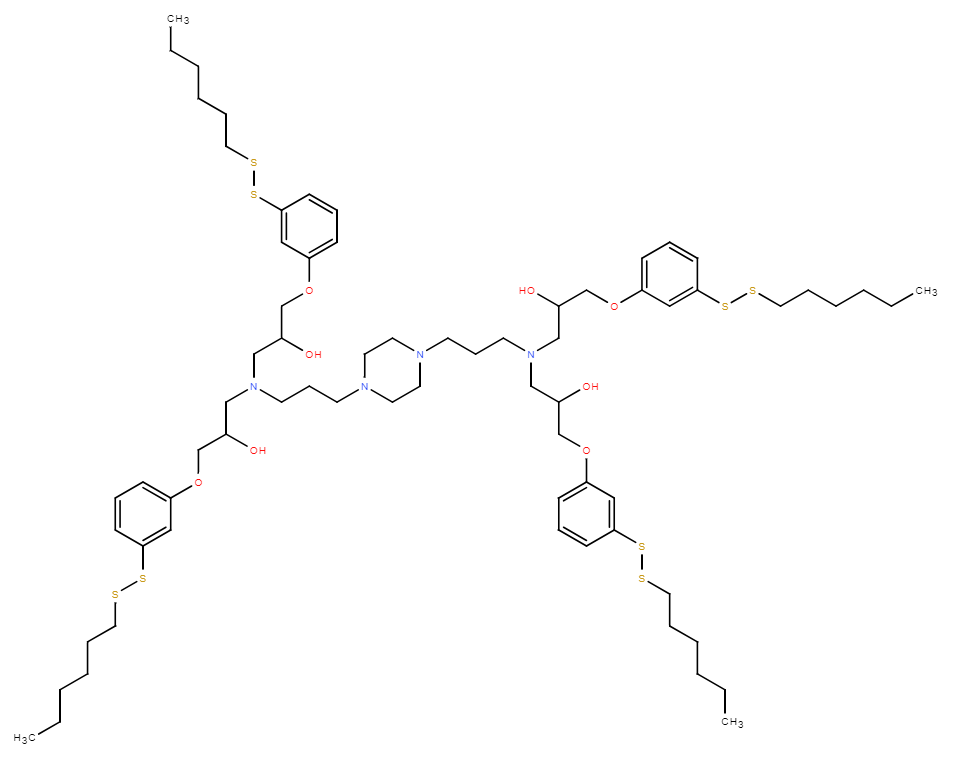
| DC68030 | C6mPhE-383 Featured |
C6mPhE-383 is a top-performing ionizable lipid featuring an aromatic ring and a bioreducible disulfide bond. Formulated into lipid nanoparticles, it preferentially delivers mRNA to lymphoid tissues (lymph nodes/spleen) while minimizing off-target liver accumulation after intramuscular injection. In a SARS-CoV-2 vaccine study, it elicited strong antibody responses, promoted protective effector memory T cells, and exhibited enhanced safety by significantly reducing systemic inflammatory cytokines compared to the standard SM-102 LNP.
More description
|
|