To enhance service speed and avoid tariff delays, we've opened a US warehouse. All US orders ship directly from our US facility.
| Cat. No. | Product Name | Field of Application | Chemical Structure |
|---|---|---|---|
| DC39030 | SR-717 (lithium salt) Featured |
SR-717 is a non-nucleotide STING agonist with EC50s of 2.1 μM and 2.2 μM in ISG-THP1 (WT) and ISG-THP1 cGAS KO (cGAS KO) cell lines, respectively. SR-717 is a stable cyclic guanosine monophosphate-adenosine monophosphate (cGAMP) mimetic.
More description
|

|
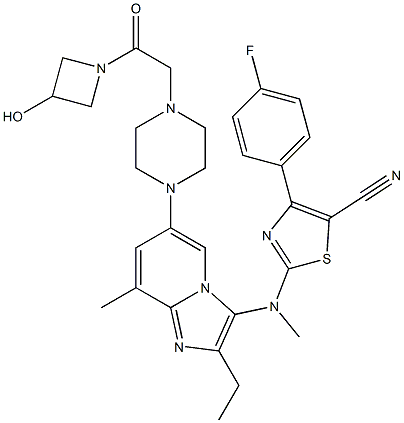
| DC11803 | GLPG-1690(Ziritaxestat) Featured |
GLPG-1690 is a first-in-class, potent, competitive autotaxin inhibitor with Ki/IC50 of 15 nM/131 nM.
More description
|
|
| DC74567 | SWTX-143 Featured |
SWTX-143 is a potent, irreversible and covalent YAP/TAZ-TEAD inhibitor with IC50 of 12 nM in luciferase reporter assays, binds to the palmitoylation pocket of all four TEAD isoforms, inhibits Hippo pathway-mutant cancer cells.
More description
|
.gif)
|
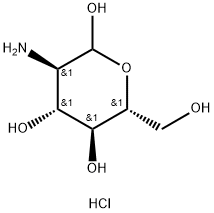
| DC45679 | 2-Amino-2-deoxyglucose hydrochloride Featured |
2-Amino-2-deoxyglucose hydrochloride is a hexosamine hydrochloride can be used in the synthesis of cyclopropene-modified hexosamine derivative Ac4GlcNCyoc and Ac4GalNCyoc.
More description
|
|
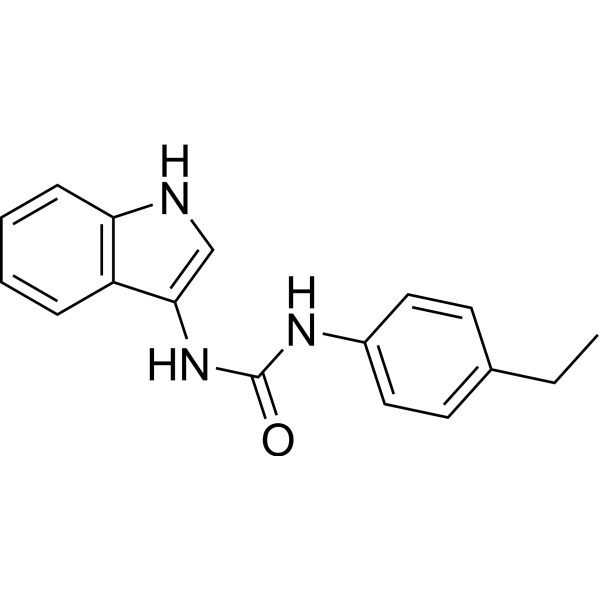
| DC10876 | H-151 Featured |
H-151(H151) is a novel STING (stimulator of interferon genes) antagonist.
More description
|
|
| DC70638 | NAMPT activator (NAT-5r) Featured |
NAMPT activator (NAT-5r) is a potent, small molecule activator of nicotinamide phosphoribosyltransferase (NAMPT) with ITC KD of 180 nM, 3-fold improved activity over NAT.NAMPT activator (NAT-5r) had no effect on NMNAT1 enzyme activity, both NAMPT mutants of K189R and K189A reduced the binding affinity of NAT-5r.NAMPT activator (NAT-5r) treatment significantly enhanced NAD content in NAMPT-WT cells, but not in NAMPT-CRISPR cells.Treatment of NAT-5r at 3 μM concentrations for 4 h induced significant elevation of cellular NAD.NAMPT activator (NAT-5r) induced subsequent metabolic and transcriptional reprogramming, promoted proliferation and maintain the self-renewal of NSCs and protects peripheral sensory neurons from paclitaxel-(PTX) induced damage in mouse model.
More description
|
.gif)
|
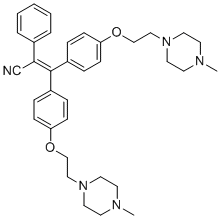
| DC11778 | PKC-IN-6c Featured |
A novel, potent, brain permeant PKC inhibitor with IC50 of 80 nM, without detectable binding to the estrogen receptor (Ki>10 uM).
More description
|
|
| DC60861 | Dexamethasone Acid Featured |
(-)-Dexamethasone Acid, also known as (11β,16α,17α)-9-Fluoro-11,17-dihydroxy-16-methyl-3-oxoandrosta-1,4-diene-17-carboxylic acid, is a synthetic glucocorticoid. It is a fluorinated steroid and a key intermediate in the synthesis of dexamethasone, a widely used anti-inflammatory and immunosuppressant medication.
More description
|

|
| DC60032 | 5H-1,2,4-Triazolo[4,3-a]azepine, 3-(2,5-dimethyl-1-phenyl-1H-pyrrol-3-yl)-6,7,8,9-tetrahydro- Featured |

|
|
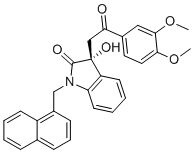
| DC73659 | 3hi2one-G4 Featured |
3hi2one-G4 is a highly selective small molecule activator targeting GIRK4 homomeric channels, does not activate GIRK2, GIRK1/2 or GIRK1/4 channels.
More description
|
|
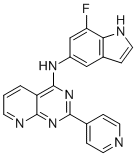
| DC74300 | BC18813 Featured |
BC18813 (BC 18813) is a small molecule inhibitor of the E3 ubiquitin ligase subunit DCAF7, potently inhibits SARS-CoV-2 infection with IC50 of 48 nM in cell-based assays.
More description
|
|
| DC71004 | Apaziquone Featured |
Apaziquone (EO-9), an analog of Mitomycin C, is a prodrug that is activated to DNA damaging species by oxidoreductases (particularly NQO1). Apaziquone has the ability to kill aerobic and/or hypoxic cancer cells. Apaziquone, a bioreductive alkylating agent, inhibits cell proliferation and induces apoptosis in oral squamous cell carcinoma (OSCC) cells. Apaziquone significantly reduces oral tumor xenograft volume in immunocompromised NOD/SCID/Crl mice.
More description
|
.gif)
|
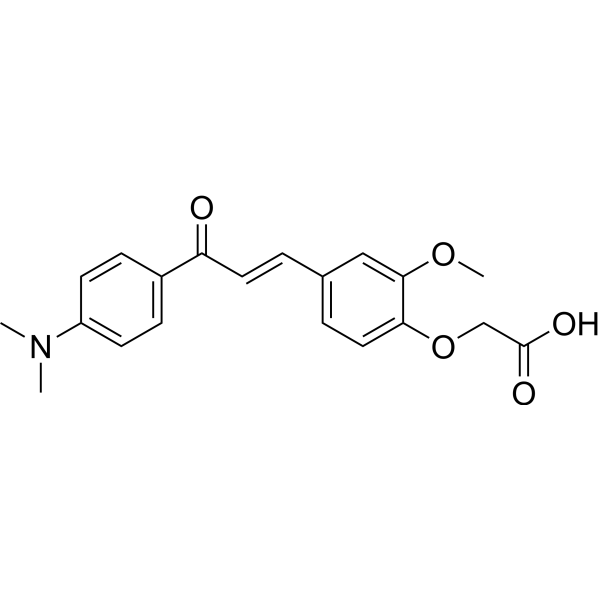
| DC67562 | SMS121 Featured |
SMS121 is a CD36 inhibitor with a KD values of about 5 µM. SMS121 reduces the uptake of lipids and inhibits cell viability in acute myeloid leukemia cells. SMS121 has antitumor activity.
More description
|
|
| DC67561 | Z57346765 Featured |
Z57346765 is a PGK1-specific inhibitor that reduces the activity of metabolic enzymes in PGK1 glycolysis and inhibits PGK1-dependent cell proliferation. Z57346765 exerts inhibitory effects against clear cell renal cell carcinoma (KIRC).
More description
|
.gif)
|
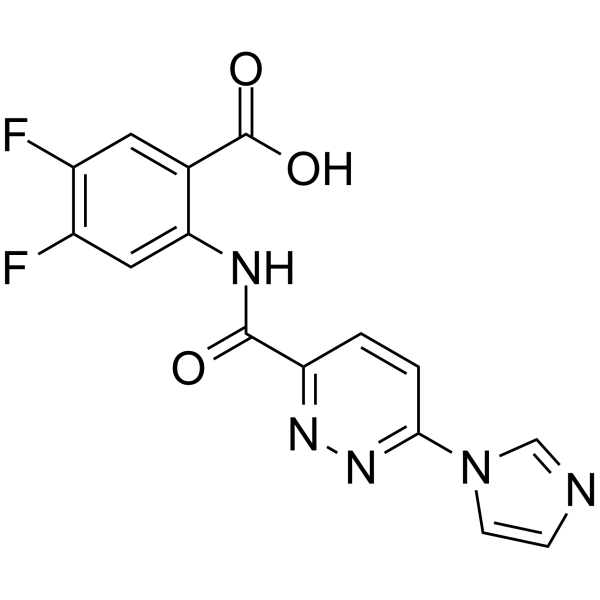
| DC60036 | SR-717 free acid Featured |
SR-717 is an agonist of stimulator of interferon genes STING for treating cancer. SR-717 demonstrates broad interspecies and interallelic specificity. SR-717 functions as a direct cyclic guanosine monophosphate-adenosine monophosphate (cGAMP) mimetic that induces the same "closed" conformation of STING. SR-717 displayed antitumor activity; promoted the activation of CD8+ T, natural killer, and dendritic cells in relevant tissues; and facilitated antigen cross-priming. SR-717 also induced the expression of clinically relevant targets, including programmed cell death 1 ligand 1 (PD-L1), in a STING-dependent manner.
More description
|
|
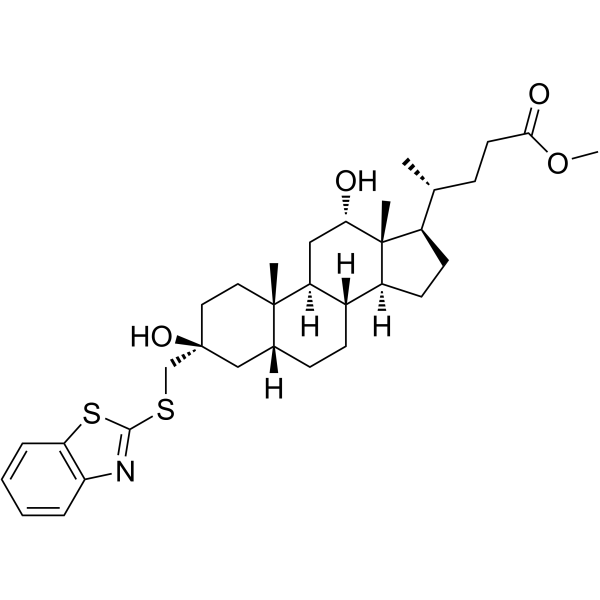
| DC67559 | TDP1 Inhibitor-3 Featured |
TDP1 Inhibitor-3 (Compound 4E) is a (TDP1) inhibitor with an IC50 value of 0.63 μM.
More description
|
|
| DC70104 | Elacestrant Featured |
Elacestrant (RAD-1901) is a novel, orally bioavailable small-molecule selective estrogen receptor degrader (SERD).
More description
|

|
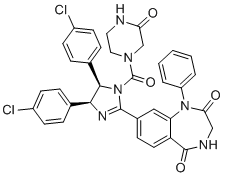
| DC70475 | H203 Featured |
H203 is a potent dual Mdm2/MdmX inhibitor with Ki of 2/11 nM, respectively;
H203 significantly reduced cell viability in the cells overexpressing both Mdm2 and MdmX, and a significant and dose-dependent decrease in cell number in H203-treated cells lacking Mdm2 or MdmX.
H203-mediated decrease in cell viability is strictly p53-dependent and H203 affects MdmX more specifically than nutlin-3a.
H203 induced the expression of the p21 gene but not the p53 gene in treated cancer cells.
More description
|
|
| DC67333 | MYC degrader 1 TFA Featured |
MYC degrader 1 TFA (compound A80.2HCl) is an orally available molecular glue degrader targeting MYC, exhibiting significant anti-tumor activity. It restores pRB1 protein function and re-establishes the sensitivity of MYC-overexpressing cancer cells to CDK4/6 inhibitors.
More description
|

|
| DC67357 | KT-333 diammonium Featured |
KT-333 diammonium is a molecular glue degrader that selectively targets STAT3 for proteasomal degradation by bridging interactions between STAT3 and the VHL E3 ubiquitin ligase complex. Exhibiting high specificity for STAT3 degradation, this compound demonstrates potent antitumor efficacy. Its therapeutic potential is particularly relevant in hematologic malignancies, including large granular lymphocytic leukemia (LGL-L), peripheral T-cell lymphoma (PTCL), and cutaneous T-cell lymphoma (CTCL).
More description
|

|
| DC67355 | Pomalidomide-d4 Featured |
Pomalidomide-d4 is a deuterium-labeled analog of pomalidomide, a third-generation immunomodulatory drug functioning as a molecular glue degrader. This compound selectively binds the cereblon E3 ubiquitin ligase complex, triggering targeted proteasomal degradation of Ikaros family transcription factors—a key mechanism underlying its therapeutic activity.
More description
|

|
| DC67366 | KT-333 ammonium Featured |
KT-333 ammonium (Compound A) is a targeted molecular glue degrader that induces STAT3 protein degradation via the ubiquitin-proteasome pathway. The compound facilitates this process by simultaneously engaging both STAT3 and the VHL E3 ubiquitin ligase, demonstrating remarkable degradation selectivity. With potent antitumor efficacy, KT-333 ammonium shows particular promise for investigating therapeutic interventions in hematologic malignancies, including large granular lymphocytic leukemia (LGL-L), peripheral T-cell lymphoma (PTCL), and cutaneous T-cell lymphoma (CTCL).
More description
|

|
| DC67393 | Pomalidomide-d5 Featured |
Pomalidomide-d5 is a deuterium-stabilized isotopologue of pomalidomide, a third-generation immunomodulatory drug that functions as a molecular glue degrader. This compound mediates targeted protein degradation by recruiting the cereblon E3 ubiquitin ligase to promote ubiquitination and proteasomal elimination of Ikaros family transcription factors (IKZF1/3), a mechanism central to its therapeutic activity.
More description
|

|
| DC67330 | MYC degrader 1 Featured |
MYC degrader 1 (compound A80.2HCl) is an orally available molecular glue degrader targeting MYC, with significant anti-tumor activity. It restores pRB1 protein function and re-establishes the sensitivity of MYC-overexpressing cancer cells to CDK4/6 inhibitors.
More description
|

|
| DC67337 | VNPP433-3β Featured |
VNPP433-3β is a first-in-class molecular glue degrader that simultaneously targets androgen receptor (AR), its splice variants (AR-Vs), and Mnk1/2 kinases for proteasomal degradation. This multimodal agent demonstrates potent anti-proliferative activity in castration-resistant prostate cancer (CRPC) models, with GI50 values of 0.2–0.31 μM in LNCaP, C4-2B, and CWR22Rv1 cells. Its robust in vivo efficacy, evidenced by tumor growth inhibition in CWR22Rv1 xenografts, is supported by favorable pharmacokinetics in CD-1 mice.
More description
|

|
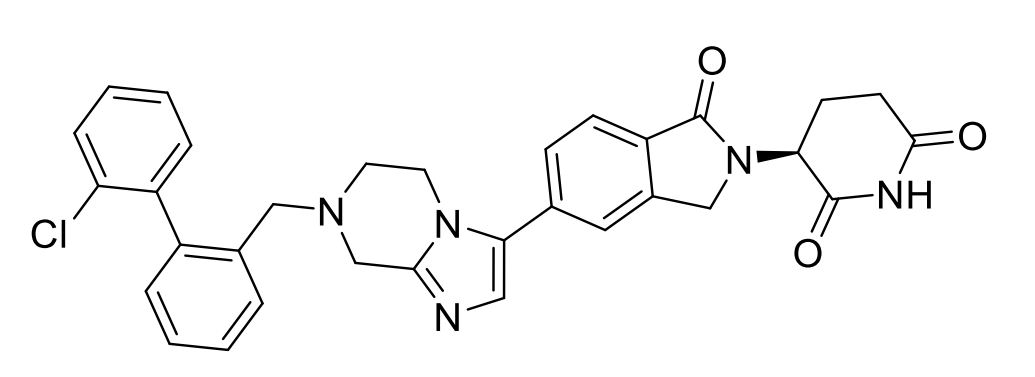
| DC60858 | LC-04-045 Featured |
LC-04-045 is a leading NEK7 molecular glue degrader with DC50 of 7 nM and Dmax of 90 % in MOLT-4 cells. LC-04-045 displays high selectivity for NEK7 across the proteome.
More description
|
|
| DC67361 | IKZF-IN-1 Featured |
IKZF-IN-1 (Compound I) is a molecular glue degrader that selectively targets IKZF1/2/3/4 (Ikaros zinc finger family proteins) for proteasomal degradation. This immunomodulatory compound holds therapeutic potential for investigating cancer and viral infection treatment strategies.
More description
|

|
| DC67362 | QXG-6442 Featured |
QXG-6442 is a potent molecular glue degrader targeting CK1α, demonstrating high degradation efficiency (DC50 = 5.7 nM, Dmax = 90%). This compound significantly suppresses proliferation in the MOLM-14 leukemia cell line, highlighting its therapeutic potential.
More description
|

|
| DC60451 | MRT-2539 Featured |
MRT-2359 a potent, selective and orally bioavailable GSPT1-directed molecular glue degrader (MGD).
More description
|

|
| DC67377 | JP-2-249 Featured |
JP-2-249 functions as a molecular glue degrader that selectively targets SMARCA2 for proteasomal degradation. In MV-4-11 leukemia cells, treatment with JP-2-249 (1–10 μM) induces dose-dependent reduction of SMARCA2 protein levels, demonstrating potent degradation activity.
More description
|

|