 To enhance service speed and avoid tariff delays, we've opened a US warehouse. All US orders ship directly from our US facility.
| Cat. No. | Product Name | Field of Application | Chemical Structure |
|---|---|---|---|
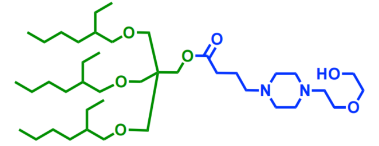
| DC60486 | IAJD 288 |
IAJD 288(IAJD-288) is a pentaerythritol-based one-component ionizable amphiphilic Janus Dendrimer (IAJD), delivery systems for mRNA delivery.
More description
|
|
| DC89030 | SM-102 IMPURITY 1 |

|
|
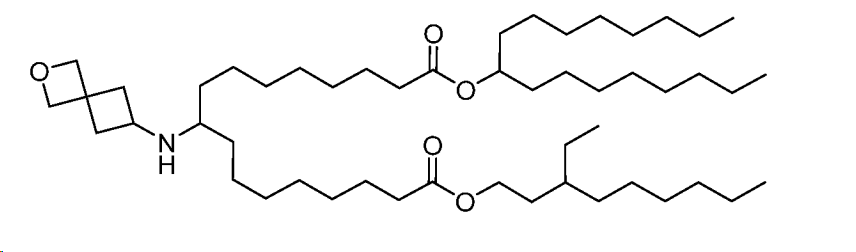
| DC67522 | AZD Lipid 17 Featured |
Lipid 17 is a novel, highly potent ionizable lipid designed for mRNA delivery within lipid nanoparticles (LNPs) developed by AstraZeneca . Its structure features a secondary amine head group attached to a cyclic ether moiety (specifically, the 2-oxaspiro[3.3]heptan-6-amine head group). It possesses an asymmetric tail architecture: one tail is derived from heptadecan-9-ol (a branched C17 secondary alcohol), while the other tail is a modified nonyl chain (C9) with a key ethyl branch at the 3-position. The linker connecting the head group to the tails has a length equivalent to n=3 (three methylene units) as defined in the study. This specific combination of the secondary amine cyclic ether head group, asymmetric tails, and the ethyl branch at the 3-position of the nonyl chain proved critical for its exceptional performance. When formulated into LNPs and administered intravenously in mice, Lipid 17 demonstrated a remarkable 6-fold increase in functional protein (eGFP) expression in the liver compared to the benchmark lipid MC3, with high statistical significance (P < 0.0001). This makes Lipid 17 one of the most active lipids identified in the study and a promising candidate for liver-targeted mRNA therapeutics.
More description
|
|
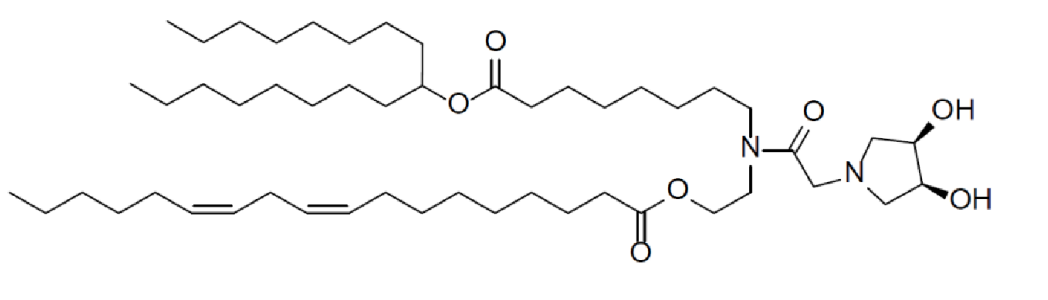
| DC67524 | Nitto Lipid 19 Featured |
Lipid 19 is an engineered cationic lipid designed to optimize the delivery of RNA within lipid nanoparticles (LNPs) developed by Nitto. Its unique structure—featuring a dual-hydroxyl headgroup and tailored hydrophobic chains—enables highly efficient encapsulation of these fragile genetic payloads, protecting them from degradation. The resulting LNPs exhibit exceptional stability (<100 nm size), target the liver specifically for enhanced therapeutic impact, and support applications ranging from mRNA vaccines to gene-silencing therapies. This makes lipid 19 a pivotal advancement in precision nanomedicine for liver-related disorders.
More description
|
|
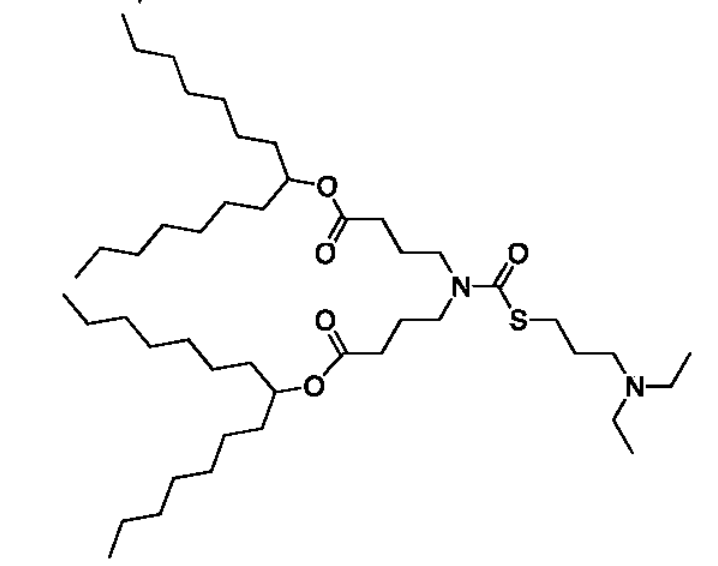
| DC67531 | ATX-129(ATX-0129,10q) |
ATX-129 is a novel ionizable lipid used in the formulation of lipid nanoparticles (LNPs) for the delivery of RNA developed by Arcturus.
More description
|
|
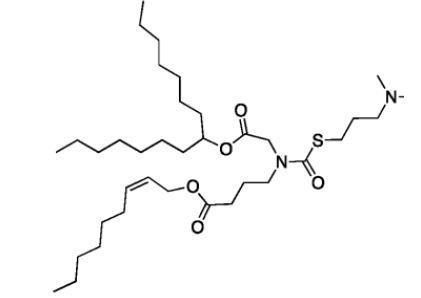
| DC67535 | ATX-106 |
ATX-106 is a novel ionizable lipid used in the formulation of lipid nanoparticles (LNPs) for the delivery of RNA developed by Arcturus.
More description
|
|
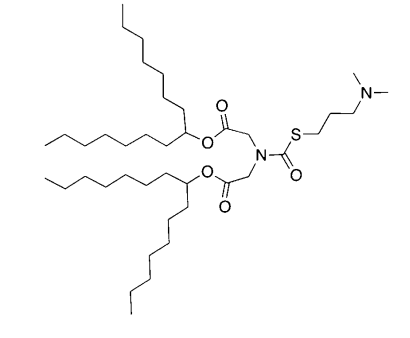
| DC67533 | ATX-132 |
ATX-132 is a novel ionizable lipid used in the formulation of lipid nanoparticles (LNPs) for the delivery of RNA developed by Arcturus.
More description
|
|
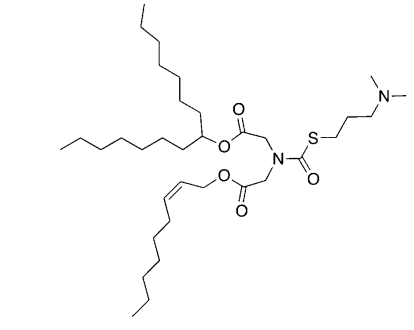
| DC67532 | ATX-111 |
ATX-111 is a novel ionizable lipid used in the formulation of lipid nanoparticles (LNPs) for the delivery of RNA developed by Arcturus.
More description
|
|
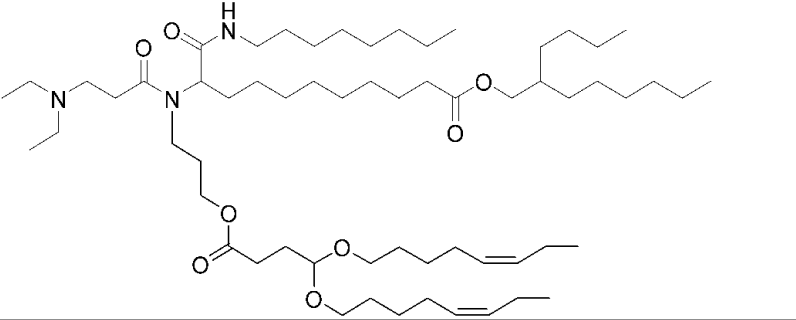
| DC67541 | Yoltech lipid 4 |
Yoltech lipid 4, a highly efficient ionizable lipid disclosed in patent PCT/CN2023/116607, features a central tertiary amine group flanked by hydrophobic tails—specifically, a bis(2-ethylhexyl) core and a linoleyl (C18:2) chain linked via ester bonds. This structure enables pH-responsive behavior critical for mRNA/LNP delivery: neutral in circulation (reducing toxicity) but protonated in endosomes to facilitate membrane disruption and payload release. In murine studies targeting liver PCSK9, Compound 4 achieved ~90% gene-editing efficiency. Its optimized formulation yields LNPs of 70–150 nm with >90% encapsulation, ideal for hepatocyte-specific delivery.
More description
|
|
| DC67543 | ATX L2 |
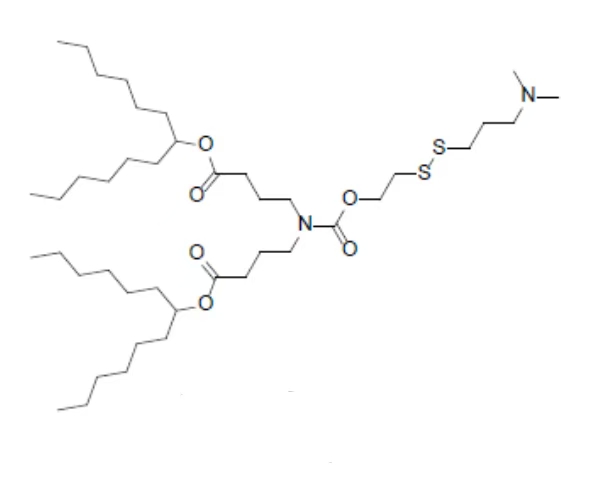
L2 is a redox-responsive lipid engineered for ultra-potent siRNA delivery. With shorter hexyl (C6) tails and a carbamate linker, it demonstrates the fastest biodegradation (liver half-life: 2.6 days) among tested lipids. L2 achieves >80% FVII gene knockdown at just 0.01 mg/kg—surpassing both L1 and MC3 in siRNA potency. Its higher apparent pKa (6.90) enhances endosomal disruption, correlating with strong in vitro hEPO expression. While slightly less effective for mRNA than L1, L2’s unmatched siRNA silencing efficiency, rapid cytosolic self-immolation, and low cytotoxicity position it as a leading candidate for RNAi therapeutics targeting hepatic diseases.
More description
|
|
| DC67552 | MeTis Lipid 5 |
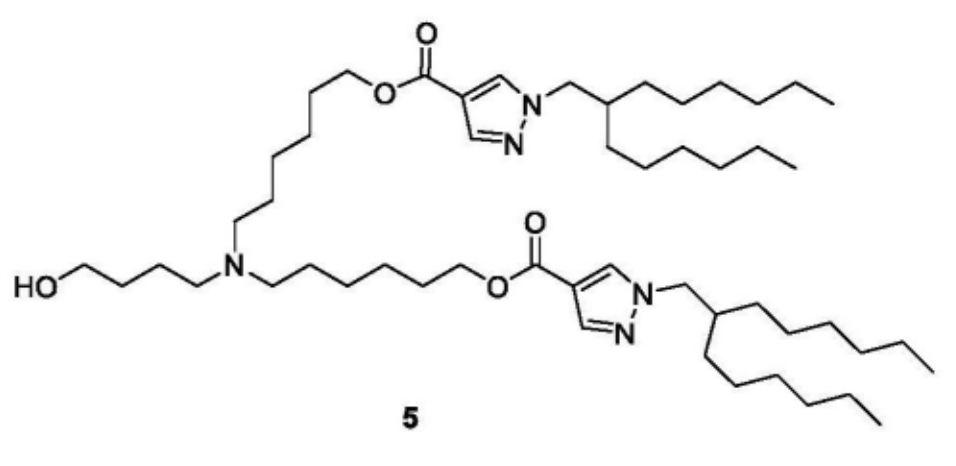
MeTis Lipid 5 is an ionizable lipid featuring a pyrazole-based headgroup and biodegradable C8-ester twin tails developed by MeTis Pharmaceuticals (Patent CN118290339B). It demonstrated breakthrough in vivo efficacy (7.08E+10 photons, luciferase assay), surpassing MC3 lipid by 8.8-fold in systemic mRNA delivery. The molecule achieves optimal safety-profile (96.4% cell viability) and encapsulation efficiency (96.4%), forming LNPs of 108.9 nm (PDI 0.17) at N/P 6. Its ester-enabled rapid metabolization and balanced hydrophobicity position lipid 5 as a candidate for next-gen mRNA therapeutics.
More description
|
|
| DC67551 | Lipid CDL9 |
CDL9 is an original cyclic disulfide lipid first designed, synthesized, and functionally validated in the study "In Vivo Demonstration of Enhanced mRNA Delivery by Cyclic Disulfide-Containing Lipid Nanoparticles for Facilitating Endosomal Escape" published in RSC Medicinal Chemistry (DOI: 10.1039/D5MD00084J).Its molecular architecture—featuring a C18:2 di-unsaturated alkyl chain linked to a tertiary amine headgroup modified with an α-lipoic acid-derived cyclic disulfide unit—was explicitly detailed in the paper's lipid library. Experimental data from this study demonstrated CDL9’s capacity to boost mRNA delivery efficiency by 6-fold in vitro and 5-fold in vivo when integrated into SM102-based LNPs, leveraging thiol-disulfide exchange for enhanced endosomal escape.
More description
|

|
| DC67554 | MeTis Lipid 1 |
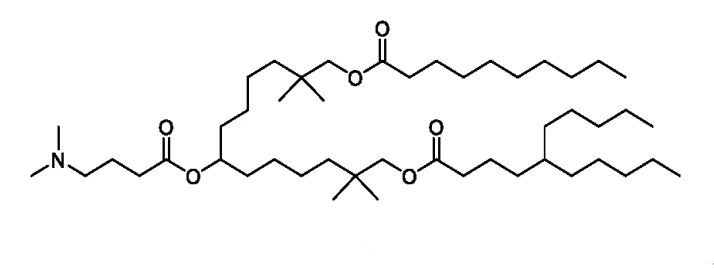
MeTis Lipid 1 is an ionizable lipid featuring a pentacyclic core with geminal dimethyl groups and symmetrical C9 alkyl chains developed by Metis Pharm. According to Patent WO 2025/140421 A1, Lipid 1 demonstrated exceptional biological performance including: the highest SARS-CoV-2 neutralization titer (NT50 1:2146, 5.7-fold higher than ALC0315), potent humoral immunity with COVID-19 IgG titers reaching 1:1,000,000 post-boost and exclusive validation for VZV-gE IgG (1:1,000,000), favorable biophysical properties (124.5 nm LNP diameter, 0.2 PDI, 85% encapsulation efficiency), and excellent safety profile (hERG IC₅₀ >30 μM, Mini-Ames negative), establishing it as the lead compound in nucleic acid vaccine delivery.
More description
|
|
| DC49237 | DODAP hydrochloride |
DODAP (hydrochloride) is an ionizable lipid. DODAP (hydrochloride) has the potential for the research of gene delivery.
More description
|

|
| DC67118 | PNI 132 Featured |
PNI 132, an ionizable lipid derived from the patent WO2020252589A developed by Precision Nanosystem, is useful in the formulation of lipid nanoparticles.
More description
|

|
| DC60352 | DDAB |

|
|
| DC33635 | DODAP Featured |
DODAP, also known as 1,2-Dioleoyl-3-dimethylammonium-propane, is a cationic lipid. It has been used as a component in liposomes that can be used to encapsulate siRNA, immunostimulatory oligodeoxynucleotides, antisense oligonucleotides, or chemotherapeutic agents for in vitro and in vivo delivery.
More description
|

|
| DC33636 | DOTAP Featured |
DOTAP, also known as 1,2-Dioleoyl-3-trimethylammoniumpropane, is a cationic liposome-forming compound used for transfection of DNA, RNA, and other negatively charged molecules into eukaryotic cells. It has been used in gene delivery vectors for gene ther
More description
|

|
| DC65362 | BP Lipid 114 Featured |
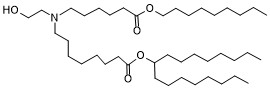
BP Lipid 114 is a well-designed ionizable lipid optimized for mRNA encapsulation and delivery. Its ethanolamine headgroup, ester bonds at the C6 and C8 positions, and 9-carbon tail contribute to efficient mRNA complexation, stability during delivery, and improved biodegradability. These properties make it a valuable component in LNPs for gene therapy and other mRNA-based therapeutic applications.
More description
|
|
| DC65390 | BP Lipid 135 Featured |
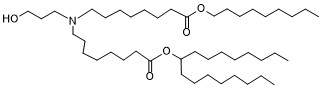
BP Lipid 135 is a well-designed ionizable lipid optimized for mRNA encapsulation and delivery. Its propanolamine headgroup, ester bonds at the C8 position, and 9-carbon tail contribute to efficient mRNA complexation, stability during delivery, and improved biodegradability. These properties make it a valuable component in LNPs for gene therapy and other mRNA-based therapeutic applications.
More description
|
|
| DC49908 | OF-02 Featured |
OF-02 (OF-2) is an alkenyl amino alcohol (AAA) ionizable lipid for highly potent in vivo mRNA delivery.Alkenyl amino alcohols (AAA) are a functional group found in sphingosine and other bioactive molecules. It was used to prepare
AAA-based ionizable lipids through ring-opening reactions between alkenyl epoxides (AEs) and polyamine cores. These
AAA-based iLNPs could promote high-level protein expression Therefore, AAA-based ionizable lipids OF-00, OF-01,
OF-02, and OF-03 were prepared. The results of in vivo delivery
of human erythropoietin (hEPO) mRNA showed that the AAA
ionizable lipid OF-02 with the linoleic acid derivative
could effectively deliver hEPO mRNA. Compared with the positive
control CKK-E12, OF-02 showed an increased ability to
induce serum EPO protein expression by nearly twofold
(Figure 7b). Likewise, it outperformed two benchmark ionizable
lipids (503013 and C12-200) in the nucleic acid delivery field.
Furthermore, the mRNA delivered by OF-02 iLNPs was mainly
in vivo.translated into the liver. The liver-targeting ability of OF-02 iLNPs
improves their delivery efficiency. Therefore, the OF-02 iLNPs
may become excellent delivery vehicles for the treatment of liver
diseases without other side effects of damage to other organs
during the treatment
More description
|

|
| DC60475 | CL4F8-6 Featured |
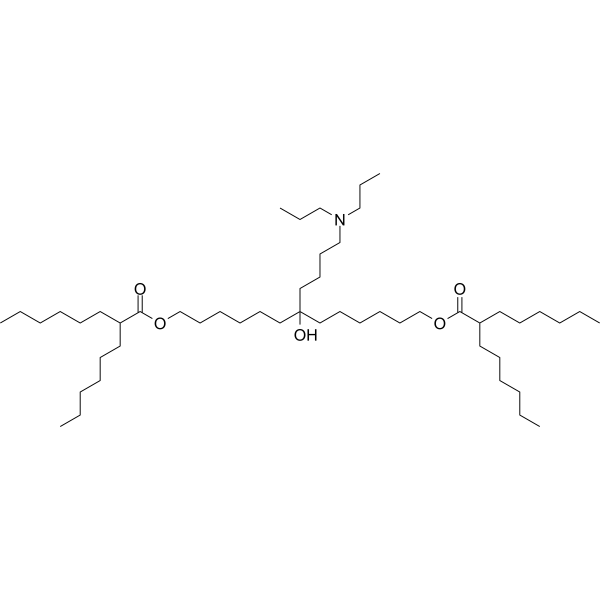
CL4F8-6 is an ionizable cationic lipid (pKa = 6.14) that has been used in combination with other lipids in the formation of lipid nanoparticles (LNPs).1 LNPs containing CL4F8-6 and encapsulating an mRNA reporter accumulate specifically in the mouse liver after intravenous administration. LNPs containing CL4F8-6 and encapsulating mRNA encoding the Cas9 nuclease (mCas9) and single-guide RNA (sgRNA) targeting Ttr (sgTtr), the gene encoding transthyretin, have been used to induce CRISPR-mediated gene knockdown in mice resulting in a reduction of serum levels of TTR.
More description
|
|
| DC70008 | CLinDMA |
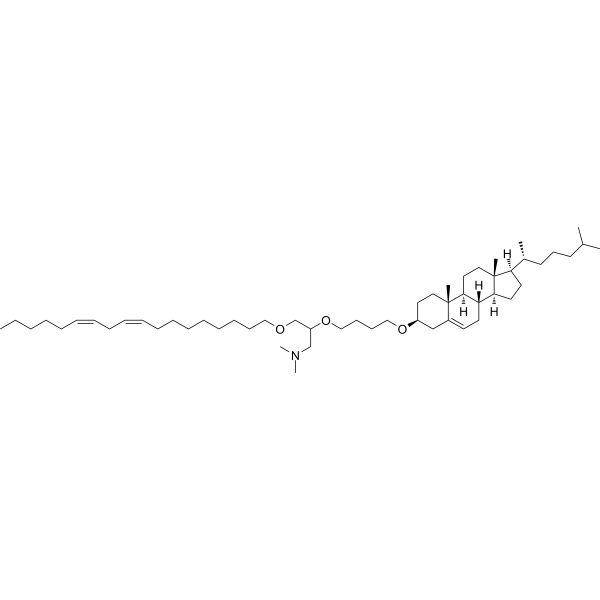
CLinDMA, a cationic lipid known to potentially trigger inflammatory responses, is utilized in the synthesis of LNP201. This liposome-based assembly is specifically designed for the systemic delivery of siRNA.
More description
|
|
| DC49883 | L343 |
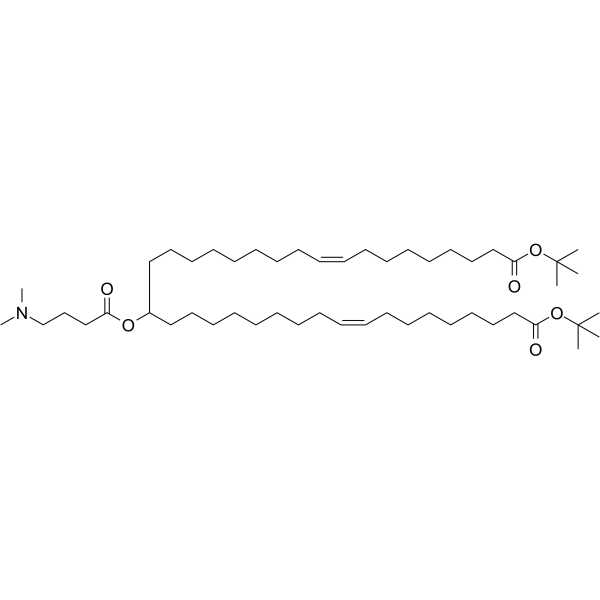
L-343 is an ionizable cationic lipidoid and can be used to synthetic liposomes for systemic delivery of RNAi therapeutics, Pka: 6.34.L343, with its sterically hindered tert-butyl esters, exhibited slower elimination from plasma and higher and more persistent levels in liver compared with L319.
More description
|
|
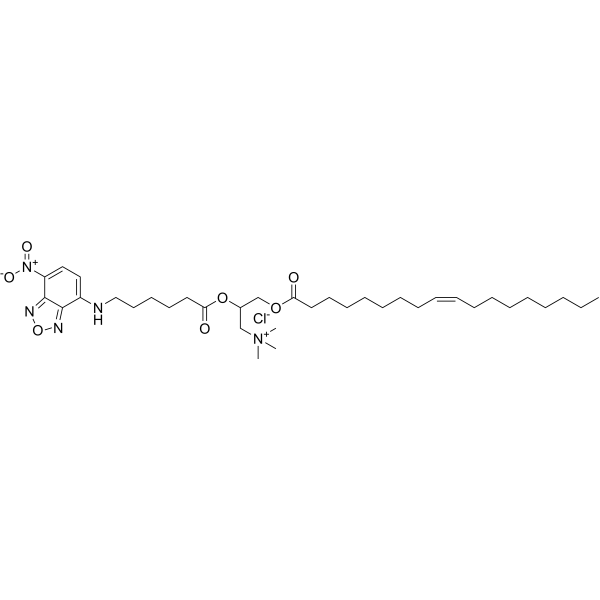
| DC71044 | Fluorescent DOTAP |
Fluorescent DOTAP, a cationic lipid, can be used for the research of nucleic acid and protein delivery.
More description
|
|
| DC60362 | DLenDMA |
DlenDMA is a lipid for RNA and vaccine delivery. DLenDMA showed better siRNA transfection efficiency than DODMA.
More description
|

|
| DC60421 | DC-6-14 |
DC-6-14 is a cationic lipid that can be used for drug delivery, gene transfection and vaccine delivery. DC-6-14 may be used for research into in vitro and in vivo nucleic acid and protein delivery. Reagent grade, for research use only.
More description
|

|
| DC65333 | A2-Iso5-4DC19 |
A2-Iso5-4DC19 is a lipidoid compound. A2-Iso5-4DC19 is an effective carrier for the delivery of an agent such as a polynucleotide to a cell.
More description
|

|
| DC65001 | 4A3-Cit |
4A3-Cit is an ionizable lipid used for the generation of lipid nanoparticles (LNPs). To investigate the role of unsaturated lipid tails in iLNPs, the
nucleophilic amines were added to ester-based linkers, followed
by Michael’s addition to the thiols to construct a library of 91
amino ionizable lipids. Such ionizable lipids were composed
of an ionizable tertiary amine core, an ester-based degradable
linker, and an alkylthiol tail periphery. Through in vitro
and in vivo screening, the iLNPs with 4A3 core and citronellolbased
(Cit) periphery can significantly increase endosome escape
and delivery efficiency of mRNA, leading to 18-fold increase in
protein expression compared with iLNPs without Cit periphery.
Furthermore, the delivery efficiency of mRNA may be associated
with the location/configuration of the unsaturated bond(s) in
lipids. Although lipids with Cit periphery showed excellent
membrane fusion ability to facilitate endosome escape, the
fusion mechanism needs to be further clarified.
More description
|

|
| DC65335 | LNP Lipid-5 |
LNP Lipid-5 (Compound Lipid 2) is an ionizable lipid (amino lipid). LNP Lipid-5 can be used to prepare lipid nanoparticles .
More description
|

|
