 To enhance service speed and avoid tariff delays, we've opened a US warehouse. All US orders ship directly from our US facility.
| Cat. No. | Product Name | Field of Application | Chemical Structure |
|---|---|---|---|
| DC60791 | Cholestify Precursor Featured |
Precursor of Cholestify,18F-Cholestify, which binds cytochrome P450 46A1, detected cholesterol breakdown in the mammalian brain. CYP46A1 converts cholesterol to 24-hydroxycholesterol, a form easily eliminated from the brain.
More description
|
|
| DC65709 | PS-13 precursor 19 Featured |
PS-13 Precursor 19 is a critical intermediate in the synthesis of PS-13, a highly potent and selective COX-1 inhibitor. PS-13's exceptional selectivity for COX-1 over COX-2 makes it a promising compound for both therapeutic development and research applications focused on understanding COX-1-mediated processes.
More description
|

|
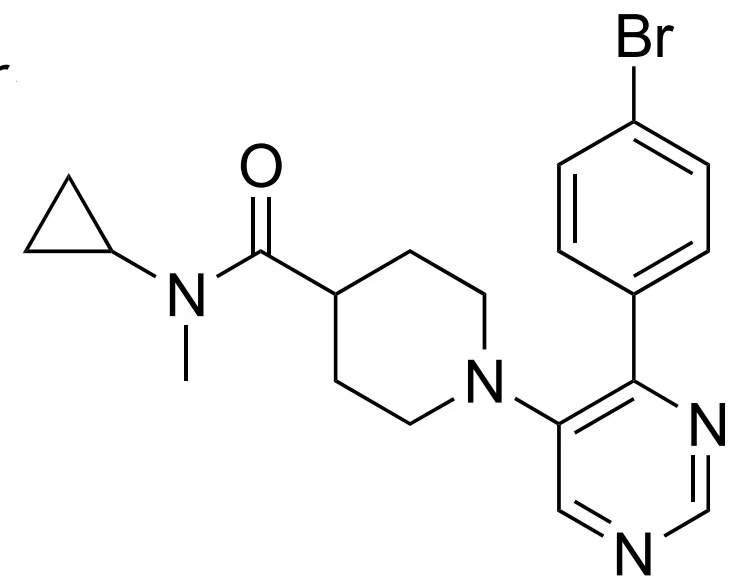
| DC60608 | SL25.1188 precursor Featured |
SL25.1188 Precursor is a key intermediate in the synthesis of SL25.1188, a reversible and selective MAO-B radioligand. The radiolabeled form, [¹¹C]SL25.1188, is a promising PET imaging agent for studying MAO-B in the brain, with applications in neurodegenerative disease research and drug development. Its reversible binding and high selectivity make it a valuable tool for understanding MAO-B's role in health and disease.
More description
|

|
| DC66464 | 3BP-3940 Featured |
3BP-3940 is a highly potent FAP-targeting peptide with significant potential in theranostics. Its ability to be coupled with diagnostic and therapeutic radionuclides makes it a versatile tool for tumor imaging, targeted therapy, and treatment monitoring. By focusing on the tumor stroma, 3BP-3940 offers a promising approach to improving cancer diagnosis and treatment, particularly for cancers with prominent stromal involvement. As research progresses, 3BP-3940 could play a key role in advancing precision oncology.
More description
|

|
| DC71440 | FAP-2286 Featured |
FAP-2286 is a highly promising FAP-targeting theranostic agent with potent affinity for FAP, versatile radionuclide coupling capabilities, and demonstrated antitumor activity. Its ability to serve as both a diagnostic imaging agent and a therapeutic tool makes it a valuable asset in oncology, particularly for cancers with prominent stromal involvement. As research progresses, FAP-2286 has the potential to significantly advance cancer diagnosis, treatment, and research, offering new hope for patients with FAP-expressing tumors.
More description
|

|
| DC65339 | HBED-CC-tris(tBu) ester Featured |

|
|
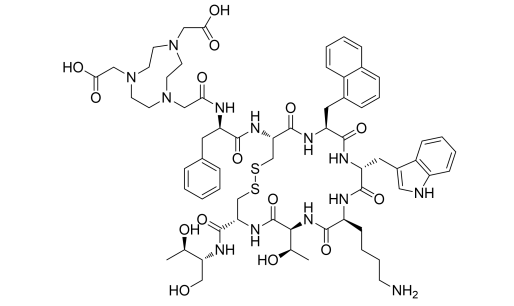
| DC67284 | NOTA-NOC Featured |
|
|
| DC74649 | NOTA-TATE Featured |

|
|
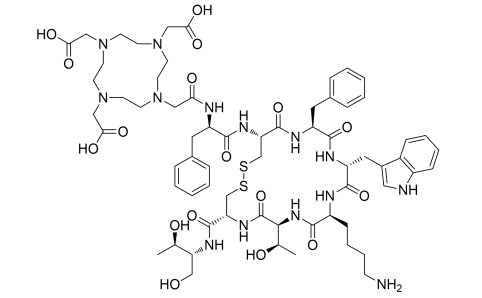
| DC67285 | DOTA-Octreotide Featured |
|
|
| DC66461 | SH-FAPI-4 Featured |
SH-FAPI-4 is a specific fibroblast activation protein inhibitor (FAPI) compound that belongs to the FAPI family of molecules. SH-FAPI-4 is expected to selectively accumulate in FAP-positive tumors and disrupt the functions of cancer-associated fibroblasts (CAFs) within the tumor microenvironment. By inhibiting FAP activity, this compound aims to potentially slow tumor growth, enhance the efficacy of other cancer treatments, and modulate the tumor microenvironment.
More description
|

|
| DC66463 | FAPI-46-NOTA Featured |
NOTA-FAPI-46 is an analogue of FAPI-46 (MedKoo Cat#207189). NOTA-FAPI-46 is useful in the diagnosis or treatment of a disease characterized by overexpression of fibroblast activation protein (FAP). NOTA-FAPI-46 can be used as a PET tracer for detection of diseases or disorders related to fibroblast activation protein.
More description
|

|
| DC60818 | mono-Boc-Br MK-6240 Precursor Featured |
mono-Boc-Br MK-6240 Precursor is the precusor of MK-6240.. (18)F]-MK-6240 is a tau positron emission tomography (PET) tracer for neurofibrillary tangles (NFTs), exhibiting high specificity and selectivity for binding to NFTs .
More description
|

|
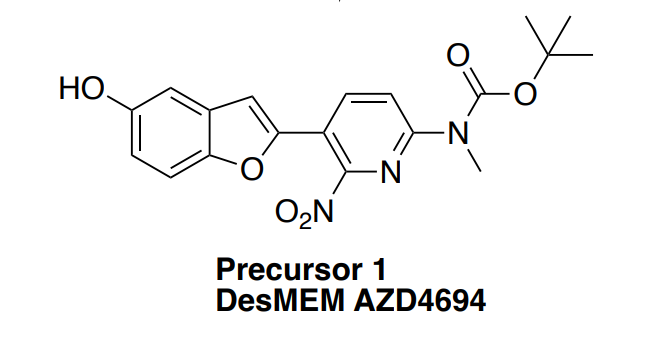
| DC60790 | DesMEM AZD4694 Featured |
DesMEM AZD4694(AZD4694 Precursor 1)is the precursor of [18F] AZD4694 for the synthesis of [18F] AZD4694, an amyloid-β imaging ligand with high affinity for amyloid-β plaques.
More description
|
|
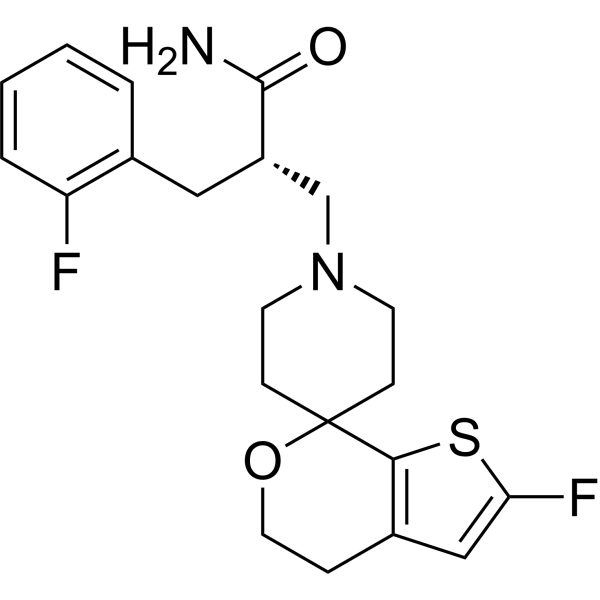
| DC67547 | NOP-1A Precursor Featured |
The Precursor of NOP-1A. (11)C-NOP-1A is a useful radioligand for quantifying NOP receptors in the monkey brain, and its radiation dose is similar to that of other (11)C-labeled ligands for neuroreceptors.
More description
|
|
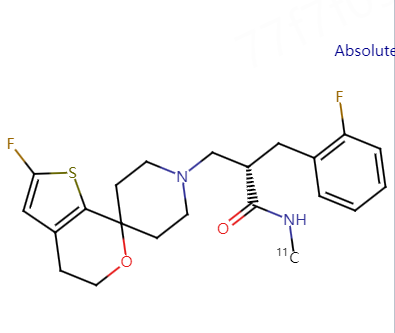
| DC67548 | NOP-1A Featured |
NOP-1A standard. 11C-NOP-1A is a new radioligand for thenociceptin/orphanin FQ peptide (NOP) receptor, with high affinity (Ki, 0.15 nM) and appropriate lipophilicity (measured logD, 3.4) for PET brain imaging. 11C-NOP-1A is the the first successful radioligand to image NOP receptors in rat and monkey brain. 11C-NOP-1A is a selective antagonist at the NOP receptor and has high affinity and appropriate lipophilicity for blood–brain barrier permeability. 11C-NOP-1A imaging in rhesus monkeys showed high brain uptake and a large receptor-specific signal and could be quantified with the gold standard method of compartmental modeling. In humans 1C-NOP-1A reliably quantified NOP receptors in human brain both in large brain regions and at a voxelwise level using parametric imaging. The radiation absorbed dose in humans was similar to that observed with other 11C-labeled ligands and would allow multiple scans of a single subject. Thus, 11C-NOP-1A is a promising radioligand for reliably quantifying NOP receptors in human brain.
More description
|
|
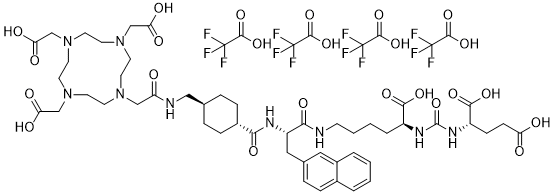
| DC75325 | PSMA-617 TFA Featured |
PSMA-617, also know as vipivotide tetraxetan, is a ligand used to make 177Lu-PSMA-617, which is a radioactive molecule to fight cancer. PSMA617 possesses a small peptide, which was designed to target prostate-specific membrane antigen (PSMA). PSMA617 demonstrates high radiolytic stability for at least 72 h. PSMA617 has high inhibition potency (equilibrium dissociation constant Ki=2.34±2.94 nM on LNCaP; Ki=0.37±0.21 nM enzymatically determined). 177 Lu-PSMA-617 offers a potential additional life-prolonging treatment option for men with mCRPC.
More description
|
|
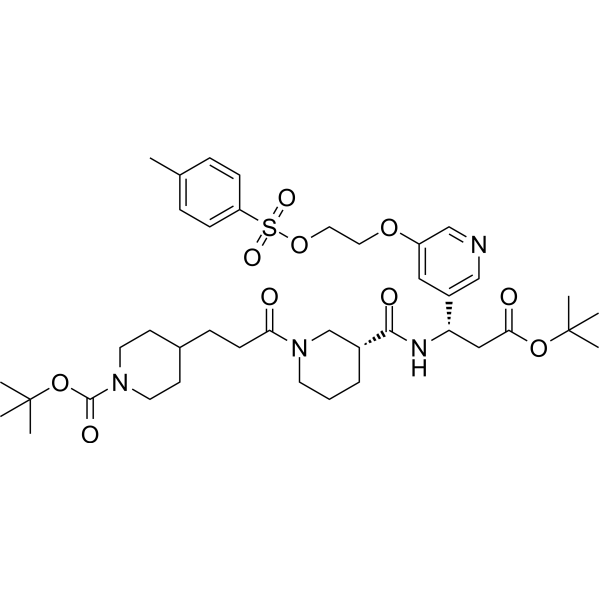
| DC78952 | GP1 precursor Featured |
GP1 precursor has high affinity to GPIIb/IIIa receptors of activated platelets. GP1 precursor can be radiolabeled with [18F] and used as a PET Tracer for visualizing active platelet aggregation at the molecular level. GP1 precursor can be used for the detection of Thrombi.
More description
|
|
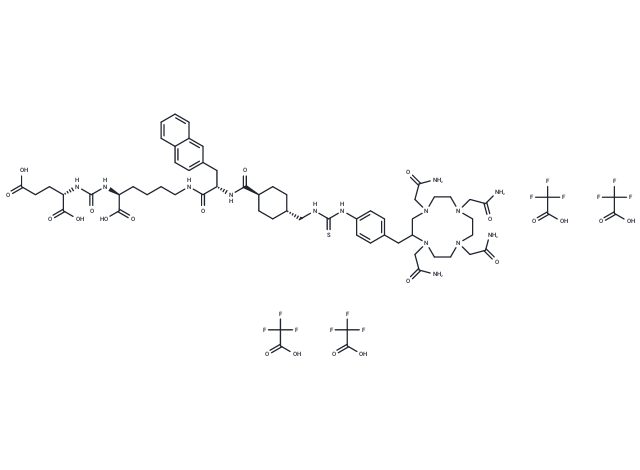
| DC32562 | PSMA617-TCMC TFA |
PSMA617-TCMC is a derivative of PSMA-617 with structure modification, in which the caroboxy groups in DOTA ring is replaced by TCMC macrocycle. PSMA-617 is a ligand used to make 177Lu-PSMA-617, which is a radioactive molecule to fight cancer,. PSMA-617 originally was developed at the German Cancer Research Center and the Heidelberg University Hospital. ABX held the exclusive license to bring the treatment, which targets prostate-specific membrane antigen (PSMA), through early clinical development.
More description
|
|
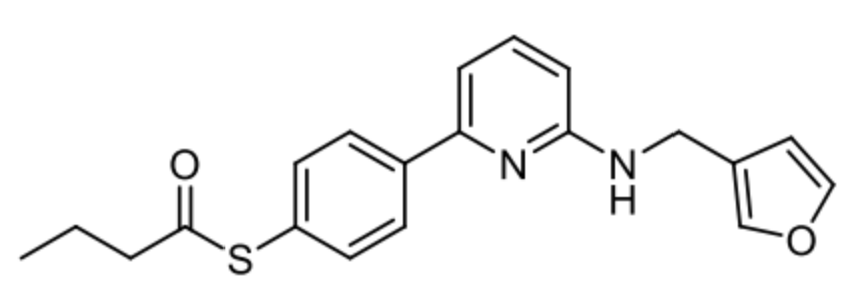
| DC67993 | BRD1158-thioester Featured |
BRD1158-thioester is the precursor of BRD1158.
More description
|
|
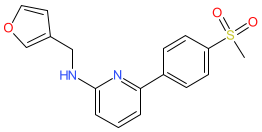
| DC67992 | BRD 1158 Featured |
BRD1158 is a selective, fully reversible and brain-penetrant COX2 inhibitor . It has a rapid target kon and koff rates which makes it a good candidate as a PET radiotracer to monitor enzyme dynamics in vivo. The radiotracer BRD1158 is particuarly suited for imaging in tissues (such as microglia) where basal COX2 expression is very low, and has demonstrated its in vivo imaging potential in rodent models that express human COX2 (including a mouse Huntington's disease model in which COX2 expression is elevated in disease-affected brain regions).
More description
|
|
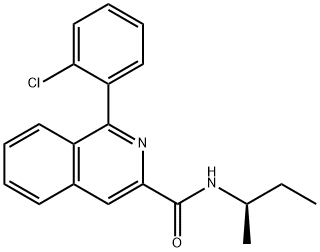
| DCC0103 | (R)-N-Desmethyl PK11195 Featured |
Precursor for (R)-[N-Methyl-11C-]PK11195
More description
|
|
| DC66462 | FAP-IN-2 Featured |
FAP-IN-2 is a derivative of 99mTc-labeled isonitrile-containing fibroblast activation protein (FAPI) inhibitor. FAP-IN-2 can be used for tumor imaging. FAP-IN-2 has good stability, high uptake and good retention in the tumor site of mouse model.
More description
|
.gif)
|
| DC65513 | HYNIC-FAPI-04 Featured |
HYNIC-FAPI-04 is a useful ligand for making [99mTc]Tc-HYNIC-FAPI-04. In vitro experiments, the results indicated that [99mTc]Tc-HYNIC-FAPI-04 showed binding properties, and inhibited the migration of tumor cells. The [99mTc]Tc-HYNIC-FAPI will be a promising SPECT/CT imaging probe.
More description
|

|
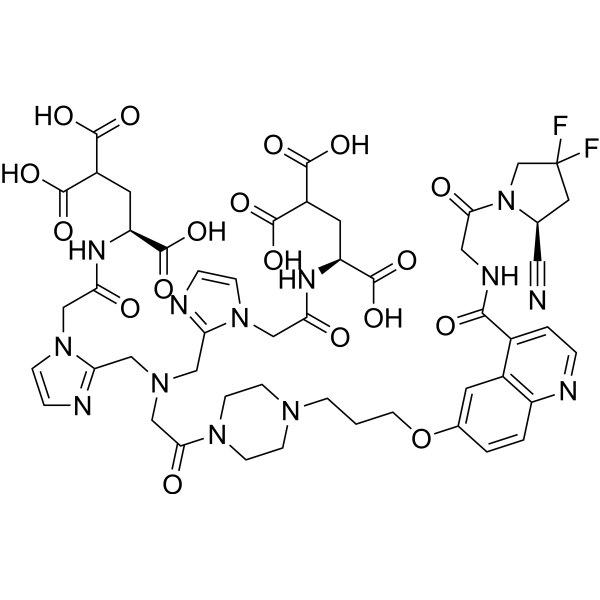
| DC46245 | FAPI-34 Featured |
FAPI-34 is a fibroblast-activating protein (FAP) inhibitor with favorable pharmacokinetic and biochemical properties. (patent WO2019154886A1).
More description
|
|
| DC65514 | NOTA-FAPI-46 Featured |
NOTA-FAPI-46 is an analogue of FAPI-46 (MedKoo Cat#207189). NOTA-FAPI-46 is useful in the diagnosis or treatment of a disease characterized by overexpression of fibroblast activation protein (FAP). NOTA-FAPI-46 can be used as a PET tracer for detection of diseases or disorders related to fibroblast activation protein.
More description
|

|
| DC67437 | PI-2620 precursor Featured |
PI-2620 precursor is the precursor of PI2620. 18F-PI-2620 is a PET tracer with high binding affinity for aggregated tau, a key pathologic feature of Alzheimer disease (AD) and other neurodegenerative disorders.
More description
|

|
| DC40358 | MK-6240 Precursor Featured |
MK-6240 Precursor (6e) serves as a key intermediate in the synthesis of **[18F]-MK-6240**, a highly selective tau-targeting PET imaging agent. The radiolabeled compound, **[18F]-MK-6240**, is specifically designed for detecting neurofibrillary tangles (NFTs)—a hallmark pathology of Alzheimer’s disease and other tauopathies.
More description
|

|
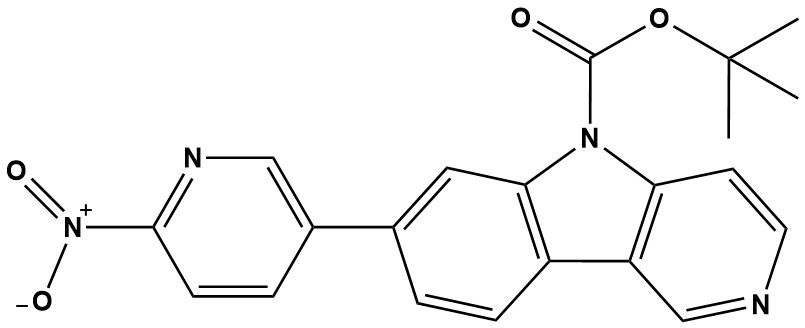
| DC67414 | AV1451 precursor |
|
|
| DC40273 | AV-105 Featured |
AV-105 is a tosylate precursor compound derived from Florbetapir (18F), a radiolabeled styrylpyridine derivative referenced in patent WO2010078370A1 (Example 1.5). This precursor plays a crucial role in the synthesis of 18F-radiolabeled imaging agents, particularly for positron emission tomography (PET) applications.
More description
|

|
| DC46535 | THK-5475(THK 5475) Featured |
THK-5475(THK5475) is a precursor of THK-5470, a monoamine oxidase-B(MAO-B) imaging probe, could be used for neurological diseases study (from patent EP2019-846498).
More description
|

|
