
 To enhance service speed and avoid tariff delays, we've opened a US warehouse. All US orders ship directly from our US facility.
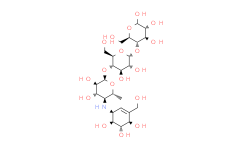



| Cas No.: | 56180-94-0 |
| Chemical Name: | Acarbose |
| Synonyms: | acarbose;bay-g5421;d-glucose,o-4,6-dideoxy-4-(((1s-(1-alpha,4-alpha,5-beta,6-alpha))-4,5,6-trihyd;roxy-3-(hydroxymethyl)-2-cyclohexen-1-yl)amino)-alpha-d-glucopyranosyl-(1-4)-o;5-[5-[3,4-DIHYDROXY-6-METHYL-5-[[4,5,6-TRIHYDROXY-3-(HYDROXYMETHYL)-1-CYCLOHEX-2-ENYL]AMINO]OXAN-2-YL]OXY-3,4-DIHYDROXY-6-(HYDROXYMETHYL)OXAN-2-YL]OXY-6-(HYDROXYMETHYL)OXANE-2,3,4-TRIOL;Glucobay;Acarbose Hydrate;O-4,6-DIDEOXY-4-[[[1S-(1A,4A,5BETA,6A)]-4,5,6-TRIHYDROXY-3-(HYDROXYMETHY;acarviostatin I01;Ascarbose;Prandase;Precos;Precose;4",6"-Dideoxy-4"-([1S]-[1,4,6/5]-4,5,6-trihydroxy-3-hydroxymethyl-2-yclohexenylamino)-maltotriose;Sugammadex sodium Impurity;acarbose iMpurity;Beta-Acarbose;XUFXOAAUWZOOIT-SXARVLRPSA-N;DSSTox_RID_81300;DSSTox_CID_26034;DSSTox_GSID_46034;Arcabose;Glucor;1agm;1ukt;QPS;Acarbose, >=95%;HMC-(1-4)AGL-(1-4)GLC-(1-4)GLC;GTPL6791;HMS3677P19;HMS3413P19;HMS3269L19;BCPP000442;HMS3713B18;Tox21_111597;s1271;BDBM50333465;Tox21_111597_1;AKO |
| SMILES: | O([C@]1([H])[C@@]([H])([C@]([H])([C@@]([H])([C@@]([H])(C([H])([H])[H])O1)N([H])[C@@]1([H])C([H])=C(C([H])([H])O[H])[C@]([H])([C@@]([H])([C@@]1([H])O[H])O[H])O[H])O[H])O[H])[C@]1([H])[C@@]([H])(C([H])([H])O[H])O[C@@]([H])([C@@]([H])([C@@]1([H])O[H])O[H])O[C@]1([H])[C@@]([H])(C([H])([H])O[H])O[C@]([H])([C@@]([H])([C@@]1([H])O[H])O[H])O[H] |
| Formula: | C25H43NO18 |
| M.Wt: | 645.6048 |
| Purity: | >98% |
| Sotrage: | 4°C for 1 year, -20°C for more than 2 years |
| Description: | Acarbose is an inhibitor of alpha glucosidase, an anti-diabetic drug. |
| In Vivo: | Acarbose (300 mg/60 kg body weight) decreases the fasting blood glucose, and regulates the glucose tolerance of DM rats without body weight loss. Acarbose significantly suppresses serum IL6 and TNF-α in DM rats[1]. Acarbose (2.5 and 5.0 mg/kg) significantly and dose-dependently decreases the intensity of neointimal IL-6, TNF-α, and iNOS staining, and significantly increases the intensity of neointimal p-AMPK staining. Acarbose (2.5 and 5.0 mg/kg) significantly and dose-dependently decreases neointimal Ras and β-galactosidase expression in HCD-fed rabbits without body weight loss[2]. |
| In Vitro: | Acarbose (1, 2, and 3 μM) dose- and time-dependently inhibits TNF-α-induced VSMC proliferation and migration. Acarbose (1, 2, and 3 μM) dose-dependently decreases β-galactosidase, Ras expression and increased p-AMPK expression in TNF-α pre-treated A7r5 cells[2]. |
| Cell Assay: | Cell viability is determined using the MTT assay. Cells are seeded in 24-well culture plates at a density of 2×10⁴ cells/well, incubated for 48 h, treated with acarbose at varying concentrations (0.5, 1.0, 2.0, 3.0, and 5.0 μM) for 24 h; or pre-treated with TNF-α (20 ng/mL) for either 24 h or 48 h to evaluate the dose-dependent effects of acarbose on VSMC growth and viability, cultured with 0.5 mg/mL MTT at 37°C in a humidified atmosphere of 5% CO2 for another 4 h, and solubilized with isopropanol. The viable cell number varies directly with the concentration of formazan product measured spectrophotometrically at 563 nm. |
| Animal Administration: | Twenty-four male New Zealand white rabbits, weighing 2500 g are used. They are individually housed in metal cages in an air-conditioned room (22 ± 2°C, 55 ± 5% humidity), under a 12 h light/12 h dark cycle with free access to food and water. All rabbits are randomLy assigned to four groups of 6 animals each and are fed either standard chow (Group I), high cholesterol diet (HCD; containing 95.7% standard Purina chow + 3% lard oil + 0.5% cholesterol) (Group II), HCD diet and 2.5 mg/kg per day acarbose (Group III), or HCD diet and 5.0 mg/kg per day acarbose (Group IV). At the end of the 25 weeks, all rabbits are sacrificed by exsanguination under deep anesthesia with pentobarbital (30 mg/kg i.v.) injected via the marginal ear vein. Serum is stored at −80°C prior to measurement of serum values. The aortic arch and thoracic aortas are carefully removed to protect the endothelial lining, and are collected and freed of adhering soft tissue. |
| References: | [1]. Zhang Q, et al. Acarbose Reduces Blood Glucose by Activating miR-10a-5p and miR-664 in Diabetic Rats. PLoS One. 2013 Nov 18;8(11):e79697. [2]. Chan KC, et al. Pleiotropic effects of acarbose on atherosclerosis development in rabbits are mediated via upregulating AMPK signals. Sci Rep. 2016 Dec 7;6:3864 |