To enhance service speed and avoid tariff delays, we've opened a US warehouse. All US orders ship directly from our US facility.
| Cat. No. | Product Name | Field of Application | Chemical Structure |
|---|---|---|---|
| DC32886 | Agmatine Sulfate Featured |
Agmatine Sulfate is a neurotransmitter and neuromodulator, inhibiting N-methyl-D-aspartate (NMDA), nicotinic acetylcholine receptors nitric oxide synthase, calcium channels and certain serotonin receptors, activating imidazoline receptors.
More description
|

|
| DC36637 | 1-Decanol Featured |
1-Decanol is used in the production of plasticizers, lubricants, surfactants and solvents. It is also used to study the thermal properties of polymer-monolithic stationary phases. Further, it is used to enhance homomeric glycine receptor function. In addition to this, it is used in daily flavor, food flavor and cosmetics.
More description
|

|
| DC33930 | Cyanine3 carboxylic acid Featured |
Free Cyanine3 carboxylic acid (Cy3? carboxylic acid analog), non-activated dye. Non-sulfonated reagent, with good solubility in organic solvents, and limited aquous solubility. The dye can be used as a non-reactive fluorophore, for control experiments, and for calibration.
More description
|

|
| DC35456 | m-PEG3-alcohol Featured |
m-PEG3-alcohol is a PEG derivative containing a hydroxyl group. The hydroxyl group enables further derivatization or replacement with other reactive functional groups. The hydrophilic PEG spacer increases solubility in aqueous media.
More description
|

|
| DC34938 | t-Boc-N-Amido-PEG3-amine Featured |
t-Boc-N-Amido-PEG3-amine is a PEG derivative containing an amino group and Boc-protected amino group. The amino group is reactive with carboxylic acids, activated NHS esters, carbonyls (ketone, aldehyde) etc. The Boc group can be deprotected under mild acidic conditions to form the free amine. PEG Linkers may be useful in the development of antibody drug conjugates.
More description
|

|
| DC37292 | Dibenzylamine Featured |
Dibenzylamine is a component of Potent neurogenic agent.
More description
|

|
| DC35972 | TCO-NHS ester Featured |
TCO-NHS ester is an amine-reactive reagent containing the TCO moiety and a NHS ester. This reagent can be used to modify an amine-containing molecules. The specially formulated crystalline producty enables easy handling andan extended shelf life. TCO-NHS Ester is supplied as single axial (major) diastereomer.
More description
|

|
| DC37167 | Undecylenic acid Featured |
Undecylenic acid is a fatty acid with a terminal double bond. Undecylenic acid is an active ingredient in medications for skin infections, and to relieve itching, burning, and irritation associated with skin problems.
More description
|

|
| DC37722 | Thiazolylalanine Featured |
Thiazolylalanine is an important raw material and intermediate used in organic synthesis, pharmaceuticals, agrochemicals and dyestuff.
More description
|

|
| DC37256 | 3'-Hydroxyacetophenone Featured |
3-Hydroxyacetophenone (m-Hydroxyacetophenone) is a hydroxy-substituted alkyl phenyl ketone and also a plant defensin in carnations.
More description
|

|
| DC37150 | Calcium stearate Featured |
Calcium Stearate as an Effective Alternative to Poly(vinyl alcohol) in Poly-Lactic-co-Glycolic Acid Nanoparticles Synthesis.
More description
|

|
| DC37233 | 4-Phenylbutyric acid Featured |
4-Phenylbutyric acid is an antineoplastic agent.
More description
|

|
| DC33761 | 2-Acetylpyrazine Featured |
2-Acetylpyrazine is a pyrazine and a ketone. It is a yellow-brown powder at room temperature.
More description
|

|
| DC37770 | N-Monoacetylcystine Featured |
N-Monoacetylcystine is an antidote for paracetamol poisoning. It is also an antioxidant, used in the treatment of influenza A virus pandemic. N-Acetyl-L-cystine promotes fertilization by reducing disulfide bonds in zona pellucida of mouse.
More description
|

|
| DC31711 | Hydrocortisone acetate Featured |
Hydrocortisone Acetate is the synthetic acetate salt form of hydrocortisone, a corticosteroid with anti-inflammatory and immunosuppressive properties. Hydrocortisone acetate initially binds to the cytoplasmic glucocorticoid receptor; then the receptor-ligand complex is translocated to the nucleus where it initiates the transcription of genes encoding for anti-inflammatory mediators, such as cytokines and lipocortins. Lipocortins inhibit phospholipase A2, thereby blocking the release of arachidonic acid from membrane phospholipids and preventing the synthesis of prostaglandins and leukotrienes.
More description
|

|
| DC36105 | Adrenalone hydrochloride Featured |
Adrenone hydrochloride displays antineoplastic activity and has been shown to inhibit growth of Ehrlich ascites tumors in mice.
More description
|

|
| DC37720 | Dimethoate Featured |
Dimethoate is an organothiophosphorus cholinesterase inhibitor that is used as a systemic and contact insecticide.
More description
|

|
| DC34714 | Mericycline Featured |
Tetracycline, sold under the brand name Sumycin among others, is an antibiotic used to treat a number of infections. This includes acne, cholera, brucellosis, plague, malaria, and syphilis. It possesses some level of bacteriostatic activity against almost all medically relevant aerobic and anaerobic bacterial genera, both Gram-positive and Gram-negative.
More description
|

|
| DC36742 | Salicylamide Featured |
Salicylamide is a non-steroidal anti-inflammatory agent with analgesic and antipyretic properties. Its medicinal uses are similar to those of aspirin.
More description
|

|
| DC35435 | PEG3-Tos Featured |
PEG3-Tos is a PEG derivative containing a hydroxyl group and a tosyl group. The hydrophilic PEG spacer increases solubility in aqueous media. The hydroxyl group enables further derivatization or replacement with other reactive functional groups. The tosyl group is a very good leaving group for nucleophilic substitution reactions.
More description
|

|
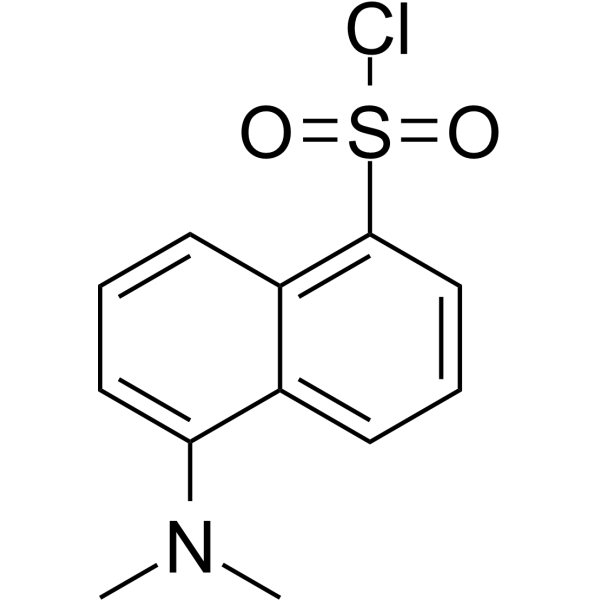
| DC36339 | Dansyl chloride Featured |
Dansyl chloride is a reactive probe for the derivatization of primary amines, including those on amino acids, peptides, and polyamines, for detection by HPLC. It has also been used for the derivatization of compounds containing phenol groups, such as steroids, for detection by MS/MS. Dansyl chloride is a fluorescent probe for proteins and enzymes. It displays excitation/emission maxima of 340/535 nm, respectively, in acetone.
More description
|
|
| DC36551 | Calcium phosphate Featured |
Dicalcium phosphate is the calcium phosphate with the formula CaHPO4 and its dihydrate. The "di" prefix in the common name arises because the formation of the HPO42– anion involves the removal of two protons from phosphoric acid, H3PO4. It is also known as dibasic calcium phosphate or calcium monohydrogen phosphate. Dicalcium phosphate is used as a food additive, it is found in some toothpastes as a polishing agent and is a biomaterial.[
More description
|

|
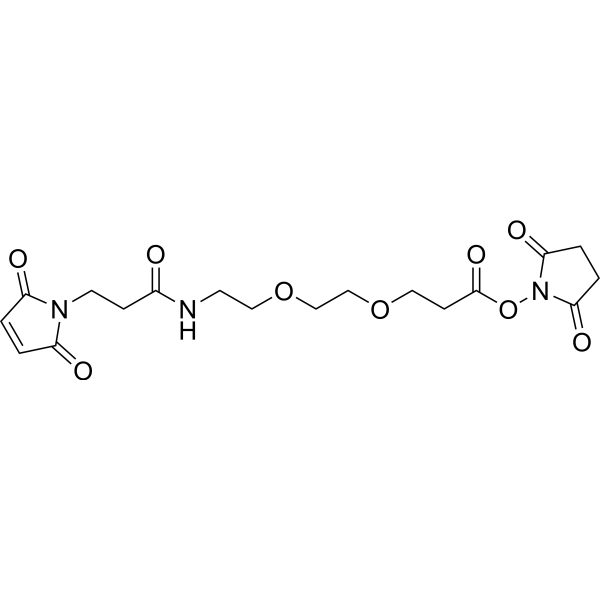
| DC35833 | Mal-amido-PEG2-NHS Featured |
Mal-amido-PEG2-NHS is a PEG derivative containing a maleimide group and an NHS ester. The hydrophilic PEG spacer increases solubility in aqueous media. The NHS ester can be used to label the primary amines (-NH2) of proteins, amine-modified oligonucleotides, and other amine-containing molecules. The maleimide group will react with a thiol group to form a covalent bond, enabling the connection of biomolecule with a thiol.
More description
|
|
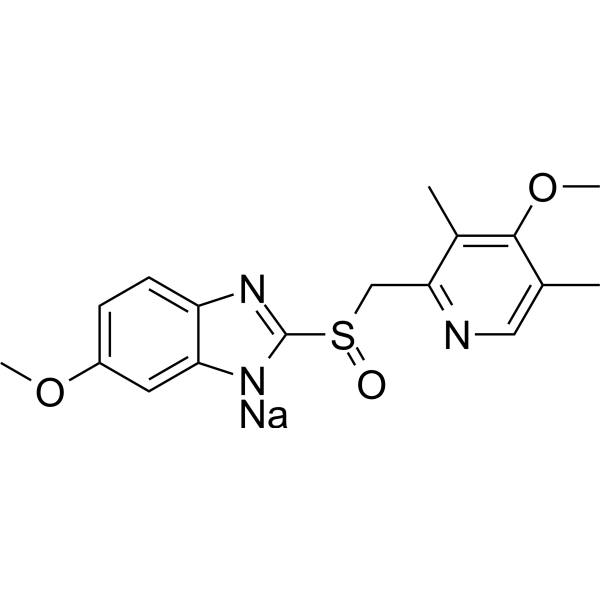
| DC38062 | Omeprazole sodium Featured |
Omeprazole sodium is the salt analogue of Omeprazole, which binds covalently to proton pump. It inhibits gastric secretion. Used as an anttiulcerative.
More description
|
|
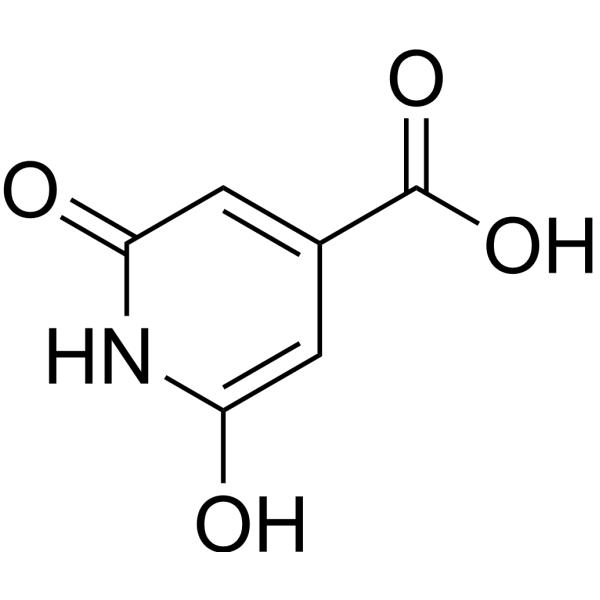
| DC33813 | Citrazinic acid |
Citrazinic acid inhibits 3-dehydroquinate dehydratase from Mycobacterium tuberculosis.
More description
|
|
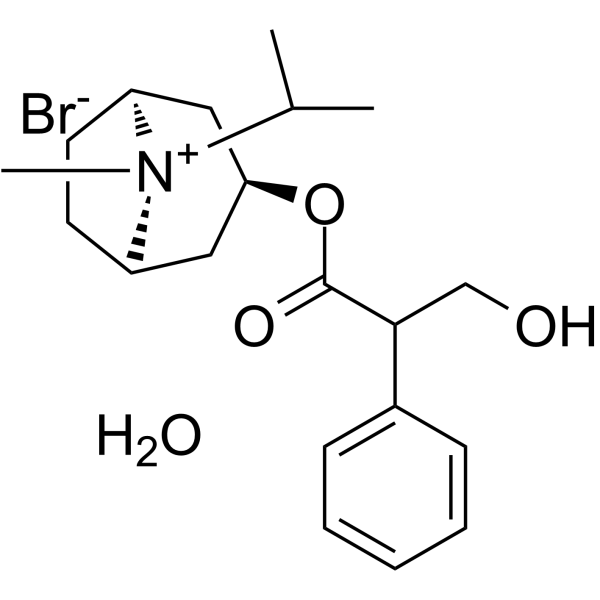
| DC44703 | Ipratropium bromide monohydrate Featured |
Ipratropium bromide (Atrovent, Sch 1000) monohydrate is an antagonist of muscarinic acetylcholine receptors (mAChR) with IC50 of 2.9 nM, 2.0 nM, and 1.7 nM for M1, M2, and M3 receptors, respectively.
More description
|
|
| DC44763 | Elastase from porcine pancreas Featured |
Elastase from porcine pancreas is a single polypeptide chain of 240 amino acid residues. Elastase from porcine pancreas is a serine protease that can hydrolyze proteins and polypeptide. Elastase from porcine pancreas can induce emphysema in hamsters.
More description
|

|
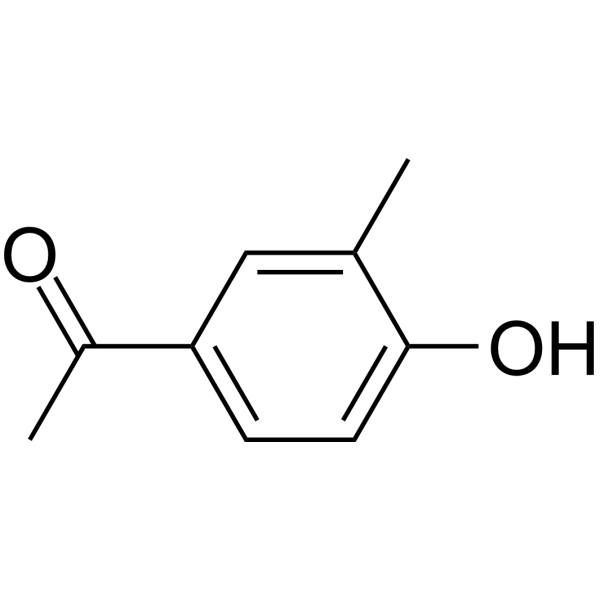
| DC44819 | 4'-Hydroxy-3'-methylacetophenone Featured |
4'-Hydroxy-3'-methylacetophenone, a phenolic volatile compound, is isolated from Hawaiian green coffee beans (Coffea Arabica L.). 4'-Hydroxy-3'-methylacetophenone has potent antioxidant activities. 4'-Hydroxy-3'-methylacetophenone also can be used to synthesize heterocyclic compounds which have antimycobacterial activity.
More description
|
|
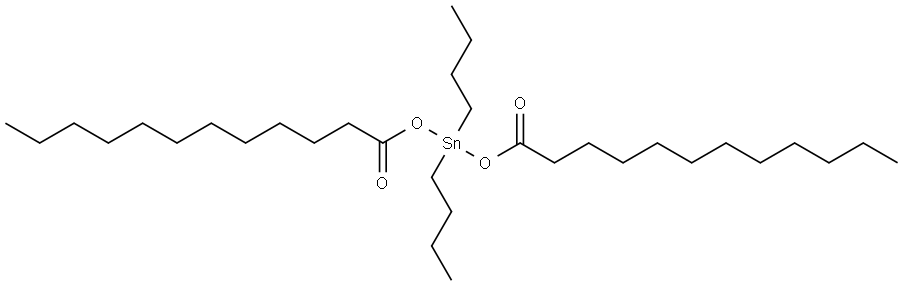
| DC37942 | Dibutyltin dilaurate Featured |
Dibutyltin dilaurate is used in prevention of parasitic dieases in cattle and sheep.
More description
|
|
| DC28469 | TGFβRI-IN-2 |
TGFβRI-IN-2 (compound 18) is a potent, selective and orally active (Activin-Like Kinase 5) ALK 5 inhibitor with pIC50 and pEC50 values of 7.6 and 6.63, respectively. TGFβRI-IN-2 can produce observed cardiac toxicity in vivo at high dose.
More description
|

|